

.webp)

 Mathan Allington


1 min read
Building an HR tech stack for 100 to 500 employees: 2026 guide
 Compono
The ideal HR tech stack for 100 to 500 employees moves away from fragmented spreadsheets and centres on three to five well-integrated platforms...
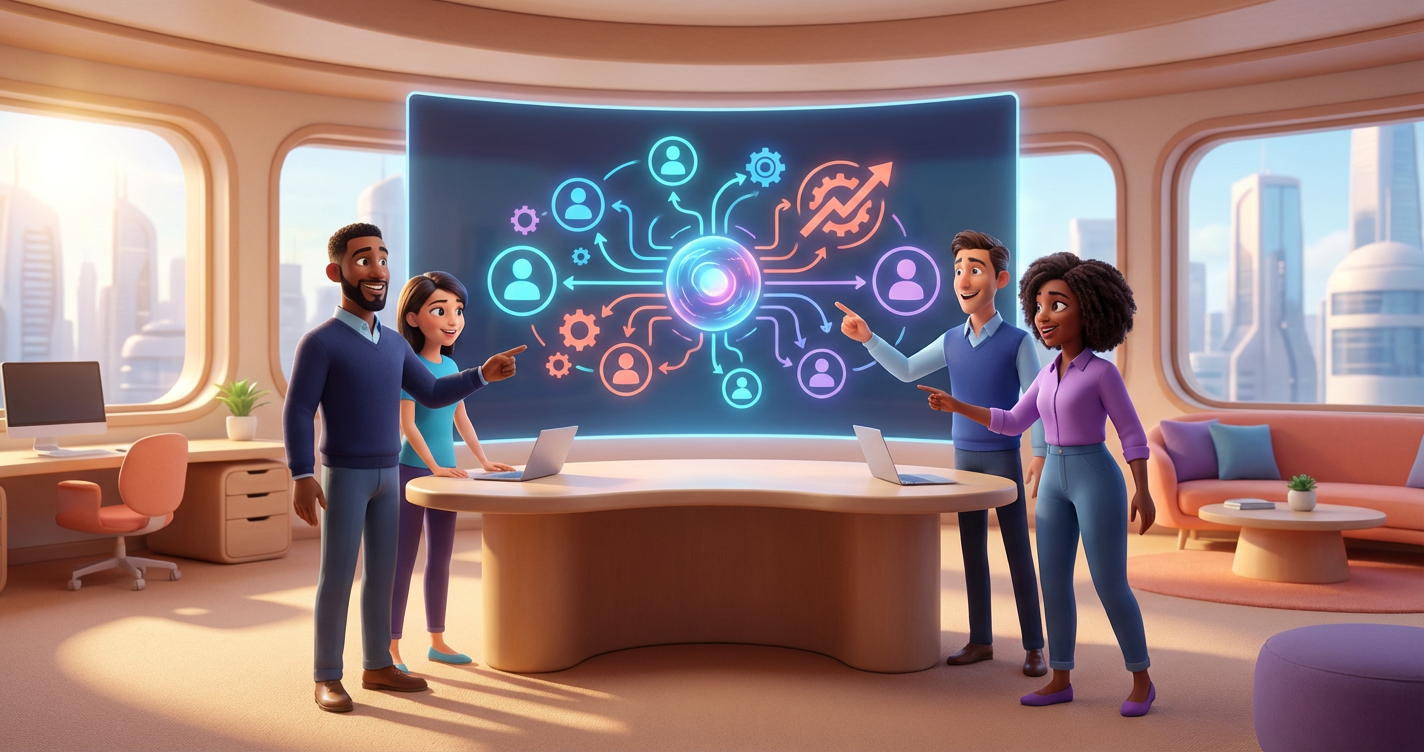
HR software integration connects your HR systems so one record of a person, including their pay, training and performance, moves between tools automatically instead of being retyped. In practice it comes down to a handful of decisions: which system owns each field, which fields actually need to travel, whether the link runs on a schedule or on an event, and whether you join the systems with a prebuilt connector, an open API or middleware.
Last reviewed September 2026.
An integration is a defined, repeatable exchange of fields between two systems. It runs on a schedule (every night at 2am) or on an event (an offer is accepted, a person changes role). Underneath every integration sit two agreements that matter more than the technology: which system is the owner of each field, and which direction the data travels.
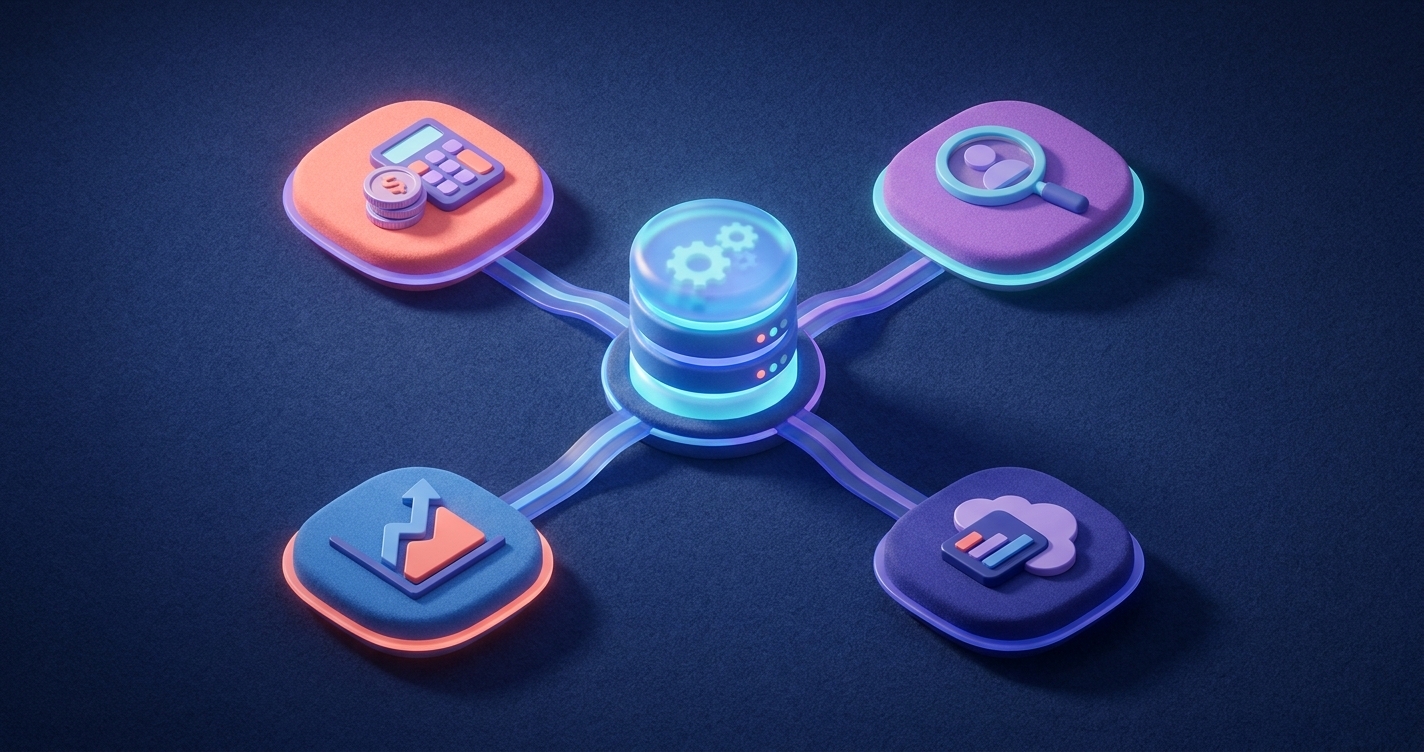
Most HR teams run between four and eight systems. Recruitment, core HR, payroll, learning, engagement, time and attendance, and whatever finance needs for headcount reporting. Very few organisations join all of those to each other. What people usually mean by HR system integration is joining the core HR record to everything else, so the employee record is the hub and the rest are spokes.
Where one HR software platform already covers hiring, engagement and development, the number of joins you have to build and maintain drops. Where it does not, the joins are the work, and they need an owner.
Vendors use the word integration for all five of these, and they are not equivalent. Ask which one you are being sold.
| Method | How it works | Suits | Watch for |
|---|---|---|---|
| Native connector | The vendor builds and maintains a link to a named product. You switch it on and map fields in an admin screen. | Common pairings such as recruitment to core HR, or core HR to a major payroll product. | The field list is fixed. Ask to see exactly which fields sync before you sign, not the logo wall. |
| Open API | Your team or an implementation partner writes against the vendor's documented endpoints. | Custom fields, unusual approval workflows, anything the connector does not cover. | Someone has to own it when the API version changes or a field is renamed. |
| Integration platform (iPaaS) | Middleware sits between systems and handles mapping, retries and logging centrally. | Stacks with many systems and no in-house development capacity. | Another subscription, and another place errors can hide if nobody reads the logs. |
| Flat file over SFTP | A scheduled CSV or fixed-width file is dropped in a folder and picked up by the receiving system. | Payroll and finance, plus older systems with no usable API. | Errors surface a day late, and a format change breaks the file quietly. |
| Manual export and import | A person downloads from one system and uploads to another. | One-off migrations and genuinely low-volume exchanges. | Acceptable as a stopgap with a named owner and a date. Not acceptable as the plan. |
Two questions separate a real integration from a demo: what happens when a record fails to sync, and who finds out. If the answer is that the record sits in a queue nobody looks at, you have a report, not an integration.
Sequence by consequence rather than by how easy the vendor says each one is.
You do not need to be technical to own this. You need to be decisive about ownership of data, which is an HR decision and not an IT one.
If you are turning this into a shortlist, the HR tech requirements builder converts the same thinking into a requirements list you can send to vendors.

The failures are rarely exotic. They repeat.
HR carries two different kinds of risk, and integration work usually gets justified against only one of them. Process risk is the admin: payroll errors, expired certifications, onboarding steps missed. Most integration business cases are written here, because the hours saved are easy to count.
The second kind is people insight risk: the wrong hire, the top performer nobody noticed disengaging, the training spend that did not build the capability you needed. That risk is reduced by joining data that currently sits apart. Assessment and fit data captured during hiring, learning completion, and engagement sentiment all describe the same person, and they only become useful together. A team with high engagement scores and almost no development activity looks fine in isolation and looks quite different once the two are in the same view.
That joined view is what turns records into genuine people analytics, and it is where Compono is built to sit: hiring, engagement and development data on one record, so managers see the same person rather than three partial ones. The honest boundary is that integration does not improve the quality of what you collected. If the hiring data was thin to begin with, connecting it more efficiently to payroll will not make it insightful.
When the systems agree with each other, HR stops being the reconciliation service and starts being the part of the business that can answer questions about people with evidence.
See how Compono holds hiring, engagement and development data on one record, so there is less to integrate in the first place.
Talk to usIt is a defined, repeatable exchange of data between two HR systems, so a change made in one appears in the other without anyone retyping it. The exchange runs on a schedule or on an event, and it depends on agreeing which system owns each field.
One agreed version of each person's record. It removes manual entry between systems, reduces reconciliation errors, and lets leaders report on hiring, capability and engagement from the same dataset rather than three exports that disagree.
Core HR is the priority, because it holds the fields payroll depends on: start and end dates, job title, manager, cost centre, pay rate and leave. Time and attendance comes next in shift-based operations. Recruitment and learning rarely need to touch payroll directly.
Not always. A prebuilt native connector covers common pairings without any development work, and a scheduled file transfer still serves older payroll and finance systems well. An API matters when you have custom fields or workflows the connector does not handle.
A map of every system and its owner, a named system of record for each field, the people questions you want to answer, a build sequence ordered by consequence, an agreed plan for when a sync fails, and a review date. The technical method is chosen after those decisions, not before.
Not usually. Many platforms offer no-code or low-code integration that HR teams manage themselves. Custom workflows and legacy systems may warrant IT involvement or an implementation partner, but that is the exception rather than the rule.
1 min read
The ideal HR tech stack for 100 to 500 employees moves away from fragmented spreadsheets and centres on three to five well-integrated platforms...

1 min read
HCM software is one system for the whole employee lifecycle, holding hiring, onboarding, payroll and time, performance, learning and engagement...

1 min read
People management tools are software that helps managers and HR teams run the whole employee relationship: hiring, onboarding, development,...
 Mathan Allington