 Compono


How to choose the right team collaboration software

Team collaboration software is most effective when it bridges the gap between digital task management and the unique work personalities of your...


Become the expert on delivering
valid and fair assessments for
your training and education.

.png?width=383&height=200&name=team%20(1).png)
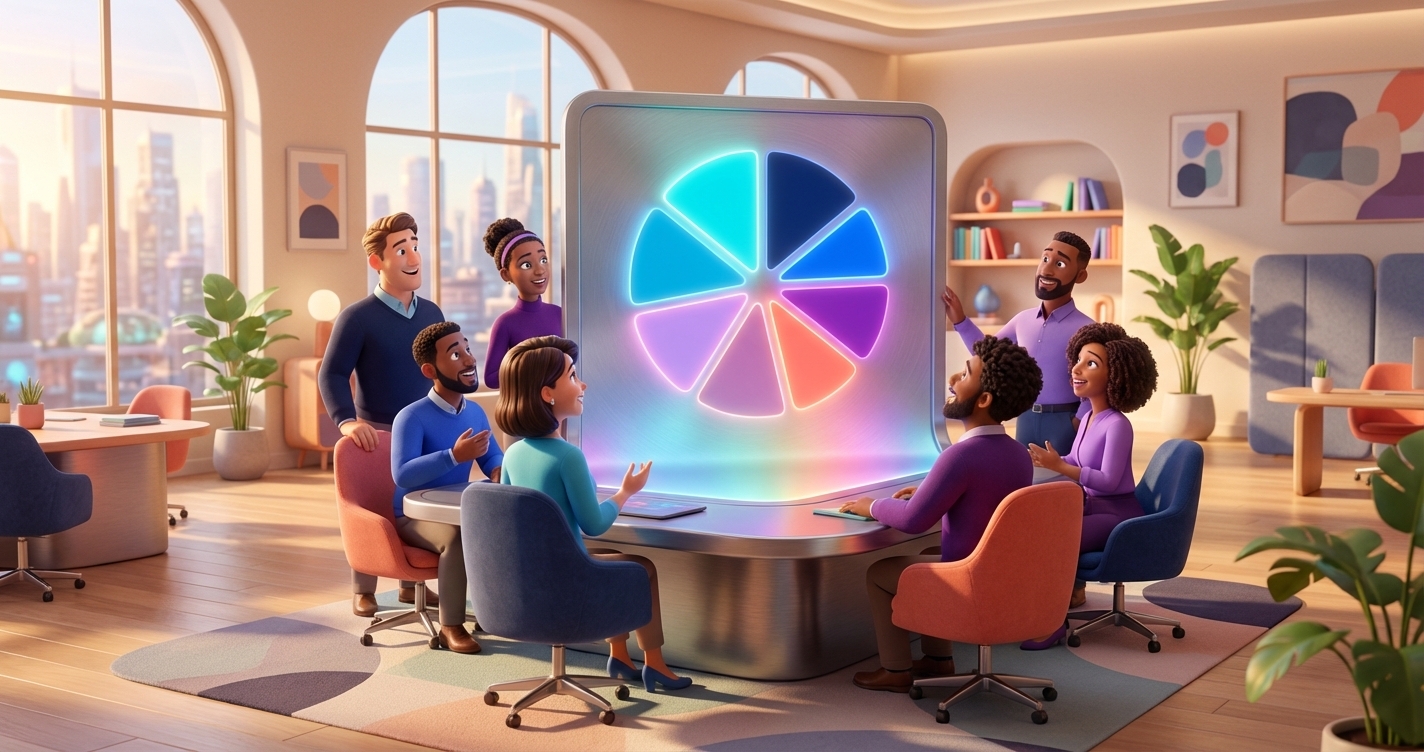
Team design software is a digital toolset that allows business leaders to purposefully structure their workforce by aligning individual strengths, work personalities, and specific role requirements to ensure maximum collective output.
Key takeaways
- Effective team design software moves beyond simple org charts to map the natural work preferences of every employee.
- High-performing teams require a specific balance of eight key work activities, from pioneering new ideas to auditing final outputs.
- Using data-driven insights to identify gaps in team composition reduces conflict and improves long-term engagement.
- Modern workforce intelligence allows managers to simulate the impact of new hires before they even join the team.
Most teams today are formed by accident rather than design. We often hire for a specific skill gap or fill a seat because someone left, without pausing to consider how that new person affects the delicate internal chemistry of the group. This reactive approach leads to teams that might have the right technical skills on paper but struggle with execution, communication, or a lack of innovation.
When a team is poorly designed, you see it in the daily friction. You might have a group full of brilliant thinkers who never quite get around to the doing, or a team of executors who lack the strategic vision to pivot when the market shifts. This isn't a lack of talent – it is a lack of balance. Without the right team design software, leaders are essentially flying blind, relying on gut feel to solve complex human puzzles.
The shift toward modern work requires a more sophisticated lens. We need to understand not just what people can do, but how they prefer to work. At Compono, we’ve spent years researching the Compono Culture, Engagement & Performance Model to help leaders move from accidental structures to intentional, high-performing units.

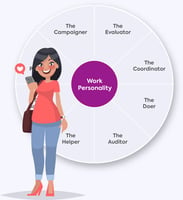
To design a team effectively, you first need to understand the work that actually needs to be done. Our research has identified eight key work activities that every high-performing team must perform to stay successful. These aren't just job descriptions; they are the functional behaviours that drive a project from a hazy idea to a finished product.
These activities include Evaluating, Coordinating, Campaigning, Pioneering, Advising, Helping, and Doing. If your team is heavily weighted toward one side – for example, you have three Pioneers but no Auditors – you will likely see plenty of exciting starts but very few polished finishes. The goal of team design software is to highlight these imbalances before they become performance bottlenecks.
When you have visibility into these preferences, you can start to play to people's natural strengths. A Coordinator will naturally gravitate toward structure and efficiency, whilst Helpers will focus on team harmony and support. Recognising these roles allows you to assign the right person to the right part of a project, reducing burnout and increasing the quality of the final output.
Diversity is often discussed in terms of demographics, but cognitive diversity – the variety of ways people think and solve problems – is the real engine of innovation. Team design software allows you to visualise this diversity through the lens of work personality. By plotting every team member on a visual wheel, you can immediately see where the team is clustered and where the gaps lie.
Imagine a leadership team where everyone is an Evaluator. Decisions will be logical and data-driven, but the team might struggle with the empathy needed to manage a large workforce during a period of change. Conversely, a team of Campaigners will be excellent at selling a dream, but they might overpromise and struggle with the practical implementation that Doers provide so reliably.
At Compono, we use workforce intelligence to help managers reveal these insights. The Compono Engage module allows you to invite every employee to complete a quick assessment, and then bottles up the expertise of a corporate psychologist to provide tips on how these different personalities can best collaborate. This level of insight turns potential conflict into a productive exchange of different perspectives.
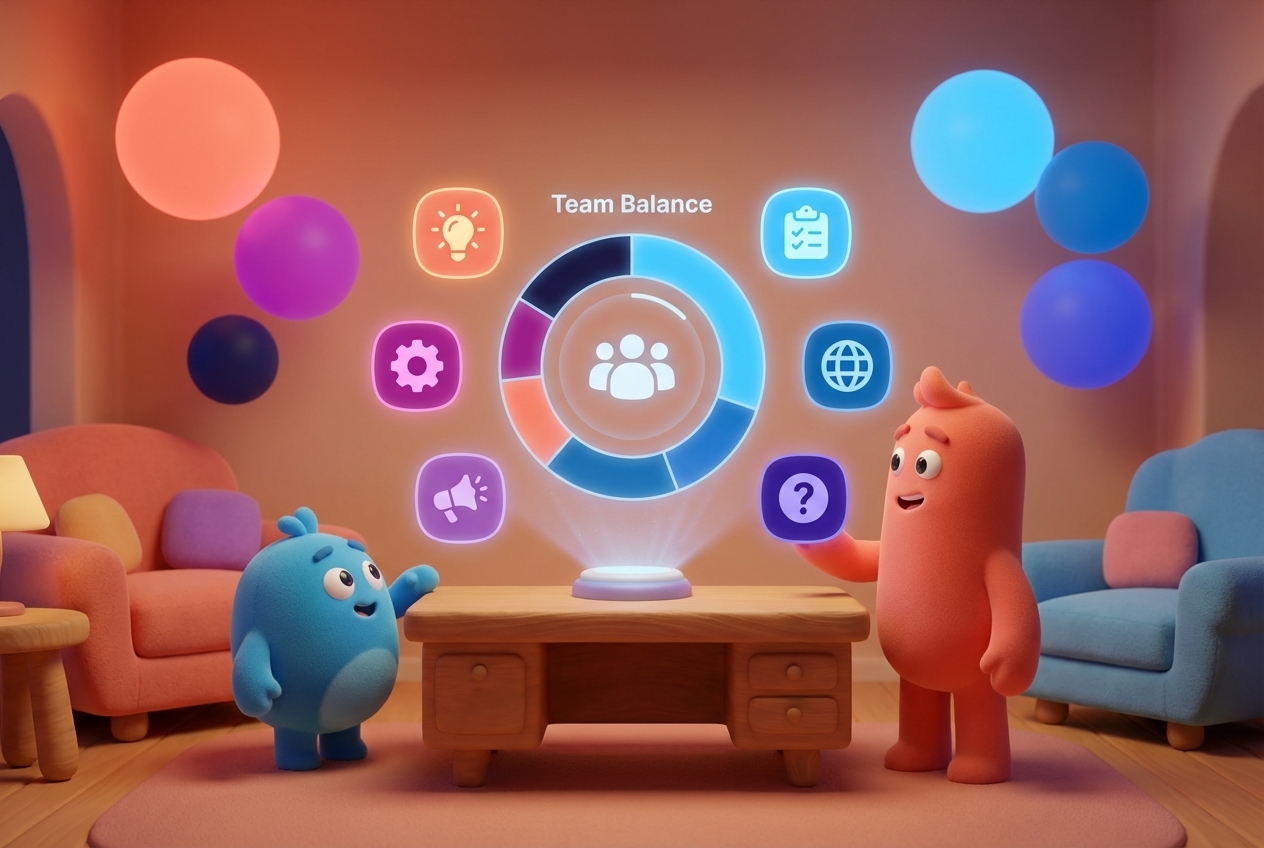
The most powerful application of team design software isn't just fixing existing teams – it is making sure the next person you hire is the missing piece of the puzzle. Traditional recruitment focuses on the individual's CV, but modern hiring focuses on the individual's fit within the existing ecosystem. You aren't just looking for the 'best' candidate; you are looking for the 'right' candidate for that specific team at that specific time.
Before you even post a job ad, you can use software to simulate the impact of adding a certain personality type to your group. If your current team is struggling with meeting deadlines and following through on details, you might intentionally look for an Auditor or a Doer. This proactive approach ensures that every new hire adds a new dimension to the team's capability rather than just duplicating what you already have.
This is where the Compono Hire platform becomes invaluable. It allows you to select the work personality you need for a role and automatically ranks candidates based on their fit. This ensures that you are building a balanced team from the ground up, significantly reducing the risk of a bad hire and improving long-term retention rates.
Once you have designed a balanced team, the final piece of the puzzle is the leadership style used to manage them. Different team compositions require different approaches. A team of highly experienced Pioneers might thrive under a Non-Directive Leadership style that offers them maximum autonomy, whereas a team of Doers in a high-stakes environment might prefer Directive Leadership with clear, actionable instructions.
Effective leaders learn to flex their style based on the personalities they are managing. An Advisor is naturally versatile and can shift between Democratic and Non-Directive styles easily, but a leader who is naturally a Coordinator might need to work harder to allow for the creative freedom a Campaigner needs to stay engaged.
By using team design software to understand your own leadership default and the needs of your team, you can make more intentional choices about how you communicate and delegate. This reduces frustration on both sides and ensures that the structure you have built actually delivers on its potential. High-performing teams aren't born – they are designed, nurtured, and led with purpose.
Key insights
- Intentional team design prevents the performance bottlenecks caused by accidental or reactive hiring.
- Mapping the eight key work activities ensures that teams have a balanced mix of strategy, execution, and support.
- Cognitive diversity is the primary driver of innovation, and software makes this diversity visible and manageable.
- Predictive hiring allows leaders to identify the specific personality types needed to fill gaps in team capability.
- Leadership must be flexible, adapting its style to suit the specific work personalities within the team.
The main benefit is moving from gut-feel hiring to data-driven team building. It allows you to see the hidden clusters and gaps in your team’s work preferences, ensuring you have the right balance of personalities to actually finish what you start.
When people are placed in roles and teams that align with their natural work personality, they feel more engaged and less prone to burnout. By designing teams where individuals can play to their strengths, you create a more satisfying work environment that keeps people around longer.
Yes, often conflict arises because of different work styles rather than personal animosity. Software helps team members understand each other’s 'blind spots' and preferences, providing a common language to discuss how they can collaborate more effectively.
Not at all. Whilst it is highly effective for mid-sized companies (60–1,000 staff), even small teams of three to five people benefit from understanding their collective balance. Knowing that you lack a 'Doer' or a 'Pioneer' early on can save significant headaches as you scale.
Traditional tests are often broad and academic. Team design software focuses specifically on work personality – how people behave and what they are motivated to do in a professional context. It is designed to be actionable for managers and HR leaders in a day-to-day business environment.

Team collaboration software is most effective when it bridges the gap between digital task management and the unique work personalities of your...
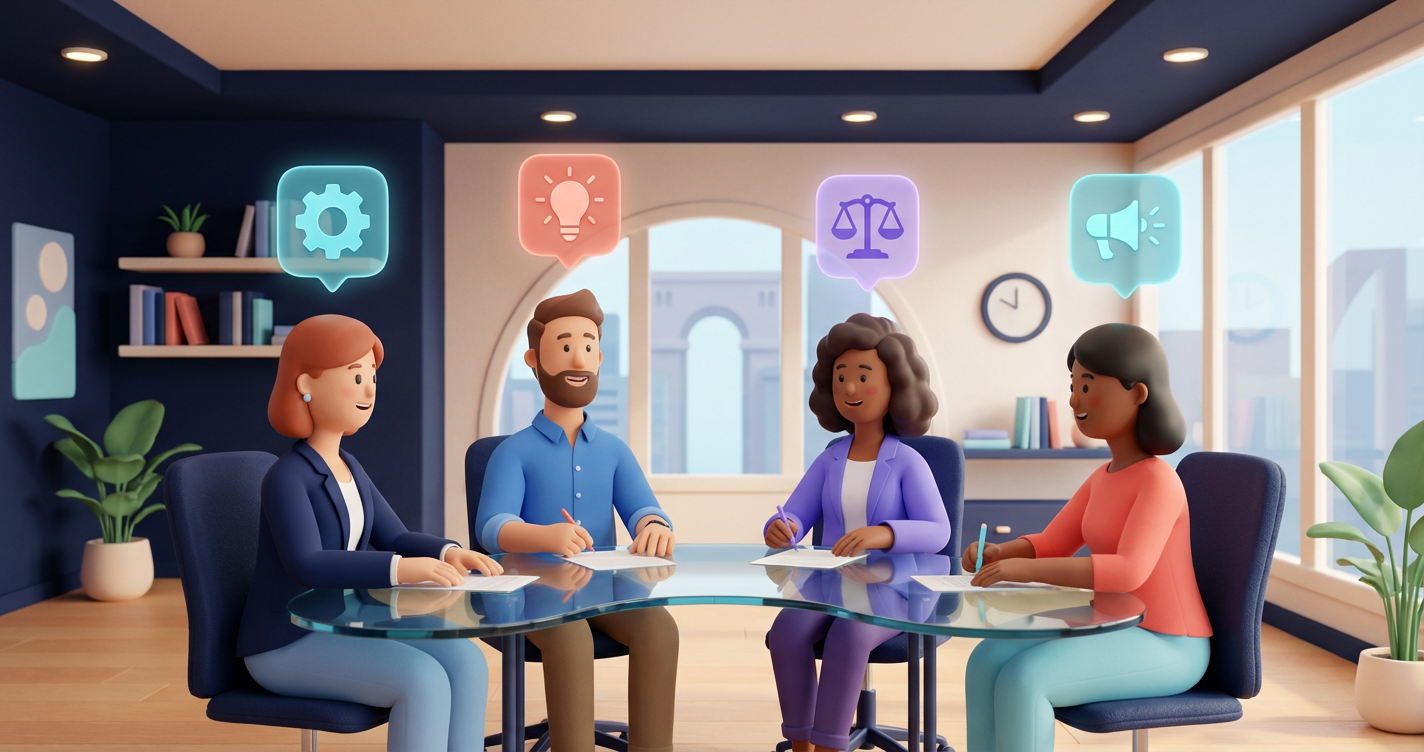
A team personality assessment is the most effective way to identify the natural work preferences of your people so you can balance diverse strengths...
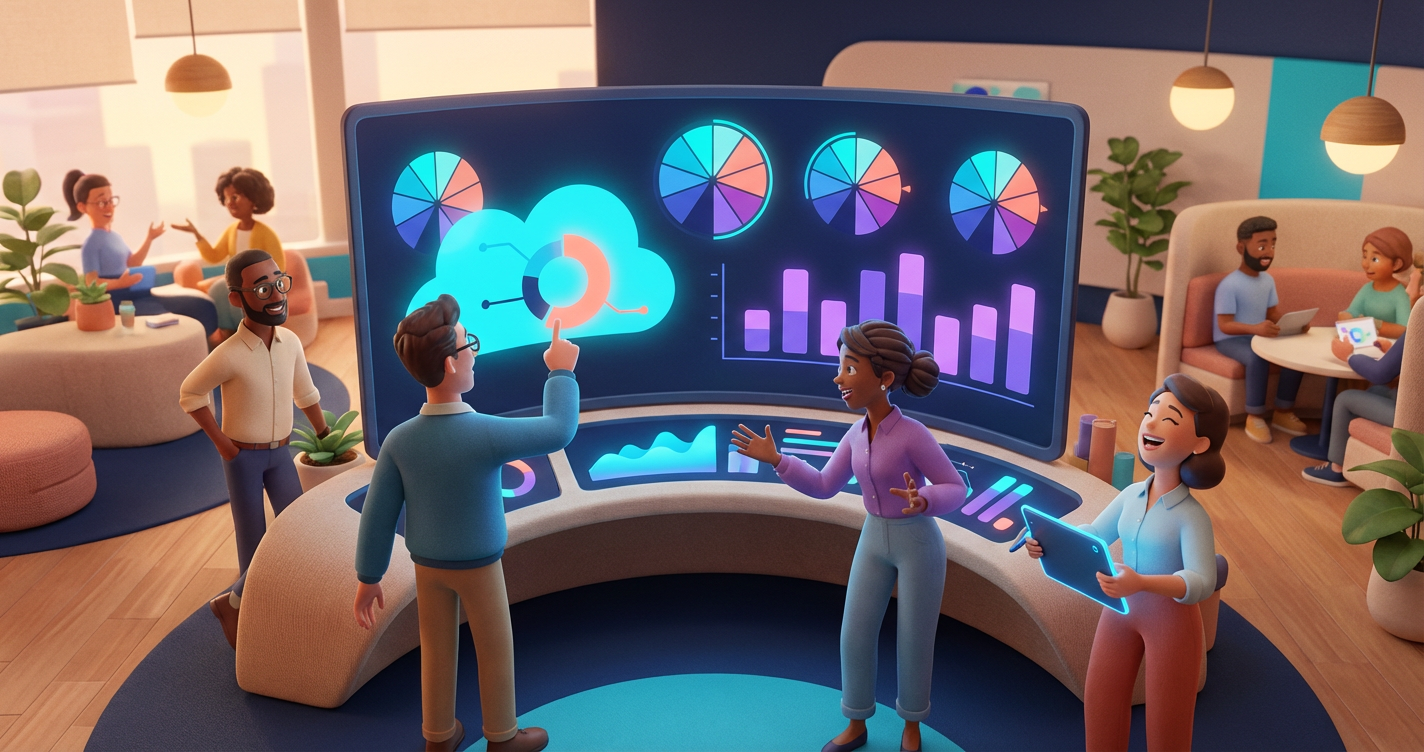
A candidate motivation assessment is the most effective way to determine if a person’s natural work preferences align with the actual requirements of...