 Compono

Understanding the key performance drivers at work

Building a high-performing team is rarely about finding the smartest people in the room and hoping for the best. Instead, it is about understanding...


Become the expert on delivering
valid and fair assessments for
your training and education.
Hire
|
Engage
|
Develop
|
|
Automatically match to candidates who are a great fit for your team culture and who are intrinsically motivated to succeed. |
Deeply understand your organisation with science-backed analytics on your culture, team design, and engagement. |
Back your onboarding, compliance and skill development with industry-leading credentialling, competency and capability expertise.
|


.png?width=383&height=200&name=team%20(1).png)

Understanding the people behind the roles is the most effective way to build a resilient, high-performing organisation. When you truly understand your workforce – their motivations, their natural work preferences, and how they handle pressure – you move beyond simple management and into the realm of strategic leadership that actually delivers results.
Most leaders recognise that their people are their greatest asset, yet many struggle to actually define what makes their team tick. You might have a group of highly skilled individuals who, on paper, should be a powerhouse, but for some reason, the output isn't quite matching the potential. This often happens because there is a disconnect between the tasks being assigned and the natural work personalities of the people doing them.
When you don't fully understand your workforce, you risk misaligning talent with opportunity. This lead to disengagement, friction within teams, and ultimately, higher turnover. At Compono, we believe that the foundation of a great culture is built on deep insight into individual and team behaviours. By moving away from guesswork and towards evidence-based data, you can start to see your workforce through a much clearer lens.

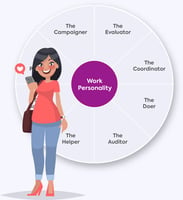
To understand your workforce, you first need to understand that everyone has a dominant work personality. Our research at Compono has identified eight key work activities that define high-performing teams: Evaluating, Coordinating, Campaigning, Pioneering, Advising, Helping, and Doing. Every person in your organisation naturally gravitates towards one or two of these areas.
For example, you might have a 'Campaigner' in your marketing team. These individuals are enthusiastic, visionary, and future-focused. They are excellent at selling a dream and motivating others. However, if you bury a Campaigner in routine, repetitive administrative tasks, their energy will quickly fade. Conversely, an 'Auditor' thrives on precision and details. They find satisfaction in maintaining order and compliance – tasks that might overwhelm a more creative, spontaneous 'Pioneer'.
By using tools like the Compono work personality assessment, you can map these traits across your entire organisation. This allows you to see where your strengths lie and, more importantly, where the gaps are. If your team is full of 'Doers' but lacks an 'Evaluator', you might be great at executing tasks but struggle to objectively analyse the risks involved in your strategy.
Once you understand your workforce's personality mix, the next step is adapting your leadership style to suit. Effective leadership isn't about having one fixed approach; it’s about being flexible enough to provide what your team needs in any given moment. This is what we call the leadership style continuum, ranging from Directive to Non-Directive approaches.
A 'Directive' style involves providing clear instructions and high levels of structure. This is often necessary when working with 'Doers' who appreciate clear actionable goals, or in crisis situations where quick decisions are paramount. On the other end of the scale, a 'Non-Directive' approach offers high levels of autonomy. This works beautifully with 'Pioneers' or 'Auditors' who have established processes and prefer to work independently without constant oversight.
Many people leaders find that the 'Democratic' style – which focuses on collaboration and shared decision-making – is the sweet spot for modern teams. This style is particularly effective for 'Helpers' and 'Advisors' who value harmony and inclusivity. When you understand your workforce, you can switch between these styles with confidence, knowing exactly which lever to pull to get the best out of your people.

Conflict is an inevitable part of any workplace, but it doesn't have to be destructive. In fact, when you understand your workforce, you can use conflict as a tool for growth. Friction often arises not because of personal animosity, but because of differing work preferences. For instance, a 'Coordinator' who lives for structure and deadlines might clash with a 'Pioneer' who prefers to keep options open and explore new ideas.
As a leader, your role is to help these different types find common ground. You might encourage the Coordinator to allow for some creative flexibility before locking in a timeline, while helping the Pioneer see the value in setting milestones to ensure their brilliant ideas actually reach completion. This level of nuance is only possible when you have a deep, data-driven understanding of individual personalities.
At Compono, we've developed frameworks to help managers navigate these exact scenarios. By understanding the personality factors of each team member, you can foster a culture of empathy and mutual respect. This is a core part of The Compono Culture, Engagement & Performance Model, which focuses on how individual traits contribute to the collective success of the group.
Understanding your workforce isn't just about managing the people you have today; it’s about making smarter decisions for tomorrow. When you know the current 'shape' of your team, you can hire with much greater precision. Instead of just looking for a set of technical skills, you can identify the specific work personality that will complement your existing group.
Perhaps your team is highly analytical but lacks the energy and persuasive power of a 'Campaigner'. Knowing this allows you to target your recruitment efforts to fill that specific cultural gap. This proactive approach to team design ensures that as your organisation grows, it remains balanced and high-performing.
Many businesses use Compono Hire to gain these insights during the recruitment process, ensuring every new hire is a perfect fit for the team's unique dynamic.
The best place to start is by using a validated work personality assessment. This provides a common language for your team to discuss their preferences, strengths, and blind spots, moving the conversation away from subjective opinions to objective data.
Skills can be taught, but natural work preferences are much more stable. Understanding how someone naturally behaves – whether they are detail-oriented or big-picture focused – helps you place them in a role where they will naturally succeed and feel motivated.
While core personality traits are generally stable, people can learn to 'flex' and adapt their behaviours to meet the demands of a specific role. However, consistently working against one's natural preferences can lead to burnout and disengagement.
When employees feel understood and are given work that aligns with their natural strengths, their job satisfaction increases. A workforce that feels seen and valued by leadership is far less likely to look for opportunities elsewhere.
Leaders act as the facilitators of this understanding. It is your responsibility to create a safe environment where people can share their work preferences and to use that information to optimise team performance and harmony.

Building a high-performing team is rarely about finding the smartest people in the room and hoping for the best. Instead, it is about understanding...

Have you ever wondered why a group of high-performing individuals can sometimes fail to click as a team? The secret isn't just in their skills; it is...

As your organisation grows, hiring the right people becomes one of the most critical factors for success. Yet, many businesses struggle with the...
