

.webp)

 Mathan Allington


Human resource systems: complete guide to modern HR technology solutions
 Mathan Allington
What human resource systems do, how HRIS, HRMS and HCM differ, what they cost in Australia, and how to choose one that covers people insight too.

A PTO policy template needs four things to work: a clear leave structure (accrued, unlimited or banked), fair and transparent accrual rules, compliance with local employment law, and a simple request process. Get those right and paid time off becomes a genuine retention tool rather than an administrative afterthought.
Last reviewed July 2026. This is general guidance, not legal advice. Leave laws vary by jurisdiction, so consult the relevant legislation and seek professional advice before finalising your policy.
Paid time off (PTO) reflects how much a company values its people and their work-life balance. For HR leaders across the ANZ and APAC regions, designing an effective policy means balancing employee needs with operational priorities in a compliant and fair way. Compono does not sell PTO templates; this guide comes from what we see in workplace culture data, where leave behaviour is often an early signal of how a culture is really tracking.
Employers who prioritise PTO send a clear message: we value your personal time. The impact is measurable, not just sentimental.
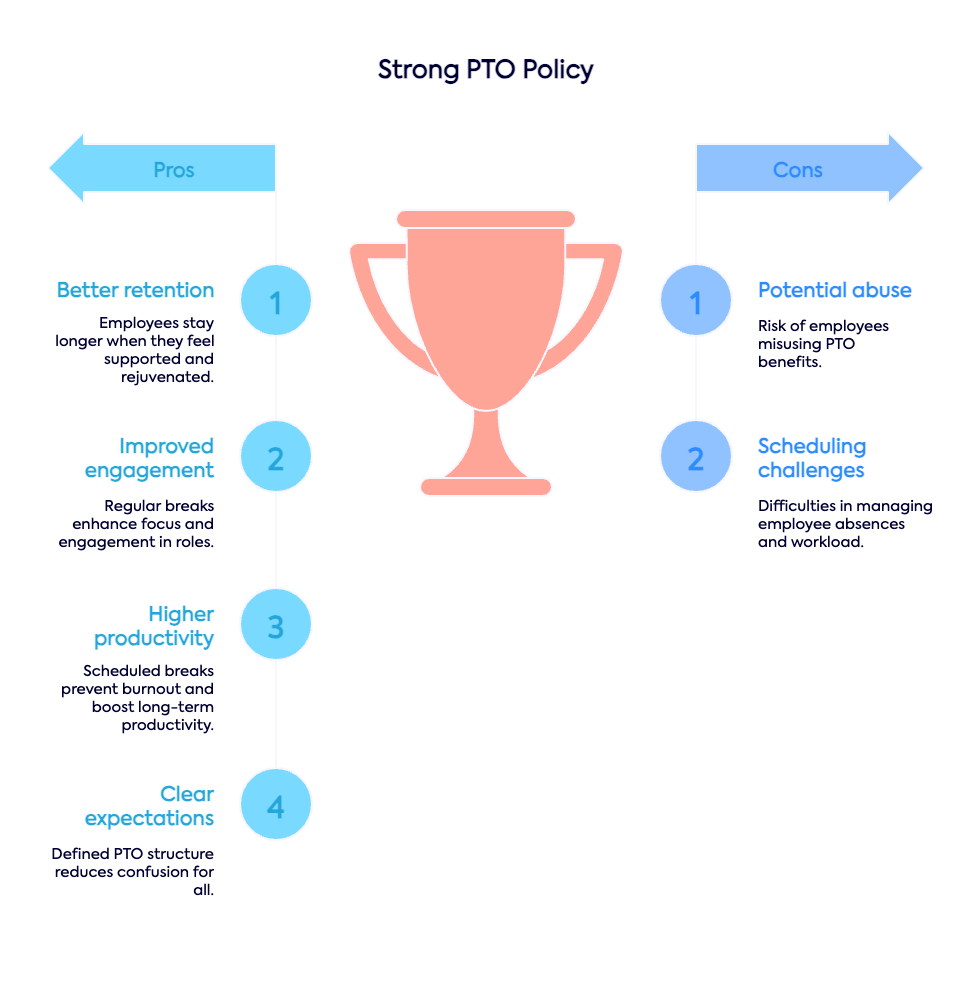
Your PTO policy is an extension of your culture. If it is transparent, balanced and actually used, it signals a workplace of choice.
The structure sets the tone for how employees interact with leave. Three common formats:
The right format depends on your culture, industry and operational reality. Tech companies often lean towards unlimited PTO to attract flexibility-seeking talent, while shift-based industries usually need the predictability of accrued or banked systems.
Competitive accrual rates align your policy with industry expectations and lift satisfaction. Whatever rates you choose, publish them plainly. Transparency around entitlements is one of the cheapest fairness signals an employer can send.
Compliance is non-negotiable, and rules on entitlements, carryovers and payouts vary across ANZ and APAC. For instance, Australian organisations must ensure unused annual leave is cashed out on termination, while New Zealand follows specific rules for public holiday entitlements. Review state and national legislative updates regularly and consult employment law specialists when drafting or changing your policy.
A PTO policy is also a culture tool. From Compono's workplace culture assessments, three practices consistently lift engagement:
Culture data sharpens this further. Subculture assessments can reveal teams that feel overburdened and reluctant to request leave, giving HR a precise starting point for intervention instead of a blanket campaign. Expectations also differ by region and generation: younger ANZ employees tend to value flexibility, while more traditional APAC industries prefer predictable leave systems.
A good policy loses its value if requesting leave feels like paperwork warfare. Three practices help:
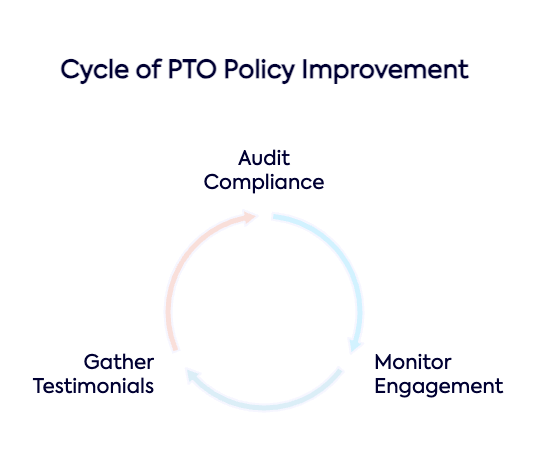
Workplace needs shift, and your policy should keep pace. Audit compliance annually against national and regional law changes, monitor leave usage rates as an engagement metric, and gather employee feedback on how the process feels in practice. Low leave usage in a specific team is rarely about the policy document; it is usually about workload or culture, and that is worth investigating with tools like Compono Engage before rewriting the rules.
Disclaimer: The information in this article is a general guide to help HR managers understand key considerations for designing PTO policies. Labour laws vary significantly across countries and regions. Consult the relevant legislation in your jurisdiction and seek professional legal advice to ensure your policy fully complies with local requirements.
Compono Engage surfaces the culture and workload signals behind leave behaviour, so your PTO policy fixes the real problem.
Talk to usA PTO policy template is a framework that outlines how employees can take paid time off from work. It covers types of leave, accrual methods, request processes and compliance considerations.
The most common types are accrued PTO, where employees earn leave incrementally based on time worked; unlimited PTO, where employees take leave as needed within guidelines; and banked PTO, where employees receive a set allocation at the start of the year.
Laws vary by country. In Australia, employers are required to pay out unused annual leave when an employee leaves, while regulations in other APAC countries differ. Always consult local legislation when drafting your policy.
Set clear accrual and usage policies, promote minimum annual leave expectations, and build a culture where taking time off is normalised and visibly supported by leaders.

What human resource systems do, how HRIS, HRMS and HCM differ, what they cost in Australia, and how to choose one that covers people insight too.

Employee engagement questionnaire examples you can copy: Gallup Q12 format, eNPS, pulse checks and a full question bank, plus how to act on results.

What culture survey software measures that engagement tools miss, how Culture Amp and Compono Engage compare, and how to act on the results.