

 Mathan Allington

To assess your team's culture, ask each person where the team works now and where it should work, on the same set of dimensions, then read the gap between the two. The gap is the finding. Use a short anonymous survey so people answer honestly, and start with the largest gap.
Last reviewed November 2026.
What is team culture, and can it differ from the company's?
Team culture is how a team gets work done day to day: who makes decisions, how much freedom people have, how closely they follow the rules, and whether they cooperate or compete.
A team can have a different culture from the rest of the company. A sales team chasing a deadline and a finance team checking every figure rarely work the same way, even under one set of company values. That group-level way of working is a team subculture.
This is why a company-wide result can miss what is happening in your team. A team culture assessment looks at one team on its own, so the answers describe the people who work together every day. Compono's free team culture survey is built for exactly this.
How do I measure my team's culture?
Ask each person two things on the same set of dimensions: where the team works now (the current culture) and where it should work to do its job well (the desired culture). Combine the answers and compare them.
In practice, that means four steps:
- Pick one team and one set of dimensions, so every answer means the same thing.
- Ask everyone to place the team on each dimension twice, once for now and once for where it should be. Ask the two sets separately, so the first answer doesn't pull the second.
- Combine the answers so no one can be picked out.
- Compare current and desired on each dimension, then share what you find with the team.
A sample question for one dimension reads: "Where does this team sit now, between Innovative and Risk Averse?" The second question asks: "Where should it sit for us to succeed over the next two years?"
Why does the gap matter more than either score?
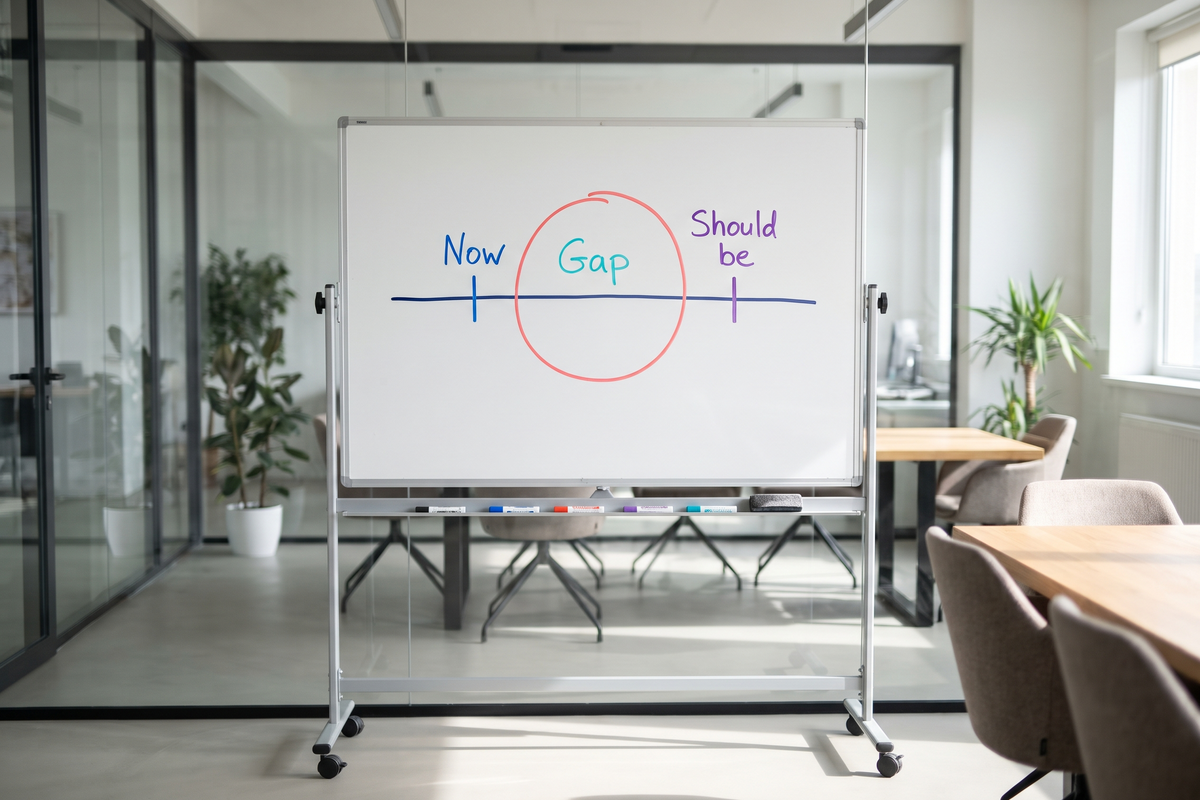
One position on a line says little by itself. A team that sits towards Planned might be exactly where it needs to be, or it might be held back by it. Only the desired position tells you which.
The gap between current and desired is the finding. Large gaps are the team's biggest desired shifts. Small gaps show where the team is already on the right track.
Large gaps often signal frustration, bottlenecks or leadership habits that no longer fit. They also carry good news. A large gap with good energy in the team is a strong position for change, provided it starts before frustration builds.
Treat the desired culture as evidence, not an order. It shows what people believe would help them do their work, and your job is to check that against what the business is trying to achieve.
Is there a good or bad team culture?
No. A culture works when it suits what the business is trying to achieve, so there is no good or bad end to any line.
A team that handles safety checks may need many fixed policies and a strict process. A team building a new product may need room to experiment and break from the usual way. Each is right for its job, and neither should copy the team down the corridor.
For the same reason, don't assume a team needs the opposite of what it has. The question is whether the current culture supports where the team is headed.
What questions should I ask to understand team culture?
Ask about how the work gets done, using 12 culture dimensions. Each one is a line between two ends, and the team sits somewhere along it.
Statements such as "I feel valued here" tell you how people feel. Dimensions describe how work happens, which is the part a manager can change. These are the 12 culture dimensions Compono measures:
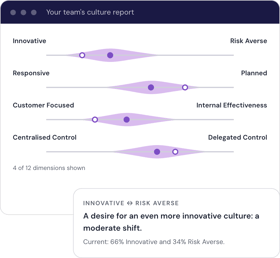
In the report, every line shows where the team's answers fall, with the current and desired culture marked:
An example team. In the report, the gap between the filled and hollow markers is the finding.
How do I find out what my team really thinks about how we work?
Make it anonymous, keep it short and show people what happens to their answers.
In the free team culture survey, no name or email sits with anyone's answers. Each person gives a first name and email before sending, and those are stored apart from the answers. Scores show only combined, and below five answers the report shows only the team's position, not the spread. Improvement suggestions appear as written, without names.
It takes about five minutes a person. You go first, then send one link to the team. The survey closes when you close it, or 14 days after you start. Then everyone who answered gets the report by email, as long as at least three people took part, so the team sees the same result you do.
Tell people why you are asking before you send the link, and say you will talk through the result together. Teams answer more openly when they know the results come back to them.
Where do I start improving my team's culture?

Start with the largest gap, and talk about it with the team. Ask what that gap looks like in a normal week and what sits behind it.
A few habits make the conversation go further:
- Pick one shift to work on first, not all twelve.
- Ask what is already working on the dimensions with small gaps, and keep doing it.
- Let the team suggest the first change.
Teams often know the shift they need, but it may not come naturally to the people in it. A team that wants more delegated control may need its manager to change how decisions get made, which takes a deliberate habit. That is also where hiring for the desired culture, or moving people to teams that suit how they work, can help.
To run a survey across the whole company, see how to run a culture survey.
How is team culture different from engagement?
A score says where the team stands. The culture shows what sits behind it.
Engagement is how people feel about their work and the company. Culture is how work gets done now and how people believe it should be done. Read together, the culture gap shows what to change and the engagement score shows how urgent it is. If you want the score on its own, there is a free employee engagement survey for one team, and the culture vs climate guide explains the difference in full.
The free survey covers one team at one point in time. Compono shows culture across every team and subculture, with practical insight right across the business, in Compono Engage.
See your team's current and desired culture
An anonymous culture survey on 12 culture dimensions, about five minutes each. Everyone who answers sees where the team is most and least aligned.
Get started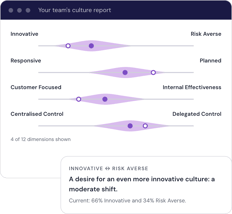
Frequently asked questions
What is a team culture assessment?
A short, anonymous survey that asks each person where the team works now and where it should work, on 12 culture dimensions. The report shows where current and desired sit furthest apart.
How long does it take, and who answers?
About five minutes a person. Everyone on the team answers, and the combined results go back to everyone who took part.
Is it really anonymous?
No answer has a name or email on it. Each person's name and email are stored apart from their answers, and scores show only combined.
Can I run it with a big group?
It is built for one team. Past 20 people, the report says it is several cultures in one survey, where a gap in one group can hide behind calm in another.
What if the gaps are large?
A large gap with good energy in the team is a strong position for change, provided it starts before frustration builds.
We already run an engagement survey. Does this replace it?
No. Keep the tools you have. This adds a view of how the team works now and how it should work, beside how people feel.