

.webp)

 Compono


How to assess team fit for long-term performance
 Mathan Allington
Assess team fit with the eight work actions, hire for culture add rather than culture clones, and spot likely friction before it costs you.

Hiring for team dynamics is the process of selecting candidates based on how their unique work personality and behaviours will complement existing team members to drive collective performance.
While technical skills get the work done, it is the underlying chemistry between people that determines how fast, how well, and how consistently that work happens. In today's workplace, a brilliant individual who cannot collaborate is often a liability, whereas a balanced team with diverse cognitive styles can solve almost any challenge.
Key takeaways
- Effective hiring for team dynamics requires looking beyond the resume to understand how a candidate's work personality fits within the current team's ecosystem.
- High-performing teams require a balance of eight core work actions, including pioneering, coordinating, and helping, to ensure all aspects of a project are covered.
- Using objective data to assess organisation fit helps reduce unconscious bias and ensures long-term retention and engagement.
- Conflict is not always a negative; when managed through an understanding of personality types, it can become a catalyst for innovation and growth.
We have all seen it happen. A company hires a 'rockstar' with an impeccable pedigree and a portfolio of awards, only to watch the team's productivity plummet within three months. The issue usually isn't the new hire's ability to do the job – it is their inability to integrate with the existing team dynamics. When we focus purely on the individual in isolation, we ignore the fact that work is a team sport.
Ignoring team dynamics during the recruitment phase leads to more than just a few awkward coffee breaks. It results in 'culture debt', where small frictions in communication and misaligned work preferences grow into deep-seated resentment. This friction slows down decision-making, stifles creativity, and eventually leads to high turnover. To build a truly resilient workforce, we must shift our perspective from 'Who is the best person for this role?' to 'Who is the best person to make this team better?'.
At Compono, we have spent over a decade researching what makes teams tick. We have found that the most successful organisations do not just hire for skills; they use a Workforce Intelligence Platform to understand the DNA of their teams before they even post a job ad. By mapping the strengths and gaps of your current group, you can identify exactly which personality type will bridge the gap between where you are and where you want to be.

To hire effectively for dynamics, you first need a language to describe how people work. Our research into high-performing teams has identified eight key work actions that every team needs to perform. No single person can be all eight things at once, which is why diversity of thought is so critical. When you understand these types, you can see where your team is 'top-heavy' and where it is lacking.
For instance, a team full of Pioneers will have no shortage of brilliant, innovative ideas, but they might struggle with follow-through. Conversely, a team of Auditors will be incredibly precise and compliant, but they might move too slowly to keep up with a changing market. Hiring for team dynamics means finding the 'missing piece' – like adding a Coordinator to a group of creative types to ensure those big ideas actually result in a finished product.
This is where Compono Hire changes the game. It allows you to assess candidates across three dimensions: Organisation Fit, Skills, and Qualifications. Instead of relying on a 'gut feeling' about whether someone will fit in, you get a data-driven score that shows how their natural tendencies align with your team's culture and the specific requirements of the role.
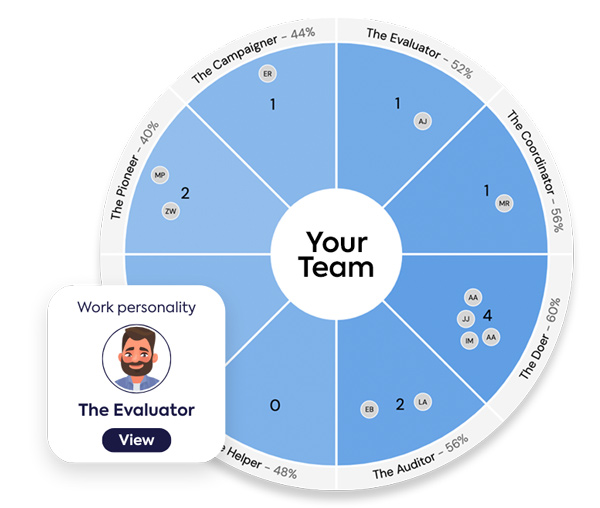
Before you can hire for the future, you must analyse the present. Mapping your current team involves identifying the dominant work personalities already in the room. Are you a team of Doers who are great at execution but need more strategic oversight? Or perhaps you have plenty of Advisors who excel at collaboration but struggle to make firm, quick decisions under pressure?
Once you have identified these patterns, you can write a job description that specifically targets the traits you are missing. If your team is currently experiencing high levels of friction, you might look for a Helper to boost empathy and cohesion. If the team is stagnant and lacks fresh perspectives, a Campaigner could provide the energy and vision needed to rally everyone behind a new goal.
Using a tool like Compono Engage helps leaders visualise these dynamics in real time. It provides a 'team wheel' that plots every member's personality, making it immediately obvious where the gaps are. This level of insight ensures that your next hire isn't just a replacement for a departed employee, but a strategic addition that elevates the entire group's performance.
For a long time, the industry talked about 'culture fit'. The problem with this term is that it often leads to 'mini-me' hiring – where managers hire people who think, act, and look just like them. This creates an echo chamber that is detrimental to innovation. Modern hiring for team dynamics focuses on 'culture add' – looking for people who share your core values but bring a different perspective or work style to the table.
A Evaluator might be exactly what a visionary startup needs to bring some much-needed logic and risk assessment to their bold plans. They might not 'fit' the existing high-energy, impulsive culture in the traditional sense, but they 'add' the necessary friction to prevent costly mistakes. This balance is what creates a high-performing team culture that can withstand challenges and adapt to new environments.
We recommend using structured interviews and objective assessments to evaluate this 'add'. Ask questions that reveal how a candidate handles conflict with different personality types. For example, ask a potential hire how they would work with someone who is highly detail-oriented if they themselves prefer the big picture. Their answer will tell you more about their potential team dynamic than any technical test ever could.
Key insights
- High-performing teams are built on a foundation of diverse work personalities that complement each other's blind spots.
- Hiring for team dynamics requires a shift from looking for 'culture fit' to seeking a 'culture add' that brings missing strengths to the group.
- Objective data and personality mapping are essential to remove bias and ensure candidates are placed in roles where they can truly thrive.
- A balanced team dynamic reduces friction, speeds up decision-making, and significantly improves long-term employee retention.
Building a high-performing team is a journey, not a destination. To start optimising your team dynamics, we recommend taking a data-driven approach to your next round of recruitment.
Culture fit often refers to how well an individual aligns with the company's broad values, while team dynamics focuses on the specific interpersonal interactions and work styles that determine how a small group functions together on a daily basis.
You can identify gaps by mapping your team's dominant work personalities. Look for recurring issues, such as missed deadlines (lack of Coordinators) or a lack of new ideas (lack of Pioneers), to see which traits are missing.
Yes, by using psychometric assessments and work personality mapping, you can move away from subjective 'gut feelings' and use data to understand how different behaviours and preferences will interact within a team environment.
Not at all. The goal is to ensure that conflict is constructive rather than destructive. A well-balanced team will have healthy debates because they bring different perspectives to the table, leading to better outcomes.
Diversity – especially cognitive diversity – is the engine of team dynamics. By bringing together different work personalities, such as Doers, Helpers, and Evaluators, you ensure that the team can handle a wider range of tasks and challenges effectively.
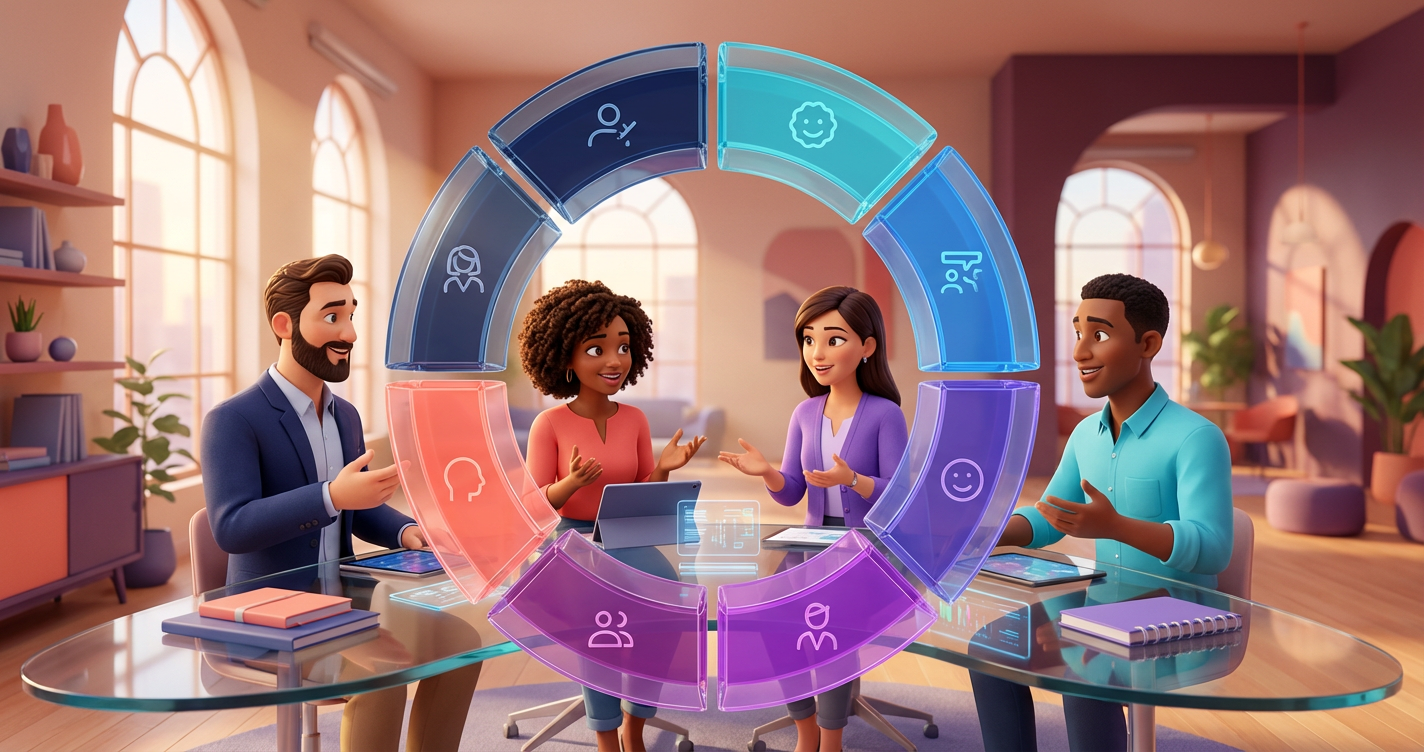
Assess team fit with the eight work actions, hire for culture add rather than culture clones, and spot likely friction before it costs you.
How work personality insights explain team dynamics, shape sharper interview questions and give you scoring keys for objective hiring decisions.
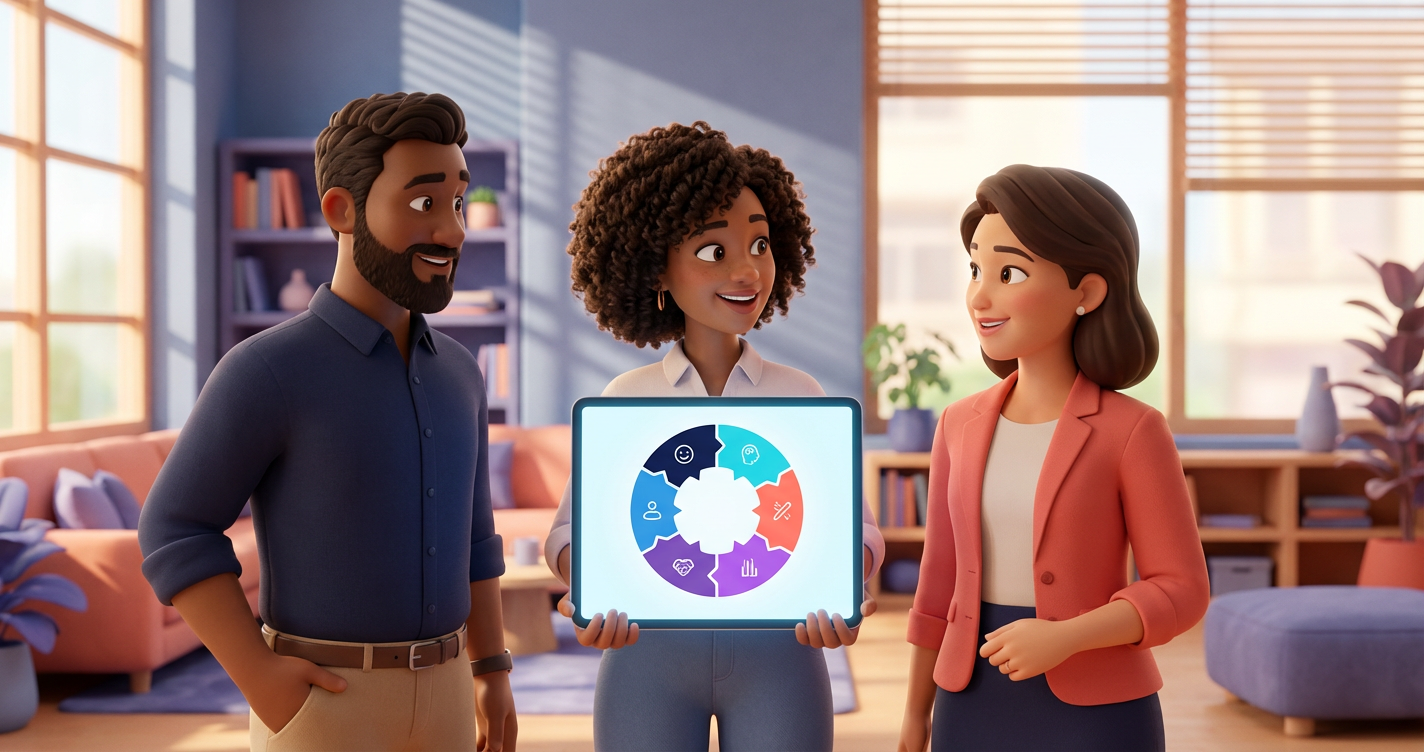
How to improve hire quality by lining up personality, culture and skills, with practical ways to cut turnover and steady your teams.
 Compono