

.webp)

 Compono


How culture fit hiring works in disability services
 Compono
Support work asks for patience under pressure. Here is how culture fit hiring finds people who hold up in the role and share how your team works.
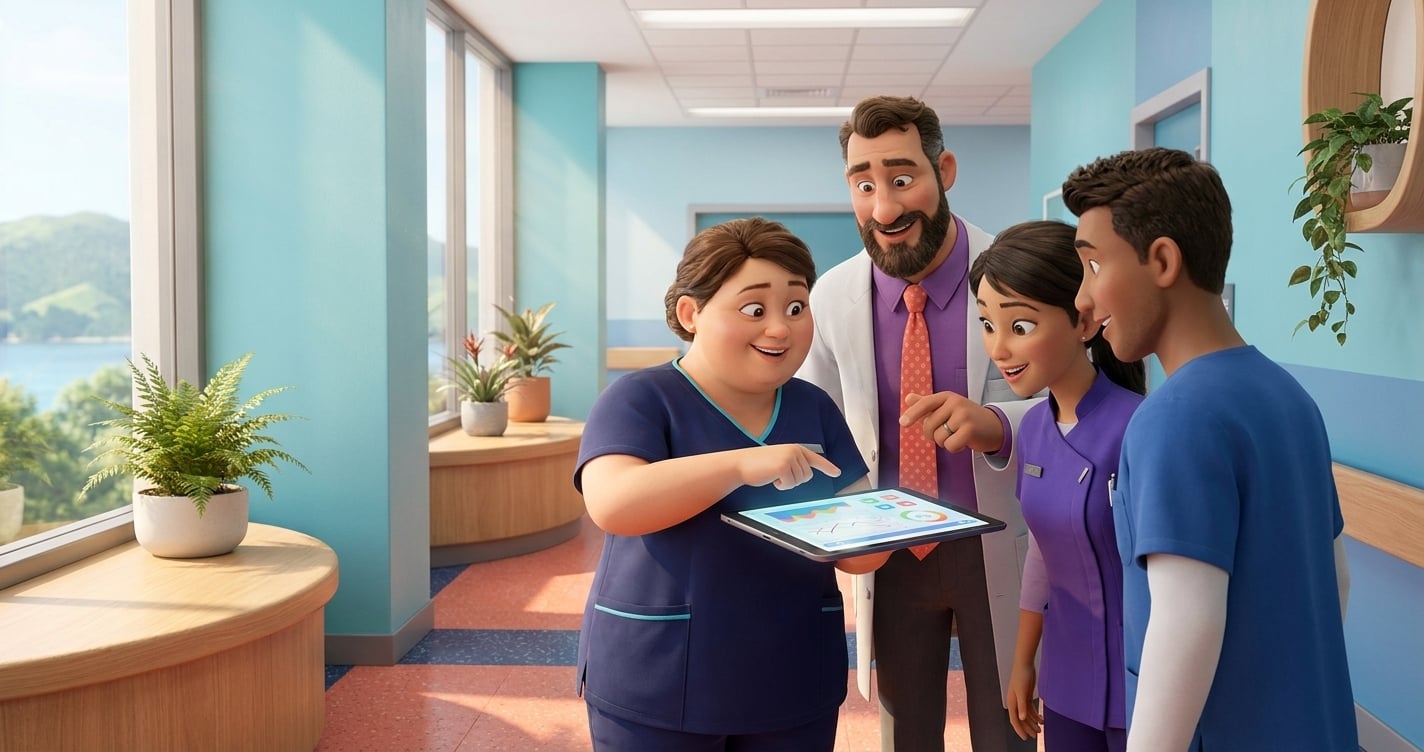
An assessment platform for healthcare in New Zealand evaluates both the clinical capabilities and the behavioural traits of candidates to ensure they can handle high-pressure medical environments.
By moving beyond standard resumes to measure work personality and cultural alignment, these platforms help clinics, hospitals, and care facilities hire staff who stay longer and perform better under stress.
Key takeaways
- Clinical skills alone do not predict how well a healthcare professional will cope with the emotional and physical demands of the job.
- Modern assessment tools measure behavioural traits and work personality to match candidates with the right care environments.
- Using a dedicated assessment platform for healthcare in New Zealand reduces early turnover by identifying candidates who naturally fit your team culture.
- Standardised testing removes unconscious bias from the hiring process, creating fairer opportunities for diverse medical talent.
Healthcare recruitment is notoriously difficult. Medical professionals face long hours, high emotional stakes, and intense physical demands. When you are hiring for a clinic, a hospital, or an aged care facility, finding someone with the right degree is only half the battle. You need to know if they have the bedside manner, the resilience, and the temperament to handle the reality of the work.
Traditional hiring methods rely heavily on CVs and brief interviews. A resume tells you where a nurse trained or what certifications a specialist holds. It does not tell you how they react when a patient is distressed, or how they communicate with a tired team at the end of a twelve-hour shift. This gap in information leads to poor hiring decisions, which ultimately results in high turnover and team burnout.
To fix this, medical facilities are changing how they evaluate talent. They are looking at the whole person, not just their paperwork. This is where a targeted assessment platform for healthcare in New Zealand becomes a practical necessity.
Every healthcare worker needs technical competence. A surgeon must know how to operate, and a nurse must know how to administer medication. But technical skills are a baseline requirement. What separates an average hire from an excellent one is their behaviour.
Behavioural assessments help you understand how a candidate naturally prefers to work. Some people are highly methodical and thrive on following strict procedures. Others are deeply empathetic and excel in roles that require constant emotional support. By assessing these traits before you make an offer, you can place people in roles where they will naturally succeed.
For example, many successful nurses and care workers share traits with The Helper work personality. They are empathetic, supportive, and focused on maintaining harmony within their teams. When using Compono Hire, managers can map these natural work preferences against the specific needs of a ward or clinic, ensuring the person has the right temperament for the role.
Turnover in the healthcare sector is expensive and disruptive. When a new hire leaves within their first six months, it places an enormous burden on the rest of the staff who have to cover the gaps. Often, these early exits happen because the reality of the workplace culture did not match the candidate's expectations, or their natural working style clashed with the team.
A good assessment process looks at cultural alignment alongside individual capability. It asks whether the candidate shares the core values of your facility. Do they prefer a highly structured environment, or do they need flexibility? Do they work best independently, or do they rely on close team collaboration?
Answering these questions early prevents mismatched expectations. Facilities that adopt an inside-out hiring framework for aged care and disability services often see a drop in staff turnover. They hire people who align with their core mission, resulting in teams that are more engaged and less likely to leave when things get tough.
Healthcare providers are almost always short-staffed. When a vacancy opens, there is immense pressure to fill it quickly. This urgency often leads to rushed interviews and skipped reference checks, which increases the risk of a bad hire.
An assessment platform for healthcare in New Zealand helps solve this speed-versus-quality problem. Instead of manually reviewing hundreds of applications to guess who might be a good fit, the platform automatically screens candidates based on the criteria you set. It evaluates their skills, qualifications, and organisational fit in the background.
This means your hiring managers only spend time interviewing candidates who have already proven they meet the baseline requirements for both technical ability and behavioural fit. It speeds up the time to hire while actually improving the quality of the people you bring into the organisation.
Unconscious bias affects every industry, and healthcare is no exception. Hiring managers naturally gravitate toward candidates who remind them of themselves, or who trained at familiar institutions. This limits the diversity of your medical teams and can cause you to overlook highly capable candidates.
Standardised assessments level the playing field. When every candidate takes the same behavioural and cognitive tests, you get objective data to compare. You are no longer relying on a "gut feeling" from an interview. You are making decisions based on measurable traits.
Diverse healthcare teams are better equipped to serve diverse patient populations. By using data to guide your hiring decisions, you build teams that bring different perspectives and problem-solving approaches to your clinic or hospital.
Applying these principles in a real medical environment yields noticeable results. When clinics shift their focus from purely technical hiring to a more rounded assessment approach, the entire team dynamic changes.
Staff members who are naturally suited to their roles experience less stress. They communicate better with their peers and provide a higher standard of care to patients. We see this consistently when medical practices adopt smarter hiring technology. As demonstrated when Beyond The Clinic enhances team performance, using data to understand how team members work together leads to better patient outcomes and a much happier workforce.
The goal is not just to fill a roster. The goal is to build a team of professionals who support each other, understand their patients, and have the resilience to handle the daily challenges of medical care.
If you are looking to implement a new system for your facility, you need to know what features actually matter. Not all platforms are built to handle the specific needs of the medical sector. Here are a few things to look for when making your choice.
First, look for a system that tests for more than just personality. A good platform must evaluate candidates across multiple dimensions. It should verify their hard skills and qualifications while also mapping their behavioural traits. A personality test alone is not enough to determine if someone is a safe and capable nurse.
Second, ensure the platform provides clear, actionable reports. Hiring managers in healthcare are busy people. They do not have time to read a twenty-page psychological profile for every candidate. The system should provide a clear summary of a candidate's strengths, potential blind spots, and how well they match the specific role you are filling.
Finally, consider the candidate experience. Healthcare professionals are in high demand. If your assessment process is too long, overly complicated, or poorly designed, good candidates will simply abandon their application and go to a competitor. The assessment should be engaging, relevant to the job, and respectful of the candidate's time.
Key insights
- An effective assessment platform for healthcare in New Zealand must evaluate both technical skills and behavioural tendencies.
- Hiring for work personality drastically reduces the risk of burnout and early turnover in high-stress medical environments.
- Automated screening helps healthcare providers fill urgent rosters faster without compromising on candidate quality.
- Objective data removes unconscious bias, helping clinics build diverse teams that better reflect the communities they serve.
Finding the right balance between clinical excellence and cultural fit doesn't have to be a guessing game. A structured approach to candidate evaluation helps you build medical teams that thrive under pressure.
It is a software system used during the hiring process to evaluate medical candidates. It tests their clinical qualifications, cognitive abilities, and behavioural traits to see if they are a good fit for a specific medical environment.
They help identify candidates who have the natural resilience, empathy, and communication skills required for patient care. This ensures you hire people who can handle the emotional demands of the job, not just the technical tasks.
Yes. By identifying candidates whose work preferences align with the reality of the role and the culture of the team, you reduce the chances of early burnout and culture clashes, which are the main drivers of turnover.
Absolutely. Aged care and disability services require staff with high levels of patience and empathy. Behavioural assessments are highly effective at identifying these specific traits in candidates before you make a hiring decision.
While taking the assessment adds a step for the candidate, it actually speeds up the overall process for the hiring manager. The platform automatically filters out unsuitable applicants, so managers only spend time interviewing the best fits.
Support work asks for patience under pressure. Here is how culture fit hiring finds people who hold up in the role and share how your team works.
Psychometric hiring uses behavioural data to judge fit for a role. What it measures, where it helps, and how to start without overcomplicating it.
What makes an assessment defensible, the evidence to keep, and how to compare assessment software so your hiring decisions stand up.