

.webp)

 Compono


1 min read
Best approach to hiring in community and private hospitals
 Compono
The best approach to hiring in community and private hospitals requires a dual focus on clinical competency and cultural alignment to mitigate...

Yes, an ATS can actually improve hiring outcomes, but only if it does more than just store resumes.
When used as an intelligence tool rather than a digital filing cabinet, an applicant tracking system reduces human bias and accurately assesses team fit.
Key takeaways
- An ATS improves hiring outcomes by standardising the evaluation process and reducing unconscious bias.
- Modern systems assess candidates on more than just their CV, factoring in work personality and organisational fit.
- Automating administrative tasks gives hiring managers more time to focus on meaningful candidate interactions.
- A smart ATS shortens time-to-hire while simultaneously increasing the quality of the people you bring on board.
If you are still managing recruitment through a shared inbox and a messy spreadsheet, you already know the pain of manual hiring. The sheer volume of applications can easily overwhelm a small HR team. When you have hundreds of CVs to review, human fatigue sets in quickly. You start scanning documents for keywords rather than reading them for context.
This manual approach leads to inconsistent decision-making. A candidate reviewed at 9:00 AM on a Tuesday might get a thorough evaluation. A candidate reviewed at 4:30 PM on a Friday might get a five-second glance. This inconsistency is exactly why so many businesses struggle with high turnover rates and poor team alignment.
The core issue is that manual screening relies heavily on the traditional CV. We know that a CV is just a marketing document. It tells you what a person has done in the past, but it tells you very little about how they will behave in your specific work environment. Relying solely on these documents is a gamble, and it is a gamble that often results in bad hires.
People often ask if software can fix a human problem. The answer depends entirely on how the software is built and how you use it.
Many companies buy an applicant tracking system expecting an immediate change in their hiring quality, only to be disappointed. The problem usually stems from treating the platform like a digital filing cabinet. If you simply use an ATS to collect PDFs and move names from one column to another, you are just organising your existing flawed process.
To actually improve hiring outcomes, an ATS needs to act as a system of intelligence. It should help you parse data, highlight behavioural traits, and surface the candidates who are most likely to succeed in your specific environment. It shifts the focus from managing paperwork to analysing people.
A smart ATS changes the workflow entirely. Instead of reading every single cover letter to guess if someone has the right attitude, the system uses structured assessments to gather objective data upfront. This means your hiring managers spend their time talking to candidates who have already demonstrated the right baseline characteristics for the role.
When you stop using software just to store files and start using it to gather insights, the quality of your shortlists improves dramatically. You spend less time interviewing people who look great on paper but lack the practical skills or cultural alignment your team needs.
One of the biggest threats to a successful hire is unstructured evaluation. When three different managers interview a candidate and use three different sets of criteria to judge them, the final decision usually comes down to gut feeling. Gut feelings are notoriously unreliable and heavily influenced by unconscious bias.
An ATS improves outcomes by forcing a level of standardisation across your entire hiring team. When you set up a role in a modern system, you define the exact criteria required for success before you even look at an application. Every candidate is then measured against that same baseline.
This structured approach is the most effective way to choose an ATS that reduces hiring bias. If a candidate scores highly on the objective criteria, they move forward. If a hiring manager wants to reject a high-scoring candidate, the system forces them to articulate a business reason rather than relying on a vague sense that the person "just wasn't a culture fit".
Standardisation also creates a fairer experience for the candidates. Everyone gets the same opportunity to demonstrate their capability, regardless of where they went to university or how well they formatted their resume. When you create a fair, objective playing field, you naturally surface better talent.
Skills can be taught, but behavioural preferences are much harder to change. A major reason new hires fail is that they lack the right work personality for the specific environment they are entering. A candidate might have ten years of experience in sales, but if they prefer highly structured, quiet environments, they will likely fail in a chaotic, fast-paced startup.
This is where a sophisticated ATS proves its worth. Rather than just tracking applications, it integrates behavioural science and psychometrics directly into the application process. You get a complete picture of the person before you even pick up the phone for a screening call.
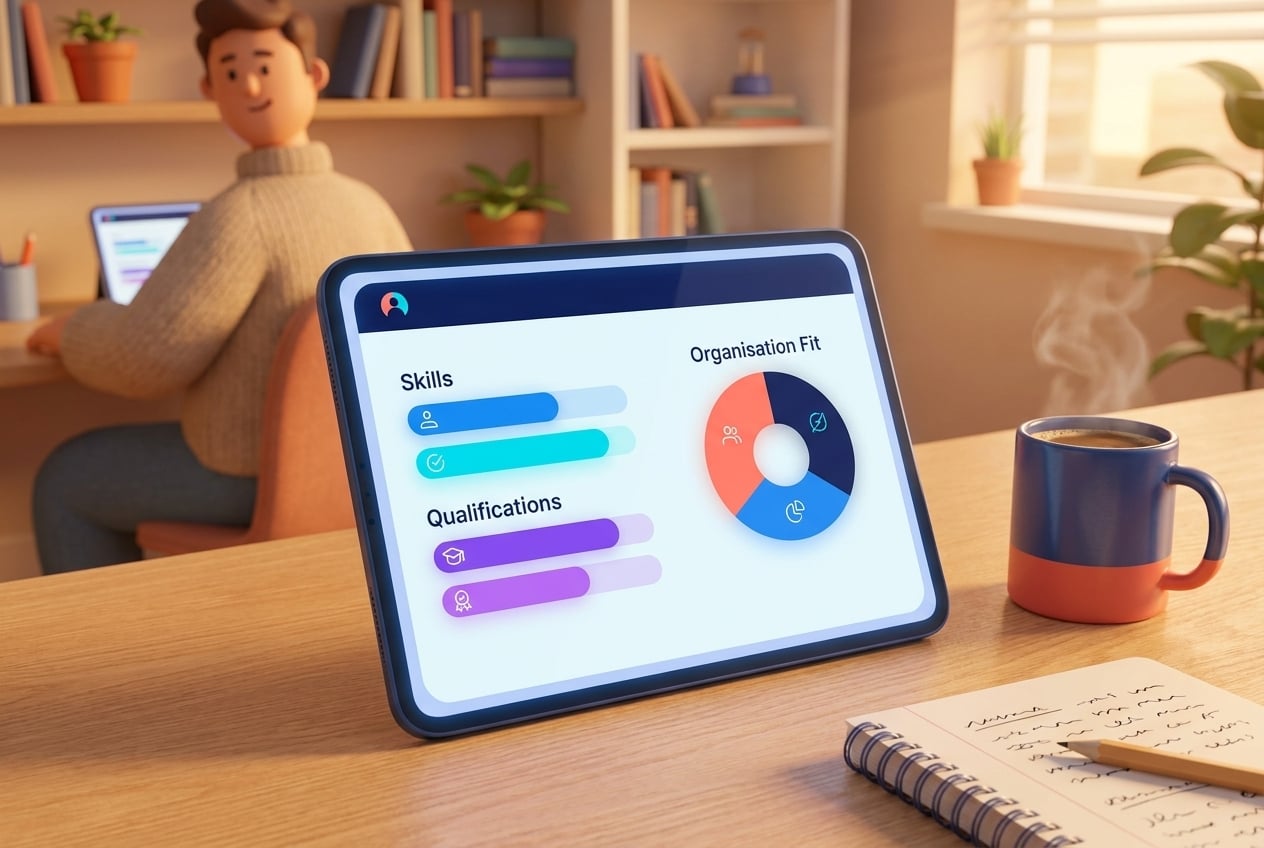
For example, Compono Hire evaluates people across three distinct dimensions. It looks at Organisation Fit, Skills, and Qualifications. By assessing these elements automatically, the platform gives you a clear, objective score for every applicant. You can read more about how Compono Hire assesses candidates to see exactly how this multi-layered approach works in practice.
When you assess the whole candidate, you drastically reduce the risk of a bad hire. You stop guessing about culture fit and start making decisions based on validated behavioural data. This directly translates to higher retention rates and better team performance down the line.
There is a persistent myth in recruitment that hiring fast means hiring poorly. The assumption is that if you speed up the process, you must be skipping important evaluation steps. A well-configured ATS proves this assumption wrong.
An ATS improves hiring outcomes by automating the heavy administrative lifting that usually slows down recruitment. Tasks like sending acknowledgment emails, scheduling interviews, and progressing candidates through different stages can all happen automatically. This keeps candidates engaged and prevents top talent from abandoning your process out of frustration.
Because the system handles the admin, your HR team and hiring managers have more time to focus on the human elements of recruitment. You can spend longer in interviews, ask better questions, and have deeper discussions about team dynamics. You are moving faster through the pipeline, but you are actually spending more quality time evaluating the things that matter.
When you combine automated admin with objective, data-driven candidate scoring, you get the best of both worlds. You fill open roles quickly, reducing the strain on your existing team, and you bring in people who are genuinely equipped to succeed.
Key insights
- Treating an ATS as a simple digital filing cabinet will not improve your hiring outcomes.
- Standardised evaluation criteria significantly reduce the impact of unconscious bias in recruitment.
- The best hiring decisions are made when you assess a candidate's behavioural traits alongside their technical skills.
- Automating administrative tasks allows hiring managers to spend more time on meaningful candidate evaluation.
If you want to move beyond a basic digital filing cabinet and start making smarter hiring decisions based on objective data, it might be time to look at a platform built for modern teams.
A basic ATS that only scans for keywords can sometimes reject good candidates if their CV doesn't perfectly match the job description. However, a modern ATS that uses behavioural assessments and psychometrics evaluates the whole person, making it much less likely to miss out on great talent just because of a poorly formatted resume.
You will typically notice administrative time savings within the first few weeks of implementation. Improvements in hire quality and retention usually become apparent after three to six months, once your new hires have passed their probation periods and integrated into their teams.
Yes. Small businesses often feel the impact of a bad hire much more severely than large corporations. An ATS helps small teams punch above their weight by automating admin tasks and providing access to enterprise-grade assessment tools, ensuring every new hire is a strong fit for the business.
An Applicant Tracking System (ATS) is specifically designed to manage the recruitment process, from posting a job ad to making an offer. A Human Resource Information System (HRIS) manages employee data after they have been hired, handling things like payroll, leave, and performance reviews. Many companies integrate the two systems to share data easily.
Candidates only hate using an ATS if the application process is overly complicated or requires them to manually re-type their entire work history. A well-designed ATS actually improves the candidate experience by making it easy to apply and keeping them updated on their progress through automated communication.

1 min read
The best approach to hiring in community and private hospitals requires a dual focus on clinical competency and cultural alignment to mitigate...

1 min read
The most credible Lever alternatives in 2026 are Compono, Greenhouse, SmartRecruiters, Workable and Ashby. Lever remains a capable ATS with a clean...

1 min read
To reduce time to hire effectively, you must identify and remove bottlenecks in your screening and interview stages while using data to predict...
 Mathan Allington