

 Mathan Allington
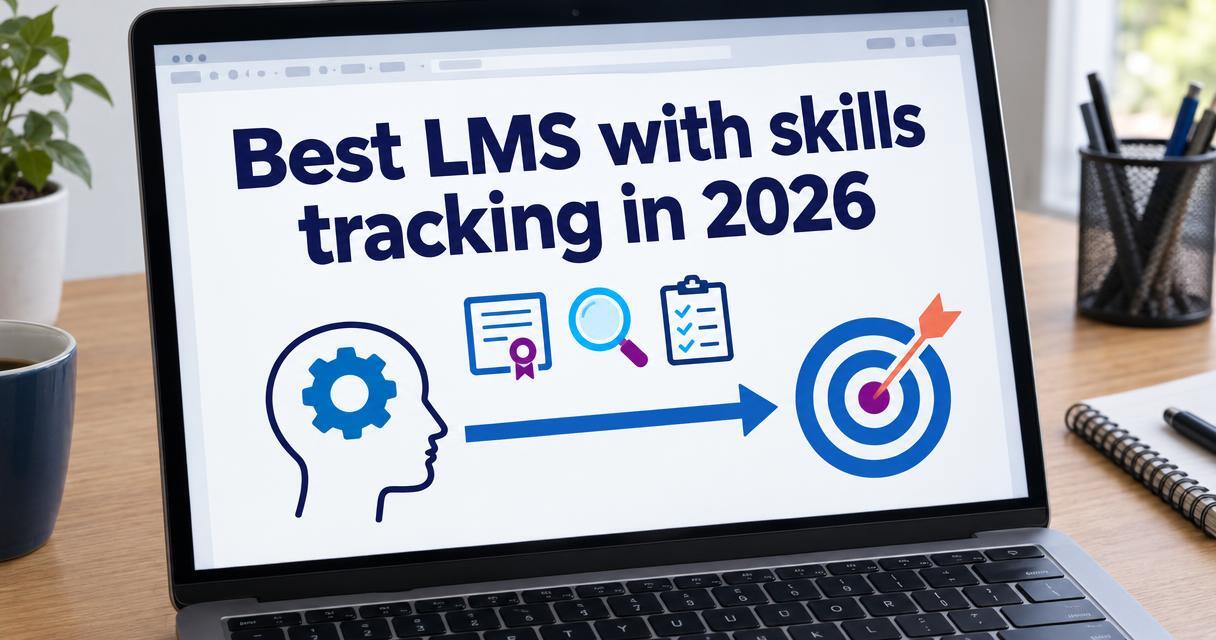
An LMS with skills tracking moves your focus from counting course completions to measuring actual workforce capability.
Last reviewed November 2026
Quick answer
- Price: Mid-market platforms typically range from $4 to $12 per user per month.
- Best for: HR and L&D leaders who need to prove that training actually closes capability gaps.
- Verdict: Compono Develop leads the category for mid-market teams by combining compliance tracking with changing competency frameworks that prove skill mastery.
The problem with tracking completions instead of capability
Most HR technology manages process risk well. You can see who logged into the portal, who clicked through the slides and who passed the final multiple-choice quiz. But process compliance is not the same as people insight. When you rely solely on course completions, you assume that watching a video equals mastering a skill.
This incomplete picture leaves your business exposed. You only discover your capability gaps when a project stalls, a machine breaks or a critical safety error occurs. Research from Deloitte and Workday shows that 55% of business leaders said in 2024 that their organisation had begun transitioning to a skills-based talent model. They understand that tracking what people can actually do is far more valuable than tracking what they have watched.
Yet the tools lag behind the strategy. We need to separate the act of learning from the evidence of capability. A traditional learning management system tracks the former. An LMS with skills tracking measures the latter.
Core capabilities of a skills-based LMS
If a site manager completes a safety module, traditional reporting marks them as compliant. This satisfies the auditors. But if that same manager cannot identify a hazard on site, they lack the capability required for the role. Capability gaps are rarely training gaps. They are the result of systems that track completion but ignore what people actually need to perform.
According to Mercer, 68% of organisations have started their skills journey and established methods to track and manage skills. However, many still rely on static spreadsheets or disconnected databases. You need a platform that connects learning content directly to your organisational competency frameworks. This ensures every module completed translates into a verified skill on an employee profile.
Competency frameworks and skill tagging
Your platform must allow you to build custom competency frameworks that reflect your unique operating environment. Every piece of learning content should carry a skill tag. When an employee completes a leadership module, the system should automatically update their profile with a specific leadership competency at the appropriate proficiency level.
Real-time skill verification
A quiz proves memory, not mastery. The best systems incorporate observational assessments and practical verifications. Managers should be able to observe an employee performing a task on the floor and verify the skill directly in the system via a mobile device. This shifts the evidence from theoretical knowledge to practical application.
How to build a changing skills matrix in your LMS
A skills matrix is the foundation of any skills-based learning strategy. When integrated into your learning platform, it stops being a static document and becomes a real-time dashboard of your workforce capability. Mercer notes that 38% of organisations still map skills manually within learning and development processes. Automating this process saves administrative time and provides instant visibility into your vulnerabilities.
Step 1: Define core competencies by role
Start with the non-negotiable skills required for each role. Group related courses under a single skill to give a clearer picture of progression. For example, a data analysis skill might require verified capability in SQL, Python and data visualisation software. Do not overcomplicate this stage. Focus on the five to ten critical skills that actually drive performance in a specific role.
Step 2: Map your proficiency levels
Not every role needs expert-level proficiency in every skill. Define what basic, intermediate and advanced mastery looks like in practice. You can then configure your LMS to award specific proficiency levels based on the type of assessment completed. A multiple-choice quiz might grant a basic level, while a peer-reviewed practical assessment grants advanced status.
Step 3: Distinguish between soft and technical skills
Tracking a forklift certification is entirely different from tracking conflict resolution skills. Technical skills often require strict compliance pathways, formal assessments and expiry dates. Soft skills require qualitative feedback, scenario-based learning and continuous coaching. Configure your skills matrix to handle both types of evidence appropriately.
Industry-specific skills tracking templates
Different industries require vastly different approaches to tracking capability. Applying a generic framework rarely yields the insights business leaders need to make strategic decisions.
Healthcare and clinical settings
In healthcare, compliance and capability are tightly bound. A skills matrix must map patient care protocols, medical device operation and bedside manner. The tracking system needs strict expiry dates for certifications and must support on-the-ward observational assessments by senior clinicians. A lapsed skill in this environment presents a severe operational risk.
Manufacturing and logistics
Manufacturing matrices focus heavily on safety compliance, heavy machinery operation and quality control processes. The LMS needs to handle shift-based workforces who may not have regular access to desktop computers. Skill verification often happens on the factory floor, meaning the system must support mobile, manager-led assessments that instantly update the central database.
Technology and professional services
For knowledge workers, skills tracking revolves around programming languages, project management methodologies and client communication. These skills evolve rapidly. The matrix must be flexible enough to add emerging technical capabilities without rebuilding the entire framework from scratch. Here, peer-reviewed code or successful project delivery often serves as the verification method.
The best LMS with skills tracking in 2026
Selecting the right platform means finding one that handles both the process of delivering training and the insight of measuring capability. Here is how the top platforms compare for mid-market organisations.
- Compono Develop
- TalentLMS
- Foundation OnDemand
- Moodle
Compono Develop
- Price: Custom pricing based on active users and required modules.
- Best for: Mid-market organisations that need to track both compliance and verified capability in one place.
- Limits: Built for mid-market and enterprise teams, so very small businesses might find it too comprehensive for basic needs.
Compono Develop is an LMS that builds capability rather than just tracking completion rates. It combines standard onboarding and compliance features with deep competency and credentialling expertise. Instead of spending days taking new hires through endless in-person sessions, you centralise tailored learning paths, in-person assessments and specific activity tasks.
The platform proves its value in high-stakes environments. For instance, the Department of Transport Victoria saved $34 million in operational costs over two years using our digital licensing and assessment technology. It currently holds a 4.7 out of 5 rating across millions of learners.
TalentLMS
- Price: Starts at $69 per month for up to 40 users (billed annually).
- Best for: Small teams looking for an accessible entry point into learning management.
- Limits: Skills tracking features are less granular for complex competency frameworks.
TalentLMS provides a straightforward interface that helps smaller teams get their training programs off the ground quickly. It allows administrators to assign skills to specific courses and generate basic reports on who holds what capability. While it handles simple tracking well, organisations with deep competency matrices often outgrow its reporting constraints.
Foundation OnDemand
- Price: Pricing on request.
- Best for: Large global enterprises with dedicated system administrators.
- Limits: Implementation timelines are long and the interface can overwhelm mid-market HR teams.
Foundation offers extensive talent management architecture. Its skills tracking connects deeply with performance and succession planning modules. The platform uses AI to infer skills and recommend learning paths based on complex organisational data. However, this complexity requires significant administrative overhead to maintain.
Moodle
- Price: Open-source version is free; hosted Moodle Workplace pricing on request.
- Best for: Academic institutions and organisations with in-house development teams.
- Limits: Requires heavy customisation to build out a modern corporate skills matrix.
Moodle remains a highly flexible option due to its open-source nature. You can build exactly the skills tracking architecture you need, provided you have the technical resources to code and maintain it. For corporate environments without a dedicated IT team, configuring the competency frameworks often proves too demanding.
LMS with skills tracking comparison
| Platform | Best for | Skills tracking depth |
|---|---|---|
| Compono Develop | Mid-market teams needing verified capability and compliance | High (integrates with custom competency matrices) |
| TalentLMS | Small businesses needing basic tracking | Basic (tags skills to courses) |
| Foundation OnDemand | Large enterprises with complex talent architecture | High (AI-driven skill inference) |
| Moodle | Academic or highly technical teams | Variable (depends on custom development) |
Compono makes Compono Develop. We have included it and kept every entry's strengths and limits honest.
Integrating skills data across your HR technology stack
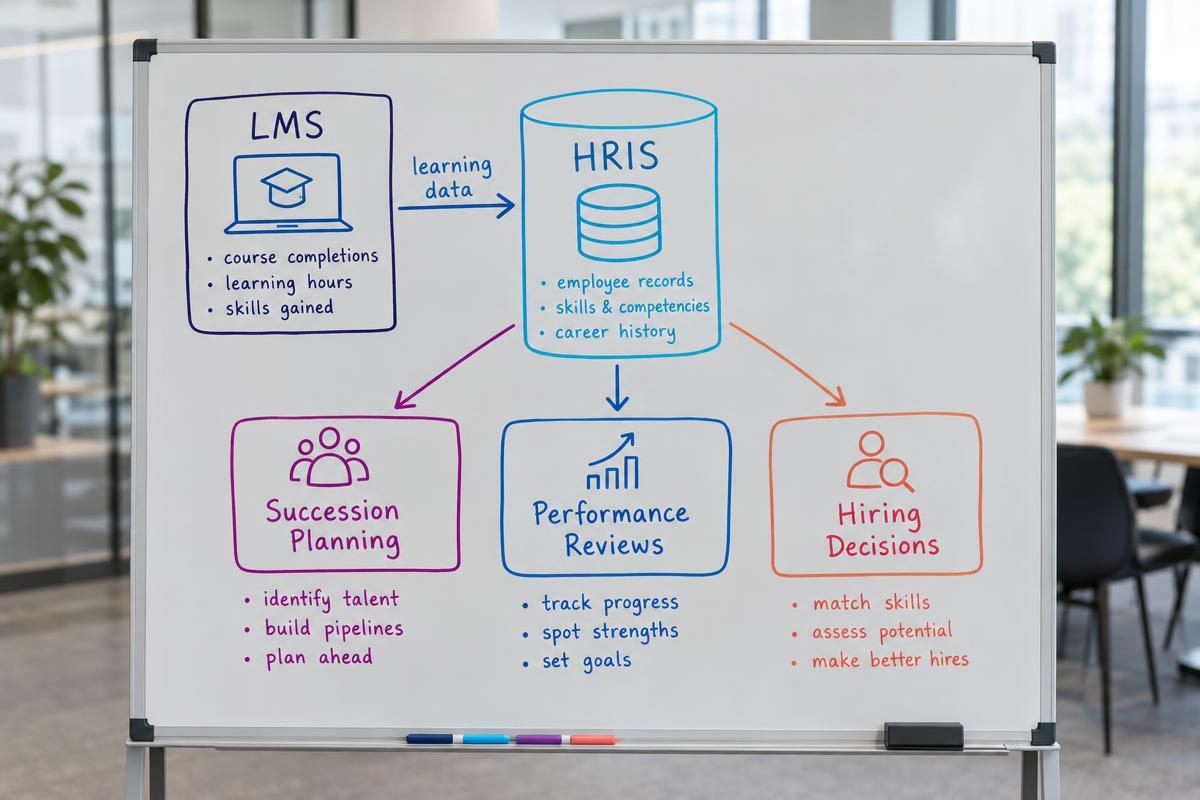
An LMS should never operate in a silo. When you isolate learning data, you miss the opportunity to use skills insights in hiring, performance reviews and succession planning. A Gartner report cited by 365Talents found that only 2% of 80 surveyed HR leaders had adopted skills-based approaches across all HR processes. This highlights a massive gap between having the data and actually using it to drive business outcomes.
Your platform needs to integrate with your broader human resources information system. When an employee completes a critical certification or passes a practical capability assessment, that verified skill must immediately update their central profile. This ensures managers assigning project work always see accurate, real-time capability data.
Proper integration means your training data works harder for you. It allows you to build a learning set of tools that scales as your organisation grows. For a deeper look at regional options that support this level of connectivity, review our guides to the best LMS providers in Australia and the top platforms for New Zealand teams.
How generative AI changes skills tracking
Modern learning platforms are beginning to use generative AI to simplify the administrative burden of skills management. Instead of HR teams manually mapping every new course to a competency framework, AI can scan the content and automatically suggest the relevant skills and proficiency levels.
AI also helps infer skills from user behaviour and job roles. If an employee consistently performs well in advanced project management simulations, the system can infer a high level of leadership capability and suggest a personalised learning pathway for their next promotion. This changing mapping ensures your skills matrix evolves alongside market demands without requiring constant manual updates.
Measuring the ROI of a skills-based strategy
Traditional learning metrics focus on seat time, completion rates and satisfaction scores. These metrics tell you that training happened, but they do not tell you if the business improved. You must measure return on investment by looking directly at closed capability gaps.
Start by baselining your current workforce skills using your reporting dashboards. Identify the specific capabilities required to launch a new product, enter a new market or improve a site safety record. Deploy targeted learning paths and track the acquisition of those specific skills. The ROI is the measurable improvement in business performance linked to that newly acquired capability.
When you run a corporate LMS effectively, you shift the conversation from course completions to risk mitigation. You stop asking how many people finished a module and start asking how much capability you gained this quarter. This is the difference between managing a process and gaining true people insight.
How Compono can help with skills tracking
Compono Develop helps you track compliance and build real capability in one central platform. You get the tools to map competencies, verify practical skills and prove that your training actually closes capability gaps across your organisation.
Frequently asked questions
What is an LMS with skills tracking?
An LMS with skills tracking is a learning platform that goes beyond counting course completions to measure and verify actual employee capabilities. It links learning content directly to organisational competency frameworks, giving you a real-time view of what your workforce can actually do.
How does a skills matrix work inside an LMS?
A skills matrix inside an LMS maps the critical competencies required for each role against the current proficiency levels of your employees. When staff complete targeted training or pass observational assessments, the LMS automatically updates the matrix, removing the need for manual spreadsheet tracking.
Why is skill verification better than course completion?
Course completion only proves that an employee watched a video or clicked through a presentation. Skill verification uses practical assessments, peer reviews and on-the-job observation to prove that the employee can actually apply the knowledge in a real-world setting.
Can an LMS track soft skills as well as technical certifications?
Yes. While technical skills are often tracked through formal compliance pathways and multiple-choice tests, a reliable LMS can track soft skills through scenario-based learning, qualitative manager feedback and observational assessments.
How do you measure the success of skills-based learning?
You measure success by tracking the reduction in capability gaps rather than total hours spent learning. Success is defined by improved business performance, fewer safety incidents and smoother project delivery as a direct result of verified skills acquisition.