


 Mathan Allington

15+ Best 15Five Alternatives and Competitors for Modern Teams (2026)
 Mathan Allington
15Five lists Engage at US$4, Perform at US$11 and Total Platform at US$16 per user a month. 15 competitors compared, with prices for the top five.

Finding the right Leapsome alternative in 2026 comes down to deciding whether you want another performance tracking tool or a platform that connects culture, engagement, and actual business outcomes.
Last reviewed October 2026
Quick answer
- Price: From $4 to $14 or more per user per month across major platforms.
- Best for: Mid-market HR teams moving beyond transactional check-ins and survey fatigue.
- Verdict: Compono Engage leads for connecting behavioural insights to performance, while tools like Lattice and Culture Amp suit organisations needing traditional OKR tracking and engagement surveys.
Leapsome has a strong reputation in the HR software space. In fact, Leapsome has a 4.8 out of 5 rating on G2 based on more than 2,500 reviews, according to Pulsewise. The platform covers performance reviews, goal setting, employee surveys, and learning management. This broad feature set appeals to growing companies looking for a single system of record for talent management.
Many HR leaders find that broad platforms create their own complications as organisations scale. A tool built to do everything often requires heavy administration to do anything well. Mid-market teams with 60 to 1,000 employees start experiencing platform fatigue. Managers spend hours working through complex calibration cycles, and employees ignore weekly pulse surveys because they see no resulting action.
The total cost of ownership also shifts as you grow. Entry-level pricing quickly escalates when you add multiple modules for 360-degree reviews, advanced analytics, and OKR tracking. Decision-makers in 2026 are evaluating whether they are paying for features their teams actually use. They want software that provides clear answers about team culture and performance risk, rather than just delivering more dashboards to interpret.
We looked at the major players in the performance and engagement category to see how they serve modern mid-market teams. A viable alternative needs to handle process risk by managing review cycles securely. It also needs to handle people insight risk by showing you where engagement is dropping before your best people leave.
We evaluated these platforms based on pricing transparency, user experience for frontline managers, integration capabilities with regional payroll systems, and their approach to data privacy. We also examined whether they rely entirely on self-reported surveys or incorporate broader behavioural signals to measure workplace culture.
Most engagement platforms tell you how people feel on a Tuesday. Compono Engage tells you why they feel that way and what to do about it. Built on decades of psychometric research, this platform measures 12 validated culture dimensions to give you a true picture of your workforce. It connects the dots between who your people are, how they fit the culture, and what drives their performance.
Where traditional tools manage the process of sending surveys, Compono Engage provides actionable insights that reduce turnover. Teams using Compono's approach to hiring and engagement regularly see 8% or lower turnover, proving that understanding people insight risk directly impacts the short answer. The platform integrates easily with your existing HRIS, giving you the "Both/And" advantage. You keep your necessary compliance workflows while gaining the behavioural intelligence missing from traditional systems.
Lattice is a major player in the performance management category. It excels at cascading goals from the executive team down to individual contributors. The software provides extensive customisation for 360-degree reviews, compensation management, and career progression paths.
This depth comes with a heavy administrative burden. Setting up the platform requires significant time and dedicated resources. If you are comparing Lattice alternatives, you must factor in the implementation time and the continuous management required to keep the OKR structures aligned with business changes.
15Five built its reputation on the concept of taking 15 minutes to write a weekly report and five minutes to read it. The platform is excellent for driving continuous conversations between managers and direct reports. It includes tools for one-on-one meetings, objective tracking, and peer recognition.
The challenge with 15Five is sustaining participation. When employees are required to submit weekly updates, the quality of feedback often declines over time. HR leaders evaluating 15Five competitors often look for systems that require less manual data entry while still providing strong managerial insights.
Culture Amp is highly respected for its survey design and industry benchmarking capabilities. The platform provides access to a massive database of questions, allowing HR teams to compare their engagement scores against global industry standards. It also handles performance reviews and goal tracking.
The main drawback is the reliance on sentiment analysis. Surveys capture a point in time, and interpreting the resulting data requires significant HR expertise. If you want a platform that offers practical next steps based on culture dimensions rather than just a dashboard of survey results, you might find Culture Amp too analytical for daily managerial use.
Workleap, formerly known as Officevibe, is designed to be frictionless for the end user. It sends short, automated surveys to employees and compiles the results into easy-to-read reports for managers. The interface is clean, and the peer recognition features help build positive team changing.
While Workleap is excellent for basic engagement tracking, it struggles to support complex performance management requirements. Mid-market companies often outgrow the platform when they need rigorous 360-degree review cycles or deep talent mapping.
PerformYard is built for flexibility. If you have a highly specific performance management process on paper and simply want to move it online, PerformYard allows you to replicate your exact workflows. The system adapts to your business rules rather than forcing you into a proprietary methodology.
This flexibility is also a weakness for teams looking for strategic guidance. PerformYard provides the software infrastructure but does not offer the behavioural science or culture models needed to actually improve team performance. It manages the process risk effectively but leaves the people insight risk entirely up to you.
Small Improvements lives up to its name by providing a focused, uncluttered platform for performance reviews and ongoing feedback. It is highly affordable and easy to deploy, making it a popular choice for young companies moving away from manual spreadsheets.
The platform intentionally avoids complex OKR tracking or deep analytics. Once an organisation scales past 100 employees, the need for reliable reporting, calibration, and culture measurement usually pushes them to seek a more comprehensive enterprise solution.
| Platform | Core Strength | Pricing Model | Best For |
|---|---|---|---|
| Compono Engage | Behavioural science and 12 culture dimensions | Pricing on request | Mid-market teams connecting culture to performance |
| Lattice | Deep OKRs and goal hierarchies | From $11 per user per month | Large enterprises needing complex goal tracking |
| 15Five | Continuous manager coaching | From $4 per user per month (Engage) | Teams focused on frequent weekly feedback |
| Culture Amp | Industry benchmarking and surveys | $9 to $14 per user per month | Organisations wanting traditional engagement metrics |
| Workleap | Automated pulse surveys | From $5 per user per month | Teams needing a simple, frictionless interface |
Compono makes Compono Engage. We've included it and kept every entry's strengths and limits honest.
Evaluating software based solely on the advertised entry price is a common mistake. A platform quoting $5 per user per month rarely stays at that price once you roll it out completely. Software vendors often segment their products into distinct modules for performance reviews, goal tracking, engagement surveys, and compensation planning. You might start with a low base rate, only to see your invoice triple when you add the modules your HR team actually needs.
Implementation fees also add to the total cost of ownership. Some platforms require you to hire certified consultants or pay premium support tiers just to set up your initial review cycles. When choosing an employee engagement platform, ask for a clear calculation that includes all necessary modules, integration costs, and ongoing support fees for a three-year term.
Your performance management software needs to live where your employees already work. The battle between Microsoft 365 and Google Workspace dictates how seamlessly a new platform will be adopted. If your company operates entirely in Microsoft Teams, starting a tool that only offers deep integration with Slack will create immediate friction. Employees ignore notifications that force them to log into a separate portal.
Some newer vendors are addressing this directly. For instance, Teamspective supports native survey completion directly inside Slack and Microsoft Teams, ensuring higher response rates by removing the need for a separate login. Peoplebox is positioned around OKRs, performance reviews, calibration, and compensation in one platform, integrating deeply with existing daily workflows, according to Peoplebox. Assess your chosen alternative by how well it respects your current set of tools.
The traditional approach to employee engagement relies entirely on asking people how they feel. This self-reported data is valuable, but it is heavily influenced by timing, mood, and survey fatigue. Employees learn how to answer surveys to avoid triggering follow-up meetings with human resources. This results in green dashboards that hide underlying cultural decay.
Modern HR teams are shifting toward platforms that measure actual behavioural drivers and validated culture dimensions. Instead of just asking if someone is happy, these tools map the underlying work personalities and team changing. This provides a more accurate, predictive view of team health, allowing you to intervene before your top performers start updating their resumes.
Data sovereignty is a critical evaluation point for global teams. If you operate in Europe or have employees based there, GDPR compliance is non-negotiable. Many North American software providers store data exclusively on US servers, which can violate regional privacy laws. You must verify where the alternative platform hosts its data and whether it offers specific regional server options.
Compliance extends to your payroll and HRIS integrations. A platform might boast 50 integrations, but if none of them connect to your specific Australian or European payroll system, your HR team will be stuck doing manual data entry. Demand a live demonstration of the exact integration you intend to use before signing a contract.
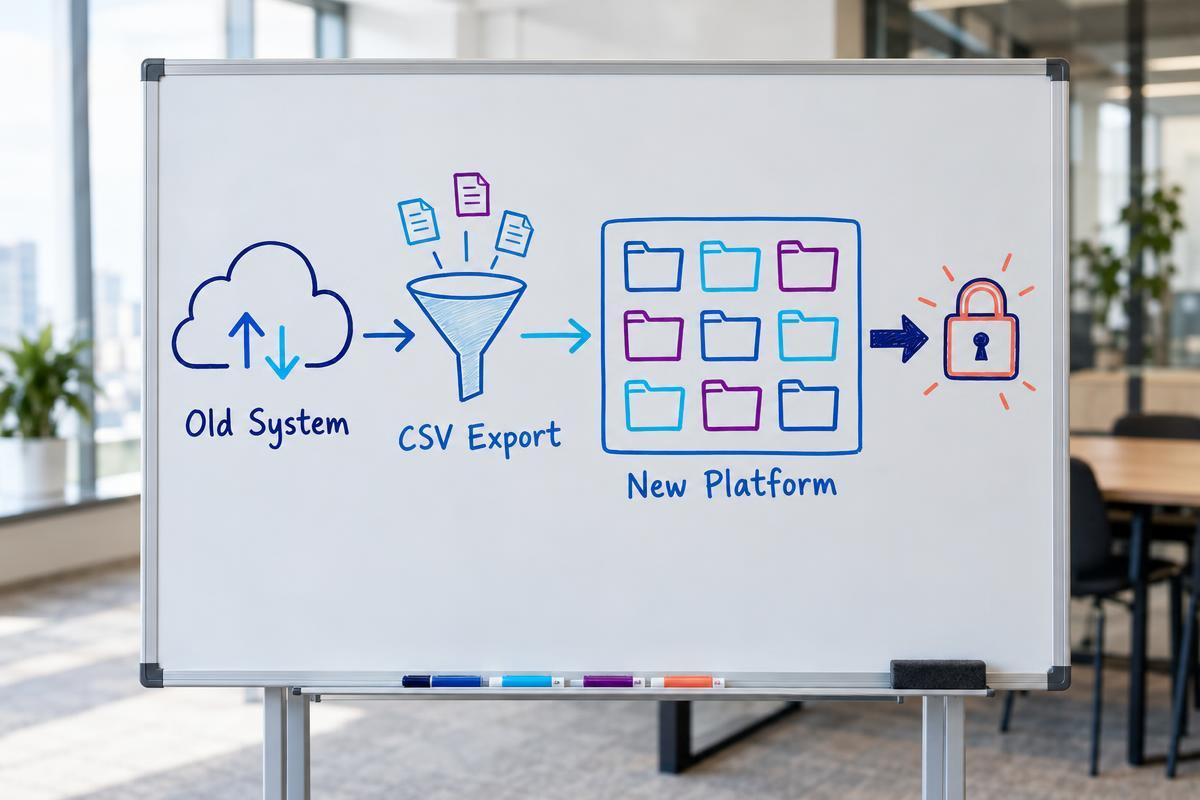
Switching performance management platforms is a major project. Historical review data is highly sensitive and critical for ongoing compensation decisions. A poorly executed migration frustrates managers and destroys trust in the new system. Follow a structured playbook to ensure a smooth transition.
First, secure your historical data. Export all past performance reviews, goal histories, and survey results in a flat CSV format before your current contract expires. Second, map your competencies. The new platform will likely use a different framework for assessing skills, so you must align your old rating scales to the new system. Finally, run a pilot program with a single department before rolling the software out company-wide. This allows you to identify integration issues with your tech stack before they impact the entire organisation.
If your current platform only manages the process of sending surveys, you are missing the insights needed to build a resilient culture. Compono Engage provides the behavioural science and culture mapping required to understand your team and make defensible talent decisions.
Companies typically look for alternatives when they outgrow the platform's features, experience survey fatigue, or find the administrative burden too high. Mid-market teams often want deeper behavioural insights rather than just more dashboards tracking self-reported sentiment.
Migration requires careful planning, but most modern platforms provide CSV import tools. The challenge lies in mapping historical rating scales and competencies to the new software's framework. Exporting your data well before your current contract ends is the safest approach.
Most vendors charge a per-user, per-month subscription fee. This base price often covers only core features. Advanced modules like 360-degree reviews, compensation planning, and detailed analytics are usually sold as add-ons, which increases the total cost of ownership significantly.
Yes, major alternatives offer integrations with popular HRIS and payroll systems. However, you must verify that they support your specific regional software, especially if you operate outside of North America. Always ask to see the integration working during a product demonstration.
Pulse surveys capture an employee's immediate mood and sentiment at a specific point in time. Culture assessment, like the 12 dimensions used by Compono Engage, evaluates the underlying behaviours, values, and psychological safety of the team. Culture data predicts long-term performance, while pulse surveys only reflect current satisfaction.

15Five lists Engage at US$4, Perform at US$11 and Total Platform at US$16 per user a month. 15 competitors compared, with prices for the top five.

Lattice lists Performance at US$10 a seat, US$4,000 minimum, and has dropped its HRIS. Six competitors compared on price and fit, Leapsome to...

A side by side look at 15Five, Lattice, Qualtrics and Compono for engagement and culture work, with what each one is genuinely good at.