

.webp)

 Mathan Allington


Licence vs certification vs Credential
 Mathan Allington
Learn the exact difference between a licence, a certification, and a credential to protect your business from compliance risks. Discover how to...
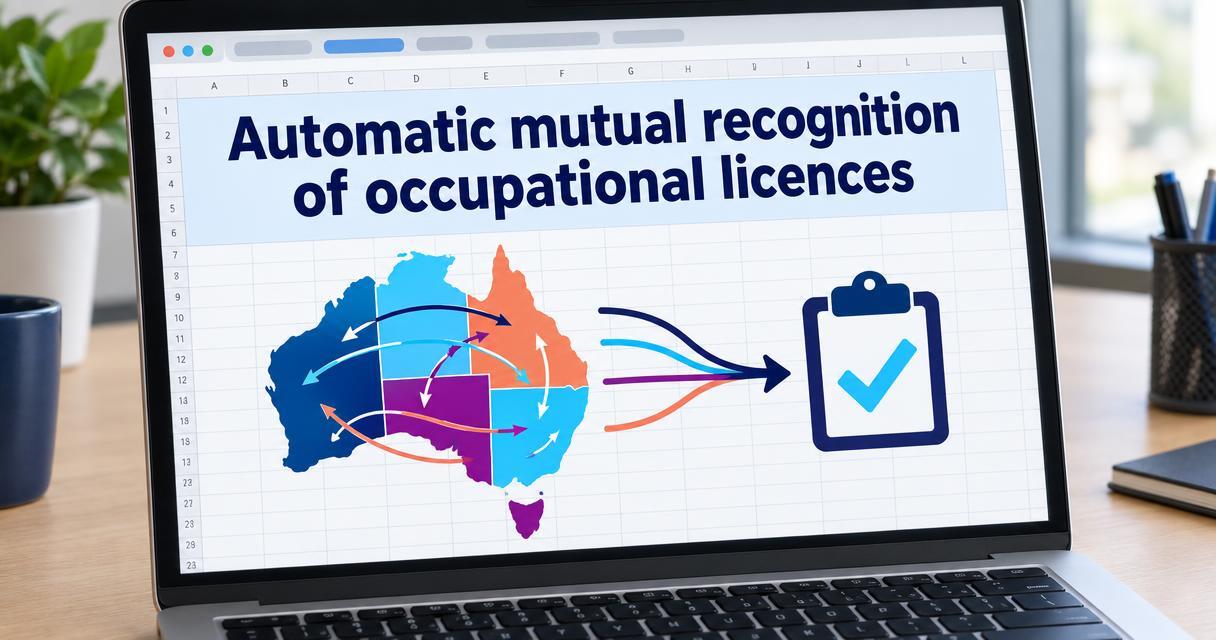
Automatic mutual recognition of occupational licences allows licensed workers to perform their jobs in participating Australian states and territories without applying for a new local licence or paying extra fees.
Last reviewed October 2026
It removes the red tape of cross-border work and helps businesses deploy staff where they are needed most. But for employers, this freedom introduces a complex compliance burden that forces you to rethink how you track and verify out-of-state credentials.
Key takeaways
- The AMR scheme lets workers use their home state licence across most of Australia without paying additional registration fees.
- Not all occupations or states participate equally and many require workers to formally notify local regulators before starting work.
- Employers remain legally responsible for verifying that interstate workers hold a valid and current licence under local AMR rules.
- Tracking these varied compliance requirements manually is a massive operational risk that requires dedicated credentialling software.
The automatic mutual recognition of occupational licences sounds like a right solution for a mobile workforce. A plumber from New South Wales can take a contract in Victoria. A real estate agent in South Australia can work in Western Australia. The government designed the scheme to boost workforce mobility and reduce administrative costs for individuals.
But for employers, this freedom creates a massive compliance headache. When your site managers or HR teams are used to checking local credentials, an influx of interstate licences creates confusion. You have to know which states participate, which occupations are exempt, and whether the worker needs to notify the local regulator before they start. Licensing management software for government regulators has improved how the states share this data, but the legal risk of employing an unlicensed worker still sits squarely on your shoulders.
Under the AMR scheme, a worker's home state licence becomes their passport to work in other participating jurisdictions. They do not need to pay a second fee or wait for a second approval process. They are subject to the local laws and regulations of the state they are working in just like a local worker.
The scheme is not universal. While most Australian states and territories have signed on, the exact list of covered occupations varies by region. Some high-risk occupations are excluded entirely to protect public safety. Employers must check the specific state regulator's website to confirm if a particular role falls under the scheme.
Before this automatic system existed, workers relied on standard mutual recognition. If you held a licence in New South Wales and wanted to work in Queensland, you had to lodge a formal application with the Queensland regulator. You paid a fee, waited for processing, and eventually received a separate Queensland licence.
The automatic mutual recognition of occupational licences removes this friction. The worker relies entirely on their home state credential. They do not get a second physical card or a new licence number. This is a massive win for workers but it shifts the administrative burden onto the employer. You must now understand how digital licensing works across different jurisdictions to ensure your workforce remains compliant.
The word automatic is slightly misleading. In many cases, workers must still notify the local regulatory body that they intend to work in that state. This notification process does not cost money, but failing to complete it means the worker is operating illegally.
There is also the Trans-Tasman mutual recognition arrangement to consider. This separate agreement allows workers from New Zealand to apply for an equivalent Australian licence. Unlike AMR, the Trans-Tasman scheme usually requires a formal application and fee payment before the worker can start. Employers need to understand the difference between a worker who is automatically recognised and one who is waiting for their Trans-Tasman application to clear.
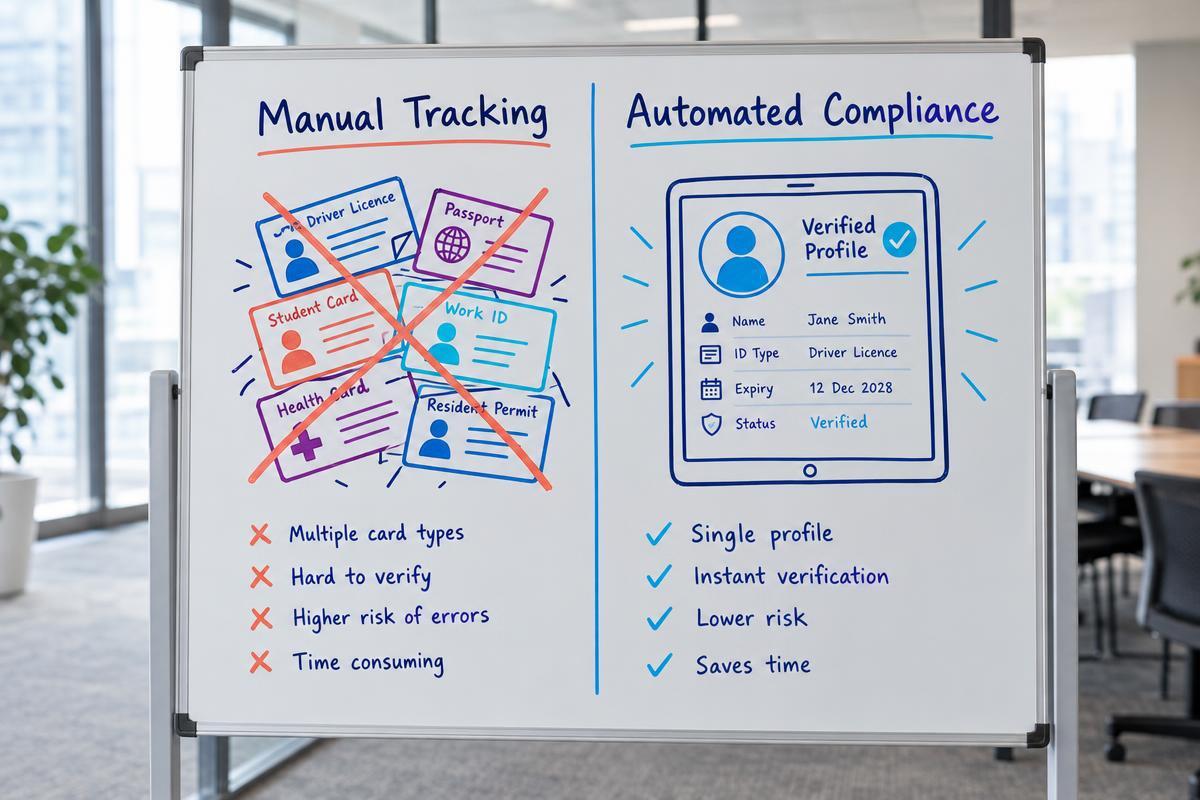
When you rely on spreadsheets or basic filing systems, verifying an interstate licence is difficult. A site supervisor might look at a Queensland electrical licence and have no idea if it meets the requirements for a site in Victoria. They might not know if the worker submitted their mandatory notification.
This knowledge gap creates massive operational risk. If a safety incident occurs and the worker is found to be non-compliant with local AMR rules, the employer faces severe penalties. You cannot simply trust that a worker understands their own compliance obligations. You need a reliable verification of competency process to check their home state licence and confirm their notification status.
The only way to safely manage a workforce operating under automatic mutual recognition of occupational licences is to digitise your compliance tracking. Modern employee licence management software can map exactly what credentials a role requires and flag when a worker's documentation falls short.
This is where Compono Assure steps in. Our competency management software allows you to build custom compliance frameworks that account for interstate licensing rules. You can mandate that workers upload both their home state licence and their local notification receipt before they are cleared for site access. The system automatically tracks expiry dates and alerts managers before a compliance breach happens.
Managing interstate credentials does not have to be a manual nightmare. Compono gives you the tools to track, verify, and automate compliance across your entire workforce so you can confidently deploy teams across borders.
It is a scheme that allows individuals who hold a valid occupational licence in one Australian state or territory to perform the same work in another participating jurisdiction without applying for a new licence.
Most states and territories participate, but the specific occupations covered can vary. You must always check the local regulator's guidelines for the state where the work will take place.
Yes, for many occupations, workers must formally notify the local state regulator before they begin working under the AMR scheme. Failing to do so can result in penalties.
The Trans-Tasman agreement allows New Zealand licence holders to apply for an equivalent Australian licence. Unlike AMR, this usually requires an application process and fee payment before work can commence.
Yes, employers are responsible for ensuring all staff hold the correct and current licences for the work they perform, even when operating under the AMR scheme.
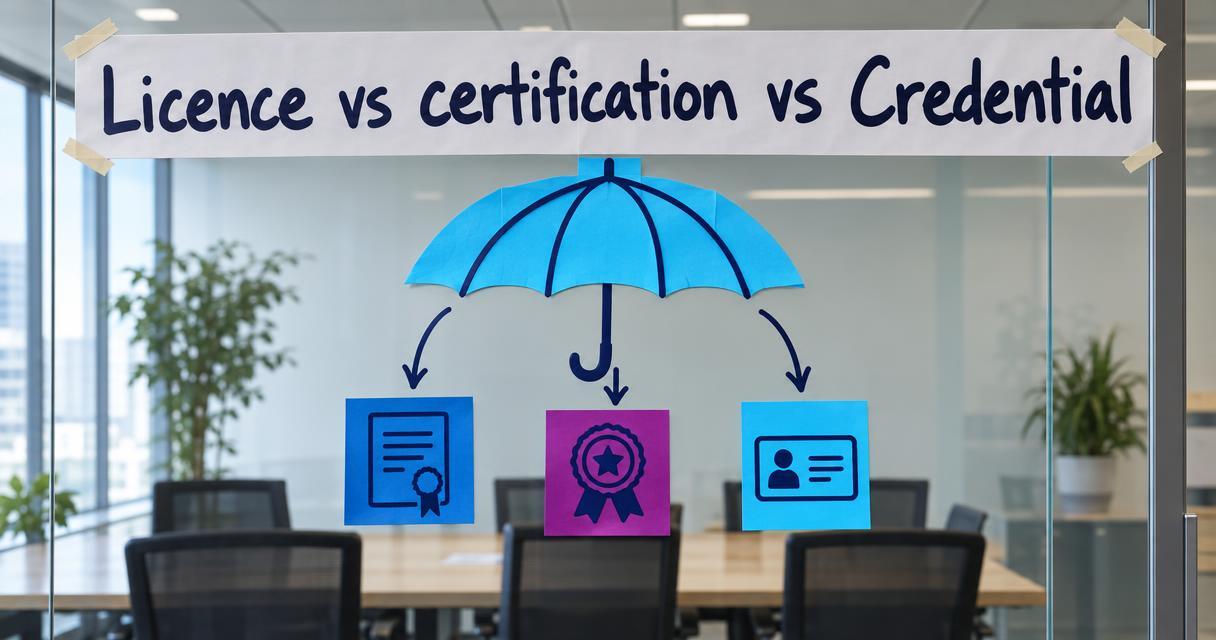
Learn the exact difference between a licence, a certification, and a credential to protect your business from compliance risks. Discover how to...

What to include in a high risk work licence register template, why tracking VOCs matters, and how to automate compliance for your site.

How government agencies manage workforce credentialling, stay compliant, and plan capacity in 2026, plus what to look for in a system.
 Compono