

 Claire Fernando

Most organisations don't have a people data problem. They have a people data fragmentation problem. Your applicant tracking system, HR information system, engagement survey and learning platform each know one thing about your people, and none of them were built to talk to each other. So someone ends up stitching it all together by hand.
That's how talent leader Edan Haddock puts it in Episode 8 of his Movember podcast series, and it's a problem anyone working in people and culture will recognise.
Quick answers
- People data fragmentation happens when HR data is spread across disconnected systems that each hold one part of the picture.
- Most organisations already collect plenty of people data. The gap is connecting it to the decisions it should inform.
- Recruitment, engagement, learning and performance data typically live in separate tools, creating HR data silos.
- Dashboards built in tools like Power BI help, but they rely on someone manually joining data that was never designed to connect.
- The fix isn't more data or more dashboards. It's a shared understanding of people that follows them from hiring through to development.
We have dashboards coming out of our ears
Edan lists what a typical people team collects: "Recruitment data, engagement data, performance data, learning data, rem data, psychometrics, succession, retention, turnover, absence, skills, candidate data, employee data."
Then he asks the uncomfortable question. "How much of it actually talks to each other? How much of it changes the decision?"
For most organisations, the honest answer is not much. The data exists. It just lives in different places, owned by different tools, formatted in different ways.
What HR data silos look like in practice
Edan describes the familiar picture:
- Your applicant tracking system (ATS) knows how someone was hired and what they looked like as a candidate.
- Your HR information system (HRIS) knows their role, manager and employment details.
- Your engagement platform knows how they and their team are feeling.
- Your learning system knows what training they've completed.
"And then someone in people analytics is desperately trying to stitch the whole thing together," he says.
In Edan's own team, that meant building Power BI dashboards to bring information together from different systems. Compono's Head of Talent Solutions, Justin Coutts, told Edan he'd experienced exactly the same thing in previous organisations, where systems simply didn't talk to each other.
None of those tools is doing anything wrong. Each one does its own job. The issue is that each one only sees its own slice.
Why fragmentation costs more than time
The obvious cost is effort. Someone spends hours exporting, cleaning and joining data every reporting cycle. That's time not spent on the strategic work most HR leaders would rather be doing.
The bigger cost is what fragmentation does to decisions. A few examples:
- Hiring decisions get made without knowing the culture or working styles of the team the person is joining.
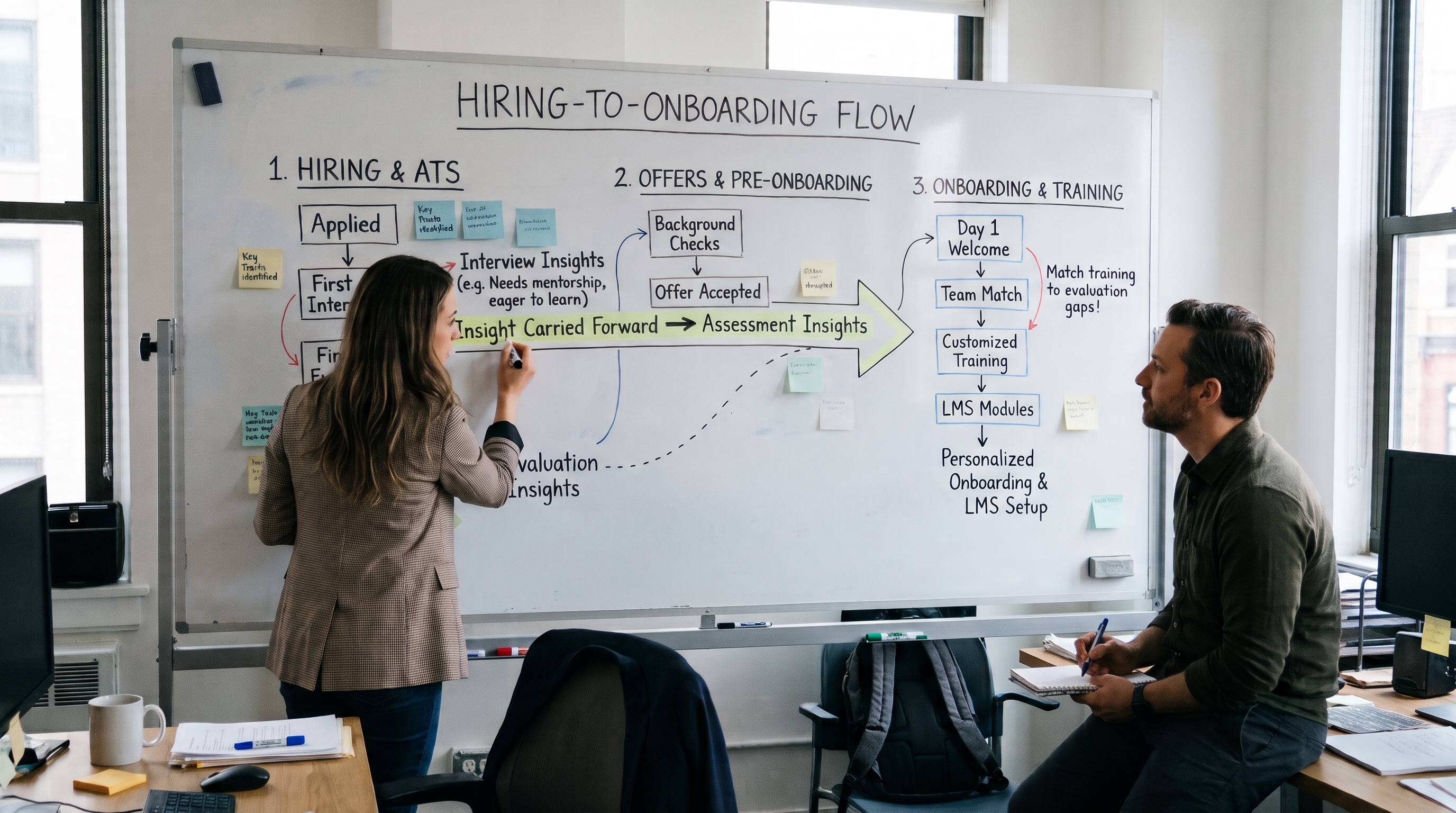
- Onboarding starts from scratch, because what you learned about someone during hiring stays in the ATS.
- Engagement drops get spotted in one tool but can't easily be traced back to team makeup or management style.
- Development plans get built without linking to how someone actually prefers to work.
Each of these is a moment where you had useful information about a person. It just wasn't in the right place when the decision was made.

More dashboards won't fix it
The instinct is to solve fragmentation by building a better report. But dashboards sit downstream of the problem. They visualise data after it's been collected separately, defined separately and stored separately.
Edan's view is that HR technology has spent decades digitising processes. "Maybe the next step is making the information inside those processes genuinely useful. Not more dashboards, not more scores, not more reports that nobody reads, but better decisions."
That's a different goal from reporting. Reporting tells you what happened. Connected people data changes what you decide next.
What a people intelligence layer looks like
What caught Edan's attention about Compono wasn't the applicant tracking system itself. As he says, there are plenty of those. It was the attempt to create what Compono calls a people intelligence layer underneath the process.
The idea is simple. Understand the people, the team and the culture, plus where you're trying to go. Then carry that understanding through every stage, instead of rebuilding it in every tool.
Here's how that works across the Compono platform, a people and culture platform built on decades of psychometric research:
- Compono Engage is employee engagement software that measures culture, team alignment, engagement and work personality, including how current culture compares with the culture your people want.
- Compono Hire is an ATS that handles the jobs, applications and pipeline you'd expect, then brings that team and culture data into the hiring decision.
- Compono Develop is a learning management system (LMS) for training, compliance and capability development, so what you know about people informs how they grow.
- Compono Assure supports competency frameworks and certification, connecting capability to the same picture.
Justin described the shift as moving HR technology beyond a process system or filing cabinet, towards actually understanding the people inside it. Process still matters. It's just half the job.
How to start reducing people data fragmentation
You don't need to replace every system on day one. Start with the decisions that suffer most from disconnected data.
- Map your decisions, not your data. List the big people decisions you make (hiring, promotion, team design, development) and note which systems hold the information each one needs.
- Find the manual stitching. Wherever someone exports to a spreadsheet or BI tool to answer a regular question, you've found a fragmentation point.
- Pick one connection to fix first. Hiring to onboarding is usually the highest value, because so much useful insight is lost the day someone signs.
- Agree on a shared language for people. If culture and working style are described consistently from hiring onwards, every later decision gets easier.
Key takeaways
- Most organisations have a people data fragmentation problem, not a data shortage.
- ATS, HRIS, engagement and learning tools each hold one slice of the picture.
- Manual stitching in BI tools is a symptom, not a fix.
- The biggest cost of HR data silos is decisions made without the insight you already had.
- Start by connecting the decisions that matter most, beginning with hiring to onboarding.
See how it works No pressure, just a look at what's possible with the data you already have.
Frequently asked questions
What are HR data silos?
HR data silos are sets of people data stored in separate systems that don't share information, such as an ATS, HRIS, engagement survey and LMS each holding their own records.
Why is people data fragmented?
Most organisations add HR tools one at a time to solve specific process needs. Each tool collects its own data, so over time information about the same person ends up spread across several systems.
How do you fix fragmented HR data?
Start with the decisions that need connected data, identify where people are manually joining reports, and fix the highest-value connection first. A shared people intelligence layer reduces the need to rebuild context in every tool.
Is a BI dashboard enough to solve HR data fragmentation?
Dashboards help with reporting, but they rely on manually joining data that was collected separately. They show what happened. They don't change the information available at the moment a decision is made.
Better decisions, not more reports
Your people team probably isn't short of data. It's short of data in the right place at the right time. Connecting what you already know about people, from the first application to their next development step, turns information you've been collecting for years into decisions you can actually stand behind.
See what connected people data looks like
If your team is spending more time stitching reports together than acting on them, it's worth seeing how a people intelligence layer works in practice. We'll show you how Compono connects culture, hiring and development data around the decisions you make every week.
Claire Fernando is a Digital Marketing Specialist at Compono, an Australian people and culture platform that combines hiring, culture, and learning with people insight.