

.webp)

 Rudy Crous
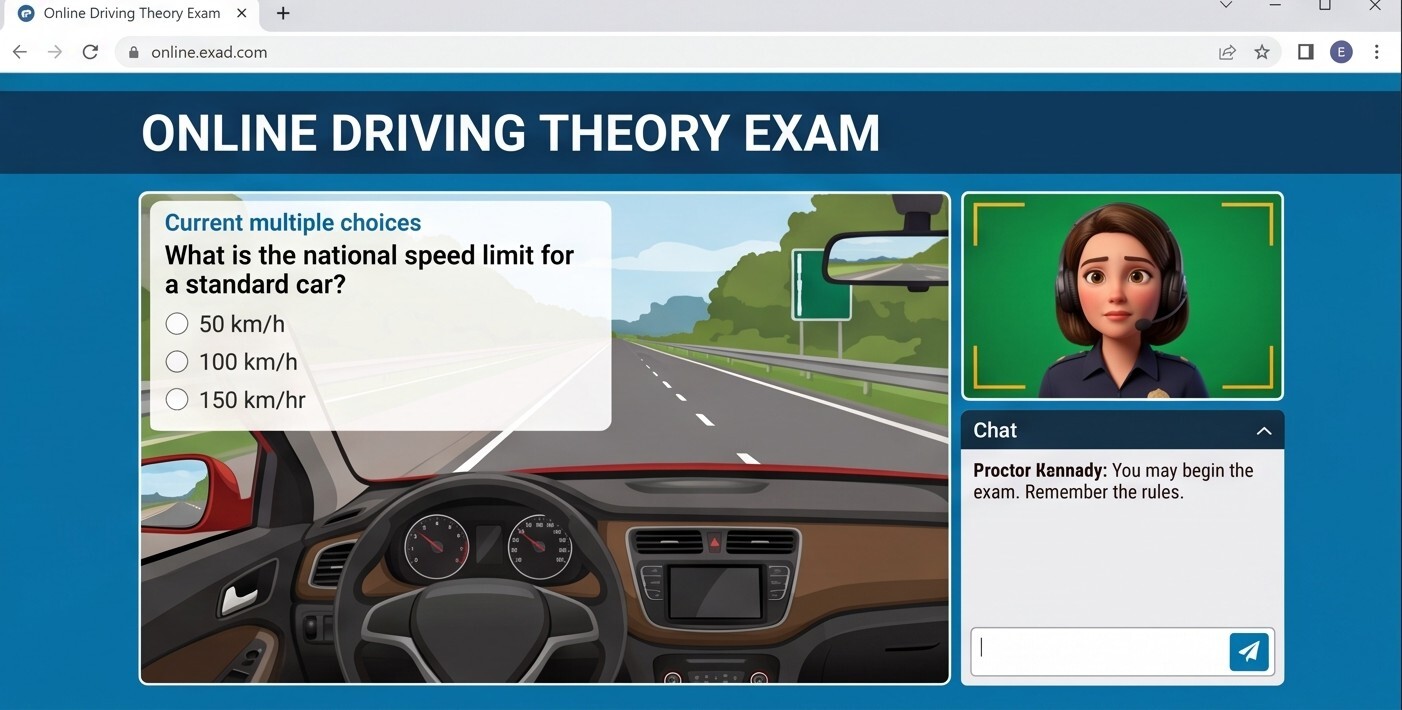
When customers ask why an assessment platform does not automatically include proctoring, the question usually comes from a good place.
They care about integrity. They care about fairness. They care about making sure the person completing the assessment is the person who should be completing it.
Those concerns are valid.
But proctoring is not the same thing as assessment quality. And surveillance is not the same thing as learning.
In fact, one of the biggest mistakes organisations make is assuming that the primary risk in assessment is cheating. It is not. The primary risk is that people do not learn what they need to learn, and the assessment does not validly measure the capability it claims to measure.
That distinction matters.
Cheating is real. But it is not the whole problem.
There will always be a small group of people who look for ways around the system. They will share answers. They will use hidden devices. They will ask someone else to sit the test. They will find loopholes.
This is not theoretical. In Great Britain, recorded cheating attempts in driving tests rose to 2,844 cases in the year to September 2025, up from 1,940 the previous year. The most common method was technology-assisted cheating during theory tests, such as concealed phones and earpieces. Impersonation was also recorded in both theory and practical tests.

So yes, cheating exists.
But the more important question is this: how big is the problem compared with the size of the system, and what is the best use of investment?
Driving and licensing systems process very large volumes of assessments. For example, Great Britain conducted 692,000 car theory tests and 449,000 car practical tests in just one quarter in 2024. The DVSA also reported 1.96 million car practical tests in 2024 to 2025.
That does not mean cheating should be ignored. It means the response should be proportionate.
You can spend enormous amounts of money designing a system around the people who are trying to defeat it. Or you can invest that money into better learning, better content, better assessment design, better feedback, better learner experience, and stronger evidence of competence for the vast majority of people who are trying to do the right thing.
That is the real strategic choice.
Proctoring reduces some risks, but it does not remove the need for good design.
There is evidence that online proctoring can reduce some forms of cheating. For example, one study found that introducing webcam-based proctoring in online courses was associated with lower exam scores, which the authors interpreted as evidence that cheating had been occurring before proctoring was introduced.
But that does not make proctoring a complete solution.
TEQSA’s assessment security guidance classifies online proctored exams as only “medium” security, noting that LMS credentials can still be shared with third parties and proctoring may not detect collusion, such as messaging with peers during an exam.
That is the point. Proctoring may reduce some behaviours, but it does not magically create competence. It does not make poor learning content better. It does not make weak assessment items more valid. It does not ensure the test reflects the real-world capability required. It simply watches the learner.
And sometimes, watching the learner becomes a distraction from the work that matters most.
Validity matters more than surveillance.
A strong assessment system should answer one central question:
Can we trust that this person has demonstrated the knowledge, skill, behaviour or competence required?
That is a validity question, not just a proctoring question.
Recent assessment literature makes this point clearly. Dawson, Bearman, Dollinger and Boud argue that cheating should be understood within the broader concept of assessment validity. Their position is that the real goal is assurance of learning: knowing that people are capable of what the credential, licence or certificate says they are capable of. They also warn that some anti-cheating technologies can reduce cheating while creating other validity problems, such as inclusion or fairness issues.
This is exactly the issue in workplace learning and licensing.
If an assessment is boring, disconnected, overly theoretical, badly written or poorly mapped to the competence framework, proctoring does not fix the real problem. It just creates a more controlled version of a weak assessment.
A better question is:
Have we designed the learning and assessment journey so well that the learner understands the point, sees the relevance, engages with the content, and has a fair opportunity to demonstrate competence?
That is where the real investment should go.
People are less likely to cheat when learning feels meaningful.
Research on academic integrity does not support a purely policing-based model. A teaching and learning approach shifts the focus from simply stopping people from cheating to ensuring people are learning.
Motivation also matters. A meta-analysis across 79 studies found that academic dishonesty is negatively associated with intrinsic motivation, self-efficacy, utility value, mastery goals and internal locus of control, while being positively linked with amotivation and extrinsic goal orientation. In plain language, when people see value in the learning, believe they can succeed, and are focused on mastery rather than just getting the certificate, cheating becomes less attractive.
A separate study on contract cheating found that motivation for learning, morality, norms and the academic environment were more important reasons for not cheating than fear of detection and punishment. The study also found that a positive academic environment, including supportive teachers and fair processes, contributed to reasons why students did not engage in contract cheating.
That is an important insight for organisations.
The best integrity strategy is not just stronger surveillance. It is stronger learning design.
Design for the 99%, control for the 1%.
The best assessment systems do not ignore cheating. They manage it intelligently.
That means using proportionate controls: identity checks where needed, secure login, audit trails, item randomisation, question banks, time controls, unusual activity monitoring, clear consequences, and targeted investigation when something looks wrong.
But it also means not designing the entire experience around the assumption that every learner is a potential offender.
That mindset damages trust. It creates friction. It can increase anxiety. It can make the assessment feel punitive rather than developmental. And in some cases, it can create privacy, accessibility and fairness concerns. Recent reviews of online proctoring continue to raise issues around data privacy, transparency, biometrics and the ethical use of monitoring technologies.
So the right question is not, “How do we watch everyone all the time?”
The better question is, “How do we build a system that is valid, engaging, secure enough for the risk, and focused on genuine competence?”
The better investment is in the learning and assessment journey.
If an organisation has a large budget to improve assessment integrity, our view is simple: do not spend all of it trying to catch the small minority who may cheat.
Spend it on improving the whole system.
Make the learning more relevant.
Make the content easier to understand.
Make the examples more realistic.
Make the assessments better mapped to the competence framework.
Make the questions clearer and more valid.
Make feedback more useful.
Make the learner experience more engaging.
Make the evidence of competence stronger.
That is a positive, future-focused approach.
It says: we trust most people to do the right thing, and we will build a system that helps them succeed. At the same time, we will keep sensible controls in place for those who try to undermine the process.
That is not being soft on cheating. It is being smart about where value is created.
Final thought
Proctoring has a role in some contexts. For high-stakes, high-risk assessments, some level of identity verification, supervision or fraud detection may be appropriate.
But proctoring should never become a substitute for good assessment design.
The real goal is not to watch people complete a test.
The real goal is to create a valid, reliable and engaging learning and assessment journey that gives organisations confidence that people are competent, capable and ready.
That is where the money should go.
Rudy Crous is a corporate psychologist and the co-founder and CEO of Compono, a people and culture platform that brings hiring, engagement, learning and credentialling together in one place, adding behavioural science to the processes most HR tools only track.
References:
Bertram Gallant, T. (2017). Academic integrity as a teaching and learning issue: From theory to practice. Theory Into Practice.
Dawson, P., Bearman, M., Dollinger, M., & Boud, D. (2024). Validity matters more than cheating. Assessment & Evaluation in Higher Education, 49(7), 1005–1016.
Dendir, S., & Maxwell, R. S. (2020). Cheating in online courses: Evidence from online proctoring. Computers in Human Behavior Reports, 2, 100033.

