

.webp)

 Compono


1 min read
Why healthcare needs a competency framework builder
 Compono
Healthcare organisations need a competency framework builder to ensure every clinician and support staff member possesses the specific skills...

Healthcare needs proficiency levels because a basic qualification does not guarantee a clinician can safely perform specific medical procedures under pressure.
A busy hospital ward exposes the limits of basic qualifications very quickly. Relying solely on a job title to determine what a staff member can handle leaves dangerous gaps in clinical coverage. When lives are on the line, managers need exact data on what their team members can actually do.
Key takeaways
- Qualifications confirm baseline knowledge, while proficiency levels measure actual on-the-job capability.
- Mapping specific skill levels helps hospital managers roster teams safely and balance cognitive load.
- Targeted development paths prevent experienced staff from wasting time on basic compliance training.
- Clear proficiency tracking provides necessary documentation for clinical governance and regulatory audits.
The healthcare sector faces immense pressure from growing patient numbers and complex medical needs. To meet this demand, hospitals and clinics must move beyond simply counting the number of staff on a shift. They need to understand the exact clinical capability of every person in the building.
A university degree confirms a graduate passed their exams. It tells a ward manager very little about how that clinician handles a deteriorating patient at two in the morning. Relying on paper qualifications alone assumes that all staff with the same title share the same practical abilities.
We see this problem frequently in high-stakes clinical environments. A registered nurse with five years of outpatient clinic experience has a very different skill profile than a nurse with five years in an intensive care unit. Both hold the exact same basic qualification and are legally allowed to practice. Only one is proficient in managing complex life support equipment.
When we look at why new hires fail, it often comes down to a mismatch between assumed capability and actual proficiency. A hospital might hire an experienced clinician and immediately assign them a heavy caseload. If their previous experience did not build the specific proficiencies required for this new ward, they will quickly become overwhelmed.
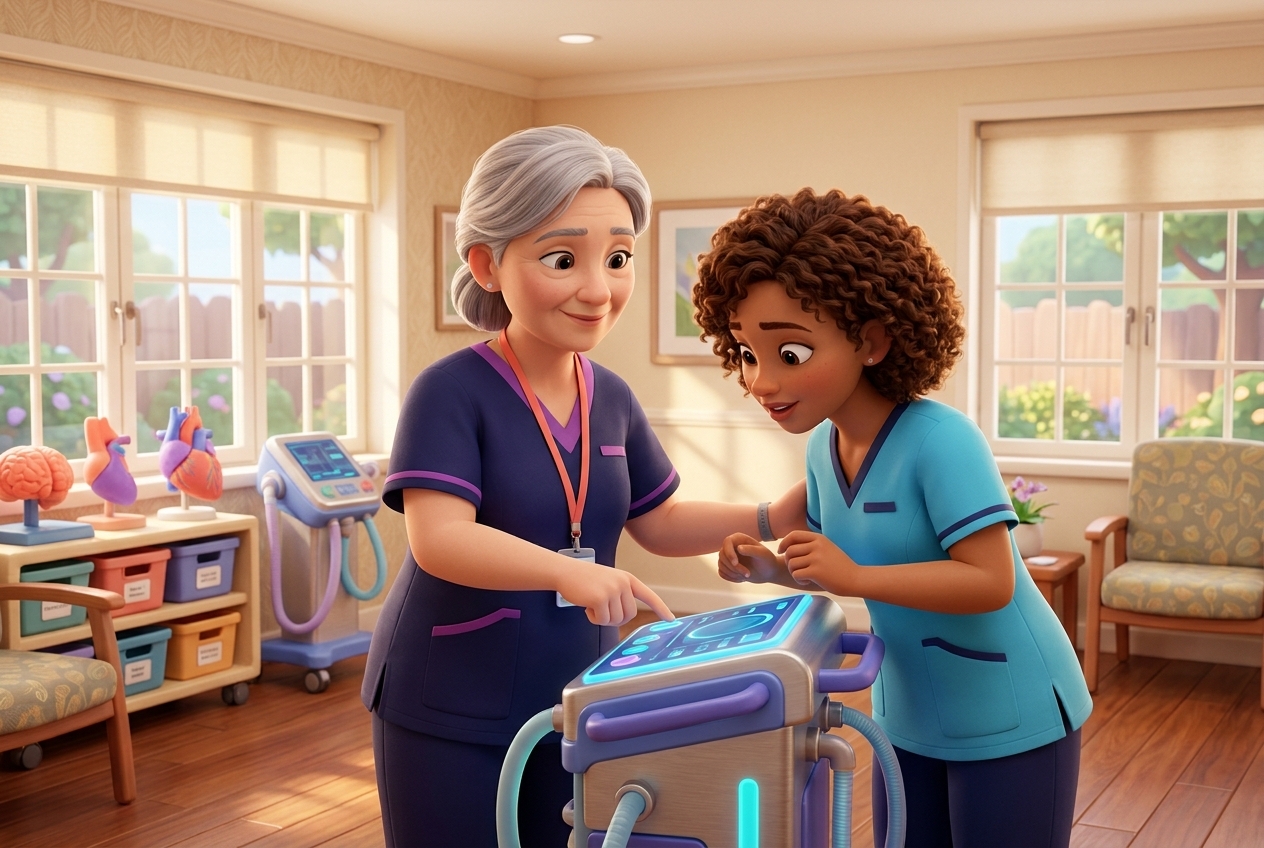
When you know exactly who is a novice and who is an expert at specific clinical tasks, you build safer shifts. Ward managers can pair highly proficient staff with newer team members to balance the cognitive load. This ensures that expert help is always available when a complex procedure is required.
Without proficiency levels, rostering becomes a guessing game based on tenure. Tenure is a poor proxy for capability. Someone can perform a specific task poorly for ten years, while a junior staff member might master it in six months through intensive practice.
This is especially relevant in sectors dealing with vulnerable people. Our Inside-Out Hiring framework for aged care and disability services shows that matching specific behavioural traits to the right roles improves care quality. When you overlay specific clinical proficiency levels on top of that baseline fit, patient safety improves dramatically.
Healthcare workers spend hours completing mandatory training that often fails to match their actual skill level. A senior clinician sitting through a basic hand hygiene module learns nothing new. A junior staff member rushing through an advanced pharmacology module they do not understand gains no practical benefit.
Proficiency levels let educators target the exact skills a person needs to advance. You can assess where an employee currently sits on the capability spectrum and deliver learning that pushes them to the next stage. This stops hospitals from wasting valuable funding on generic training programs.
The Compono Assure platform helps track these specific capability levels across your workforce. You can see exactly who holds which level of proficiency and automate the training required to maintain those specific clinical skills.
Throwing staff into clinical situations they are not equipped for causes massive stress. Clear proficiency mapping means people are given tasks they can safely handle. They know what is expected of them and they know they have the skills to deliver it.
Burnout leads to turnover, and turnover in healthcare is incredibly expensive. Replacing a specialised emergency department nurse costs tens of thousands of dollars in recruitment and lost productivity. Protecting your staff from capability-related stress is a financial necessity.
Mapping skills properly gives managers the data they need to protect their teams. You can gradually increase the complexity of a clinician's workload as their measured proficiency grows. The Compono Hire platform helps assess baseline traits before candidates even join, ensuring they have the right foundation to build these clinical proficiencies under pressure.
Nurses and allied health professionals want to know how to progress in their careers. Vague performance reviews frustrate ambitious staff. Proficiency levels give them a clear, objective map from beginner to expert.
When the requirements for advancement are tied to specific, measurable skills, conversations about promotion become entirely objective. A staff member knows exactly what they need to demonstrate to reach the next clinical level or pay grade. They can take ownership of their own professional development.
This transparency builds trust across the organisation. It shows your workforce that career progression is based on demonstrated capability rather than favouritism. Staff are more likely to stay with an employer that provides a clear roadmap for their clinical advancement.
Healthcare is one of the most heavily regulated industries in the world. When regulators or auditors visit a hospital, they want proof that the staff performing complex procedures are actually competent to do so. A list of university degrees is rarely enough to satisfy clinical governance requirements.
Proficiency levels provide a clear paper trail of assessed competence. If an adverse event occurs, hospital administrators can easily demonstrate that the staff involved had been assessed and cleared for that specific level of clinical work. This protects the institution and the individual practitioners.
Implementing a workforce intelligence platform allows healthcare administrators to digitise this entire process. You move away from messy spreadsheets and paper files into a system that provides real-time visibility over your entire clinical capability.
Key insights
- Defining exact proficiency levels creates a safer environment for patients and clinical staff.
- Targeted capability tracking reduces wasted training hours and healthcare spending.
- Clear progression frameworks help retain ambitious healthcare professionals by showing them a path forward.
- Digitising proficiency data provides essential protection during clinical governance audits.
Ready to map the actual capabilities of your clinical teams and improve patient safety?
If you'd like to talk through how Compono can support your team, we're happy to walk you through it. No pressure, just a conversation.
A proficiency level is a specific, measurable standard of ability for a clinical task. It moves beyond a basic pass or fail to describe exactly how well a healthcare professional can perform a procedure independently.
A qualification proves that a person completed a course of study and passed an exam. A proficiency level measures their actual, current ability to apply that knowledge safely in a real-world clinical setting.
Hospitals need capability mapping to ensure safe shift rostering. Knowing exactly who has beginner, intermediate, or expert skills allows managers to balance teams and avoid putting too many inexperienced staff on the same ward.
Clinical proficiency is typically measured through a combination of direct observation by senior staff, practical assessments, and digital tracking systems that log completed procedures and ongoing competency checks.
Clear proficiency tracking directly improves patient safety by ensuring that only staff with verified, current skills perform complex procedures. It prevents situations where staff are forced to attempt tasks beyond their actual capability.
1 min read
Healthcare organisations need a competency framework builder to ensure every clinician and support staff member possesses the specific skills...
 Read More

1 min read
Proficiency levels in healthcare work by categorising a professional's clinical and non-clinical skills on a scale from novice to expert, ensuring...
 Mathan Allington