

.webp)

 Compono
1 min read
How training managers use competency framework software
 Compono
Training managers use competency framework software to map required skills against current team capabilities, identify specific knowledge gaps, and...

Proficiency levels in healthcare work by categorising a professional's clinical and non-clinical skills on a scale from novice to expert, ensuring staff are safely matched to appropriate patient care tasks.
When clinical managers understand exactly where an employee sits on this spectrum, they can allocate resources effectively, reduce clinical risk, and build targeted training pathways that actually improve care.
Key takeaways
- Proficiency levels map a healthcare worker's progression from basic competence to advanced mastery in specific clinical and administrative skills.
- Healthcare teams use these levels to safely match staff capabilities with patient acuity and ward demands.
- Moving beyond a simple pass or fail system allows clinical educators to identify specific skills gaps and target their training resources.
- Clear proficiency frameworks improve retention by giving nurses and allied health professionals a transparent path for career advancement.
Managing a healthcare workforce is incredibly complex. On any given shift, a Nurse Unit Manager or clinical lead must balance patient needs with the available skills of their team. If you only look at qualifications on paper, two registered nurses might appear identical. They hold the same degree, share the same job title, and have completed the same mandatory compliance modules.
Put them on a busy respiratory ward, and the differences become obvious. One might need step-by-step guidance to manage a patient deteriorating rapidly, while the other anticipates the crisis, prepares the necessary equipment, and coordinates the medical response without missing a beat. This gap in performance is exactly why healthcare organisations rely on proficiency levels.
Tracking proficiency gives you a realistic picture of what your workforce can actually do. It moves the conversation away from basic compliance and focuses on practical capability, helping you build safer, more effective teams.
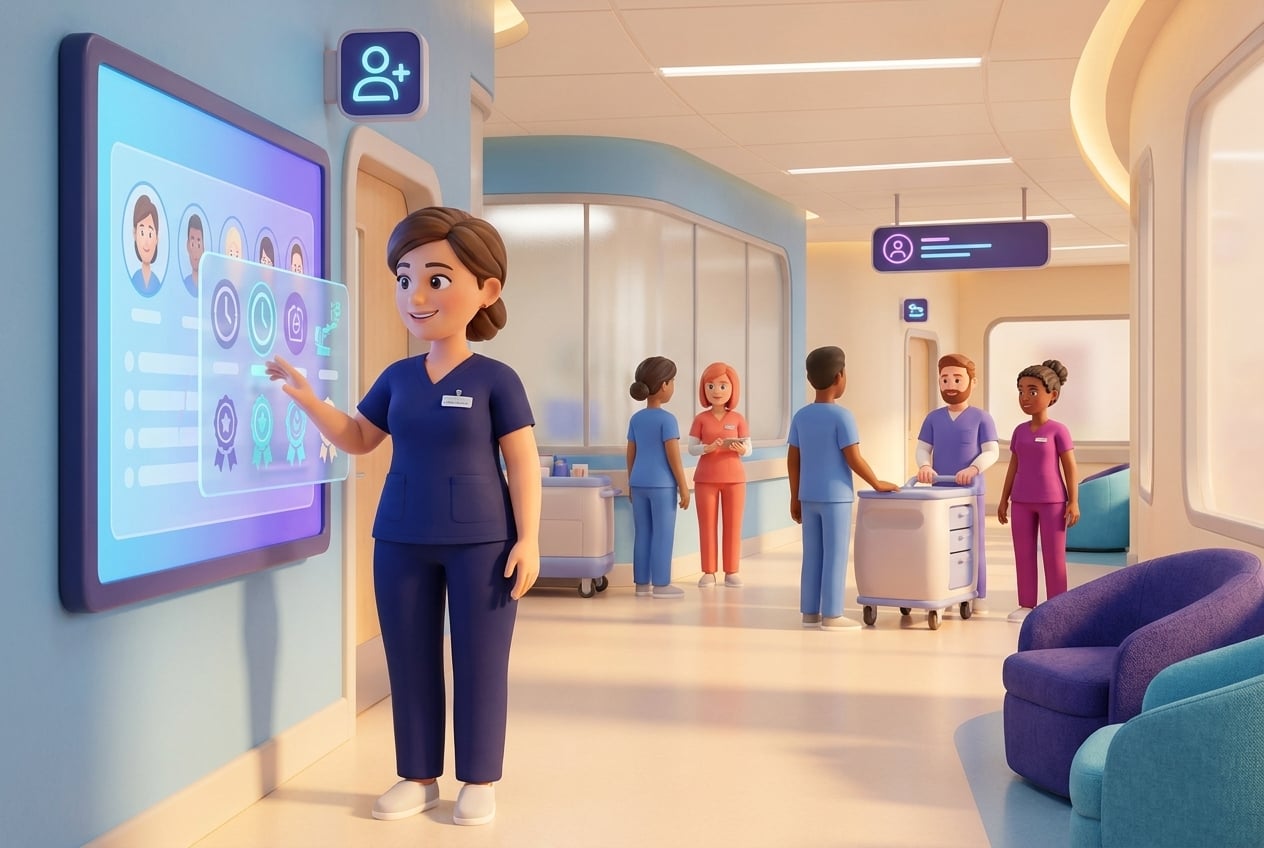
People often use the words competence and proficiency interchangeably. In a healthcare setting, they mean two very different things. Understanding this distinction is the first step to building a better workforce strategy.
Competence is the baseline standard. It means a healthcare professional has demonstrated they can perform a specific task safely and according to protocol. When a new graduate completes their orientation, they are signed off as competent in basic ward duties. Competence is binary, you either meet the standard, or you do not.
Proficiency describes the depth of that expertise. It measures speed, adaptability, and the ability to perform under pressure. A competent nurse can safely insert an intravenous cannula in a stable patient. A proficient nurse can do it quickly in a poorly lit emergency bay while the patient is actively crashing. Competence keeps your hospital compliant. Proficiency keeps your patients safe.
Most healthcare organisations adapt established models, like Patricia Benner's From Novice to Expert theory, to define their proficiency levels. While the exact terminology might vary between a public hospital and a private clinic, the progression generally follows five distinct stages.
The novice stage applies to beginners with no experience in the situations they are facing. This includes nursing students or experienced staff moving to a completely new specialty. Novices rely heavily on rules and guidelines to dictate their actions. They need clear instructions and close supervision because they lack the contextual experience to make independent clinical judgements.
The advanced beginner has experienced enough real-world situations to recognise recurring components. They can perform tasks independently but still focus heavily on the rules rather than the broader clinical picture. If a patient's condition changes unexpectedly, an advanced beginner will likely need guidance from a senior colleague to prioritise their next steps.
The competent stage usually emerges after two to three years in the same clinical area. Competent staff can plan their work, manage multiple demands, and feel a sense of mastery over their environment. They lack the speed of more advanced practitioners, but they are reliable, safe, and form the backbone of most clinical teams.
The proficient practitioner perceives situations as wholes rather than a series of disconnected tasks. They learn from experience what to expect in a given scenario and how to modify their plans when things change. A proficient professional looks at a patient and immediately recognises the early warning signs of deterioration before the vital signs trigger an alarm.
The expert stage represents the highest level of clinical mastery. Experts no longer rely on analytical principles or rules to connect their understanding of a situation to an appropriate action. They have an intuitive grasp of clinical scenarios and zero in on the exact problem immediately. Experts are your clinical leaders, educators, and the people the rest of the team turn to during a crisis.
Assigning a proficiency level requires more than a simple self-assessment. Healthcare organisations use a mix of objective and subjective measures to determine where an employee sits on the scale.
Direct observation in the clinical environment remains one of the most effective methods. Clinical educators or senior staff watch an employee perform a task, noting not just if they complete it, but how they manage the environment, communicate with the patient, and handle unexpected complications. This is often paired with peer feedback, which provides insight into how the professional functions as part of the broader team.
Simulation is another powerful tool. By placing staff in controlled, high-stress scenarios, educators can assess their proficiency without putting real patients at risk. Simulations reveal how well an employee prioritises tasks and manages their cognitive load under pressure.
Tracking all this data manually is an administrative nightmare. Paper-based competency booklets get lost, and spreadsheets become outdated the moment they are saved. This is where modern learning systems prove their worth. Compono Assure helps healthcare organisations map and track these learning outcomes, giving managers a clear view of their team's verified skills without digging through physical files.
The practical application of proficiency levels happens during rostering and shift allocation. Patient acuity, the severity of a patient's illness and the level of care they require, must be matched with the appropriate level of staff proficiency.
You cannot staff a high-acuity intensive care pod entirely with advanced beginners, even if they are all legally competent to be there. The skill mix would be too diluted to handle a sudden emergency. A safe roster requires a deliberate blend of proficiencies. You need experts to guide the clinical decision-making, proficient staff to manage the complex cases, and competent staff to maintain the baseline workflow.
When managers have clear visibility over their team's proficiency levels, they can distribute expertise evenly across shifts. This prevents the dangerous scenario where all the highly proficient staff are rostered on a Tuesday morning, leaving a weekend night shift dangerously exposed. Getting this balance right is a core component of operationalising a safety culture for your workforce.
Proficiency levels do more than just manage risk, they provide a roadmap for employee development. When staff know exactly what behaviours and skills are required to move from competent to proficient, they can take ownership of their own career progression.
Clinical educators can use proficiency data to target their training budgets effectively. Instead of running generic seminars for the entire ward, they can design specific interventions. They might build a simulation program to help advanced beginners improve their prioritisation skills, or create a leadership workshop for proficient staff preparing for expert roles.
This structured approach to development has a massive impact on staff retention. Healthcare professionals often leave organisations when they feel stagnant or unsupported. Providing a clear, transparent pathway for advancement shows your staff that you are invested in their long-term career. It gives them a reason to stay.
Of course, building a highly proficient team starts before the employee even walks onto the ward. The foundation of a strong clinical workforce is laid during the recruitment phase. Using structured frameworks like hiring in aged care and disability services helps you identify candidates who possess the right behavioural traits to develop into highly proficient practitioners.
As healthcare becomes more complex and patient needs continue to rise, the demand for highly proficient staff will only grow. Organisations can no longer afford to guess who their top performers are or rely on tenure as a proxy for expertise. Ten years of experience might mean a decade of continuous growth, or it might mean one year of experience repeated ten times.
By implementing clear proficiency levels, healthcare leaders gain the data they need to make informed decisions about rostering, training, and recruitment. It creates a culture of continuous learning where excellence is clearly defined and actively supported.
When you know exactly what your team is capable of, you can build a workforce that is not just compliant, but truly capable of delivering exceptional patient care.
Key insights
- Healthcare proficiency levels provide a structured way to evaluate how well a staff member performs a skill, rather than just confirming they can do it.
- Effective proficiency tracking directly influences patient outcomes by ensuring the right mix of experience is available on every shift.
- Clinical educators rely on clear proficiency data to design training that moves staff from advanced beginners to autonomous experts.
- Replacing paper-based competency checklists with digital tracking systems gives hospital administrators real-time visibility into their workforce capabilities.
Mapping and developing the skills of your healthcare workforce is easier when you have the right systems in place.
Proficiency levels give nursing managers a clear understanding of what their staff can handle safely. They help ensure that complex patients are assigned to nurses with the right level of experience, reducing clinical errors and improving overall patient outcomes.
Clinical proficiency is usually assessed through a mix of direct observation, peer feedback, and clinical simulations. Educators watch how a staff member performs under pressure, manages their environment, and adapts to unexpected changes, rather than just checking if they can complete a basic task.
A competent worker can perform a task safely by following the rules and guidelines. A proficient worker has enough experience to see the bigger picture, anticipate problems before they happen, and adapt their approach quickly when a patient's condition changes.
Most healthcare organisations conduct formal proficiency evaluations annually as part of a performance review. However, informal assessments happen continuously through daily clinical supervision, peer interactions, and ongoing professional development programs.
Yes. When staff have a clear understanding of what is required to move to the next proficiency level, they feel more supported in their career progression. Transparent development pathways reduce frustration and give healthcare professionals a tangible reason to stay with their current employer.

1 min read
Training managers use competency framework software to map required skills against current team capabilities, identify specific knowledge gaps, and...

1 min read
Proficiency levels in superannuation funds work by categorising the specific skills, knowledge, and behaviours required for roles into progressive...

1 min read
Transport and logistics operations need proficiency levels because they provide a standardised framework to measure technical skill, safety...