

.webp)

 Compono


How to choose an effective government training platform
 Compono
What a public sector training platform needs: compliance records, capability tracking, licensing that fits procurement, and content staff will finish.
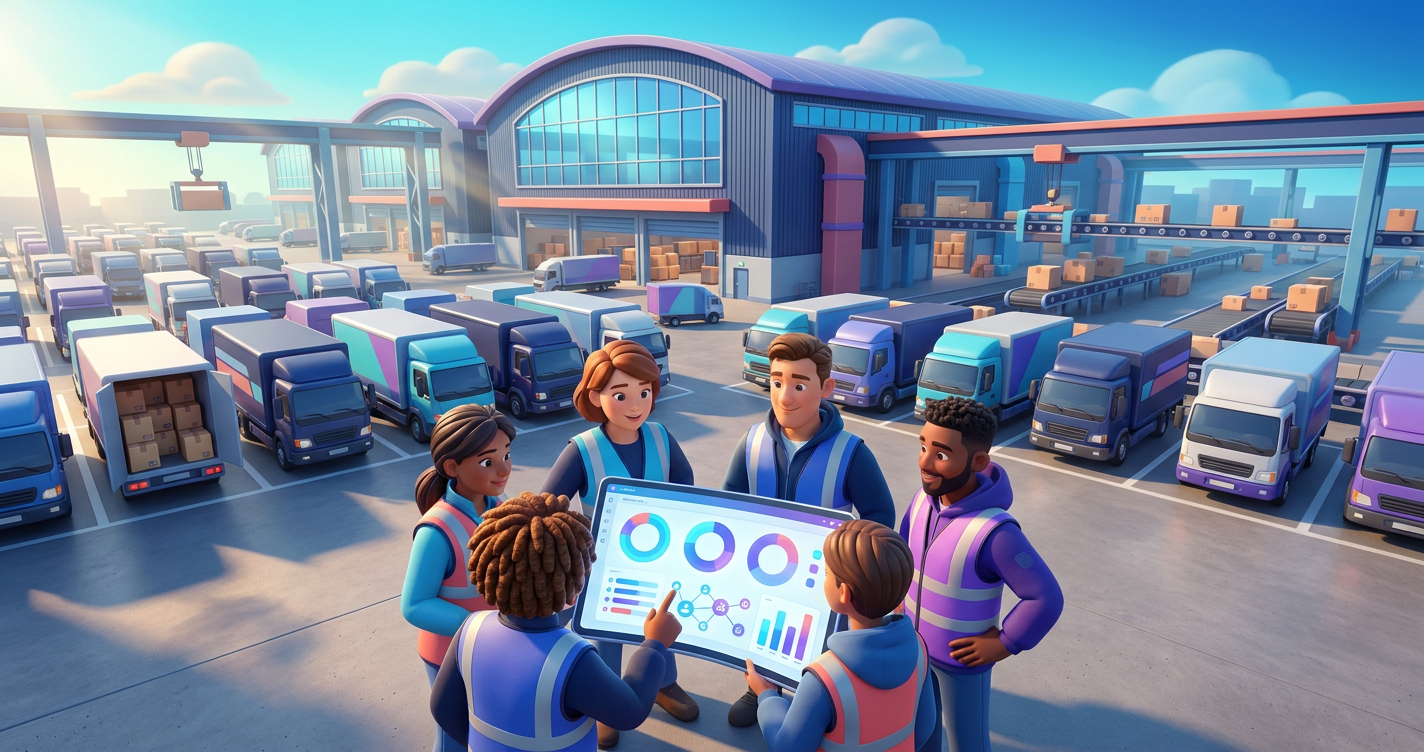
Transport and logistics operations need proficiency levels because they provide a standardised framework to measure technical skill, safety compliance, and decision-making capabilities across a distributed workforce.
By moving beyond a simple 'yes/no' checklist for skills, transport leaders can identify hidden risks in their supply chain, ensure drivers and warehouse staff are truly competent for high-risk tasks, and build a more resilient operation. Proficiency levels help you move from basic compliance to true operational excellence by defining exactly what 'good' looks like at every stage of a career path.
Key takeaways
- Proficiency levels offer a clear roadmap for skill development, moving beyond basic compliance to mastery in high-stakes transport environments.
- Standardised levels reduce operational risk by ensuring only qualified individuals handle specific machinery or complex logistics routes.
- Implementing clear skill tiers improves employee retention by providing transparent career progression and growth opportunities.
- Digital tracking of these levels ensures real-time compliance visibility, which is essential for meeting modern regulatory requirements.
In the transport world, the traditional approach to skills has often been binary – either a person has a licence or they do not. While this works for meeting basic legal requirements, it fails to capture the nuance required for high-performance logistics. We have seen that the gap between a novice driver and a master operator is not just about time on the road; it is about the depth of their proficiency in specific, high-risk scenarios.
When we talk about why transport needs proficiency levels, we are really talking about risk management. A driver might know how to operate a heavy vehicle, but do they have the proficiency level required to navigate steep alpine terrain in the middle of winter? Without a defined level of mastery, you are essentially guessing. By categorising skills into tiers – such as fundamental, intermediate, and advanced – you create a common language that helps managers deploy the right people to the right tasks.
At Compono, we believe that understanding these nuances is the first step toward building a safer workplace. Our research into team performance shows that when people are matched to roles based on their true capability and work personality, safety incidents decrease and efficiency climbs. Proficiency levels provide the data you need to make those matches with total confidence.

Transport operations are inherently high-risk, involving heavy machinery, tight deadlines, and public safety. Relying on a 'tick-the-box' training culture creates a false sense of security. Proficiency levels allow you to map out the specific behaviours and technical abilities required for every role, ensuring that 'safety' is an active practice rather than a passive status.
Consider the difference between a warehouse worker who can operate a forklift and one who is proficient at managing high-reach inventory in a fast-paced distribution centre. The latter requires a higher level of spatial awareness and precision. By defining these proficiency levels, you can prevent accidents before they happen by ensuring that only those with the verified 'advanced' tier are assigned to the most challenging tasks.
This is where Compono Assure comes into play, helping you track and verify that your workforce meets these critical standards. Instead of wading through piles of paper certificates, you get a clear, digital view of who is truly proficient in what. This transparency is vital when you are managing a fleet or a warehouse where one small error can lead to a significant bottleneck or a safety breach.
One of the biggest challenges in the modern transport industry is keeping good people. Drivers and logistics staff often feel like their career has hit a ceiling once they obtain their primary licences. Proficiency levels change this dynamic by providing a visible ladder for them to climb. When an employee knows exactly what they need to demonstrate to reach the next level of seniority, they are more likely to stay engaged and committed to the organisation.
We have found that workers – particularly those with a Doer work personality – thrive when they have clear, practical goals to hit. By setting out proficiency levels, you are giving your team a sense of progress. It is no longer just about doing the same job for ten years; it is about becoming a 'Level 4 Senior Lead Driver' with the skills to mentor others. This structure turns a job into a career.
To support this growth, you need a way to deliver the right training at the right time. Using Compono Develop, you can align your learning programmes with these specific proficiency tiers. If a team member is at an intermediate level and wants to move to advanced, you can provide the exact modules they need to bridge that gap. This targeted approach to development saves time and ensures your training budget is actually moving the needle on performance.
The regulatory landscape for transport is becoming increasingly complex. Chain of Responsibility (CoR) laws mean that every person in the supply chain is responsible for safety. If an incident occurs, authorities will look beyond whether a driver had a licence; they will ask if the organisation took every reasonable step to ensure the person was competent and proficient for that specific task.
Proficiency levels provide the evidence you need for these audits. They show that you have a proactive system for assessing, monitoring, and improving the skills of your workforce. This level of detail is a powerful defence in a legal or insurance context. It demonstrates that your organisation prioritises a safety culture that is backed by data and scientific assessment.
Furthermore, having a digital record of these levels allows for real-time compliance monitoring. You can set alerts for when a specific proficiency level is due for reassessment, ensuring that your team never falls below the required standard. In an industry where things move fast, having this automated oversight is not just a luxury – it is a necessity for staying in business and protecting your people.
Finally, proficiency levels allow you to move toward a more strategic way of managing your people. When you know the exact skill levels across your entire team, you can identify gaps that might be holding you back. Perhaps you have plenty of 'Level 1' operators but a shortage of 'Level 3' supervisors. This insight allows you to hire more effectively or promote from within with greater accuracy.
By integrating these levels into your Compono Hire process, you can even assess new candidates against the specific proficiency tiers you need most. This ensures that every new hire is not just a cultural fit, but a technical fit who can hit the ground running. It reduces the 'time to proficiency' for new starters, which is a key metric for any growing logistics business.
Ultimately, proficiency levels are about excellence. They signal to your employees, your customers, and the public that you take your responsibilities seriously. By quantifying the 'unquantifiable' aspects of skill and experience, you build a more robust, safe, and profitable transport operation that is ready for the challenges of the future.
Key insights
- Proficiency levels provide a scientific way to map skills, reducing the risk of accidents caused by competency gaps.
- Clearly defined tiers of mastery help transport companies move beyond basic compliance to operational excellence.
- Providing transparent grow paths through proficiency tiers significantly boosts employee engagement and long-term retention.
- Digital tracking of verified skills ensures that organisations are always audit-ready and compliant with evolving safety regulations.
Defining and tracking proficiency levels is the smartest way to protect your transport business and your people. By moving to a data-driven model of skill management, you ensure every task is performed by someone with the right level of mastery.
Standard job descriptions usually list general responsibilities, whereas proficiency levels define the specific depth of skill required at different stages. For example, a job description might say 'operate a forklift', but a proficiency level would specify the difference between basic operation and high-risk manoeuvring in tight spaces.
While it requires an initial investment in mapping your skills, digital platforms make the ongoing management quite simple. By categorising your existing workforce into tiers, you can automate much of the tracking and renewal process, making it easier to manage hundreds or even thousands of drivers.
Many insurers look favourably on organisations that can prove they have rigorous, data-backed safety and competency frameworks. By showing that you only deploy staff with verified proficiency levels for high-risk tasks, you demonstrate a significantly lower risk profile.
Absolutely. Proficiency levels are just as important for dispatchers, planners, and managers. Their ability to make complex decisions under pressure or use advanced logistics software can be mapped into tiers to ensure the entire operation runs smoothly from top to bottom.
This depends on the specific skill and the regulatory requirements, but most transport leaders reassess technical proficiencies annually. This ensures that skills haven't faded and that staff are kept up to date with the latest safety protocols and technology.

What a public sector training platform needs: compliance records, capability tracking, licensing that fits procurement, and content staff will finish.

How to verify employee skills and prove training happened: digital records, licence expiry tracking, and reports you can hand to an auditor.

How proficiency levels work for childcare providers, and how tracking educator skills supports compliance, safety and team performance.