1 min read
How L&D managers use competency framework software
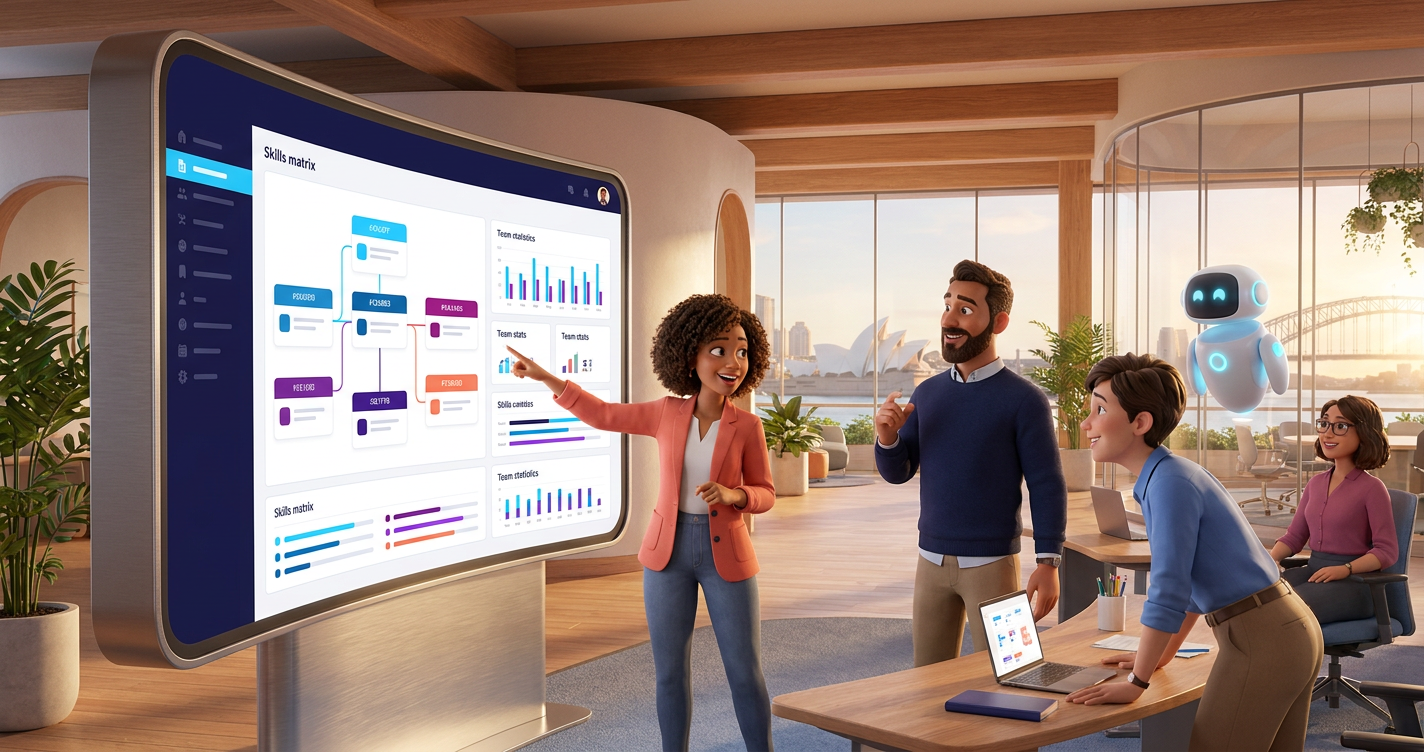
Learning and development managers use competency framework software to map required skills, identify talent gaps, and align employee training...
Voice or text coaching built on psychology. For you, your team, or the candidates you place.
A coach that actually gets you.
Get 10 minutes free, then $15 a month. Cancel anytime.
Get Started ≫
A competency framework is a structured collection of knowledge, skills, and behaviours that define effective performance in specific roles across an organisation.
Key takeaways
- Core competencies define the foundational behaviours expected of every employee, such as communication, adaptability, and teamwork.
- Leadership frameworks typically focus on a small set of key competencies, mapping out clear proficiency levels for decision-making and strategic thinking.
- Functional and industry-specific models provide granular, observable behaviours to guide technical progression and compliance requirements.
- Successful implementation requires tying your competencies directly to learning, development, and performance management systems rather than leaving them in a static document.
If you have ever looked at a generic job description and wondered what success actually looks like in practice, you are not alone. In 2026, modern teams need more than a bulleted list of daily duties – they need a clear map of the behaviours and skills required to thrive. This is exactly where a well-designed competency framework comes in.
By standardising what "good" looks like, HR leaders and managers can remove bias from hiring, provide clear pathways for career progression, and identify exactly where skill gaps exist. But building these models from scratch can feel overwhelming. To help you structure your own, we have broken down the most effective competency framework examples across core, leadership, functional, and industry-specific categories.
Core competencies are the universal skills and behaviours expected of every single person in your organisation, regardless of their department or seniority. These are heavily tied to your company culture and values.
For example, if your business prides itself on innovation and customer success, your core competency framework must reflect those priorities. Common examples include communication, collaboration, adaptability, and results orientation.
When documenting a core competency, it is vital to define what it looks like in action. For "Adaptability", the framework might state: "Demonstrates the ability to adjust to new information, changing conditions, or unexpected obstacles without losing focus on the end goal." By establishing these baseline expectations, you ensure that every team member is pulling in the same cultural direction.

Leadership requires a distinct set of behaviours that go beyond technical expertise. Moving from an individual contributor to a manager means shifting focus from personal output to team enablement, and your framework needs to reflect that transition.
Research suggests that keeping leadership models focused is highly effective. Another framework example recommends 4–5 competencies with three clear proficiency levels for leadership roles, including a decision-making competency that moves from making timely decisions in one’s own area to taking accountable cross-functional decisions.
A standard leadership competency framework might include:
If you are struggling to get your managers to adopt these models, it might be a structural issue. You can read more about why your leadership competency framework is gathering dust and how to fix it.
While core competencies apply to everyone, functional competencies are specific to a department or discipline. These frameworks break down the exact technical skills and domain knowledge required to advance within a specific career track.
This tiered approach works brilliantly across different departments. For instance, in a sales functional framework, a competency like "Customer Focus" might progress through the following levels:
By mapping out these clear proficiency levels, employees never have to guess what they need to do to earn their next promotion. With tools like Compono Develop, you can map these specific competencies directly to personalised learning pathways, ensuring your team has the resources to level up.
Certain industries require highly specialised frameworks, particularly those with strict regulatory, safety, or compliance requirements. In manufacturing, healthcare, or construction, a competency framework is not just a career development tool – it is a critical risk management asset.
In these environments, a competency must often be tied to specific certifications or regulatory standards. A logistics framework, for example, might include a competency for "Heavy Machinery Operation" that lists the exact regulatory codes, required safety training, and the evidence needed to prove proficiency. This ensures that compliance is baked directly into the daily expectations of the role.
The biggest mistake HR leaders make is treating a competency framework as a "set and forget" PDF document. To actually drive performance, your framework must be integrated into every stage of the employee lifecycle.
During recruitment, use your core and functional competencies to design structured interview questions. This ensures you are evaluating candidates against objective criteria rather than relying on gut feeling. During onboarding, introduce new hires to the framework immediately so they understand what success looks like from day one.
Finally, embed your competencies into your performance reviews and continuous learning programs. When an employee and their manager sit down for a development conversation, the framework should serve as the objective foundation for that discussion. Using a workforce intelligence platform like Compono helps you centralise this data, making it easy to track proficiency levels and identify skill gaps across your entire organisation.
Key insights
- Effective frameworks combine core cultural behaviours with specific functional skills.
- Proficiency levels (usually 3 to 5 tiers) are essential for showing employees how to progress in their careers.
- Competencies must be tied to observable behaviours, not just vague concepts.
- To drive real business value, frameworks must be integrated into hiring, training, and performance management systems.
Building a robust competency framework is only the first step – bringing it to life across your workforce requires the right intelligence and tools.
Related reading
A competency framework is a structured model that outlines the specific knowledge, skills, and observable behaviours required for employees to perform their roles effectively and align with the company's goals.
Best practice suggests keeping it focused. Aim for 4 to 6 core competencies that apply to the whole company, plus 3 to 5 functional or role-specific competencies. Overloading a role with too many competencies makes the framework difficult to measure and manage.
A skill is a specific learned ability (like knowing how to use a CRM software or write code). A competency is broader – it combines skills, knowledge, and behaviours to describe how someone applies their abilities to achieve a successful outcome (like "Strategic Problem Solving").
Competencies are measured using behavioural indicators and proficiency levels. Managers observe whether an employee consistently demonstrates the specific behaviours outlined for their level in the framework, often evaluated during performance reviews or 360-degree feedback sessions.
You can use the same "core" competencies across all departments to maintain cultural alignment. However, you will need to create separate "functional" competencies for different departments (like sales, engineering, or HR) to accurately reflect the distinct technical requirements of those roles.

Compono Hire helps you predict job-fit and team-fit using behavioural science, so you can shortlist with confidence.
Request a demoBuilt for mid-market hiring teams.

Voice-first coaching that adapts to your personality. Get actionable steps you can take this week.
Start freeBuilt by Compono. Not therapy — practical behaviour change.
1 min read
Learning and development managers use competency framework software to map required skills, identify talent gaps, and align employee training...
1 min read
A competency framework builder works in RTOs by digitally mapping national training standards to specific learning modules, allowing trainers to...
1 min read
Competency framework software replaces static spreadsheets with active systems that track and measure the specific behaviours your team needs to...