

.webp)

 Compono


1 min read
Hiring the wrong people: the hidden costs and how to fix it
 Compono
Hiring the wrong people occurs when there is a misalignment between a candidate's natural work preferences, skills, and the actual requirements of...
Predictive analytics in HR is the use of historical workforce data and psychological research to forecast future talent outcomes, such as employee performance, cultural fit, and retention risks.
By moving beyond simple reporting, we can now anticipate which candidates will thrive in specific roles and identify where existing teams need support before performance dips. In today's workplace, this data-driven approach allows leaders to make objective decisions that reduce bias and improve the overall health of the organisation.
Key takeaways
- Predictive analytics shifts HR from reactive problem-solving to proactive workforce planning by identifying future trends in employee behaviour.
- Using work personality data allows managers to forecast team dynamics and address potential skill or cultural gaps before they impact productivity.
- Data-driven hiring processes that assess organisation fit, skills, and qualifications lead to higher retention and better long-term performance.
- Predictive models help leaders understand the unique motivators of different personality types, from Pioneers to Auditors, ensuring tailored management.
For a long time, HR departments functioned primarily on hindsight. We looked at turnover rates from the previous quarter or reviewed performance scores after a project had already finished. While this data is useful for understanding what happened, it does very little to help us change what happens next. Predictive analytics in HR changes this dynamic by allowing us to look forward. Instead of asking why someone left, we start asking who is at risk of leaving and what we can do to keep them engaged now.
This transition is not about replacing human intuition with algorithms. Rather, it is about supporting our natural leadership instincts with objective evidence. When we use data to predict outcomes, we remove much of the guesswork that traditionally plagues people management. We can see patterns that aren't obvious to the naked eye – such as how a specific combination of work personalities might lead to friction in a high-pressure environment. By identifying these patterns early, we can intervene with training or structural changes that keep the team on track.
At Compono, we believe that workforce intelligence is the foundation of every successful business. Our research into high-performing teams has shown that when leaders have access to predictive insights, they are better equipped to build cultures that last. Predictive analytics HR isn't just a technical capability; it is a strategic advantage that helps you align your people strategy with your commercial goals. By understanding the natural work preferences of your staff, you can ensure that the right people are in the right roles at the right time.

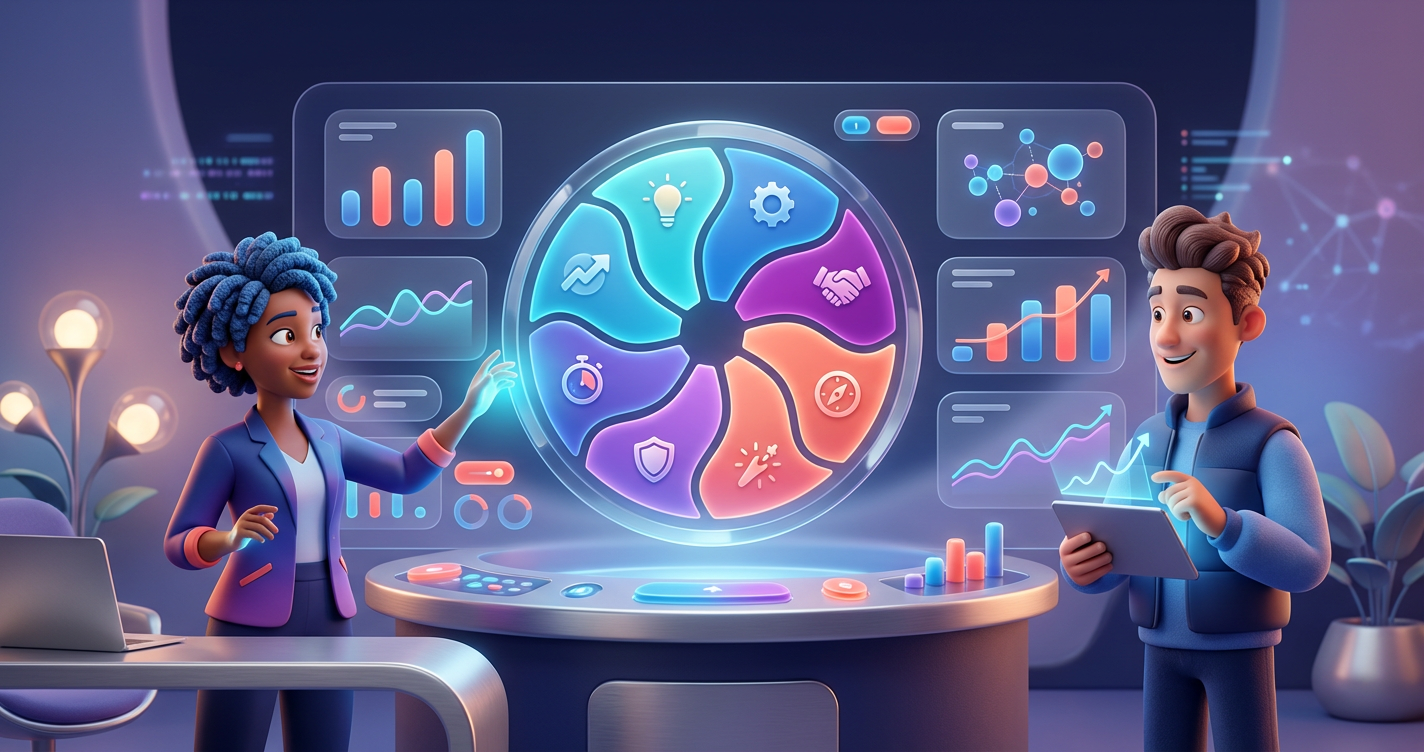
To predict how a team will perform, we first need to understand the activities that drive success. Our research has identified eight key work activities that all high-performing teams must execute: Evaluating, Coordinating, Campaigning, Pioneering, Advising, Helping, and Doing. Every team needs a balance of these actions to function effectively. If a team is heavy on Pioneers who love to innovate but lacks Doers to execute the ideas, the project will likely stall.
Predictive analytics allows you to map your current team against these eight activities. By inviting employees to complete a work personality assessment, you gain a visual representation of your team's collective strengths and blind spots. You can see, for example, if your leadership group is dominated by Evaluators who are excellent at risk assessment but might lack the empathetic touch of Helpers. This insight is predictive because it tells you exactly where conflict or stagnation is likely to occur in the future.
When you understand these dynamics, you can manage them proactively. If you know your team lacks a Coordinator to organise tasks and set priorities, you don't have to wait for a deadline to be missed to realise there is a problem. You can either develop those skills within the existing team or use the insight to inform your next hire. This is the essence of predictive analytics HR – using current data to prevent future failures and replicate past successes.
One of the most powerful applications of predictive analytics is in the recruitment process. Traditional hiring often relies on resumes and interviews, which are notoriously poor predictors of long-term job performance. Predictive analytics allows us to look deeper. By assessing candidates across three dimensions – Organisation Fit, Skills, and Qualifications – we can forecast how well they will integrate into the company culture and the specific team they are joining.
This is where Compono Hire becomes an invaluable tool for modern HR teams. The platform allows you to select the specific work personality you need for a role and then automatically scores and ranks candidates based on their likelihood of success. This isn't just about finding someone who can do the job; it's about predicting who will thrive in your unique environment. When you hire for fit as well as skill, you naturally see an increase in employee engagement and a decrease in early-stage turnover.
Imagine a scenario where you are hiring for a high-stakes sales role. You might naturally look for Campaigners who are persuasive and future-focused. However, if your data shows that your current sales team is struggling with follow-up and CRM hygiene, predictive analytics might suggest that you actually need an Auditor or a Coordinator to bring balance to the group. This data-driven approach ensures that every hire strengthens the team's overall capability rather than just adding more of the same.
Predicting who will stay and who will leave is a top priority for most people leaders. High turnover is expensive – not just in recruitment costs, but in lost knowledge and disrupted team morale. Predictive analytics HR helps you identify turnover risks by looking at engagement levels and behavioural shifts. When we understand what motivates different personality types, we can predict what will cause them to disengage. For instance, an Advisor who feels their voice isn't being heard in a rigid, directive environment is a high retention risk.
Using Compono Engage, leaders can gain deep insights into team sentiment and alignment. By regularly checking in on how employees feel about their work and their environment, you can spot the early warning signs of burnout or frustration. This allows for timely interventions, such as adjusting a person's responsibilities to better match their work personality or providing targeted development opportunities. When employees feel that their natural strengths are being utilised and their values are aligned with the company, they are far more likely to remain loyal.
We also need to consider the impact of leadership styles on retention. Our research shows that there is no single "best" way to lead; the most effective style depends on the situation and the team's needs. Predictive analytics can help a manager realise that while they naturally lean toward a directive style, their team of highly experienced Pioneers would perform better under a non-directive approach. Making these adjustments based on data-driven insights creates a more supportive work environment and significantly boosts retention rates.
Bias is often the silent killer of team performance. Whether it is a preference for candidates who went to the same university or a tendency to promote those who shout the loudest, unconscious bias leads to homogenous teams that lack the diversity of thought required for innovation. Predictive analytics HR serves as a powerful equaliser. By focusing on objective data – such as work personality types, skills assessments, and performance metrics – we can make decisions based on merit and fit rather than gut feeling.
When we use a platform like Compono to assess our workforce, we are looking at the fundamental psychological drivers of behaviour. This level of insight transcends traditional demographic markers. It allows us to see that a candidate from a completely different industry might be the perfect Evaluator your finance team needs. By broadening our perspective through data, we build more diverse, resilient, and capable organisations. Predictive analytics doesn't just tell us what will happen; it helps us create the future we want to see by ensuring every individual has the opportunity to succeed based on their unique strengths.
Key insights
- Predictive analytics HR moves beyond historical data to provide actionable forecasts for hiring, performance, and retention.
- High-performing teams require a calculated balance of the eight work actions, which can be mapped and managed using work personality assessments.
- Data-driven recruitment reduces the risk of bad hires by predicting cultural and team fit alongside technical skills.
- Understanding the natural leadership preferences of a team allows managers to adapt their style, improving engagement and reducing turnover.
- Using objective workforce intelligence is a critical step in reducing unconscious bias and building truly diverse teams.
Ready to see how workforce intelligence can transform your team? We've spent over a decade researching the psychology of high performance to help you make better people decisions.
Predictive analytics in HR involves using historical data, statistical modelling, and psychological research to forecast future workforce trends. This includes predicting which candidates are likely to perform best, identifying employees at risk of leaving, and understanding how team dynamics will shift when new members are added.
It improves hiring by moving away from subjective measures like gut feeling or resume keywords. By using assessments that measure organisation fit, personality, and skills, predictive tools can rank candidates based on their actual likelihood of long-term success in a specific role and team environment.
Yes, by identifying the factors that lead to disengagement for different work personality types. When managers understand what motivates their staff and can spot early signs of misalignment, they can take proactive steps to improve the work environment and keep their best talent.
Not at all. While large enterprises have more data, mid-market companies (60–1,000 staff) often see the most immediate impact. Having a clear, data-driven view of your team is essential for any business looking to scale efficiently and maintain a strong culture.
Actually, it's the opposite. By using predictive analytics to understand individual work preferences and motivators, leaders can treat their employees more like individuals. It allows for more empathetic management because you have a deeper understanding of what each person needs to be at their best.

1 min read
Hiring the wrong people occurs when there is a misalignment between a candidate's natural work preferences, skills, and the actual requirements of...

1 min read
To reduce bad hires, you must move beyond technical skills and assess how a candidate’s natural work personality aligns with the actual activities...

1 min read
A work personality assessment is a psychometric tool designed to map the natural work preferences and behavioural tendencies of individuals within a...