

.webp)

 Compono


1 min read
How to prevent bad hires and build high-performing teams
 Compono
You can prevent bad hires by moving beyond the traditional resume and focusing on a holistic assessment of a candidate’s work personality, cognitive...

To reduce bad hires, you must move beyond technical skills and assess how a candidate’s natural work personality aligns with the actual activities the role requires every day.
While a resume tells you what someone has done, it rarely reveals how they will behave when the honeymoon period ends or how they will contribute to your existing team dynamic. By shifting your focus toward Organisation Fit – which includes culture, job, and personality fit – you can create a repeatable process that identifies long-term success rather than just short-term relief.
Key takeaways
- Bad hires often stem from a misalignment between an individual's natural work preferences and the daily demands of the position.
- Evaluating the eight core work activities – such as Doing, Helping, and Pioneering – provides a clearer picture of potential performance than skills alone.
- A structured approach to Organisation Fit helps ensure new starters complement the existing team’s strengths and fill critical cognitive gaps.
- Reducing recruitment bias through objective personality data leads to more diverse, resilient, and high-performing workforces.
We have all felt the sinking feeling that comes a few weeks after a new starter joins, only for everyone to realise it isn’t working. The impact of a bad hire extends far beyond the initial recruitment fee or the time spent on LinkedIn. It ripples through your entire organisation, affecting team morale, project timelines, and even your brand’s reputation in the market. When a new person doesn't mesh with the culture or lacks the temperament for the specific pressures of the role, the rest of the team often has to pick up the slack, leading to burnout amongst your best performers.
Research suggests that the cost of a bad hire can be as much as 30% of the individual’s first-year earnings. However, for mid-market companies – where every person plays a pivotal role – that figure feels conservative. You aren't just losing salary; you are losing the 'opportunity cost' of what a high performer could have achieved in that same seat. To truly reduce bad hires, we need to stop looking at recruitment as a transaction and start seeing it as an exercise in workforce intelligence.

The traditional resume is a historical document, not a predictive one. It is a curated list of past responsibilities that tells you very little about future behaviour. Many managers fall into the trap of 'cloning' – looking for someone who looks exactly like the person who just left, or someone who mirrors their own traits. This approach often leads to teams that are homogenous and prone to groupthink, rather than teams that are balanced and capable of handling diverse challenges.
If you want to reduce bad hires, you have to look at the 'how' as much as the 'what'. For example, two candidates might both have a decade of experience in project management. However, one might be The Coordinator, thriving on structure and deadlines, while the other is The Pioneer, who excels at navigating ambiguity and creating new paths. If the role requires strict adherence to a pre-set compliance framework, hiring the Pioneer will likely result in a 'bad hire' – not because they aren't talented, but because the role doesn't match their natural work personality.
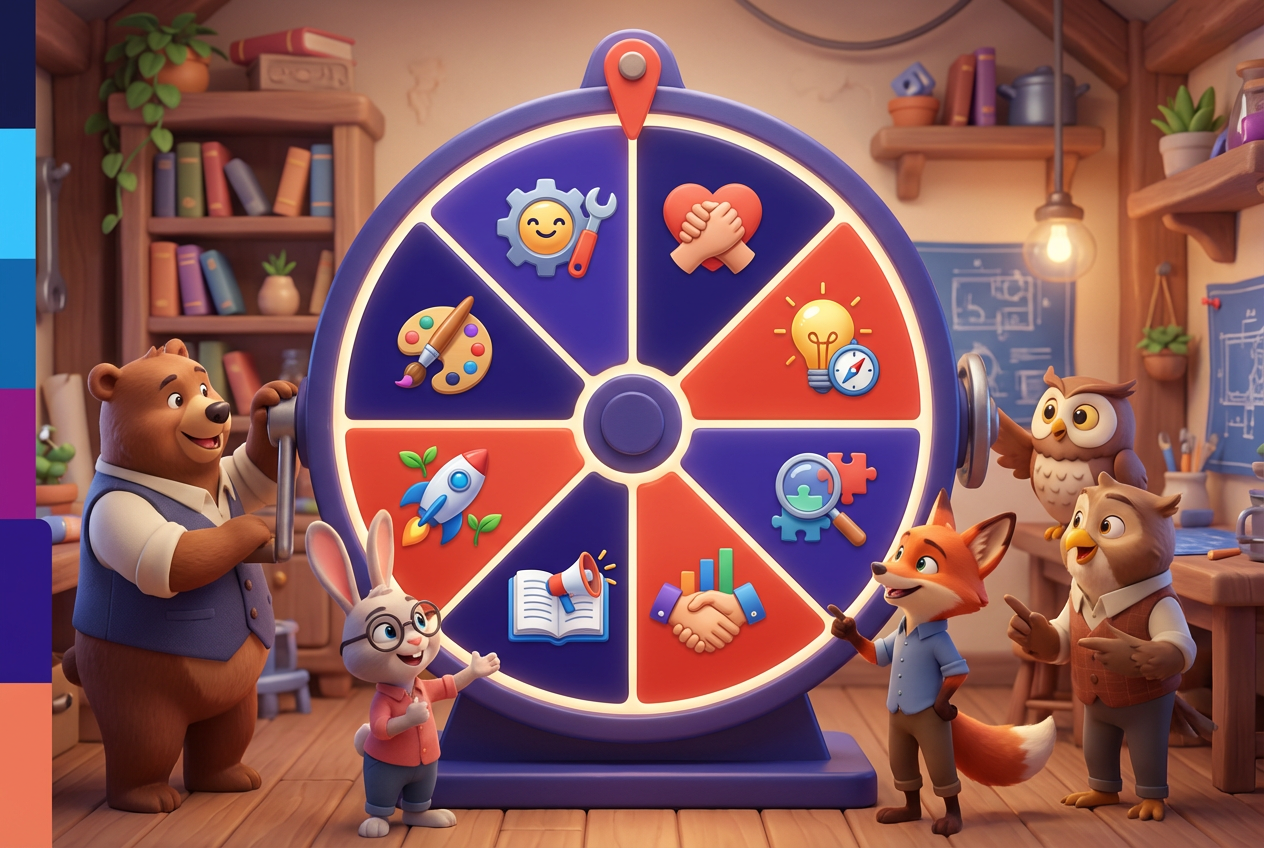
At Compono, our research into high-performing teams has identified eight key work activities that every successful team must perform: Evaluating, Coordinating, Campaigning, Pioneering, Advising, Helping, Auditing, and Doing. When you understand which of these activities are most critical for a specific role, you can begin to screen candidates with much higher precision. This isn't about finding 'perfect' people; it's about finding the right fit for the specific work that needs to be done.
Consider a customer service team. You likely need Helpers who are naturally empathetic and perceptive of others' feelings. If you accidentally hire an Evaluator – who is logical, critical, and focused on efficiency – they might solve the technical problem quickly but leave the customer feeling unheard. By using objective data to map these traits early in the funnel, you significantly reduce the risk of a mismatch. This is exactly how Compono Hire helps you assess candidates across Organisation Fit, ensuring they align with your culture and the specific demands of the job.
Reducing bad hires isn't just a recruitment problem; it's a culture and engagement challenge. Even a 'good' hire can become a 'bad' one if they are dropped into a toxic or unsupported environment. You need to ensure that once someone starts, they are placed in a position to succeed. This means understanding how their personality interacts with their manager and their peers. When leaders understand the natural tendencies of their people, they can adapt their management style to get the best out of everyone.
For instance, managing The Doer requires a different approach than managing The Campaigner. The Doer wants clear, concrete tasks and stability, while the Campaigner needs variety and a platform for their creativity. Using a tool like Compono Engage allows you to visualise these team dynamics in real time, helping managers resolve conflicts and keep engagement high. When people feel understood and their work matches their natural strengths, they are far less likely to leave, which naturally reduces the need for constant, high-risk hiring cycles.
Human intuition is a wonderful thing, but it is notoriously unreliable in job interviews. We are naturally drawn to people who are like us – a phenomenon known as affinity bias. This is one of the leading causes of bad hires. We ignore red flags because we 'just liked their vibe'. To reduce bad hires, you must introduce a layer of objective, evidence-based data into the decision-making process. This doesn't replace the human element; it informs it.
By implementing a standardised assessment process, you give every candidate a fair chance to show how they think and work. This data-driven approach allows you to rank candidates based on their actual fit for the role's requirements, rather than how well they can perform in a high-pressure interview setting. Teams that rely on these insights often find they hire people they might have otherwise overlooked – people who bring the exact 'cognitive diversity' the team was missing. You can learn more about this in The Compono Culture, Engagement & Performance Model, which details how alignment leads to superior business outcomes.
Key insights
- Resumes are historical records, whereas work personality assessments are predictive of future on-the-job behaviour.
- The cost of a bad hire includes lost productivity, decreased team morale, and significant financial setbacks for mid-market businesses.
- High-performing teams require a balance of eight core work personalities to ensure all necessary activities are covered.
- Using objective data to assess Organisation Fit reduces the impact of unconscious bias and improves long-term employee retention.
Reducing bad hires is about moving from guesswork to workforce intelligence. When you understand the 'why' behind your team's performance, you can make better decisions for your future.
The best way is to use a multi-dimensional assessment that looks at Organisation Fit. This involves checking if their work personality matches the core activities of the role and whether their values align with your company culture.
Interviews often measure social confidence and 'interview skill' rather than actual job performance. Many candidates can mask their natural work preferences for an hour, but those traits will always surface once they are in the role.
Most bad hires aren't due to a lack of technical skill; they are due to a mismatch in 'soft' areas like communication style, work pace, or a lack of alignment with the team's existing cognitive diversity.
Personality assessments provide a neutral, data-driven baseline for all candidates. This forces hiring managers to look at objective fit scores rather than relying on 'gut feel', which is often clouded by unconscious bias.
While skills can be taught, fundamental work personality and values are much harder to change. It is usually more effective to ensure the person is in a role that naturally suits their temperament than to try and train them out of their natural behaviours.

1 min read
You can prevent bad hires by moving beyond the traditional resume and focusing on a holistic assessment of a candidate’s work personality, cognitive...

1 min read
Science-backed hiring tools are objective assessments and data-driven platforms that use organisational psychology to predict job performance and...

1 min read
Compono Hire evaluates candidates across organisation fit, skills, and qualifications, using behavioural science to predict which applicants will...