

.webp)

 Compono


1 min read
Why hotels need culture fit hiring
 Compono
Hotels need culture fit hiring because a candidate's natural work style and behavioural preferences dictate how they handle the relentless pressure...

You can prevent bad hires by moving beyond the traditional resume and focusing on a holistic assessment of a candidate’s work personality, cognitive abilities, and organisational alignment.
Hiring is one of the most significant investments your business makes, yet many leaders still rely on gut feel or static documents that only tell half the story. To truly protect your culture and your bottom line, you need a recruitment process that identifies not just who can do the job, but who will thrive in your specific environment over the long term.
Key takeaways
- The true cost of a bad hire often exceeds three times the individual's annual salary when accounting for lost productivity and team disruption.
- Resumes are historical documents that fail to predict future behaviour or how a person will interact with their specific team members.
- Objective data from work personality assessments provides a clearer picture of job fit than traditional unstructured interviews.
- Culture fit is not about hiring people who are exactly the same, but about finding those whose values and work preferences align with the team's goals.
We have all felt the immediate sting of a recruitment mistake – the awkward silence in meetings, the missed deadlines, or the sudden dip in team morale. However, the damage often runs much deeper than the surface-level frustrations. When you fail to prevent bad hires, you are effectively introducing a bottleneck into your most critical systems. It is not just about the salary paid to the wrong person; it is about the time your best performers spend fixing mistakes and the impact on your customer experience.
Research suggests that a single bad hire can cost a business tens of thousands of dollars in direct and indirect expenses. This includes the cost of advertising the role again, the time spent by HR and management on offboarding and re-hiring, and the 'cultural tax' paid by the remaining team. When a new starter does not match the team's rhythm, the high-performing staff often have to pick up the slack, leading to burnout and potentially losing your 'A-players' because of one poor selection decision.
At Compono, we believe that the best way to avoid these pitfalls is to shift the focus from 'who looks good on paper' to 'who is the right fit for this specific role and culture'. By understanding the underlying mechanics of how people work, you can make decisions that are backed by science rather than just a pleasant conversation in an interview room. This transition from subjective to objective hiring is the first step in protecting your organisation's future.

The resume has been the standard for decades, but it is increasingly becoming an unreliable tool for modern recruitment. A resume is essentially a marketing document – it highlights past achievements and curated skills, but it says very little about how a person handles stress, how they collaborate with others, or what motivates them to go the extra mile. If you rely solely on these documents, you are only seeing the candidate's 'highlight reel'.
To prevent bad hires, you must look at the person behind the bullet points. For instance, a candidate might have five years of experience in project management, but if their natural work personality is that of The Pioneer, they might struggle in a role that requires strict adherence to repetitive administrative audits. Conversely, The Auditor might find a highly chaotic, fast-paced 'start-up' environment incredibly draining, regardless of their technical ability to do the work.
This is where deep intelligence comes into play. By using Compono Hire, organisations can move beyond the resume to assess candidates across three critical dimensions: Organisation Fit, Skills, and Qualifications. This multi-layered approach ensures that you aren't just hiring a set of skills, but a person who actually wants to do the work in the way your company needs it done. It removes the guesswork and provides a structured framework for every hiring decision you make.
One of the most common reasons for a 'bad hire' isn't a lack of skill, but a clash of work styles. You might hire a brilliant technician who simply cannot communicate effectively with the rest of the group. To prevent bad hires, you need to understand the existing chemistry of your team before you add a new element to the mix. Every person has a dominant work preference that dictates how they spend their energy and what tasks they are likely to avoid.
Consider a team full of Campaigners. While the energy and vision would be incredible, the team might struggle with follow-through and attention to detail. Adding another visionary might actually decrease performance. In this scenario, you might actually need The Doer or The Coordinator to ground the big ideas in reality and ensure deadlines are met. Hiring for 'fit' doesn't mean hiring more of the same; it means hiring what the team is currently missing.
We find that when leaders have access to these insights, they can spot potential conflicts before the contract is even signed. If you know a candidate is an Evaluator, you know they will bring logic and critical thinking, but they might be blunt. If your team is primarily made up of Helpers, you need to ensure the new hire understands how to deliver that logic without damaging the harmonious culture you've built. Understanding these nuances is the key to long-term retention and high performance.
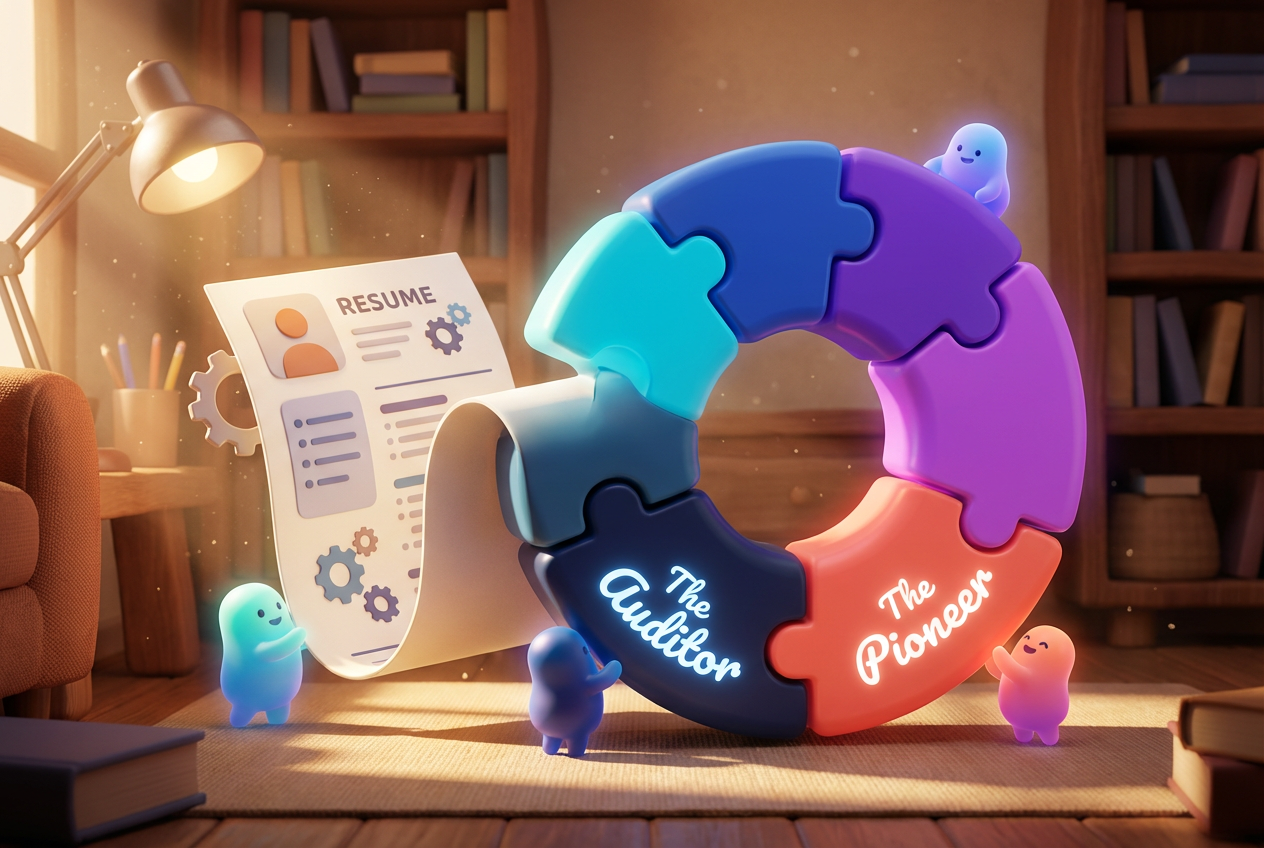
The unstructured interview – where a manager simply 'has a chat' with a candidate – is one of the least effective ways to predict job performance. We are all prone to unconscious bias, often favouring people who are similar to us or who share our interests. To prevent bad hires, you must implement a structured interview process where every candidate is asked the same set of competency-based questions and scored against a clear rubric.
This structure allows you to compare 'apples with apples'. Instead of being swayed by a candidate's charisma, you are evaluating their specific responses to situations they will actually face in the role. When you combine this structure with psychometric data, the results are powerful. You can use the data to probe specific areas of concern – for example, asking an Advisor how they handle situations where a quick, firm decision is required without the luxury of collaboration.
At Compono, we help leaders automate this scoring and ranking. Our platform allows you to select the specific work personality you need for a role and then automatically ranks candidates based on their alignment with those needs. This doesn't replace the human element of hiring; it empowers it. It gives you the evidence you need to back up your intuition, ensuring that the person you choose today is still a high performer two years from now.
Key insights
- Preventing bad hires starts with defining the specific work personality traits required for success in a given role, not just the technical skills.
- Structured recruitment processes that include objective assessments significantly reduce the impact of unconscious bias.
- Team diversity in work styles – such as balancing Pioneers with Auditors – creates a more resilient and capable workforce.
- The cost of a recruitment mistake is not just financial; it is a drain on team morale and organisational momentum.
Building a high-performing team requires the right tools and a commitment to data-driven decision making. If you are ready to transform your recruitment process and protect your culture, we can help.
Look for inconsistencies between their stated experience and their natural work preferences. Use structured, competency-based questions that require specific examples of past behaviour, and compare these against objective assessment data to see if their natural tendencies match the requirements of the role.
For small teams, cultural alignment is paramount. Use a work personality assessment to map your current team's strengths and gaps. This allows you to hire for the specific traits – like organisation or creativity – that your team currently lacks, rather than just hiring another person who 'fits in' socially.
While skills can be taught, fundamental work personality and values are much harder to change. If the issue is a lack of technical knowledge, training is effective. However, if the 'bad hire' is due to a fundamental mismatch in work style or motivation, training rarely solves the underlying problem.
Gut feeling is often a collection of unconscious biases. We tend to like people who are similar to us, which can lead to a lack of diversity and 'groupthink'. Objective data provides a neutral baseline that helps you see the candidate's actual potential rather than just your personal rapport with them.
Compono provides a workforce intelligence platform that uses science-based assessments to measure Organisation Fit, personality, and skills. By providing a clear score and ranking for candidates, we help you make informed decisions that align with your team's long-term goals.
1 min read
Hotels need culture fit hiring because a candidate's natural work style and behavioural preferences dictate how they handle the relentless pressure...
1 min read
Personality testing earns its place in hiring when the assessment is built for work rather than for self-discovery, applied in exactly the same way...

1 min read
Culture fit in recruitment is the process of identifying candidates whose values, beliefs, and work behaviours align with your organisation’s...
 Mathan Allington