

.webp)

 David Youngman


1 min read
What a customer service award actually measures
 Mathan Allington
Compono just won The Talent Tech Customer Service Award at the TIARA Talent Acquisition & Talent Tech Awards ANZ 2026. Our Customer Success and...
.jpg)
Championing customers isn't about saying "yes" to every request. It's about deeply understanding their needs, building a professional system to track and progress those needs, and having the courage to fight for the changes that will make them successful.
It’s easy to forget that behind every SaaS dashboard metric or support ticket is an actual human being. A "customer" becomes a data point on a dashboard or a ticket number in a queue.
As leaders in Success and Support, our job isn't just to solve problems, it's to be the internal heartbeat of the customer's experience.
It sounds basic, but listening is often where the ball gets dropped. Customers frequently ask for a specific feature because they've already tried to solve a problem in their head, and they've jumped straight to the solution without sharing the underlying need.
To champion them effectively, you have to peel back the layers:
Dig Deeper: When a customer says "I need a button that exports to CSV," don't just log the request. Ask, "What are you doing with that data once it's out of our system?" What they are trying to achieve could be very different to what they actually asked for.
The Goal vs. The Ask: You might find their end goal is a specific report they need to share with their boss. If you only advocate for the "button," you might miss the chance to build a better, automated reporting suite that actually solves their pain.
The "Why" Defines the Value: Understanding the root cause allows you to present a much stronger business case to your Product team, and often opens up a better solution than the one the customer originally envisioned.
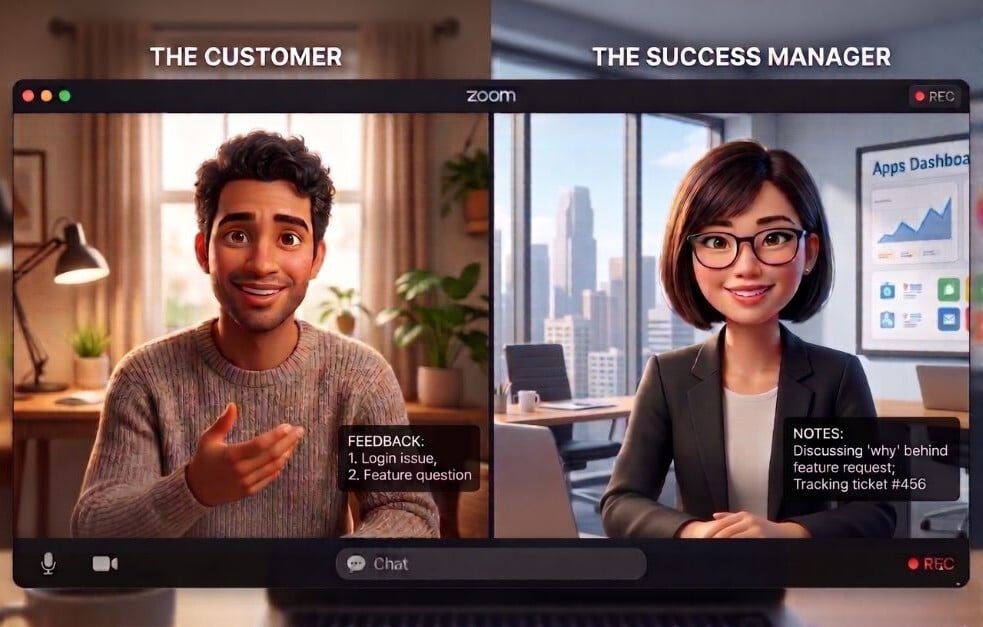
We've all seen it: a great piece of feedback is dropped into a 'product-feedback' Slack channel, gets three emoji reactions, and is never heard from again. If feedback isn't tracked, it doesn't exist. And when feedback disappears, customers feel ignored, even if your team genuinely cares.
To be a true champion, you need a disciplined internal workflow:
Centralise the Intelligence: Whether you use a dedicated tool like Aha!, or a structured Jira project, feedback needs a home. Everyone on the customer-facing team should know exactly how to raise feedback, and it should be second nature to do so every time something meaningful comes up.
Close the Loop: A champion stays across the full lifecycle of a request. You should be able to tell a customer, and your own team, exactly where a piece of feedback stands: Under Review, Planned, Parked, or Declined. That kind of visibility builds trust on both sides.
The Gentle Nudge: Product teams have competing priorities, and roadmaps shift. Having a documented trail allows you to remind them of long-standing friction points with data-backed evidence rather than gut feelings.
Aggregate Impact: Implement a system (like 'voting' or tallies) to track and quantify feedback shared by multiple customers, boosting its overall impact and priority.
In the tug-of-war between engineering constraints, roadmaps and competing priorities, the customer's voice can get drowned out. Your role is to make sure it stays loud.

Quantify the Impact: Don't just say "customers want this." Say "this friction point appears in 20% of our churned accounts" or "this enhancement would save our top-tier users five hours a week." Numbers get attention in ways that anecdotes alone often don't.
Humanise the Data: Share the stories too. Bring a quote from a frustrated high-value user to your next cross-functional meeting. Real voices cut through in a way that spreadsheets can't.
Be Assertive: If you know a specific update will be a game-changer for retention, don't be afraid to push. You are the expert on the user experience, use that authority to influence the roadmap. If a piece of feedback has been sitting in the backlog for months and you know the impact it would have, bring it back up. Make it hard to ignore.
Championing your customers requires more than just empathy. It requires a strategy to move you from being a ‘reactive responder’ to a ‘proactive advocate’.
David Youngman is the Senior Manager of Customer Success & Support at Compono, an Australian people and culture platform that combines hiring, culture, and learning with people insight.
1 min read
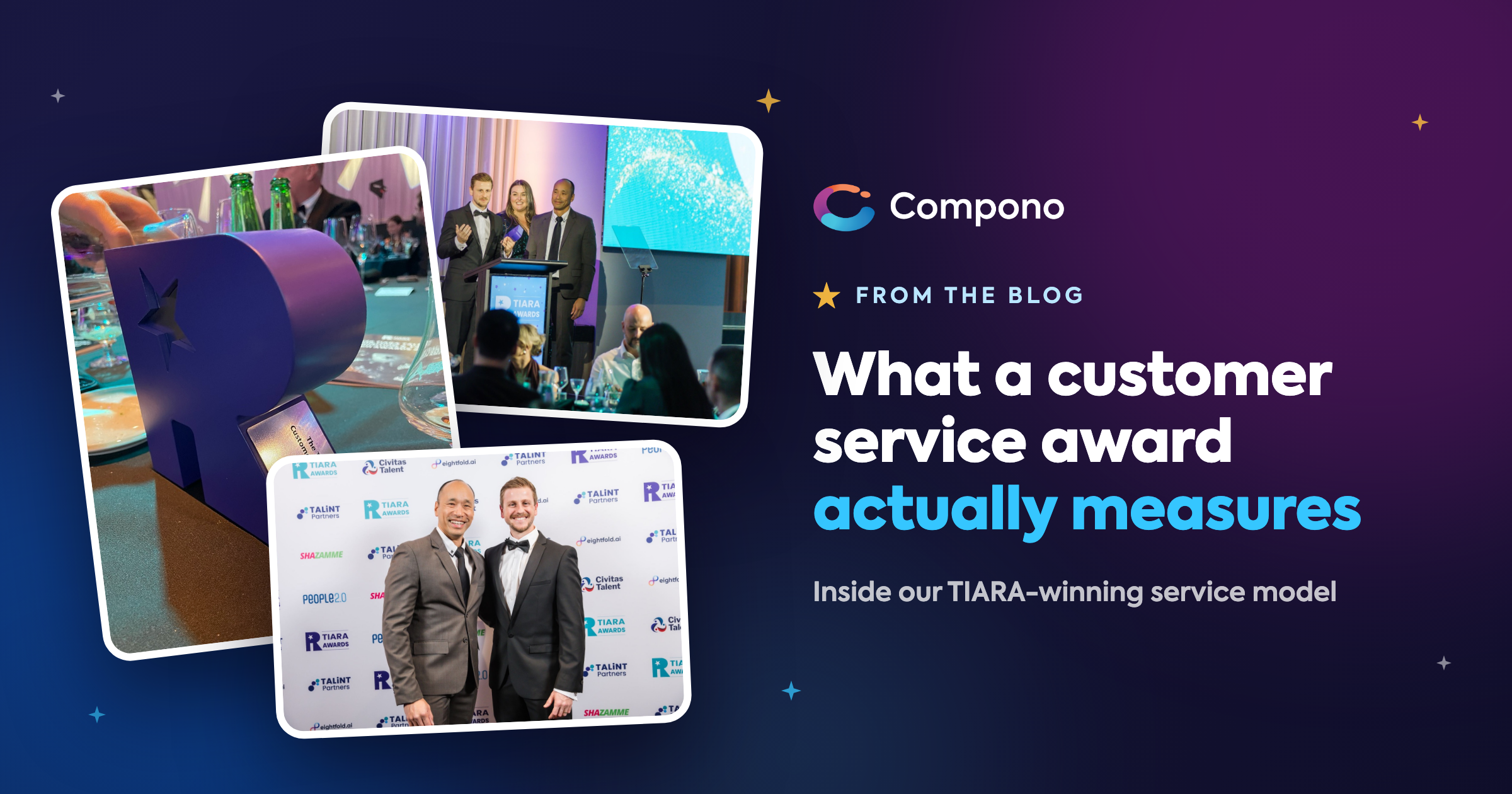
Compono just won The Talent Tech Customer Service Award at the TIARA Talent Acquisition & Talent Tech Awards ANZ 2026. Our Customer Success and...

1 min read
Workplace culture is the set of shared values, assumptions and behaviours that determine how work actually gets done in your organisation. It is...

1 min read
For a long time, most companies have stuck to a pretty shaky idea: if a new employee fails, it must be HR’s fault.
 Daryl Ning