

.webp)

 Compono


1 min read
Effective compliance training completion tracking for modern teams
 Mathan Allington
Last reviewed July 2026.
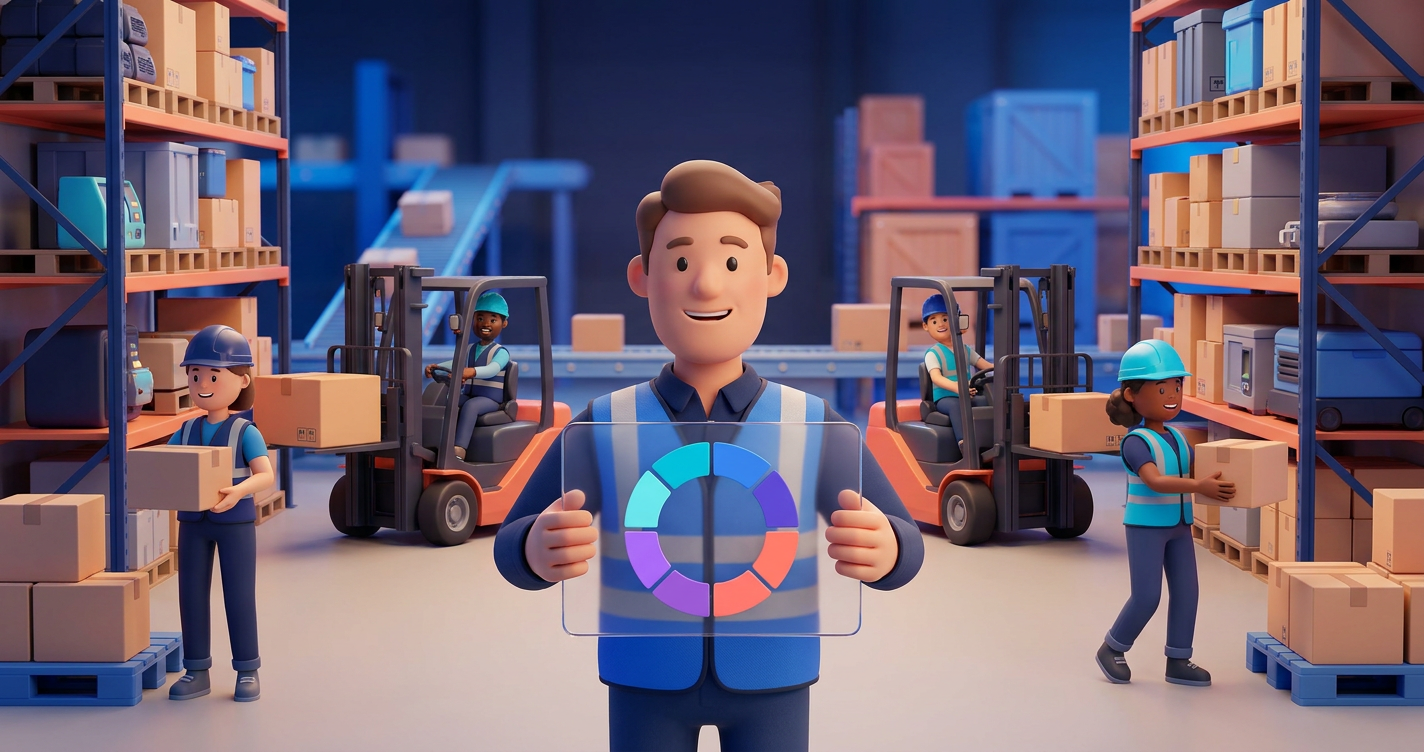
Logistics companies need a competency framework builder to solve the persistent challenge of skill gaps and high turnover by defining the exact behaviours, technical skills, and safety requirements needed for every role.
While the industry often focuses on physical infrastructure and fleet management, the most significant bottleneck in modern supply chains is often the lack of a structured approach to workforce intelligence. By building a clear map of what success looks like, you can move away from reactive hiring and start building a resilient, high-performing team that can handle the complexities of today’s global trade.
Key takeaways
- Competency frameworks provide a single source of truth for skills, reducing hiring bias and improving role clarity across warehouses and distribution centres.
- Using a digital builder allows logistics leaders to rapidly adapt to technological shifts, such as automation and AI integration, without rewriting every job description from scratch.
- Defined competencies improve safety outcomes by ensuring every team member is assessed against specific, measurable behavioural standards before they step onto the floor.
- A structured framework supports long-term retention by showing employees a clear path for development and career progression within the organisation.
In the fast-paced world of logistics, the pressure to move goods quickly often leads to a 'bums on seats' approach to recruitment. You might find yourself hiring for a general set of skills – like warehouse experience or a forklift licence – without ever defining the specific behaviours that make someone successful in your unique culture. This lack of clarity is a silent profit killer. When a new hire doesn't understand the exact expectations of their role, their performance suffers, and they are far more likely to leave within the first six months.
We have seen that high turnover in logistics is rarely just about the pay. Often, it is about the frustration of working in an environment where the goalposts constantly move. A competency framework builder allows you to pin those goalposts down. It helps you move beyond basic job descriptions to a detailed map of the 'how' behind the 'what'. For example, while a task might be 'loading a truck', the competency required is 'meticulous attention to spatial safety' or 'effective communication in high-pressure environments'.
Without these definitions, your managers are left to hire and promote based on gut feel. This leads to inconsistent team performance and, in many cases, a culture that feels unfair or biased. By centralising these requirements through a digital tool, you ensure that every site manager and recruiter is working from the same playbook. This consistency is the bedrock of a scalable logistics operation, allowing you to replicate success as you expand into new territories or facilities.

The logistics sector is currently undergoing a massive technological shift. From automated picking systems to sophisticated route-optimisation software, the skills your team needed five years ago are likely different from what they need today. This is where a traditional, static document fails. A digital competency framework builder allows you to be agile. When you introduce a new piece of technology, you can update the required competencies across all relevant roles instantly, ensuring your training and recruitment stay aligned with your operational reality.
Consider the role of a warehouse supervisor. In a manual facility, the primary competency might be physical oversight and manual scheduling. In a modern, automated hub, that supervisor needs to be a Coordinator who can manage complex digital workflows and troubleshoot system errors. If your hiring criteria don't reflect this change, you will end up with a workforce that is technically capable but strategically lost. We believe that workforce intelligence is about more than just tracking hours – it is about understanding the evolving DNA of your team.
At Compono, we help logistics leaders bridge this gap by providing tools that map individual potential against these shifting requirements. Our Compono platform allows you to identify which of your current employees have the natural aptitude to transition into tech-heavy roles, reducing the need for expensive external hiring. This proactive approach to skill management ensures that your human capital remains an asset rather than a legacy cost as you modernise your infrastructure.
Safety is the non-negotiable priority in any logistics environment. Most companies have rigorous safety protocols, yet accidents still happen. Why? Because safety is as much about behaviour as it is about rules. A competency framework builder allows you to bake safety-critical behaviours directly into your performance standards. Instead of just checking if someone has read the safety manual, you are assessing their competency in 'situational awareness' or 'proactive risk mitigation'.
When you define these behaviours clearly, you can assess candidates for their safety mindset before they even start. For instance, an Auditor personality type might naturally excel in roles requiring high levels of precision and adherence to safety standards. By using a framework to identify these traits, you are not just hiring a worker – you are hiring a safer workplace. This methodical approach reduces the frequency of incidents and can significantly lower insurance premiums and legal risks over time.
Furthermore, having these standards in place makes it easier to provide constructive feedback. When a supervisor needs to address a safety concern, they can point to the specific competency in the framework. This removes the 'personal' element from the critique and focuses the conversation on professional standards. It transforms safety from a list of 'don'ts' into a proactive set of 'dos' that every team member is empowered to uphold, creating a culture of mutual accountability on the warehouse floor.
The logistics industry is notorious for high-volume recruitment needs, especially during peak seasons. Trying to find the right people quickly without a clear framework is like trying to build a puzzle without the box lid. A competency framework builder simplifies the recruitment process by creating a standardised set of criteria for every role. This allows recruiters to move faster and with more confidence, knowing exactly what they are looking for beyond just years of experience.
When your competencies are clearly defined, you can automate much of the initial screening process. You can use assessments that specifically target the core competencies required for the role, such as physical stamina, numerical literacy, or team collaboration. This ensures that the candidates who reach the interview stage are already a high-quality match for the position. It saves your hiring managers hours of wasted time and ensures that you don't lose top talent to competitors because your process was too slow.
At Compono, we have seen how a structured approach transforms the hiring experience. Our Compono Hire module uses these frameworks to score and rank candidates based on their fit for the role, the team, and the organisation. This doesn't just speed up the process – it improves the quality of every hire. By focusing on the competencies that actually drive performance in logistics, you can build a more stable workforce that is better equipped to handle the seasonal peaks and troughs of the industry.
One of the biggest reasons people leave logistics roles is the feeling that they are in a 'dead-end' job. Without a competency framework, it is difficult for an employee to see how they can move from a warehouse hand to a shift lead or a site manager. A framework builder creates a transparent career ladder. It shows employees exactly which skills and behaviours they need to develop to move to the next level. This transparency is a powerful tool for engagement and retention.
When employees feel that their growth is being actively managed, they are far more likely to stay with the company long-term. You can use the framework to guide professional development and training programmes. If a high-potential employee wants to move into a leadership role, you can look at the competencies for that role and identify their specific gaps. This allows for hyper-targeted training that actually delivers results, rather than a generic 'one-size-fits-all' approach to learning.
Investing in your people through a Compono Develop strategy ensures that you are building a pipeline of future leaders from within. This is not only more cost-effective than external recruitment but also ensures that your leaders have a deep understanding of your operations and culture. In an industry where experience is invaluable, keeping your best people is the most effective way to maintain a competitive edge. A competency framework is the map that makes that journey possible for every member of your team.
Key insights
- Competency frameworks transform logistics recruitment from a reactive 'gap-filling' exercise into a strategic workforce planning tool.
- A digital builder ensures that safety and technical standards are consistent across multiple locations, reducing operational risk.
- By defining behavioural expectations, logistics leaders can improve team culture and significantly reduce the costs associated with early-stage turnover.
- Structured frameworks provide employees with a visible career path, which is essential for retaining talent in a highly competitive labour market.
Building a resilient logistics workforce starts with a clear understanding of the skills and behaviours that drive success in your specific environment. By moving away from static job descriptions and embracing a dynamic competency framework, you can improve safety, speed up hiring, and keep your best people for longer.
Using a traditional manual process, it can take months of interviews and documentation. However, with a digital competency framework builder like Compono, you can start with industry-standard templates and customise them for your specific needs in a matter of days or weeks.
Actually, it does the opposite. While there is a small upfront investment in defining the roles, the long-term result is a much faster hiring process. Because you know exactly what you are looking for, you can screen candidates more efficiently and reduce the time spent on unproductive interviews.
Yes, and this is where the real value lies. You can use the framework for performance reviews, identifying training needs, and planning for internal promotions. It provides a fair and objective way to measure and support the growth of your entire team.
Usually, it is best to have a core framework that applies across the whole organisation to ensure consistency. However, a good builder tool will allow you to add site-specific competencies where necessary – for example, if one facility handles hazardous materials while another focuses on cold storage.
The key is to make it easy to use. By integrating the framework into your digital recruitment and development tools, it becomes a natural part of their daily workflow. When managers see that it helps them hire better people and reduces their turnover headaches, they quickly become its biggest advocates.

1 min read
Last reviewed July 2026.

1 min read
A continuous listening platform is a digital system that captures, analyses and acts on employee feedback in real time, replacing the single annual...

1 min read
Traditional workplace training fails because it often treats skills as isolated tasks rather than behaviours rooted in a person's natural work...
 Compono