1 min read
How an HR intelligence platform transforms modern team performance
An HR intelligence platform is software that turns people data into decisions across the employee lifecycle: who to hire, how to engage them, and...
Voice or text coaching built on psychology. For you, your team, or the candidates you place.
A coach that actually gets you.
Get 10 minutes free, then $15 a month. Cancel anytime.
Get Started ≫6 min read
Mathan Allington
Updated on August 19, 2026
Last reviewed August 2026
HR insights are the conclusions you draw from people data: who to hire, how to balance a team, where culture needs attention and which managers need support. An HR insights platform collects that data (work personality, culture, engagement, performance) and turns it into those decisions. An HRIS records what happened; an insights platform tells you what to do next. This guide covers what counts as an insight, how the tools differ, where candidate insights fit, and how to choose one.
An insight is a finding you can act on, which is a different thing from a report. "Turnover was 18% last year" is a number. "Turnover is concentrated in two teams that share a manager, and both teams score lowest on psychological safety" is an insight, because it points at a decision. HR insights sit at three depths. Descriptive insights say what is happening (engagement is falling in operations). Diagnostic insights say why (the team has lost the two people who held its structure together, and the remaining mix is all ideas and no follow-through). Predictive insights say what will happen next (this candidate is likely to thrive here; that top performer is likely to leave within six months) and let you act before it does.
The raw material is people data most organisations already collect but rarely connect: assessment results, engagement and culture surveys, performance ratings, tenure and exit data, and the composition of each team. The value is created when those sources sit together and are read against each other. That is the job of an insights platform, and it is why a spreadsheet of survey scores, however tidy, is not one.
HR is managing two different types of risk, and most tools only solve one. Process risk covers admin, compliance, payroll and onboarding errors, and existing HR tech handles it well. People insight risk is the other kind: wrong hires, top performers quietly disengaging, training that never builds capability, culture breaking down while the dashboards stay green. Most HR tech ignores it entirely.
An HR insights platform exists to reduce that second risk, and the platforms worth paying for reduce both. Buy against that standard: decision quality first, processing speed second. The Compono platform was built around exactly this pairing.
Buyers searching for HR insights software or an "insights HR tool" are usually trying to work out which category they need. The table sets out the difference at a capability level.
| Category | What it holds | Question it answers | Typical example |
|---|---|---|---|
| HRIS (system of record) | Employment records, payroll, leave, contracts | What is the current state of each employee's record? | Headcount by department, leave balances |
| HR reporting and analytics | Aggregated metrics drawn from the HRIS and surveys | What happened, and how does it trend? | Turnover rate by quarter, engagement score by team |
| HR insights platform | Assessment, culture, engagement and performance data read together | Why is it happening, and what should we do next? | Which teams are unbalanced, which hire will thrive, where culture is drifting from intent |
Most organisations need the first and the third. Reporting is a feature of both, and it is only ever as good as the data underneath it. If the platform cannot see how people prefer to work and how teams are composed, its analytics describe symptoms. The intelligent HR platform guide goes further into what separates an intelligence layer from a reporting one.
For most people leaders, managing a team can feel like assembling a jigsaw in a dimly lit room: all the pieces are there, but how they fit is guesswork. You can see turnover creeping up or productivity dipping in one department, but the why stays out of reach, and annual surveys do not help much because the results are stale by the time they are processed.
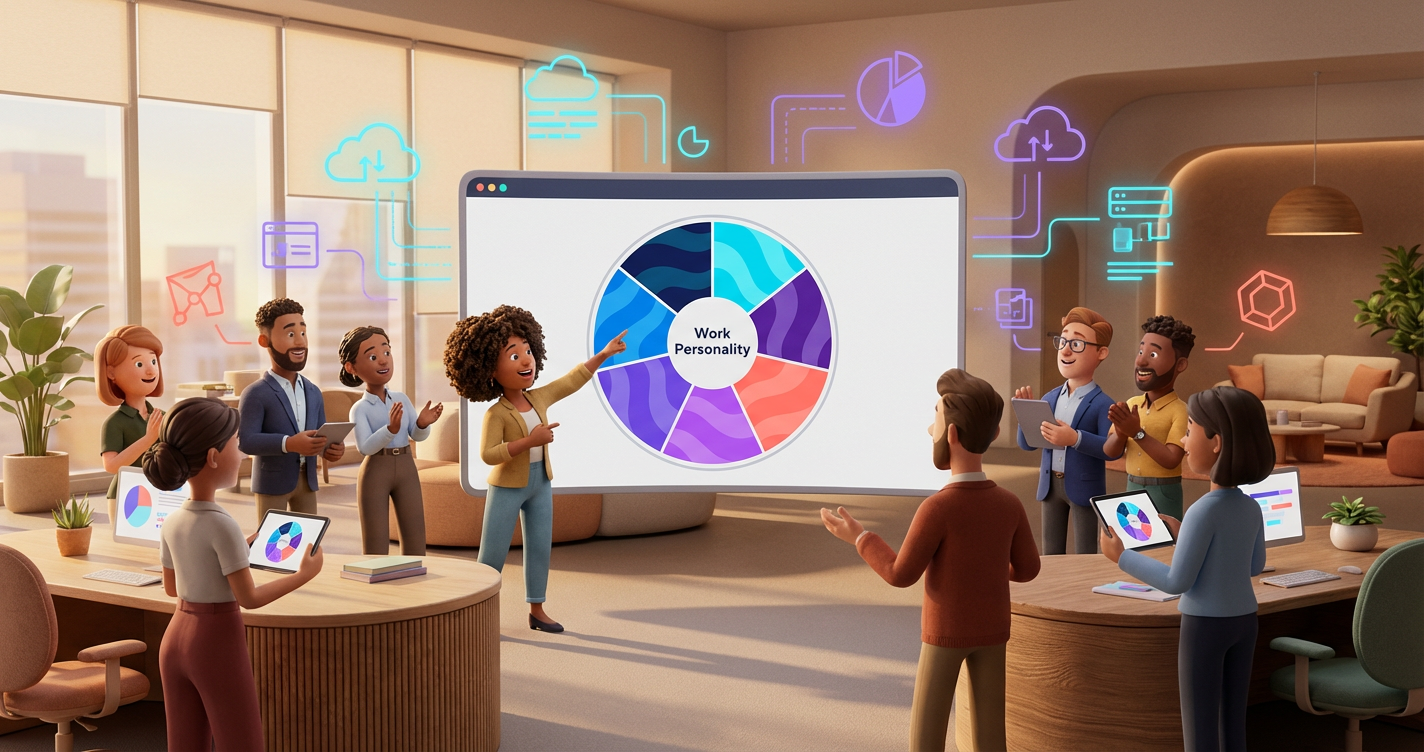
Evidence-based management replaces that guesswork, and work personality is the piece that makes teams legible. Every employee brings a distinct work personality, and a good insights platform looks at how a person naturally prefers to work and communicate, not only what their CV says. Compono's research maps eight work personality types that high-performing teams need to cover between them: Doer, Auditor, Helper, Advisor, Pioneer, Campaigner, Evaluator and Coordinator. Teams need all eight ways of working covered, which is a different thing from needing eight people.
Seen through that lens, team problems stop being mysterious. A team full of Pioneers who love new ideas but with no Auditors to check the detail will ship fast and break things it should not. Once you can see the imbalance, you can correct it deliberately, balancing the team for long-term stability rather than short-term output. The assessment that reveals a person's type is free: four questions, about two minutes, at compono.com/me.
The point of hire is the most consequential people decision an organisation makes, and it is usually where the data is weakest. Most recruitment weighs skills and experience while ignoring organisation fit, which is precisely the factor that predicts whether the hire lasts. Candidate insights fix that by bringing the same people data forward to the front door.
In practice that means assessing candidates against your existing culture and team composition before the contract is signed, so the shortlist comes with evidence about how each person prefers to work and what they will add to the team as it stands. The aim is culture add rather than cloning: finding the piece the team is missing. Compono Hire does this natively, assessing candidates on organisation fit as well as skills and qualifications, so new starters land in work that suits how they naturally operate and the profile follows them into the team. For people leaders who want the applicant tracking layer to carry this kind of insight rather than just process applications, the strategic ATS guide sets out what to ask for.
Leadership is not one-size-fits-all. A team facing a hard deadline may need a directive approach, while a team inventing something new thrives with autonomy. A live view of team composition tells you which style will land: leading a group of Helpers through conflict looks very different from leading a group of Evaluators through the same conflict.
The same data builds empathy. Instead of wondering why one employee resists a new process, you can see they are a Doer who needs a stable framework to feel secure, and manage the change accordingly. That understanding turns friction into collaboration, and it gives a manager something more useful than a personality label: a reason.
Engagement stops being a buzzword when it is linked to culture and performance data. A platform that reads them together shows whether psychological safety is dipping and whether a team is drifting toward burnout, and surfaces both before they become a resignation letter.
It also changes the boardroom conversation. Turning qualitative feelings into quantitative evidence means you can show the return on people initiatives instead of asserting it. Compono Engage measures culture, climate and work personality together and does it continuously, so the intervention happens while it can still change the outcome.
Buy for the second risk and you will find the first is handled along the way. Buy only for the first and you will have very clean records of decisions you could not defend.
Compono captures work personality, culture, engagement and hiring data in one place, so the next people decision comes with evidence rather than gut feel.
See how it worksHR insights are the actionable conclusions drawn from people data: for example, that turnover is concentrated under one manager, that a team is missing the work personalities it needs to finish what it starts, or that a candidate is likely to thrive in a particular team. They differ from reports because they point at a decision.
A standard HRIS (human resources information system) handles administrative records: payroll, leave, contracts and employment records. An HR insights platform focuses on people intelligence, reading work personalities, team culture, engagement and performance drivers to guide decisions rather than maintain records. Most organisations need both; only one of them tells you what to do next.
Candidate insights are the same people data applied before hiring: an assessment of how a candidate prefers to work and how well they fit the organisation and the team as it stands, presented alongside their skills and qualifications so the shortlist comes with evidence.
It identifies the root cause of friction between different work personalities. A clash between a detail-focused Auditor and a big-picture Pioneer looks personal until the data shows both are doing exactly what their type does best. Framed that way, the difference becomes a complementary strength instead of a running battle.
Mid-market companies (roughly 60 to 1,000 staff) usually see the fastest return because their team complexity has outgrown gut feel. Any business that relies on people to drive results can benefit from understanding its team's work personalities and engagement, and the insights arrive within days of the first assessments being completed.

Compono Hire helps you predict job-fit and team-fit using behavioural science, so you can shortlist with confidence.
Request a demoBuilt for mid-market hiring teams.

Voice-first coaching that adapts to your personality. Get actionable steps you can take this week.
Start freeBuilt by Compono. Not therapy — practical behaviour change.
1 min read
An HR intelligence platform is software that turns people data into decisions across the employee lifecycle: who to hire, how to engage them, and...
1 min read
DISC and the Big Five measure different things. DISC describes observable communication styles across four quadrants, which makes it quick to learn...
1 min read
A workforce intelligence platform is a centralised system that uses data and psychology to help leaders understand their people, design balanced...