Why 70% of hires fail and how to fix your strategy
Research indicates that up to 70% of hires fail to meet expectations or leave within their first year, primarily because traditional recruitment...
Hey Compono helps you understand your personality and how to turn it into your superpower.
First 1,000 users get 10 minutes free.
Just $15 a month after that — cancel anytime.
The AI coach that actually gets you.
First 1000 users get 10 minutes free.
Get Started ≫
A talent architect is a strategic HR professional who designs and builds workforce structures based on data-driven insights rather than just filling immediate vacancies.
Key takeaways
- Talent architects focus on the long-term structural integrity of a team rather than short-term recruitment fixes.
- Success in this role requires a deep understanding of work personality types to ensure the right people are in the right seats.
- Using workforce intelligence allows you to predict where skills gaps will emerge before they impact your bottom line.
- Effective talent architecture balances technical skills with organisational fit to reduce turnover and boost performance.
For a long time, the standard approach to hiring was reactive. A manager would realise they had a gap, HR would post a job ad, and everyone would hope the best candidate applied. But as many people leaders have realised, this 'post and pray' method often leads to teams that look good on paper but fail to gel in reality. This is where the concept of the talent architect comes in to change the game.
A talent architect doesn't just look at a resume; they look at the blueprint of the entire organisation. They ask how a new hire will complement the existing team's strengths and fill their collective blind spots. It is about moving away from being a 'service provider' within the business and becoming a strategic designer of the workforce. When you start thinking like an architect, you stop looking for 'the best person' and start looking for 'the right piece' of the puzzle.
This transition is necessary because modern work is more collaborative and complex than ever. If you are managing a mid-sized team, you know that one bad hire can disrupt the harmony of ten high performers. By adopting a talent architecture mindset, you protect the culture you have worked hard to build while ensuring the business has the human capital it needs to scale.

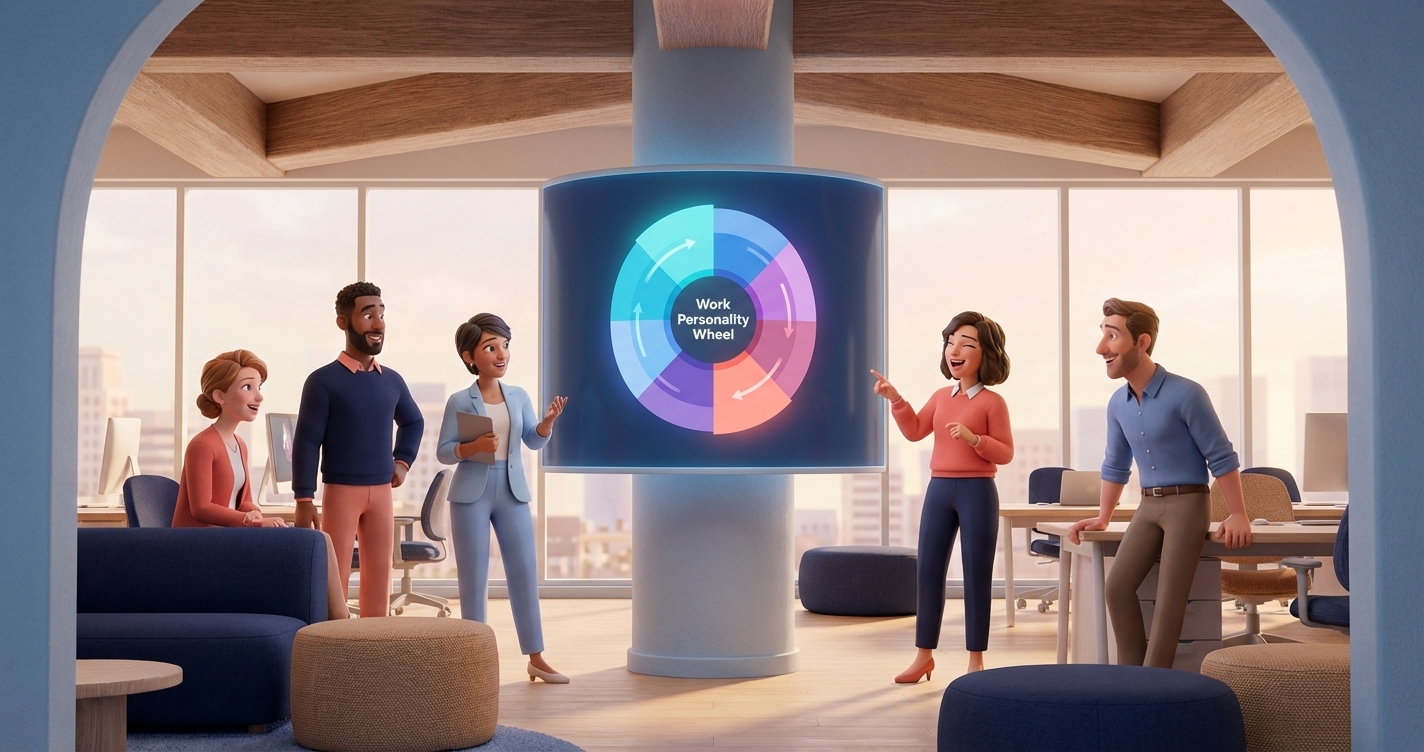
Every great building starts with a solid foundation, and for a talent architect, that foundation is an understanding of work personality. It is not enough to know that someone can do the job; you need to know how they will do it. At Compono, we have identified eight distinct work personality types that define how people contribute to a team environment.
Consider a scenario where you are building a marketing team. You might have plenty of Campaigners who are fantastic at selling the dream and bringing energy to the room. However, without an Auditor to check the data or a Coordinator to manage the timelines, that team will likely struggle with execution. A talent architect identifies these imbalances before they become performance issues.
By mapping out the existing personalities within your team, you can see exactly where the structural weaknesses lie. Perhaps your leadership team is full of Evaluators who are great at critiquing ideas but lack a Pioneer to suggest new directions. Recognising these gaps is the first step in designing a team that is truly high-performing.
One of the biggest mistakes we see in traditional hiring is a narrow focus on technical skills. While a developer needs to know how to code, their success at your company depends heavily on their 'fit'. A talent architect prioritises organisational fit – which includes culture fit, job fit, and personality fit – as much as they do the technical requirements of the role.
When we talk about fit, we aren't talking about hiring people who are all the same. In fact, a good architect knows that diversity of thought is what makes a structure strong. It is about alignment with the company’s core values and the specific demands of the role. For instance, a Helper might thrive in a customer-facing role in a non-profit but feel drained in a high-pressure, aggressive sales environment.
To help leaders master this, the Compono Hire platform uses a multi-dimensional assessment process. It looks beyond the surface to rank candidates based on how well they match the unique DNA of your team. This data allows you to make decisions with confidence, knowing that your new hire isn't just a great worker, but a great addition to your specific culture.

Scaling a business from 60 to 1,000 staff is a massive undertaking that requires more than just more people – it requires a smarter structure. Talent architects use workforce intelligence to predict future needs. They look at turnover trends, engagement levels, and skill shifts to stay ahead of the curve. This proactive approach ensures that the business never hits a 'talent ceiling' where growth is stalled by a lack of capable leaders.
Data is the architect's best friend. By analysing how teams interact and where conflict arises, you can intervene with targeted development. If you notice that a particular department has high turnover, you might find that the leadership style doesn't match the work personalities of the staff. Using a tool like Compono Engage, you can surface these insights through engagement surveys and personality mapping, allowing you to fix the structure before the roof falls in.
We have seen this work in real-world settings – for example, Lyre's used Compono to maintain their culture while expanding rapidly across multiple markets. They didn't just hire fast; they hired with an architectural mindset, ensuring every new person added to the strength of the global team rather than diluting it.
Once the team is built, the talent architect’s job shifts to maintenance and renovation. People grow, roles evolve, and the market changes. You need to ensure that your 'building' remains fit for purpose. This involves continuous development and clear career pathways that keep your best people engaged and motivated.
A key part of this is understanding how different personalities deal with conflict and communication. An Advisor will handle a difficult conversation very differently to an Evaluator. By coaching managers on these nuances, you empower them to lead more effectively. This reduces the friction that often slows down mid-sized businesses and creates a smoother, more efficient operation.
At Compono, we believe that every person has a natural 'sweet spot' where they are most productive and happy. As a talent architect, your goal is to align the business goals with these individual strengths. When people feel that their natural work preferences are being utilised, engagement skyrockets, and the entire organisation performs better. It is a win-win for the business and the employee.
Key insights
- Transitioning to a talent architect role involves moving from reactive hiring to proactive workforce design.
- Utilising work personality data is essential for identifying team gaps and ensuring balanced contributions.
- Organisational fit is the most reliable predictor of long-term employee success and retention.
- Workforce intelligence tools enable leaders to scale their businesses without losing their unique culture.
- Continuous development based on personality insights helps maintain high performance as teams grow.
Ready to start building a more resilient workforce? We can help you transition from traditional recruiting to strategic talent architecture.
A recruiter focuses on filling a specific open role as quickly as possible. A talent architect looks at the long-term strategy, designing the team structure and using data to ensure each hire adds to the collective strength and culture of the organisation.
Start by auditing your current team using work personality assessments. This will show you where you have an abundance of certain traits – like creativity – and where you might be missing others, like detail-orientation or coordination.
Yes. By focusing on organisational fit and ensuring people are in roles that match their natural work preferences, you create an environment where employees feel more satisfied and engaged, which naturally leads to lower turnover.
Not at all. In fact, it is even more critical for mid-sized businesses (60–1,000 staff) because every single hire has a much larger impact on the overall culture and performance of the company.
You need workforce intelligence tools that provide data on personality, engagement, and skills. Platforms like Compono provide the necessary insights to map your team and make data-driven hiring and development decisions.

Compono Hire helps you predict job-fit and team-fit using behavioural science, so you can shortlist with confidence.
Request a demoBuilt for mid-market hiring teams.

Voice-first coaching that adapts to your personality. Get actionable steps you can take this week.
Start freeBuilt by Compono. Not therapy — practical behaviour change.
Research indicates that up to 70% of hires fail to meet expectations or leave within their first year, primarily because traditional recruitment...
Team effectiveness tools are digital platforms and frameworks designed to improve how groups of people collaborate, communicate, and execute tasks to...
A manager effectiveness assessment is a structured process used to evaluate how well a leader guides their team, manages workflows, and contributes...