

.webp)

 Compono



1 min read
Rise of the HR talent architect role in modern teams
 Mathan Allington
Last reviewed July 2026

People problems don’t appear from nowhere. They happen when tools manage process risk but ignore people insight risk. If you have ever watched your best talent walk out the door despite high engagement scores, you know that a traditional engagement survey platform often tells you something is off but rarely tells you what to do next.
We have all been there – staring at a dashboard of green, amber, and red traffic lights wondering why the 'green' teams are still struggling with silos or why the 'red' teams are actually your highest performers. The reality is that most HR tools were built for the transactional world of the past. They manage the admin of asking questions, but they ignore the complexity of human decisions.
You need to be both the police and the policy maker. You need a system that handles the operational requirement of gathering feedback while providing the strategic intelligence to change behaviour. It is time to stop measuring how people feel and start understanding how they work.
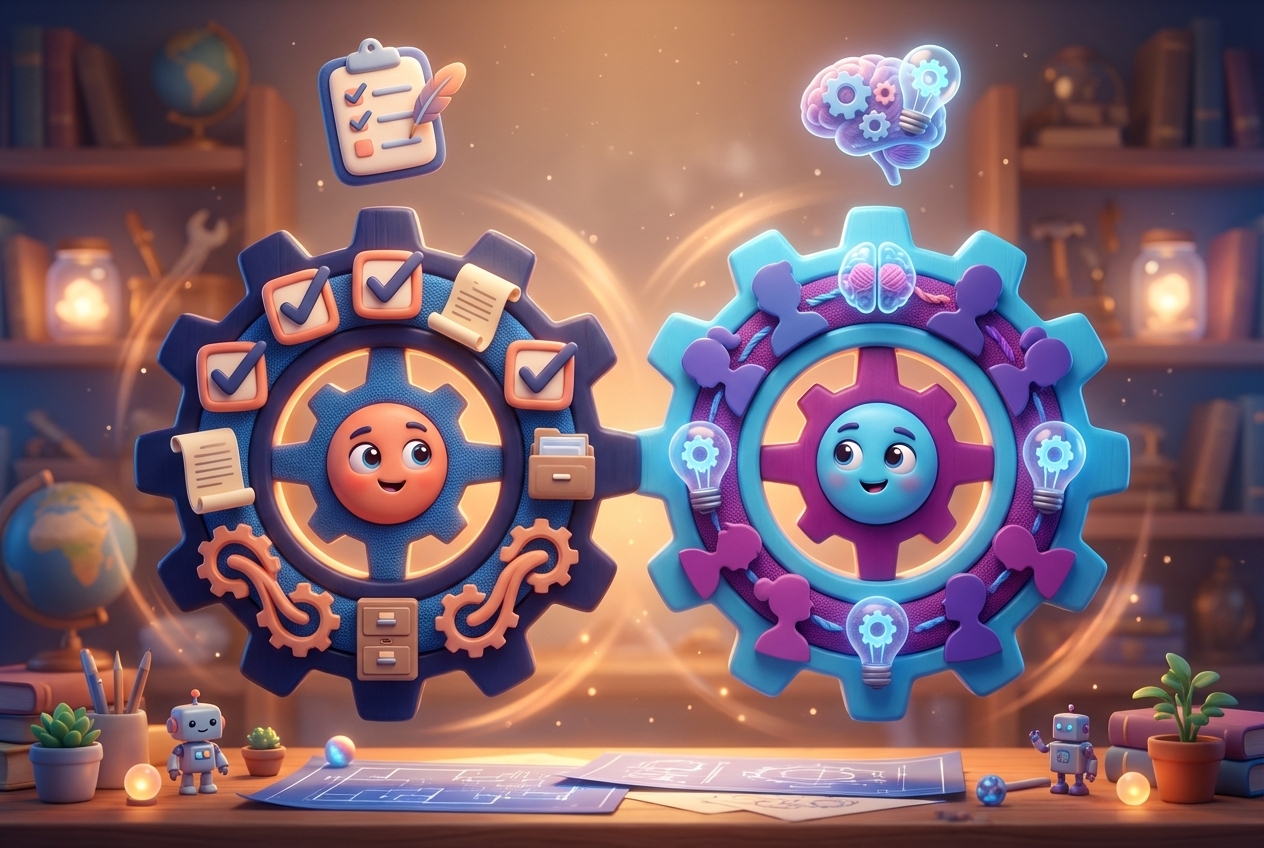
Most engagement tools on the market today are incomplete. They focus heavily on process risk – the risk of not asking for feedback, the risk of manual data entry, or the risk of missing a compliance deadline for a pulse check. While these are important, they are only half of the equation for a modern HR leader.
The bigger risk is people insight risk. This is the risk of making the wrong calls about your teams because you lack clarity. You might have mountains of data, but if that data doesn't explain the underlying work personality of your staff or the 12 dimensions of your culture, you are essentially guessing. We believe that expected human variability is your competitive advantage – provided you can see it and select for it.
When an engagement survey platform only tracks sentiment, it treats people like machines that just need occasional oiling. But people are not problems to be solved; they are potential to be unlocked. To do that, you need a system of intelligence that reveals what actually drives performance in your specific organisation.

We often see organisations evaluate engagement in isolation from culture. This is like a doctor taking your temperature without checking your heart rate or blood pressure. A fever tells you that you are sick, but it doesn't tell you why. Typical pulse surveys measure the 'mood' of the office, but they don't map the 'personality' of the business.
If you want to move the needle on performance, you must understand the relationship between culture and engagement. Culture is the 'way we do things around here' – the unwritten rules that guide every decision. Engagement is how employees feel about those rules. When there is a gap between the current culture and what employees actually need to succeed, engagement drops and people insight risk skyrockets.
At Compono, we approach this by assessing 12 validated dimensions of workplace culture alongside engagement metrics. By connecting these two datasets, you can see exactly where culture breaks down and causes top performers to leave. This is the difference between having a data point and having a defensible strategy you can stand behind with your executive team.
Understanding these drivers is essential for team design. For example, Compono Engage allows you to see the subcultures across your divisions and locations, highlighting where ways of working are misaligned with business objectives. It helps you find the 'repeatable miracles' in your high-performing teams and scale them across the business.
HR is always in the spotlight. When people decisions fail – whether it is a toxic culture or a bad senior hire – HR wears the blame. Process-focused tools cannot protect your reputation because they don't help you make better decisions; they just help you make bad decisions faster through automation.
Reducing people insight risk means having the confidence to explain why a team is struggling. It means moving away from 'gut feel' and towards science-backed insights. When you can show your board that you have mapped the work personalities of a team and identified a gap in 'Pioneering' or 'Evaluating' work types, you are no longer just a rule enforcer. You are a strategic architect.
Research shows that organisations prioritising culture outperform competitors by over 200%. However, you cannot prioritise what you cannot see. An engagement survey platform should act as your 24/7 co-pilot, helping you identify behavioural red flags before they turn into resignation letters. This level of intelligence gives you the defensibility you need to lead with clarity.
Our research into 52 companies across Australia and New Zealand revealed a clear trend: around the 60-employee mark, informal culture and engagement management start to break down. This is the tipping point where leadership perception of HR begins to dictate the function’s success. If the executive team sees HR as purely administrative, investment stays low. If they see HR as a strategic partner, the business thrives.
In mid-market companies, the HR team is often small and generalist. You don't have the luxury of a 50-person people analytics department. You need a platform that does the heavy lifting for you – one that bottles the expertise of an organisational psychologist and delivers it in plain English. This is where the 'both/and' approach becomes vital.
You need to handle the transactional reality of your role while enabling strategic impact. By using a platform that connects hiring, engagement, and development, you ensure that the data you collect during an engagement survey actually informs who you hire next. For instance, Compono Hire uses culture benchmarks created in your engagement surveys to rank candidates, ensuring you fill seats faster and with the right people.
A common mistake in the engagement space is thinking that more 'activity' equals more 'engagement'. We see this most often in learning and development. Many systems track completion rates – 100% of staff finished the module – but they ignore whether those staff actually built the capability to perform. This is another form of people insight risk.
Completion does not equal capability. If your engagement survey platform shows that people feel stuck in 'dead-end' careers, the solution isn't just more generic training. The solution is targeted development that maps to their specific work personality and the needs of their team. You need to understand what people actually need to perform, not just what they need to tick a box.
By integrating engagement data with development pathways, you can create a culture of growth. When employees see that their feedback leads to personalised development that helps them master their roles, engagement scores naturally rise. It is about moving from corporate police to strategic advisor, focusing on potential rather than just compliance.
Compono Develop bridges this gap by connecting learning to actual performance outcomes identified in your culture mapping.
Think of organisational culture as the business's 'personality' – its long-term values and ways of working. Employee engagement is more like the 'mood' – how employees feel about the workplace at a specific moment. An effective engagement survey platform should measure both to show you why the mood is shifting.
By mapping your current culture, you can create benchmarks for what 'good' looks like in your organisation. You can then use these insights to assess candidates during the recruitment process, ensuring they align with your team dynamics and performance drivers before they are hired.
This usually happens when a platform measures sentiment but ignores people insight risk. Employees might like their colleagues (sentiment) but feel the system of work is incomplete or that they lack the capability to succeed (insight risk). You need to look at performance drivers, not just happiness.
No. A pulse survey is a diagnostic tool that identifies symptoms. To change culture, you need to understand the underlying behaviours and work personalities that drive those symptoms. You need a system of intelligence that provides actionable recommendations, not just a score.
Traditional tools focus on process risk – making it easy to send surveys. Compono handles process risk but also solves for people insight risk by using organisational psychology to reveal how people work together and what moves the needle on performance.

1 min read
Innovation and collaboration are linked because innovation is almost never a solo act. New ideas come from people with different perspectives working...
 Read More