

.webp)

 Compono

1 min read
People data analytics: a guide to smarter workforce decisions
 Compono
People data analytics is the process of collecting and scrutinising workforce information to improve business outcomes, employee experience, and team...

How to use people analytics starts with identifying a specific business problem – such as high turnover or declining productivity – and then gathering relevant data to test your hypotheses.
By shifting from gut-feel decisions to evidence-based insights, you can build more resilient teams and improve your overall organisational health. Modern workforce intelligence allows you to move beyond simple reporting and start predicting the outcomes of your people strategies with much greater accuracy.
Key takeaways
- People analytics is the practice of using workforce data to solve business problems and improve employee experience.
- Successful implementation requires starting with a clear question rather than just collecting data for data's sake.
- Combining personality data with performance metrics creates a more holistic view of team dynamics.
- Privacy and ethics must be the foundation of any analytics programme to maintain employee trust.
- Using the right tools helps automate data collection and provides real-time insights for managers.
For a long time, Human Resources was seen as the department of 'gut feel'. Decisions about who to hire, who to promote, and how to keep people happy were often based on intuition or past experience. While experience is valuable, it isn't always reliable. We have all seen a 'perfect' candidate on paper fail to integrate into a team, or a high-performing employee suddenly hand in their resignation without warning.
This is where learning how to use people analytics changes the game. It allows us to apply the same rigour to our people decisions that we apply to finance or marketing. By looking at patterns in data, we can uncover the hidden drivers of performance and engagement. It isn't about reducing people to numbers – it is about using numbers to understand people better. When we understand the 'why' behind workforce trends, we can take proactive steps to support our staff and drive better business results.
At Compono, we have spent over a decade researching how to blend academic theory with practical data. We believe that when you have the right workforce intelligence, you stop reacting to problems and start preventing them. Whether you are a mid-market HR leader or a senior executive, the ability to interpret people data is becoming a non-negotiable skill in today's landscape.

Before you start pulling reports, you need to establish a clear framework. A common mistake is trying to 'boil the ocean' by looking at every metric at once. This usually leads to analysis paralysis. Instead, focus on the areas where you can make the most impact. Are you struggling with a high cost-per-hire? Is your leadership pipeline looking a bit thin? Or is employee burnout becoming a visible issue in certain departments?
Once you have a problem to solve, you need to ensure your data is clean and centralised. Data silos are the enemy of effective analytics. If your hiring data is in one system, your performance reviews in another, and your engagement surveys in a third, you will never see the full picture. Centralising this information is the first step toward meaningful insight. This is why many teams use a Business Platform that integrates these different touchpoints into a single source of truth.
It is also vital to consider the ethical side of data. Transparency is key. Your employees need to know what data is being collected and, more importantly, how it will be used to benefit them. When people analytics is used to improve the work environment – such as identifying and fixing bottlenecks or ensuring fairer promotion paths – employees are much more likely to support the initiative.
The hiring stage is one of the most effective places to apply analytics. Traditional recruitment often relies on resumes and interviews, which are notoriously prone to bias. By using data-driven assessments, you can get a much more objective view of a candidate's potential. This doesn't just mean looking at technical skills, but also how they will fit into your specific organisational culture.
For example, you might analyze the traits of your current top performers to create a 'success profile' for a new role. Are your most successful Doers in the operations team characterised by specific work preferences? By understanding these patterns, you can look for similar traits in applicants. This reduces the risk of a 'bad hire' and ensures that new starters are set up for success from day one.
This is exactly where Compono Hire adds value. It allows you to assess candidates across three critical dimensions: organisation fit, job fit, and personality fit. By ranking candidates based on these data points, you can focus your time on the people most likely to thrive in your unique environment. You can even see how a potential hire might impact the existing team balance before you make the offer.
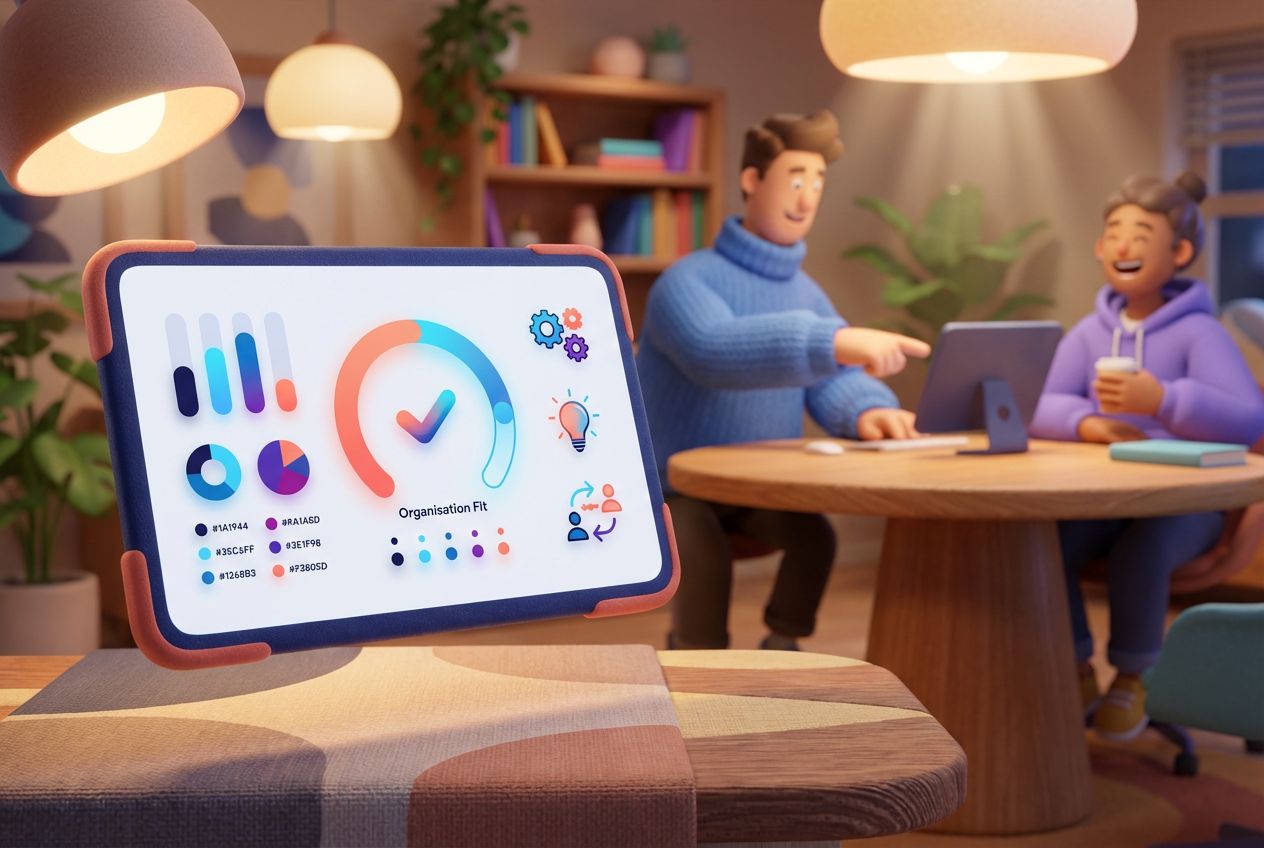
Engagement is often seen as a 'soft' metric, but it has very 'hard' consequences for the bottom line. Low engagement leads to higher turnover, lower productivity, and poorer customer service. However, a single annual engagement survey is no longer enough to keep a pulse on your culture. Modern people analytics involves more frequent, 'pulse' style check-ins that allow you to see trends in real-time.
When you analyze engagement data, look for correlations. For instance, you might find that engagement scores drop significantly for employees who haven't had a development conversation in the last six months. Or perhaps a certain department has high engagement but also high stress levels – a clear signal of potential burnout. These insights allow you to intervene before a star employee decides to leave.
To get a deeper understanding of these dynamics, we developed The Compono Culture, Engagement & Performance Model. It helps leaders understand the interplay between individual motivations and the broader company culture. When you use this kind of structured model, your engagement data becomes a roadmap for cultural transformation rather than just a score on a dashboard.
The final pillar of using people analytics is talent development. Once you have the right people in the door and they are engaged, how do you help them grow? Data can help you identify 'high-potential' employees who might otherwise be overlooked. By looking at a combination of performance data, learning progress, and work personality types, you can build a more robust succession plan.
If you know that a future leadership role requires the visionary traits of The Campaigner, you can look through your internal data to see who exhibits those natural tendencies. You can then provide them with the specific training and mentorship they need to step into that role. This data-driven approach to development makes your promotion process more transparent and equitable.
Using Compono Develop, organisations can map out these growth paths with precision. By aligning individual development needs with business goals, you ensure that your training budget is being spent where it will have the most impact. It moves development from a 'tick-box' exercise to a strategic investment in your workforce's future capability.
Key insights
- People analytics is most effective when it solves a specific business problem rather than just reporting on metrics.
- Centralising data from across the employee lifecycle is essential for a holistic view of the workforce.
- Objectively assessing personality and 'fit' during recruitment leads to better long-term retention.
- Real-time engagement data allows for proactive interventions that prevent burnout and turnover.
- Data-driven development ensures that the right people are being prepared for future leadership roles.
Starting your journey with people analytics doesn't have to be overwhelming. You don't need a team of data scientists to start making better people decisions today. By using the right tools and focusing on the metrics that matter most to your business, you can build a more engaged, productive, and resilient workforce.
HR reporting focuses on what happened in the past, such as 'what was our turnover last month?'. People analytics looks at the 'why' and the 'what next', such as 'why is turnover increasing in our sales team and what can we do to stop it?'.
Not necessarily. While some large organisations have dedicated data teams, modern platforms like Compono are designed to be used by HR professionals and managers. They do the heavy lifting of data processing and present insights in an easy-to-understand format.
Analytics can highlight biases in your hiring or promotion processes that might be invisible to the naked eye. By tracking data at every stage of the employee lifecycle, you can ensure that all employees have equal access to opportunities based on their skills and potential.
No. While large companies have more data to work with, mid-sized organisations often see the fastest ROI from people analytics because they can be more agile in responding to the insights they discover.
Privacy should be a foundational part of your strategy. This involves anonymising data where possible, being transparent with staff about what you are collecting, and ensuring you comply with all local data protection regulations.

1 min read
People data analytics is the process of collecting and scrutinising workforce information to improve business outcomes, employee experience, and team...

1 min read
Culture assessment software helps Brisbane businesses measure the intangible elements of their workplace to drive engagement and retention by...

1 min read
Predicting job performance starts with moving beyond the resume to evaluate how a person’s natural work personality and cognitive abilities align...