 Compono


How to lead successful organisational culture change

Organisational culture change is the process of shifting the shared values, beliefs, and behaviours that determine how work actually gets done in...


Become the expert on delivering
valid and fair assessments for
your training and education.


.png?width=383&height=200&name=team%20(1).png)

Organisational culture change succeeds when you align individual work preferences with shared company values rather than simply imposing new rules from the top down.
Moving beyond surface-level shifts requires a deep understanding of how your people naturally interact, communicate, and solve problems. We have seen that the most resilient cultures are built on a foundation of workforce intelligence that recognises the unique strengths of every team member.
Key takeaways
- Culture change is a continuous process of aligning daily behaviours with long-term strategic goals.
- Successful transformation relies on understanding the diverse work personalities within your existing teams.
- Data-driven insights help identify cultural gaps and reveal the hidden drivers of employee engagement.
- Leadership must model the desired changes while providing the structural support necessary for new habits to stick.
Most leaders recognise when their current environment no longer supports their vision. You might notice a dip in morale, a rise in silos, or a general sense that the 'way we do things around here' is holding the business back. Organisational culture change is often talked about as a grand project, but in reality, it is the sum of thousands of small interactions that happen every single day.
The problem is that culture is often invisible until it creates friction. When you try to force change without addressing the underlying motivations of your staff, you run into resistance. This resistance isn't usually a sign of 'bad' employees; it is often a sign that the proposed changes clash with their natural work preferences or the existing unwritten rules of the workplace. To make a shift that lasts, we need to look at the intersection of personality and performance.

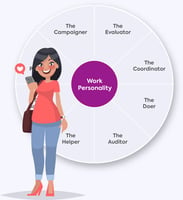
Before you can change where you are going, you must have a crystal-clear picture of where you are starting. We believe that true culture change begins with intelligence – specifically, understanding the work personality of your people. When you know what motivates your team, you can frame cultural shifts in a way that resonates with their natural tendencies rather than fighting against them.
For example, if your culture needs to become more detail-oriented, you will find natural allies in Auditors who already value thoroughness and precision. Conversely, if you are trying to foster a culture of innovation, your Pioneers will be the ones leading the charge. By mapping these traits across your entire organisation, you turn culture from a vague concept into a manageable asset. This data-led approach ensures that your change initiatives are grounded in reality, not just wishful thinking.
Leadership is the most powerful lever for organisational culture change. However, there is no single 'correct' way to lead a transformation. The most effective leaders are those who can adapt their style to suit the specific needs of the change process. Whether a situation requires a directive approach to set clear boundaries or a democratic approach to foster buy-in, your leaders must be self-aware enough to pivot when necessary.
At Compono, we help organisations bridge the gap between leadership intent and team reality. By using Compono Engage, leaders gain direct insight into team sentiment and cultural alignment. This allows you to identify which departments are thriving and which ones might be struggling with the transition. When leaders have access to this level of detail, they can provide targeted support that addresses the specific 'pain points' of their teams, making the overall change process much smoother.
Culture is not just what people feel; it is what people do. To sustain organisational culture change, you must ensure that your internal structures – from hiring to development – support the new direction. If you want a culture of collaboration, but your hiring process only rewards individual 'rockstars', you will face a constant uphill battle. Your systems must be the guardrails that keep the culture on track.
This is where strategic recruitment plays a vital role. When you are looking to evolve your culture, every new hire is an opportunity to add a 'culture add' rather than just a 'culture fit'. Using tools like Compono Hire allows you to assess candidates not just on their technical skills, but on how their natural work personality will contribute to the cultural shift you are trying to achieve. By intentionally bringing in people who embody the values you want to grow, you accelerate the change process from the inside out.
You cannot manage what you do not measure. One of the biggest mistakes in organisational culture change is treating it as a 'one and done' event. Culture is dynamic; it evolves as your business grows and as the external environment changes. Regularly checking in on the health of your culture is essential for long-term success. This isn't just about annual surveys; it's about a consistent pulse of feedback and data.
We recommend looking at the Compono Culture, Engagement & Performance Model to understand how these elements interlink. When engagement is high and culture is aligned, performance naturally follows. By monitoring these metrics over time, you can see the tangible ROI of your culture initiatives. It moves the conversation from 'soft skills' to hard business outcomes, proving that a healthy culture is the ultimate competitive advantage in the modern workplace.
Key insights
- Culture change begins with a deep, data-driven understanding of the work personalities that make up your organisation.
- Leadership must be adaptable, moving between different styles to support teams through the various stages of transition.
- Hiring for 'culture add' ensures that new talent actively contributes to the evolution of the workplace environment.
- Consistency between what leadership says and what the organisational systems reward is the only way to make change permanent.
Building a high-performing culture is a journey that requires the right insights and the right tools. If you are ready to take the next step in your organisation's evolution, we are here to help.
While minor shifts in behaviour can happen quickly, deep cultural transformation typically takes between one and three years. It depends on the size of the organisation and the consistency of leadership in reinforcing new values through every process and interaction.
Yes, provided the leadership team is willing to undergo their own personal development. Culture change often requires leaders to adopt new communication styles and decision-making habits. Without a shift at the top, the rest of the organisation will likely revert to old patterns.
The most common cause of failure is a lack of alignment between stated values and actual rewards. If a company claims to value 'innovation' but punishes every small mistake, employees will quickly learn to ignore the cultural messaging and stick to safe, traditional behaviours.
Buy-in comes from involvement. Instead of announcing a new culture, involve your team in defining what the future looks like. When people see their own work preferences and needs reflected in the cultural goals, they are far more likely to become active participants in the change.
The principles remain the same, but the execution requires more intentionality. In a digital environment, you don't have the benefit of 'watercooler moments' to reinforce culture. You must rely more heavily on structured communication, shared digital values, and deliberate team-building activities.

Organisational culture change is the process of shifting the shared values, beliefs, and behaviours that determine how work actually gets done in...

Culture survey software is a digital tool designed to help organisations measure, analyse, and improve the shared values and behaviours that define...

Choosing between Workable vs Compono depends on whether you need a traditional tracking tool or a complete workforce intelligence system that...