

.webp)

 Compono


Beyond 360 degree feedback: Why HR leaders need system intelligence
 Mathan Allington
Why HR leaders are moving past 360 degree feedback to system intelligence that shows culture, team dynamics and what really drives engagement.
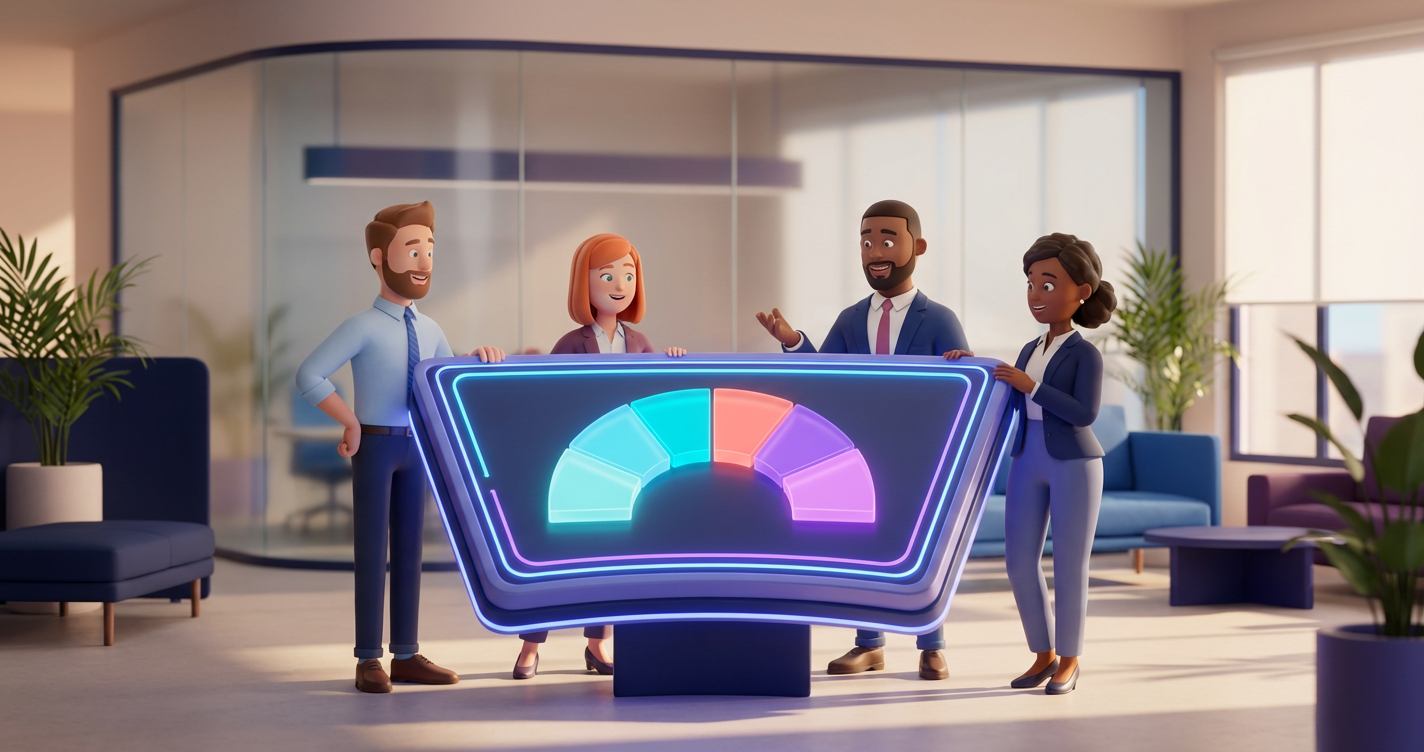
Culture Amp limitations often stem from a focus on high-level engagement data rather than the specific, actionable work behaviours that drive daily team performance.
Key takeaways
- Engagement surveys provide a snapshot of sentiment but often lack the granular data needed to fix specific team-level performance gaps.
- A major limitation is the disconnect between measuring employee 'happiness' and understanding the actual work personality types within a squad.
- Modern teams need workforce intelligence that combines culture mapping with recruitment and development rather than keeping them in silos.
- High-performing teams require a balance of eight specific work actions – such as Pioneering and Helping – which general surveys may miss.
We have all been there. You launch a massive annual survey, wait weeks for the results, and receive a beautifully designed report telling you that 'collaboration' is down by 4%. It feels like a win to have the data, but then the real challenge begins. How do you actually fix it? This is where many people leaders start to hit a wall, noticing that while sentiment is tracked, the needle on productivity doesn't seem to move.
The reality is that measuring how people feel is only one half of the equation. To build a truly high-performing culture, you need to understand how people work. When we rely solely on engagement scores, we risk missing the underlying mechanics of team dynamics – the specific roles, personalities, and work preferences that determine whether a project succeeds or stalls. Understanding these nuances is the difference between a team that is merely 'satisfied' and one that is genuinely effective.
One of the primary Culture Amp limitations is the inherent gap between employee sentiment and practical work actions. Engagement surveys are excellent at telling you if your staff feel supported or if they enjoy the office perks. However, they rarely tell you if you have enough 'Doers' to meet a deadline or if your 'Auditors' are feeling overwhelmed by a lack of process. Sentiment is a lagging indicator; by the time the score drops, the cultural friction has already done its damage.
At Compono, we have spent years researching what actually makes teams tick. Our research shows that high-performing teams consistently perform eight key work activities: Evaluating, Coordinating, Campaigning, Pioneering, Advising, Helping, and Doing. If a survey tells you the team is unhappy, it might actually be because there is a massive gap in one of these areas. For example, a team full of Pioneers might be great at ideas but struggle with execution if they lack a Doer to ground them.
When you only measure sentiment, you are looking at the 'what' without understanding the 'who'. By shifting the focus toward workforce intelligence, leaders can see the literal DNA of their teams. This allows for a more surgical approach to culture. Instead of a broad 'culture initiative', you might find that a specific department simply needs more Coordinators to manage their increasing workload. This level of detail is what transforms HR from a cost centre into a strategic powerhouse.
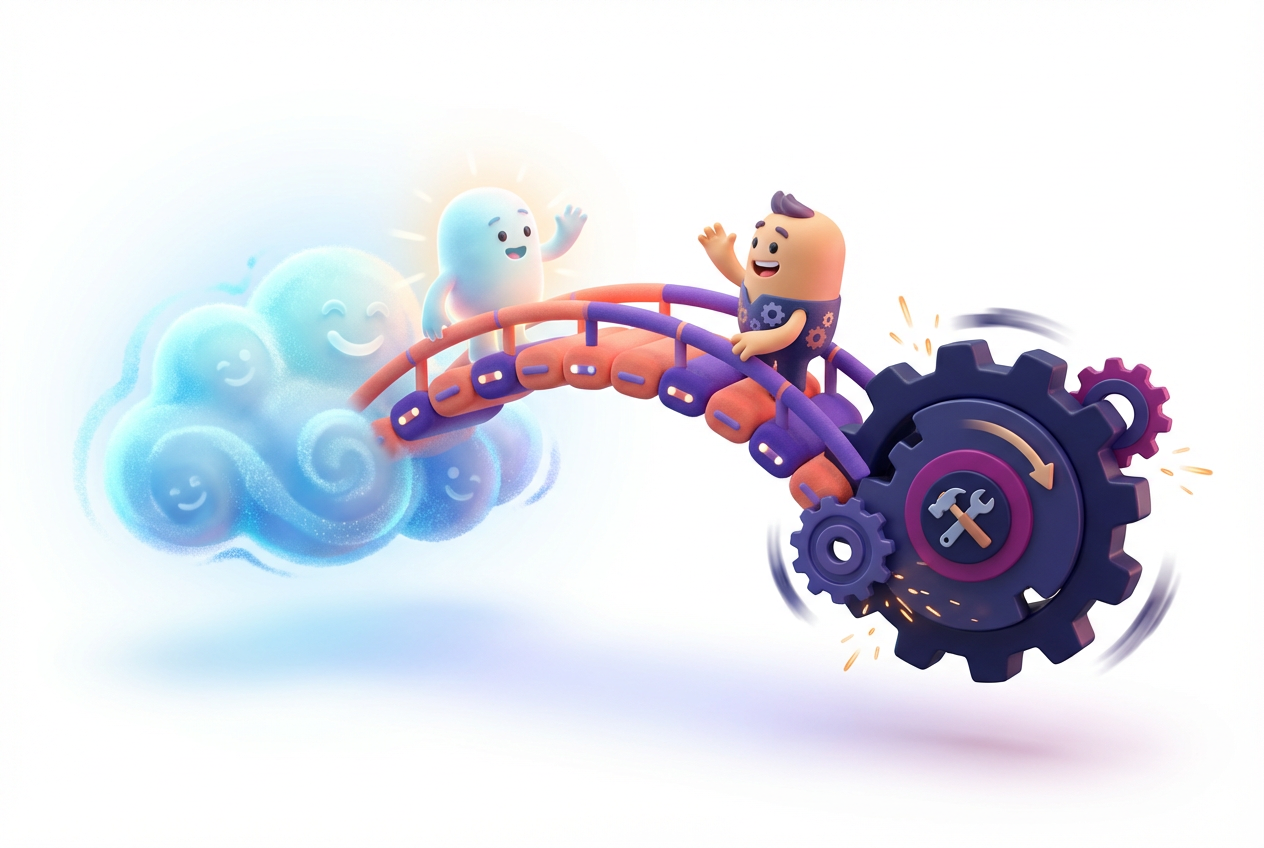
Another common hurdle is the difficulty of translating company-wide data into squad-level action. Large-scale platforms often provide incredible benchmarks against global industries, but those benchmarks don't always help a manager leading a team of six people in a high-pressure environment. The data can feel too abstract. If the 'Alignment' score is low, does that mean the manager is communicating poorly, or does it mean the team members have conflicting work personalities?
Consider the Compono Culture, Engagement & Performance Model, which suggests that performance is a result of matching the right people to the right work environment. If you have an Auditor in a role that requires constant, spontaneous Campaigning, they will likely report low engagement. A survey might flag this as a 'job fit' issue, but it won't necessarily tell you that the individual's natural work personality is being stifled by the requirements of the role.
This is where workforce intelligence platforms like Compono Engage offer a different path. Instead of just asking how someone feels, we look at the 'Work Personality' of every team member. By plotting these on a visual wheel, a manager can instantly see why conflict might be occurring. For instance, two Evaluators might be clashing because they are both trying to take the lead on critical analysis, leaving no one to focus on the 'Helping' aspect of the project. This is an actionable insight that a standard survey simply cannot provide.
A significant limitation in many popular HR tools is that the engagement data lives in a vacuum. It is often disconnected from the recruitment process and the ongoing development of the person. If your engagement survey identifies a lack of leadership capability, you then have to jump into a different system to hire someone or a third system to train your existing staff. This fragmentation makes it nearly impossible to build a cohesive talent strategy.
True workforce intelligence requires an integrated approach. If we know – through data – that a team is struggling because they lack 'Advisors', that insight should immediately inform the hiring criteria for the next role. At Compono, we bridge this gap by connecting engagement data directly to recruitment. Using Compono Hire, business leaders can select the specific work personality they need for a team and automatically score candidates based on that fit. It turns 'culture' from a vague concept into a measurable, recruitable asset.
When data is integrated, the cycle of 'survey–analyse–ignore' is broken. You move into a cycle of 'identify–solve–optimise'. For example, if a team is underperforming, you can look at their collective work personality wheel and realise they are all 'Doers' with no one 'Pioneering' new ways of working. You don't just need a team-building day; you need to develop those skills or hire for that specific gap. This holistic view ensures that every dollar spent on 'culture' is actually contributing to the bottom line.

Ultimately, the goal of any people platform should be to improve performance. While 'happiness' is a worthy goal, in a business context, it is usually a byproduct of people feeling competent, supported, and matched to their work. One of the Culture Amp limitations is the heavy emphasis on the 'how are you?' aspect of the employee experience. While vital, it doesn't always address the 'how do we perform?' aspect that keeps CEOs and Founders awake at night.
We see this clearly in our work with diverse organisations. For example, Beyond The Clinic used Compono to enhance their team performance by looking deeper than just surface-level engagement. They focused on understanding the personalities within the team to drive better outcomes. This shift in focus – from sentiment to substance – allows leaders to have more honest conversations with their staff about what is actually required to succeed in their specific roles.
By using a platform that maps natural work preferences, you empower your managers to lead with empathy and precision. They no longer have to guess why a team member is disengaged. They can see that an Advisor is being forced into a highly directive, 'Doer' style role and make adjustments before that person decides to leave. That is the power of workforce intelligence – it gives you the foresight to act before the survey results come back negative.
Key insights
- Engagement platforms often focus on lagging indicators of sentiment rather than the leading indicators of work behaviour.
- High performance is driven by a balance of eight core work actions that must be mapped at the individual and team level.
- Actionable intelligence requires seeing the 'Work Personality' of employees to understand the root cause of cultural friction.
- Integrated systems that link engagement data to recruitment and development are more effective than standalone survey tools.
- Effective leadership involves flexing styles – Directive, Democratic, or Non-Directive – based on the team's personality mix.
For many mid-sized companies, the primary limitation is that the data can be too high-level. While it provides a great overview of company sentiment, it often lacks the granular, personality-based insights needed to fix specific team-level performance issues or help with precise hiring decisions.
Standard surveys measure how people feel about their workplace (sentiment). Workforce intelligence, like that provided by Compono, looks at how people naturally work (behaviour and personality). This allows leaders to see not just that a team is unhappy, but exactly which work activities are missing or being overdone.
In most siloed systems, this is difficult. However, with an integrated platform like Compono, your engagement insights can directly inform your hiring strategy. If you identify a gap in 'Pioneering' work within a team, you can use Compono Hire to find a candidate who naturally excels in that area.
Work Personality defines the natural preferences an individual has for certain types of tasks. When a team has a diverse mix of personalities – like Helpers, Auditors, and Campaigners – they are more likely to cover all eight key work actions required for high performance, leading to a more resilient and effective culture.
Managers need more than just scores; they need a map. Providing them with a visual representation of their team's work personalities helps them understand conflict, delegate tasks more effectively, and adapt their leadership style to suit the specific needs of their squad.
Why HR leaders are moving past 360 degree feedback to system intelligence that shows culture, team dynamics and what really drives engagement.

What culture assessment software measures, how it differs from an annual engagement survey, and what Brisbane teams should ask before choosing one.

What a cloud-based HR platform does, what to look for, and how to choose one that connects hiring, engagement and development for your team.
 Compono