

.webp)

 Mathan Allington


How to choose the right team collaboration software
 Mathan Allington
Discover how to choose the best team collaboration software for your business. Learn how personality and workflow fit drive high-performing teams.

A team fit assessment objectively measures how a candidate's work preferences, motivations and personality align with an existing team and role. Done well, it replaces "would I have a drink with them" gut feel with data on what your team is missing, so every hire adds balance instead of duplication.
Last reviewed July 2026.
Key takeaways
- Team fit is about culture add: finding the missing pieces that make a team whole.
- Data-driven assessments reduce bias and improve the accuracy of hiring decisions.
- High-performing teams cover eight core work activities, from pioneering to doing.
- Understanding work personalities helps leaders adapt their style and reduces team conflict.
We have all seen it happen. A candidate looks perfect on paper, nails every technical interview and arrives with glowing references. Six months later the team's rhythm is off, productivity has dipped, and that star hire is looking for the exit. The problem usually is not their ability to do the job; it is how they do the job alongside everyone else.
When a new hire does not mesh with the team's established ways of working, the friction ripples outward into miscommunication, lower morale and eventually the full cost of turnover. Most leaders know culture matters. Few have a repeatable, objective way to measure it before someone signs a contract, which is exactly what a team fit assessment provides.

For decades, "cultural fit" was often code for "someone I would like to have a drink with". That subjective approach invites unconscious bias and predicts very little about actual performance. A proper team fit assessment focuses on work personality: the natural preferences and motivations that shape how someone approaches tasks and colleagues.
High-performing teams are rarely made of identical personalities; too much similarity breeds groupthink and shared blind spots. The goal is culture add. If your team is full of visionary Pioneers but nobody handles execution, another big-picture thinker will not help. You likely need a Coordinator or a Doer to bring balance.
Compono's research identifies eight work activities every high-performing team needs covered: evaluating, coordinating, campaigning, pioneering, advising, helping, auditing and doing. Teams do not need eight separate people; they need all eight ways of working represented across whoever is in the room. When one activity is neglected, overall performance suffers in predictable ways.
A team fit assessment maps your current people against these activities, producing a heat map of your collective strengths. You might discover you are excellent at pioneering new ideas but consistently weak at evaluating risk or coordinating delivery. Compono Hire turns that insight into action: you select the work personality your team is missing and the system scores and ranks candidates in real time on how well they fill the gap.
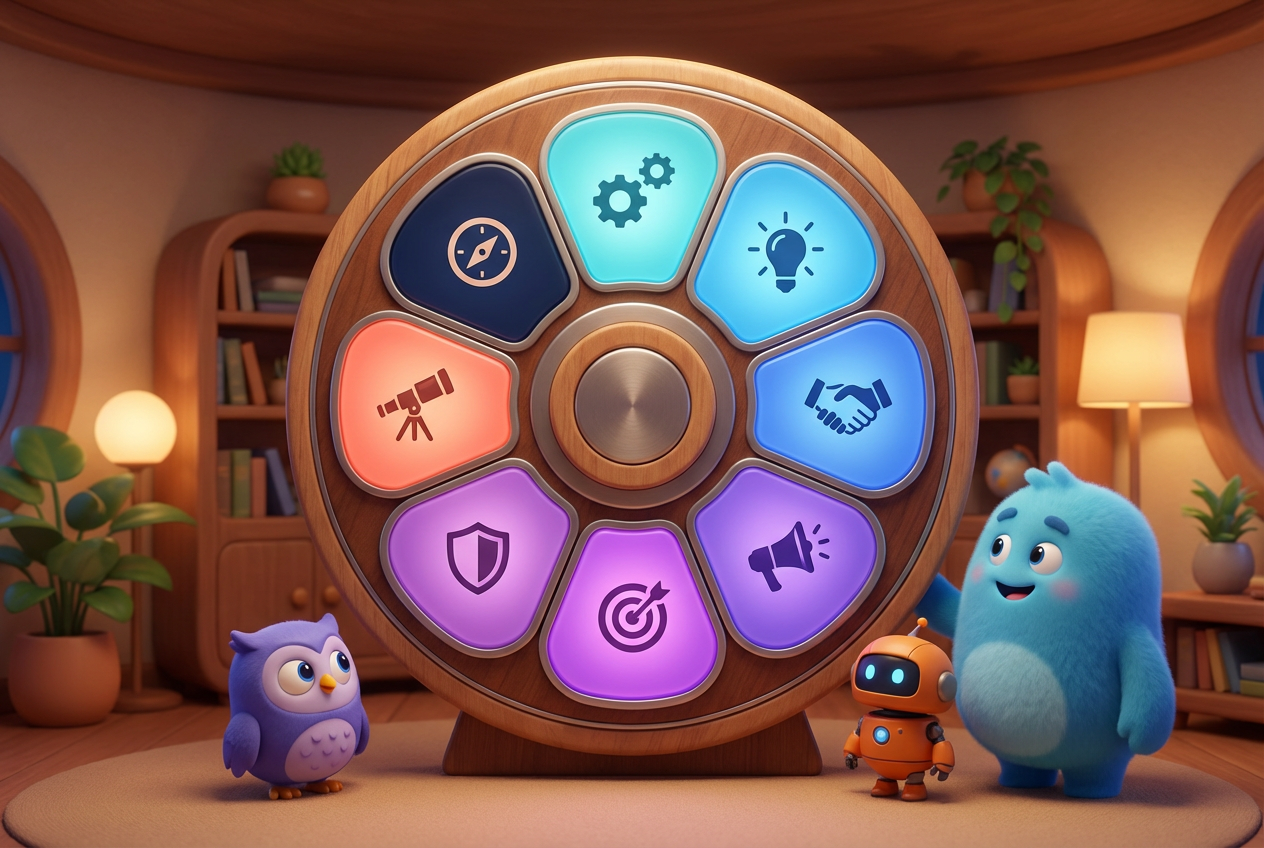
Personality decides how work gets done, not just what gets done. Some people thrive under directive leadership with clear structure, while others do their best work in democratic or hands-off environments. A team of Auditors who value precision may feel anxious under a vague, non-directive manager, while a Pioneer will feel stifled by heavy control.
An assessment gives leaders a manual for their own team. It also transforms peer collaboration: when a Campaigner understands that an Evaluator is not being negative but simply fulfilling their natural preference for risk assessment, conflict becomes constructive dialogue. You can explore each of the eight work personality types to see how these traits show up in daily work.
Start with your existing team. Having current staff complete a work personality assessment creates the baseline map of your culture, and it is about understanding the group rather than judging anyone's performance. From there, the map supports four jobs:
With the baseline in place, every hiring decision becomes a deliberate act of team design rather than a hopeful guess.
Compono Hire maps your team against the eight work activities and ranks candidates on how well they complete the picture.
Talk to usIt is an objective way to measure how a candidate's work preferences, motivations and personality align with an existing team's ways of working and the specific requirements of a role, before you make the hire.
Cultural fit often relies on subjective impressions, which invites bias and duplication. A team fit assessment uses data to identify culture add: the specific traits a candidate brings that will complement and strengthen the existing team rather than mirror it.
Evaluating, coordinating, campaigning, pioneering, advising, helping, auditing and doing. A balanced team has people who naturally gravitate toward each of these activities, even if no two teams distribute them the same way.
Whenever you hire, promote or restructure. Regular check-ins on team composition also help managers adapt their leadership style as the team evolves, since a single departure or arrival can shift the whole balance.

Discover how to choose the best team collaboration software for your business. Learn how personality and workflow fit drive high-performing teams.

The real performance drivers at work are fit, safety and team balance. What each one changes, and how work personality fits in.

Learn how to fix broken culture by identifying toxic behaviours and using evidence-based strategies to rebuild engagement and high-performing teams.