
.webp?width=559&height=292&name=2026.07.21%20Fireside%20KV%20-%201200x627%20(event%20featured).webp)
.png?width=383&height=200&name=team%20(1).png)
 Compono
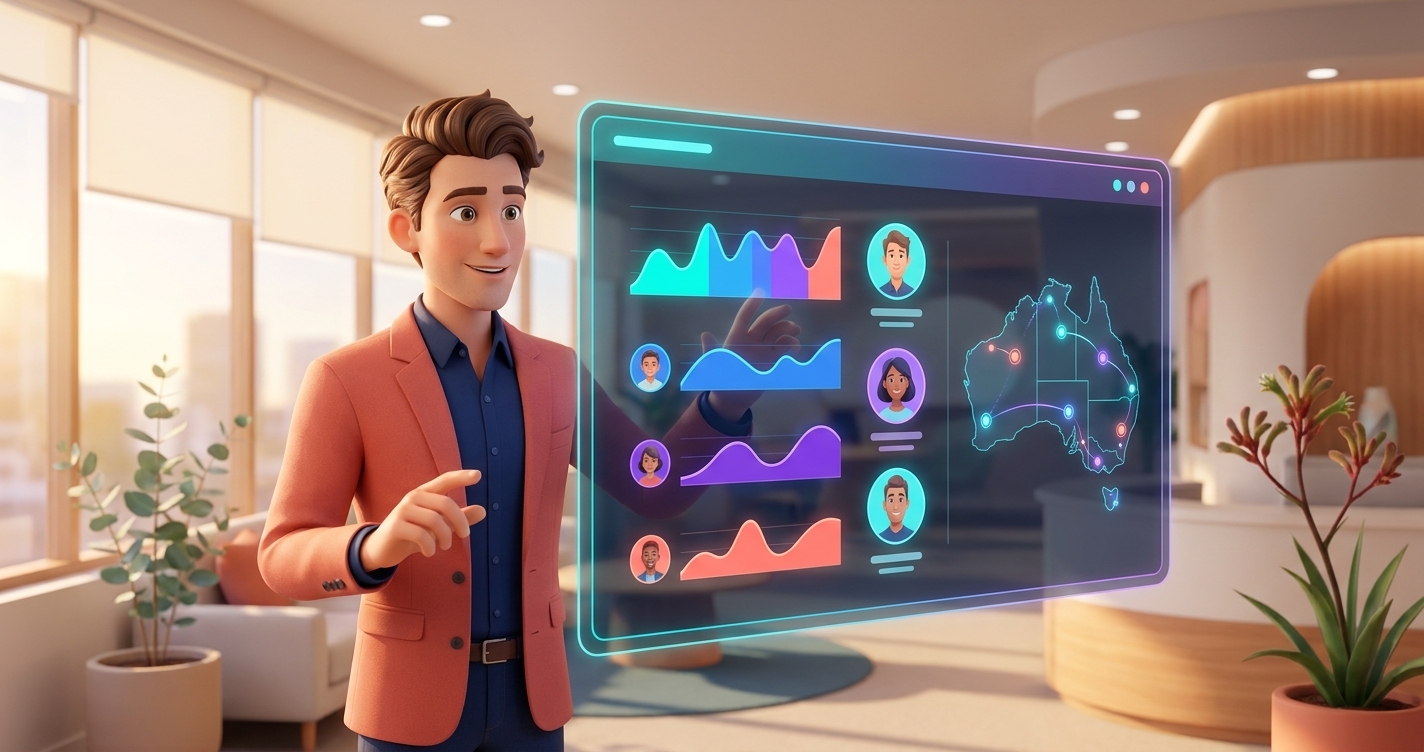
Finding the right HRIS systems in Australia means navigating a complex landscape of Fair Work compliance, modern awards, and shifting employee expectations to find a platform that genuinely supports your workforce.
Key takeaways
- Australian businesses require HRIS platforms with robust local compliance features to manage modern awards and penalty rates accurately.
- Cloud-based HR software is no longer optional, offering unprecedented accessibility, security, and integration capabilities for modern teams.
- The best HRIS solutions go beyond basic record-keeping to provide actionable workforce intelligence and behavioural insights.
- Choosing the right system requires a careful evaluation of your specific business size, complexity, and long-term growth trajectory.
- Successful implementation relies heavily on clean data migration, comprehensive change management, and prioritising the employee user experience.
The unique challenges of the Australian HR landscape
The Australian human resources environment is notoriously complex and highly regulated. With over 100 modern awards, the National Employment Standards (NES), and stringent Fair Work Commission regulations, local businesses face compliance hurdles that off-the-shelf international software often cannot clear. Today's workplace demands systems that can seamlessly handle these intricacies without requiring manual workarounds.
For many organisations, relying on outdated spreadsheets or fragmented legacy systems is a significant risk. The administrative burden of managing employee data across multiple unlinked platforms drains valuable time from HR professionals, preventing them from focusing on strategic initiatives. Furthermore, the margin for error in Australian payroll and compliance is razor-thin.
Modern teams need a single source of truth. As businesses scale, the sheer volume of employee data – from onboarding documents and performance reviews to leave balances and training records – becomes impossible to manage manually. This is where a robust, locally compliant Human Resources Information System (HRIS) becomes the central nervous system of your organisation.
What exactly is an HRIS?
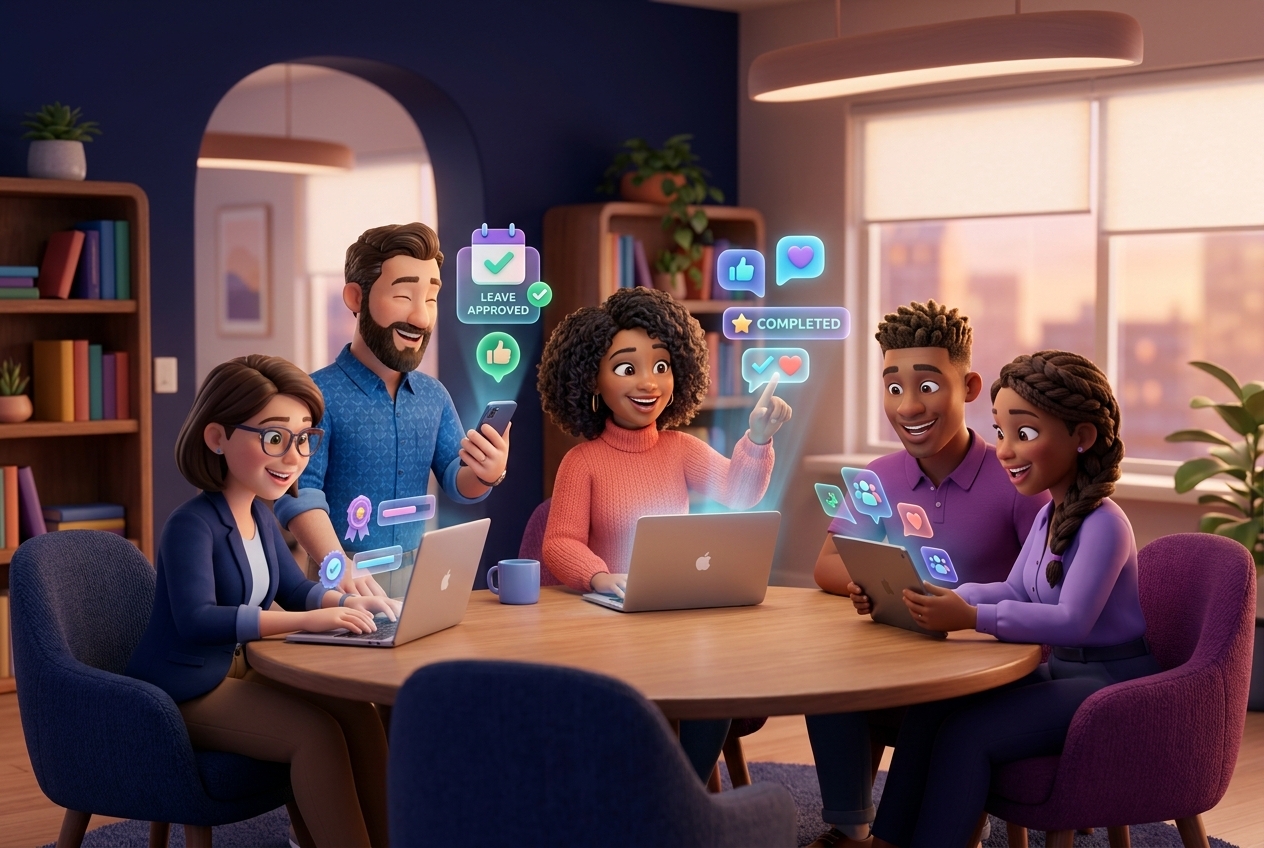
A Human Resources Information System (HRIS) is a software solution designed to centralise, manage, and automate core HR processes and employee data. It acts as the foundational technology for your people operations, bridging the gap between human resources management and information technology.
Historically, HR departments relied on physical filing cabinets, which eventually evolved into basic on-premise databases. Today, the landscape is dominated by sophisticated, cloud-based platforms. These modern systems allow employees and managers to access critical information from anywhere, at any time, via intuitive self-service portals.
While the terms HRIS, HRMS (Human Resources Management System), and HCM (Human Capital Management) are often used interchangeably, an HRIS typically focuses on the core administrative and quantitative aspects of HR. This includes employee databases, time and attendance, payroll integration, and benefits administration. However, the boundaries are blurring as modern platforms incorporate advanced talent management and behavioural science features.
The state of the HR software market in 2026
The demand for comprehensive HR technology is accelerating globally, and Australia is at the forefront of this adoption curve. Research indicates that the global HR software market is projected to grow from $25.9 billion in 2022 to $35.7 billion by 2028, marking a CAGR of over 6.8%. This growth is driven by the urgent need for digital transformation in people operations.
In the local context, expectations are exceptionally high. Industry analysis shows that Australia and New Zealand exhibit North American-style HRIS saturation but remain growth targets for vendors that can guarantee Fair Work Commission compliance. Australian businesses are no longer settling for generic global platforms; they demand systems purpose-built for local legislative requirements.
The shift to the cloud is also nearly complete for forward-thinking organisations. Data reveals that in 2025, 69% of employers had moved at least one core HR module to software-as-a-service, and 83% expect full cloud adoption by 2027. This transition enables real-time updates, enhanced data security, and the ability to integrate seamlessly with other business critical applications.
7 essential features of HRIS systems in Australia
When evaluating an HRIS system for an Australian business, certain features are non-negotiable. The right platform must balance strict compliance with an exceptional user experience.
1. Award interpretation and payroll compliance
In Australia, accurate award interpretation is the most critical feature of any HR technology. The system must be capable of automatically calculating base rates, penalty rates, overtime, and allowances based on specific modern awards or enterprise agreements. Manual calculations are highly prone to human error and pose a massive financial risk.
The consequences of getting this wrong are severe. Industry experts note that a 2% error in penalty rates for 200 employees can compound over two years into a six-figure underpayment liability due to calculation drift in non-governed HRIS systems. A robust HRIS mitigates this risk by providing automated, rule-based calculations that update automatically when legislation changes.
2. Employee Self-Service (ESS) and mobile accessibility
Modern employees expect workplace technology to mirror the seamless experiences they have with consumer apps. An intuitive Employee Self-Service (ESS) portal empowers staff to manage their own data, apply for leave, view payslips, and update personal details without HR intervention.
Mobile accessibility is equally crucial, particularly for businesses with deskless, remote, or shift-based workforces. A mobile-responsive HRIS ensures that all employees – whether they are on a construction site, in a retail store, or working from a home office – have equitable access to HR services and company communications.
3. Seamless onboarding and talent acquisition
First impressions matter, and your HRIS plays a pivotal role in the candidate-to-employee transition. The best systems offer integrated applicant tracking and digital onboarding workflows that eliminate paper forms. New hires should be able to sign contracts, upload compliance documents, and review company policies digitally before their first day.
This is where intelligent tools make a significant difference. For example, using a solution like Compono Hire allows you to assess candidates for Organisation Fit, Skills, and Qualifications during the recruitment phase, ensuring that the data flows seamlessly into your HRIS once the candidate is hired, creating a unified talent profile.
4. Performance and engagement management
Annual performance reviews are rapidly being replaced by continuous feedback models. A modern HRIS should facilitate regular check-ins, goal tracking, and 360-degree feedback. It should provide managers with the tools they need to have meaningful conversations about career development and performance.
Furthermore, integrating engagement surveys and pulse checks directly into your HRIS allows you to correlate engagement data with retention and performance metrics. This holistic view helps leaders identify flight risks and intervene before top talent leaves the organisation.
5. Advanced data analytics and reporting
Data is only valuable if you can extract actionable insights from it. Your HRIS must feature robust reporting capabilities that go beyond basic headcount and turnover metrics. Predictive analytics, diversity dashboards, and custom report builders are essential for strategic HR leadership.
The ROI on these insights is substantial. Research shows that companies with robust people-analytics programs saw a 25% increase in overall productivity and cut attrition in half. By leveraging data, HR teams can transition from reactive administrators to proactive strategic partners.
6. Learning and compliance training
Australian businesses face strict requirements regarding workplace health and safety, anti-bullying, and industry-specific compliance training. An HRIS with an integrated Learning Management System (LMS) ensures that all mandatory training is delivered, tracked, and recorded automatically.
This protects the business from liability while simultaneously fostering a culture of continuous learning. Automated reminders and certification tracking take the administrative heavy lifting off the HR team's shoulders.
7. Open API and integration ecosystems
No single software can do everything perfectly. The best HRIS systems act as a central hub that integrates seamlessly with your existing tech stack. Open APIs allow your HR data to flow securely into your payroll software, active directory, rostering tools, and communication platforms like Slack or Microsoft Teams.
This interconnected ecosystem prevents data silos and eliminates the need for double-data entry, which is a major source of administrative errors and inefficiencies.
The business case for upgrading your HR software
Convincing the C-suite to invest in new HR technology requires a solid business case focused on return on investment (ROI). The most immediate benefit is the drastic reduction in administrative overhead. By automating routine tasks like leave approvals and data entry, HR professionals can reclaim hours of their week.
This efficiency translates directly to the bottom line. Studies indicate that companies that implement HR software report a 15–20% increase in productivity within the first year of deployment. When HR teams are freed from manual paperwork, they can focus on high-impact initiatives like leadership development and culture building.
Additionally, upgrading your HRIS is a crucial risk management strategy. The cost of compliance breaches, underpayment claims, and data security incidents far outweighs the subscription cost of a modern, secure, and locally compliant HR platform. An upgraded system provides the audit trails and security protocols necessary to protect your business.
How to choose the right HRIS software for your business
Selecting the best HR software in Australia is a significant strategic decision. The market is crowded, and choosing a platform that doesn't align with your specific operational needs can lead to a costly and frustrating implementation. Follow these steps to ensure you make the right choice.
Step 1: Audit your current processes and pain points
Before looking at software vendors, conduct a thorough internal audit. Map out your current HR processes from hire to retire. Identify where the bottlenecks are, which tasks take the most manual effort, and where data is currently being siloed or duplicated. Consult with payroll, IT, and frontline managers to understand their specific frustrations with the current setup.
Step 2: Define your complex compliance requirements
Document every modern award, enterprise agreement, and specific compliance requirement your business operates under. If you have a multi-location or franchise model, note the variations in state-based legislation. When evaluating vendors, ask for specific demonstrations of how their system handles your exact award interpretations and penalty rate calculations.
Step 3: Prioritise the user experience (UX)
A system is only effective if your people actually use it. If the platform is clunky, unintuitive, or difficult to navigate on a mobile device, employee adoption will be low, and HR will end up doing the administrative work anyway. Request trial access or sandbox environments to test the interface from the perspective of an everyday employee, a line manager, and an HR administrator.
Step 4: Evaluate vendor support and local presence
Implementing an HRIS is a complex project, and you will need support. Assess the vendor's implementation methodology, training resources, and ongoing customer service. For Australian businesses, having access to local support teams in your time zone – who genuinely understand Australian employment law – is a massive advantage over relying on overseas help desks.
Common implementation pitfalls and how to avoid them
Even the best HRIS can fail if the implementation is poorly managed. One of the most common pitfalls is migrating dirty data. If your current spreadsheets are full of errors, outdated addresses, and incorrect leave balances, importing them into a new system will only digitise your problems. Invest time in a rigorous data cleansing process before the migration begins.
Another frequent mistake is treating the HRIS rollout as purely an IT project rather than a change management initiative. Employees and managers need to understand why the change is happening, how it benefits them, and how to use the new tools. Develop a comprehensive communication plan and provide targeted training for different user groups.
Finally, avoid the temptation to replicate your old, inefficient processes in the new system. An HRIS implementation is the perfect opportunity to re-engineer your workflows. Work with your vendor to understand best practices and configure the system to optimise efficiency, rather than just mirroring what you have always done.
The role of AI and automation in modern HR tech
Artificial Intelligence (AI) and machine learning are rapidly transforming the capabilities of HRIS platforms. Automation is taking over repetitive tasks, such as answering basic employee policy questions via AI chatbots, routing approval workflows intelligently, and flagging anomalies in timesheets before they reach payroll.
Beyond basic automation, AI is enabling predictive analytics. Modern systems can analyse historical data to predict future turnover risks, identify skills gaps within the organisation, and recommend personalised learning pathways for employees. This level of insight allows HR leaders to make proactive, data-driven decisions rather than reacting to problems after they occur.
However, it is vital to remember that AI should augment human decision-making, not replace it. The most effective HRIS systems use technology to surface insights and streamline processes, giving human leaders the time and context they need to make empathetic, strategic choices about their workforce.
Moving beyond basic HRIS to workforce intelligence
While a foundational HRIS is necessary for compliance and administration, true competitive advantage comes from understanding the people behind the data. Today's workplace requires a shift from transactional HR management to strategic workforce intelligence. This means moving beyond tracking *what* your employees are doing, to understanding *why* they do it and *how* they can perform at their best.
This is where integrating behavioural science into your HR technology ecosystem becomes transformative. By understanding the work personalities, intrinsic motivations, and engagement levels of your teams, you can design better organisational structures and foster a high-performance culture.
For instance, utilising a platform like Compono Engage alongside your core HR data allows you to continuously listen to your workforce, measure sentiment beyond basic annual surveys, and align your team's daily activities with your broader business strategy. This holistic approach turns your HR technology from an administrative cost centre into a strategic command centre.
Key insights
- Navigating Australia's complex workplace laws requires an HRIS with native, automated award interpretation to prevent costly compliance breaches.
- The transition to cloud-based HR technology is essential for providing equitable, mobile-first access to deskless and remote workforces.
- A successful HRIS implementation hinges on clean data migration, proactive change management, and a focus on intuitive user experience.
- Advanced platforms are evolving beyond basic record-keeping, utilising AI and predictive analytics to provide strategic workforce intelligence.
- Integrating behavioural science and continuous listening tools with your core HR data unlocks deeper insights into employee engagement and performance.
Where to from here?
Upgrading your HR technology is a critical step toward building a more efficient, compliant, and engaged workforce. If you are ready to move beyond basic administration and unlock the true potential of your people data, it is time to explore solutions that integrate seamlessly with your strategic goals.
- Read the Compono buyer's guide: ANZ HR technology guide
Related reading
Frequently asked questions
What is the difference between an HRIS, HRMS, and HCM?
While often used interchangeably, an HRIS (Human Resources Information System) typically focuses on core administrative functions like employee records, time tracking, and benefits. An HRMS (Human Resources Management System) usually adds more complex talent management features. HCM (Human Capital Management) is the broadest term, encompassing strategic functions like workforce planning, analytics, and global compliance.
Why is local Australian compliance so important in an HRIS?
Australia has one of the most complex employment regulatory environments in the world, governed by the Fair Work Commission. A system lacking local compliance features will struggle to accurately interpret modern awards, calculate penalty rates, or handle specific reporting requirements like Single Touch Payroll (STP) Phase 2, exposing the business to severe financial and legal risks.
How long does it typically take to implement a new HRIS?
Implementation timelines vary greatly depending on the size of your organisation, the complexity of your data, and the number of modules being deployed. A straightforward implementation for a mid-sized business might take 8 to 12 weeks, while complex enterprise rollouts with extensive integrations and custom award configurations can take several months.
Can an HRIS integrate with my existing payroll software?
Yes, most modern HRIS platforms are built with open APIs designed to integrate seamlessly with popular Australian payroll systems. This integration ensures that employee data, leave balances, and timesheets flow directly into payroll, eliminating manual data entry and reducing the risk of payment errors.
How do I ensure my employees actually use the new HR system?
High adoption rates rely on choosing a system with an intuitive, mobile-friendly user interface. Additionally, you must invest in comprehensive change management. Communicate the benefits clearly to your staff, provide accessible training resources, and ensure leadership champions the new system by using it actively themselves.

