

.webp)

 Mathan Allington


1 min read
Building an HR tech stack for 100 to 500 employees: 2026 guide
 Compono
The ideal HR tech stack for 100 to 500 employees moves away from fragmented spreadsheets and centres on three to five well-integrated platforms...
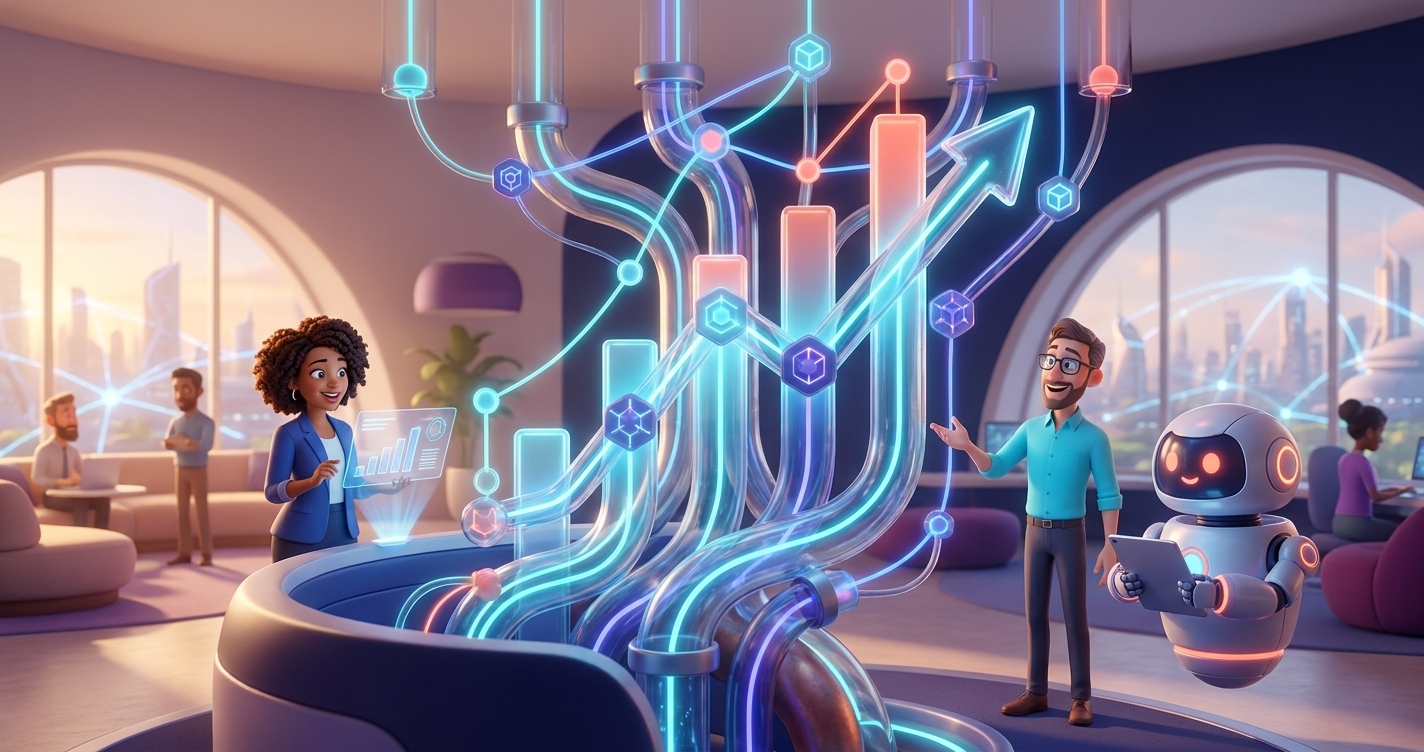
An effective HR tech stack for scaleups is a carefully integrated set-up of tools designed to manage rapid headcount growth, simplify talent acquisition, and maintain company culture without creating administrative bloat.
Key takeaways
- Scaleups need HR technology that prioritises integration and data flow over isolated, disconnected feature sets.
- The average organisation now uses over nine HR systems, yet poor integration blocks key HR goals for the majority of businesses.
- A modern HR tech stack for scaleups must balance rapid talent acquisition with long-term employee engagement and development.
- Aligning your HR software choices with broader business strategy is proven to significantly improve talent outcomes and ROI.
Transitioning from a startup to a scaleup is one of the most volatile periods in a company's lifecycle. The informal processes and lightweight tools that kept your team aligned at 30 employees will inevitably fracture when you hit 150 or 300. Suddenly, spreadsheets become liabilities, manual onboarding becomes a bottleneck, and measuring company culture becomes a guessing game. This is the exact moment when building a deliberate, scalable HR technology set-up becomes critical to your survival.
However, the solution is not simply buying more software. As companies grow, they often fall into the trap of purchasing disjointed tools to solve isolated problems. Research shows that organisations reported an average of 6.2 HR systems in 2020, rising to 9.1 systems by 2024. This rapid expansion of the tech stack often leads to software bloat, where HR teams spend more time managing systems than managing people.
To succeed in 2026, scaleups must shift their focus from tool accumulation to set-up integration. Your HR tech stack needs to act as a unified system of intelligence that guides decision-making, protects your culture during rapid expansion, and provides a frictionless experience for both candidates and employees.
While enterprise organisations might require highly specialised platforms for every micro-function, a scaleup needs a simplified stack that covers the entire employee lifecycle without unnecessary complexity. A solid HR tech stack for scaleups typically consists of four foundational pillars.
The HRIS is the central nervous system of your HR tech stack. It acts as the single source of truth for employee data, payroll, benefits administration, and compliance. For a scaleup, a modern HRIS must offer employee self-service capabilities to reduce administrative overhead. When employees can update their own details, request leave, and access payslips autonomously, HR teams are freed up to focus on strategic initiatives rather than data entry.
Scaleups are defined by their rapid hiring needs. An Applicant Tracking System (ATS) is non-negotiable, but a scaleup needs more than just a digital filing cabinet for résumés. You need a platform that simplify the candidate experience, reduces hiring bias, and integrates behavioural assessments. Smarter hiring at the top of the funnel drastically reduces turnover later on.
Maintaining culture during hyper-growth is notoriously difficult. Annual engagement surveys are no longer sufficient for modern teams. Scaleups require continuous listening tools that measure sentiment, track alignment, and identify burnout risks in real time. This layer of the stack helps leaders transition from reactive firefighting to proactive culture management.
As your company scales, the skills required to succeed will evolve rapidly. A Learning Management System (LMS) ensures that your workforce can upskill efficiently. For scaleups, this means delivering targeted, accessible training that aligns with both compliance requirements and strategic business goals.

The biggest threat to a growing company's HR operations is a disconnected technology set-up. When systems do not talk to each other, data becomes siloed. HR professionals are forced to manually export CSV files from the ATS and upload them into the HRIS, creating friction, delaying onboarding, and introducing human error.
The reality is stark: only 39% of organisations say their HR systems are usefully integrated, and 81% of those with poor integration say it actively blocks important HR goals. A fragmented stack means you cannot generate accurate reporting on key metrics like time-to-hire, quality of hire, or the correlation between onboarding success and long-term retention.
To avoid building a "Frankenstein stack", scaleups must prioritise platforms with open APIs and native integrations. Before purchasing any new tool, you must ask how it will communicate with your existing infrastructure. The goal is to create a smooth flow of data from the moment a candidate applies to the day they eventually offboard. For a deeper dive into moving beyond basic data storage, explore our System of Intelligence HR guide.
Technology is merely an enabler; it cannot fix a broken strategy. The most successful scaleups do not buy software based on flashy features, they buy software to solve specific business problems. In fact, companies that align HR tech with business strategy are 2.5x more likely to improve talent outcomes.
To achieve this alignment, HR leaders must conduct a thorough audit of their current processes. Identify the bottlenecks that are slowing down growth. Is your time-to-hire too long? Is new hire turnover spiking in the first 90 days? Are managers struggling to track performance?
Once you have identified the core business challenges, you can evaluate technology solutions based on their ability to deliver measurable ROI. If your primary goal is to scale headcount rapidly without sacrificing culture, your tech stack should heavily index on solid assessment tools and simplified onboarding portals. If you need help evaluating options in the market, our guide on choosing the right ANZ HR technology provides a comprehensive framework for decision-makers.
A common mistake scaleups make is buying technology for the size they are today, rather than the size they will be in two years. Alarmingly, only 28% of large organisations report that their HR technology stack scales efficiently as headcount grows. To future-proof your investment, you must evaluate platforms based on their scalability, security, and adaptability.
Modern HR technology is rapidly evolving toward predictive analytics and AI-driven insights. The best platforms no longer just tell you what happened; they tell you what is likely to happen next. They can predict flight risks, identify skills gaps before they impact project delivery, and suggest the most effective learning pathways for individual employees.
This is where a unified workforce intelligence platform becomes invaluable. By consolidating hiring, engagement, and development data into a single set-up, scaleups can open up deep insights into team performance. For example, Compono helps growing businesses connect the dots between candidate assessment scores and long-term employee engagement, allowing leaders to continuously refine their hiring profiles based on real performance data.
Securing budget for a new HR tech stack for scaleups requires a compelling business case. When pitching to the executive team or the board, you must translate HR metrics into business outcomes. Executives are less interested in the user interface of an ATS and more interested in how it reduces the cost-per-hire or accelerates time-to-productivity for new revenue-generating staff.
Focus your business case on three primary areas of return on investment (ROI):
By framing your HR tech stack as a strategic growth engine rather than an administrative cost centre, you align your people operations directly with the scaleup's overarching commercial goals. For mid-market companies and scaleups looking to build this strategic capability, exploring People Intelligence for Business can provide the necessary foundation for sustainable growth.
Key insights
- Software bloat is a major risk for scaleups; focus on consolidating tools into a unified set-up rather than buying point solutions for every problem.
- Open APIs and native integrations are non-negotiable requirements when evaluating new HR software.
- The best HR technology investments are those directly tied to solving specific business bottlenecks, such as high turnover or slow time-to-hire.
- Future-proofing requires adopting platforms that offer predictive analytics, moving your HR function from a reactive state to a proactive strategic partner.
Building a scalable HR set-up doesn't have to mean managing a dozen disconnected vendors. Compono provides a unified workforce intelligence platform that connects your hiring, engagement, and development data, giving you the insights needed to scale your team with confidence.
Related reading
An HR tech stack is the collection of software applications and digital tools an organisation uses to manage its human resources functions. This typically includes systems for recruiting, onboarding, payroll, performance management, employee engagement, and learning and development, all working together to support the employee lifecycle.
While the average organisation uses around nine HR systems, a scaleup should aim for a more consolidated approach to avoid software bloat. A highly effective stack can often be achieved with 3–5 well-integrated platforms covering the core pillars: an HRIS, an ATS, an engagement tool, and a learning management system.
Startups usually need to upgrade their HR software when they experience rapid headcount growth (typically crossing the 50-employee threshold), when manual processes like spreadsheets become unmanageable, or when they lose visibility over key metrics like employee turnover and engagement sentiment.
To ensure proper integration, prioritise vendors that offer open APIs and native integrations with your existing core systems (like your HRIS or payroll software). Before purchasing, map out exactly how data needs to flow between systems, such as moving a successful candidate from the ATS directly into the HRIS for onboarding, to verify the integration can handle your specific workflows.
For a growing company, a solid Human Resources Information System (HRIS) is the most critical foundational piece. It acts as the central database for all employee information, ensuring compliance, managing payroll, and providing the core architecture that all other HR tools (like an ATS or engagement platform) will eventually connect to.
1 min read
The ideal HR tech stack for 100 to 500 employees moves away from fragmented spreadsheets and centres on three to five well-integrated platforms...

1 min read
Incomplete HR tech is a system that fails to connect the dots between hiring, engagement, and development, leaving managers to manually bridge the...

1 min read
Finding the right HR software mid-market solution means bridging the gap between basic small-business tools and overly complex enterprise systems to...
 Mathan Allington