
.webp)

 Mathan Allington
Choosing the right e-learning platform Australia
 Mathan Allington
The four things that matter when comparing Australian digital learning platforms: usability, content quality, reporting and personalised learning...

Upskilling software is a platform that finds the gaps between the skills your workforce has and the skills the business needs, then closes them with targeted learning and tracks whether the capability actually improved. Choosing one comes down to four decisions: whether you need a content catalogue or a capability system, whether skills data has to connect to hiring and engagement data, how the licence is priced against your real adoption rate, and what the platform can prove to a finance team at renewal. The comparison below covers the main categories and the licensing models you will be quoted.
Last reviewed September 2026.
Most HR leaders are not short of training content. They are short of a way to tell which capabilities are missing, who should be developing what, and whether last year's spend changed anything. That is the job upskilling software is meant to do, and it is the part that separates the categories below from each other.
Workplace learning spent a long time as a set of tick-box exercises: an annual compliance video, an occasional seminar, done. Upskilling software assumes something different, that capability needs are continuous and specific to your business, so the platform has to start by working out what you have before it recommends what to learn.
In practice that means four functions. It builds a picture of current capability, usually through a mix of self-assessment, manager assessment and completed learning. It compares that picture against role requirements or a skills matrix. It assigns learning that targets the gap rather than the catalogue. And it reports movement in capability over time, which is the only output senior leadership tends to care about.
Anything that only does the third function is a content library with a login. That is a legitimate purchase, and it is much cheaper. It is worth being honest with yourself about which one you are buying, because the two get sold under the same words.
There is no single best platform, and any article that names one is guessing about your context. What is knowable is which category fits which situation. Work out the category first, then shortlist inside it.
| Category | Best suited to | What it does well | Where it falls short |
|---|---|---|---|
| Content subscription library | Teams that mainly need breadth of off-the-shelf courses | Large catalogue, low cost per seat, quick to switch on, strong general business and technical content | No view of your skill gaps, so people browse rather than progress. Completion data only. |
| Traditional learning management system | Organisations whose priority is assigning, delivering and evidencing required training | Course delivery, compliance records, audit trails, SCORM support, reporting by role and site | Skills analysis is usually a bolt-on. Content is yours to source. |
| Skills intelligence platform | Larger workforces doing workforce planning and internal mobility | Skills taxonomies, gap analysis, adjacency mapping, succession and redeployment views | Often needs a separate delivery platform, and taxonomy setup is a real project. |
| Capability platform connected to hiring and engagement | Organisations that want skills, culture and hiring data in one picture | Development informed by how each person works, plus continuity from candidate to employee to internal move | Bigger change than adding a content library. Value depends on using more than one part. |
This choice matters most for mid-market organisations of roughly 60 to 1,000 staff. At that size the needs are complex enough to need structure, and the organisation is still small enough that culture and capability move quickly when you get it right. Compono Develop sits in the fourth category, which makes it a fit where you want development connected to hiring and engagement data, and an expensive answer if all you need this year is a content catalogue.

Enterprise selection adds requirements that rarely appear on a feature comparison and almost always appear in a procurement review. Work through these before you fall for a demo.
Ask for a reference customer at your size and in something like your operating model, then ask that reference what the implementation actually took. Configuration effort is where enterprise deployments slip, not licensing.
Vendors price upskilling software in several ways, and the quotes are hard to compare because they measure different things. The four models you will meet:
An illustrative worked example, using made-up numbers to show the shape of the decision rather than any vendor's real pricing. Say you are licensing for a 100-person IT team. A per-registered-user quote of $20 per user per month costs $2,000 a month, or $24,000 a year, regardless of who logs in. An active-user quote of $35 per active user per month costs $23,100 a year if 55 people are active in a typical month, which looks like the better deal. Lift adoption to 80 active users, which is what you are trying to do, and the same active-user contract costs $33,600 a year while the per-registered-user contract has not moved. The cheaper model on paper is the one that penalises success.
Three further things belong in any licensing comparison. Ask what happens to your data and completion records if you leave, since export terms vary a lot. Ask whether content is included or licensed separately, because a low platform fee with a separate catalogue subscription can land above a higher all-inclusive quote. And check the renewal uplift clause, which is where multi-year deals quietly recover their discount.
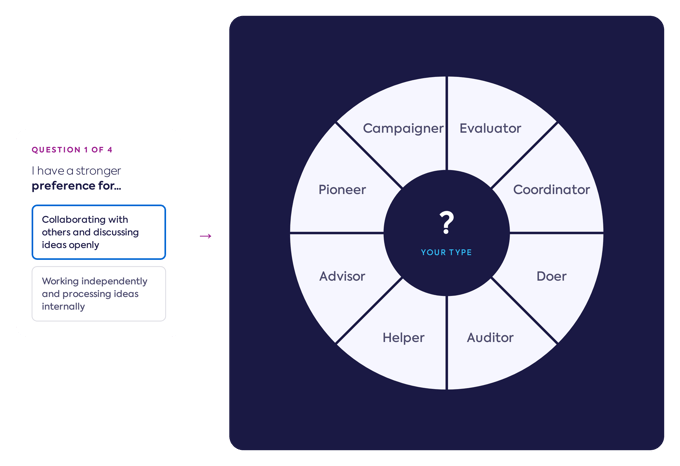
Assuming everyone learns the same way is the most common reason a well-funded development program produces nothing. People have natural work preferences that shape how they take on new material and what kind of growth appeals to them. Compono's framework describes eight work personalities: Doer, Auditor, Helper, Advisor, Pioneer, Campaigner, Evaluator and Coordinator.
Understanding work personality makes the difference concrete. Pioneers tend to be drawn to open-ended, creative problem solving, so putting one through a rigid, detail-heavy compliance path with no room to apply anything is a fast route to disengagement. Auditors work the opposite way, and will happily go deep on technical precision that a Pioneer would find airless. Neither preference is better. Assigning both the same path is what wastes the budget.
When you shortlist platforms, ask how learning paths get personalised. Some tools personalise by role, some by prior completion, and a smaller number by how the person actually works. That last one is the difference between a catalogue that recommends and a program someone takes ownership of.
Upskilling does not start six months into a tenure. It starts while you are still assessing the candidate. If you know someone fits the culture and the role but is short a specific technical capability, you can hire on that basis, with the development plan already written.
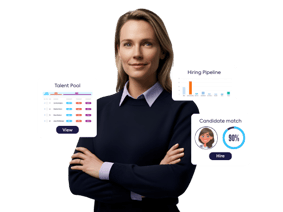
Most organisations keep hiring and development in separate systems and separate teams, which produces a fragmented experience for the person in the middle. Someone hired for their strengths as a Campaigner, then given a first month of solitary process training, works out the disconnect immediately. Keeping the insight from the hiring stage available to the person building the learning plan is the whole argument for buying these capabilities from one workforce intelligence platform rather than two.
The same data drives internal mobility. With a clear map of capability across the business, a vacancy does not automatically become an external search. You can find the person who is most of the way there and close the remainder. That is cheaper than recruiting, and it tells everyone else that growth here is real. Running the numbers through a skills gap analysis calculator gives you a defensible size for the gap before you argue for the budget, and a reskilling platform comparison is the right next read when the gap is big enough that people need to move roles entirely rather than deepen the one they have.

Hours of training completed is the metric that has kept learning teams on the back foot for two decades. It measures attendance. Capability gained is the measure that survives a budget review, and it needs a baseline, so assess before you start rather than after.
Four outputs are worth reporting: movement in assessed capability against role requirements, the share of vacancies filled internally, retention among people with an active development plan compared with those without, and time to competence for new starters in critical roles. If your platform cannot produce those, ask how it expects you to defend the renewal.
Where an upskilling platform and your core people system overlap on records and reporting is worth settling early. The boundary between a learning platform and an HRIS is the usual source of duplicated administration, and deciding which system is the record of truth for skills data before implementation saves an argument later.
Compono Develop maps what your team can do against what the roles need, then builds the learning around how each person actually works.
Talk to usUpskilling deepens what someone already does, so they perform better in their current role or step up into the next one. Reskilling moves someone into a different role, usually because their position has changed shape or the business has shifted. The software overlaps, but reskilling puts far more weight on skills adjacency and internal mobility features.
The category matters more than the brand. A content subscription library suits teams that need breadth cheaply, a learning management system suits assigning and evidencing required training, a skills intelligence platform suits workforce planning at size, and a capability platform suits organisations that want development connected to hiring and engagement data. Pick the category against your situation, then shortlist two or three inside it.
Model each quote at the adoption rate you are aiming for, not the one you have today. Per-registered-user pricing is predictable and wasteful at low adoption, while per-active-user pricing is cheap early and rises as your program succeeds. Also check export terms, whether content is bundled or separate, and the renewal uplift clause.
Single sign-on and automated provisioning, data residency and security certifications, integration depth with your core people system, and whether divisions can administer their own content within a shared framework. At enterprise scale, configuration effort is the usual cause of a slipped implementation.
Yes, though the value comes from a different place. Small teams rarely need workforce planning features, and they benefit most from the structure of having development planned, visible and followed up, which otherwise gets lost behind delivery work.
Continuously rather than annually, with a formal reassessment when a role changes materially or a new capability enters the business. An annual audit tells you where you were, which is the wrong information for a decision you are making now.

The four things that matter when comparing Australian digital learning platforms: usability, content quality, reporting and personalised learning...

What to check in an enterprise learning platform: capability data over completion rates, manager visibility, and how to tie learning to business...

The best competency management software in 2026 by type: compliance-led, healthcare and nurse competency tracking, LMS hybrids and talent suites.