

.webp)

 Mathan Allington


Choosing the best HR reporting software for your team
 Mathan Allington
What HR reporting software does, the features that matter, and how to choose a tool that turns scattered people data into decisions you can defend.

Effective HR dashboards aggregate workforce data into real-time visual insights so People leaders can track the metrics that matter and make decisions they can defend. The best ones go beyond headcounts and turnover reports to connect recruitment, engagement, culture and performance data in one view, turning people data into people intelligence.
Last reviewed July 2026.
Most HR leaders have stared at a mountain of spreadsheets trying to work out why turnover is spiking in one department or why a recruitment drive missed. For a long time HR was treated as the gut-feel department, running on intuition and anecdote. Intuition will not secure a seat at the executive table. You need data that tells a story and prompts action.
The problem is not a lack of information. Most businesses are swimming in data. The challenge is centralising it into a format that does not require a statistics degree to read. That is the job of a well-designed HR dashboard: bridging the gap between having people data and having people intelligence.
Traditional HR reporting looks backward. It tells you what happened last quarter: how many people left, what training cost, how many roles were filled. That is necessary for compliance and budgeting, but it does not predict the next challenge. A modern HR dashboard should work like a GPS, showing where you are now and flagging the roadblocks ahead.
To get there, dashboards need more than headcounts. Look at the intersection of performance, engagement and culture. Understanding the why behind the numbers matters as much as the numbers. Tracking how teams interact and where natural work preferences sit reveals patterns spreadsheets miss.
If a dashboard shows high turnover in one department, basic reporting might point to compensation. A view that includes engagement data might reveal a cultural disconnect, or a leadership style that does not match the team. That is the difference between reporting a problem and providing a data-driven answer.

It is easy to drown in the number of metrics you could track. Focus on five core pillars: recruitment efficiency, employee engagement, team performance, diversity and inclusion, and retention risk.
Recruitment efficiency is usually the first stop. Time-to-hire and cost-per-hire are standard, but quality-of-hire is the metric that separates good dashboards from decorative ones. How many new hires are still with you after 12 months? How long until a new team member reaches full productivity? With Compono Hire these metrics are baked into the workflow, so tracking them takes no extra effort.
Engagement and culture come next. These metrics get dismissed as soft, but they hit the bottom line directly. Visualising engagement data alongside performance metrics gives a much clearer picture of organisational health, and high-performing teams consistently score better on engagement and cultural alignment.
One of the biggest mistakes HR leaders make is showing the same dashboard to everyone. Your CEO does not need the granular recruitment funnel, and team managers do not need global turnover costs. Data lands when the view matches the audience.
For the C-suite, lead with the metrics that link people to profit: total headcount costs, revenue per employee, overall engagement scores. If you can show that a 5% lift in engagement correlates with a 10% drop in turnover costs, you have already won the argument for your next initiative.
For team managers, keep it practical and day-to-day. They need to know how their team is performing, where the skill gaps sit, and who might be at risk of burnout. With Compono Engage, managers see real-time data on team dynamics and work personality, so they can lead with precision instead of waiting for an annual review to surface issues.
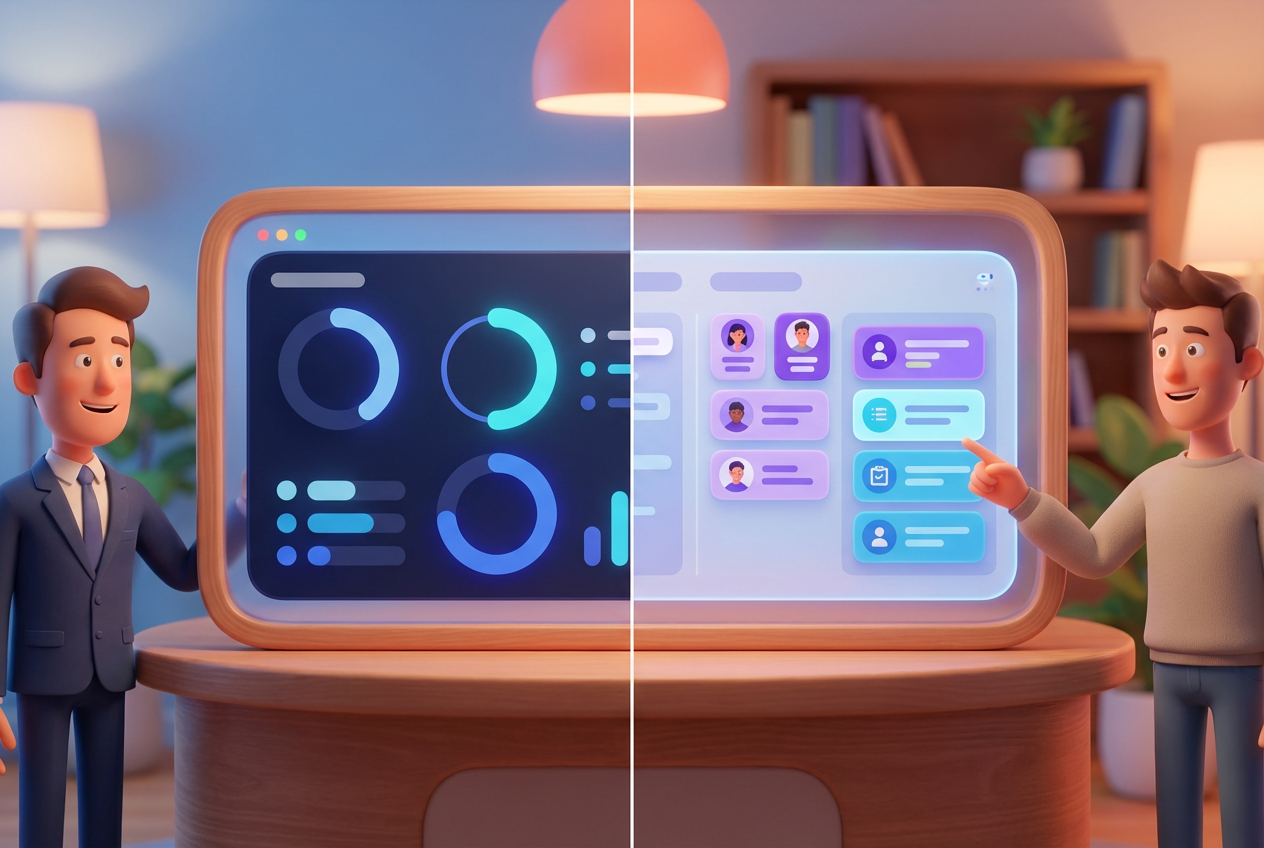
The most beautiful dashboard in the world is useless if the data behind it is wrong. This is a common hurdle for mid-market organisations that grew quickly and now have people data scattered across payroll, an ATS, performance tools and engagement surveys.
Start by centralising your source of truth. You do not need to replace every tool, but the tools do need to talk to each other. When data is clean and centralised, you spend less time defending the numbers and more time acting on them.
Cleaning usually means a one-off audit: duplicate records, inconsistent job titles, missing demographic information. Once you have a clean baseline, automate as much data entry as you can. The more manual the process, the higher the error rate, and the faster leadership stops trusting the dashboard.
Retention is where dashboards earn their keep. Rather than reporting who left, use the data to spot who might leave. Predictive signals include a drop in engagement scores, a sudden dip in performance ratings, or falling participation in training and development programs. Visualised properly, these stand out as red flags demanding attention, and managers can hold meaningful stay conversations before it is too late.
The Compono Culture, Engagement & Performance Model shows how these elements feed each other: healthy culture drives engagement, which drives performance and retention. Your dashboards should reflect that interconnection, showing how a change in one area moves the others. That is how HR shifts from reactive function to strategic leader.
Compono connects hiring, engagement and development data in one platform, so your dashboards answer the questions leadership actually asks.
Talk to usIt depends on your business goals, but the usual core set is turnover rates, time-to-hire, employee engagement scores, diversity statistics and performance ratings. Prioritise metrics that lead to action rather than observation.
Real-time is ideal, weekly at minimum. Real-time data lets you catch trends as they happen, whereas monthly reporting usually means reacting to issues after they have already hurt the business.
Tier access by role. Senior leaders need high-level strategic data, managers need specific insight into their direct reports, and data privacy has to be maintained whenever sensitive people information is shared.
Usually because it is too complex or does not answer the questions the business cares about. Keep the visuals simple and link people data directly to outcomes like cost savings or productivity gains.

What HR reporting software does, the features that matter, and how to choose a tool that turns scattered people data into decisions you can defend.

Attrition prediction uses workforce data and behaviour patterns to flag turnover risk early, so HR leaders can act on retention before people quit.
HR software implementation in four phases: data audit, change management, piloted rollout and adoption. Includes a checklist and realistic timelines.