
.webp)
.png?width=383&height=200&name=team%20(1).png)
 Compono


1 min read
How proficiency levels work in childcare providers
 Compono
Proficiency levels in childcare providers work by categorising an educator’s ability to perform specific tasks – such as administering first aid or...

High stakes assessment platform providers in Auckland offer the digital infrastructure needed to deliver secure, legally defensible, and reliable exams for professional certifications, government licensing, and academic qualifications.
Choosing a provider in the ANZ region requires a focus on local data sovereignty, accessibility standards, and robust proctoring technology to ensure the integrity of every result. At Compono, we help organisations move beyond traditional paper-based testing into secure digital environments that protect both the candidate experience and the institution's reputation.
Key takeaways
- High stakes assessment platforms must provide end–to–end security, from identity verification to anti–cheat browser lockdowns.
- Localised support and compliance with ANZ privacy standards are essential when selecting a provider for Auckland–based projects.
- Scalability and accessibility ensure that large–scale licensing or certification programmes remain inclusive and reliable under pressure.
- Moving to a digital–first assessment model reduces administrative overhead while increasing the speed of results delivery.
For many organisations in Auckland, the transition from traditional pen–and–paper exams to digital platforms is no longer a luxury – it is a necessity for maintaining standards. High stakes assessments are defined by their consequences; whether it is a medical board certification or a heavy vehicle driver licence, the cost of a security breach or a technical failure is incredibly high. This is why local government bodies and professional associations are looking for platform providers that understand the specific nuances of the New Zealand market.
The challenge often lies in finding a balance between rigorous security and a seamless user experience. If a platform is too restrictive, it can create undue stress for candidates, potentially skewing results. Conversely, if it lacks robust proctoring and lockdown features, the validity of the entire certification is put at risk. We have seen that the most successful digital transitions occur when the technology feels like an enabler rather than a barrier to the assessment process.
At Compono, we focus on creating assessment environments that are as intuitive as they are secure. Our Assure module is specifically designed to handle these complex requirements, providing a purpose–built space for high–consequence testing that prioritises reliability and integrity at every stage of the journey.
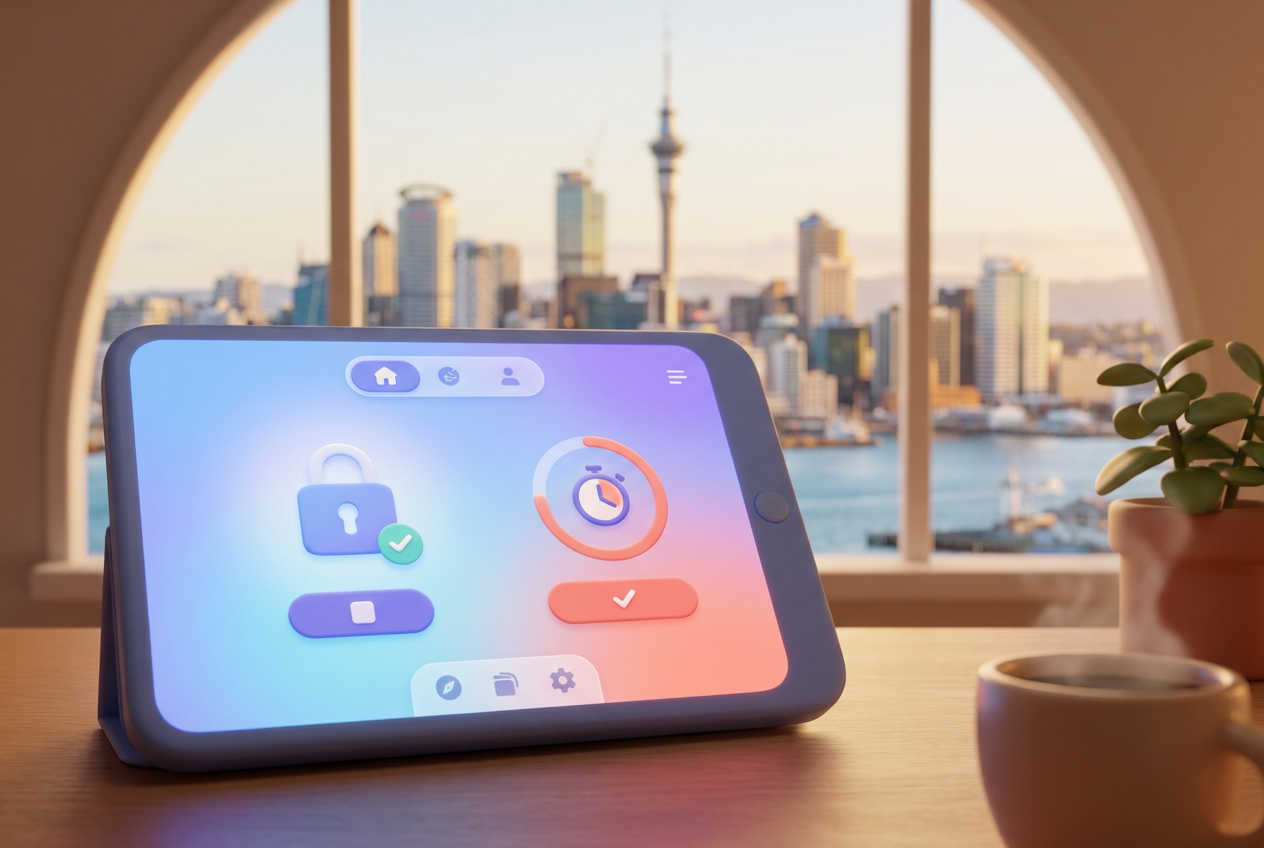
When you are evaluating high stakes assessment platform providers in Auckland, security should be your primary concern. This involves more than just a password–protected login. Modern platforms use sophisticated tools like AI–assisted proctoring, biometric verification, and secure browser technology to prevent unauthorised access to external resources during an exam. These layers of protection ensure that the person taking the test is who they say they are and that they are relying solely on their own knowledge.
Data integrity also extends to how the results are stored and managed. For Auckland organisations, knowing that data is handled in accordance with local privacy laws is a significant advantage. A breach in a high stakes environment does not just affect one individual; it can devalue an entire qualification and lead to significant legal liability. This is why we advocate for systems that use encrypted data transmission and rigorous audit trails to track every interaction within the assessment portal.
Integrity is not just about catching bad actors – it is also about protecting honest candidates. A reliable platform ensures that even if a candidate loses their internet connection mid–exam, their progress is saved and the clock is paused. This level of technical resilience is what separates a standard survey tool from a true high stakes assessment platform. It provides peace of mind to the administrators and a fair playing field for every participant.
Auckland is home to a diverse workforce, and your assessment strategy must reflect that. High stakes assessment platform providers must prioritise accessibility to ensure that no candidate is disadvantaged by the technology itself. This means adhering to WCAG standards, providing screen reader compatibility, and allowing for adjustable font sizes and high–contrast modes. When the stakes are high, the last thing you want is a legal challenge based on a lack of inclusive design.
Beyond technical accessibility, there is the matter of digital literacy. Not every candidate will be an expert at navigating complex software. The best platforms use clean, minimal interfaces that guide the user through the process without distraction. At Compono, we believe that the assessment should test the candidate's skills or knowledge – not their ability to figure out a confusing user interface. This commitment to clarity is central to our NSW Driver Knowledge Test online implementation, where inclusive training delivery was paramount.
We also need to consider the physical location of the candidate. While many high stakes exams are still held in supervised centres, there is a growing demand for remote invigilation. This allows candidates in regional areas or those with mobility issues to complete their assessments from home. By removing geographical barriers, Auckland organisations can reach a wider talent pool and make their certification programmes more accessible to everyone, regardless of their circumstances.
High stakes testing often happens in waves. You might have periods of low activity followed by a sudden surge where thousands of candidates need to sit an exam simultaneously. A platform that works perfectly for ten people may buckle under the weight of a thousand. When researching high stakes assessment platform providers in Auckland, ask about their server infrastructure and how they handle peak loads. System downtime during a high stakes exam is a catastrophic failure that can lead to massive rescheduling costs and lost trust.
Scalability also refers to the ease with which you can manage large volumes of data and candidates. Manual grading and data entry are prone to error and are simply not feasible at scale. Automated marking for multiple–choice or drag–and–drop questions provides instant feedback and reduces the administrative burden on your team. For more complex assessments, a platform should facilitate a streamlined manual marking workflow for examiners, ensuring consistency and speed in results delivery.
By using a platform like Compono, organisations can manage these fluctuating demands with confidence. Our architecture is built to support large–scale government and enterprise projects, ensuring that performance remains steady even during high–traffic certification windows. This reliability allows your team to focus on the quality of the assessment content rather than worrying about whether the website will stay online.
Key insights
Selecting a high stakes assessment platform in Auckland requires a focus on end–to–end security, local compliance, and inclusive design. The right provider will offer a resilient infrastructure that protects the integrity of the results while ensuring a fair and accessible experience for every candidate. By moving to a digital–first model, organisations can scale their certification programmes and reduce administrative risks.
Where to from here?
Transitioning to a high stakes digital assessment model requires a strategic approach that balances security with candidate experience. Whether you are managing professional certifications or government licensing, the right technology partner is the foundation of your success.
High stakes assessments are those where the results have significant consequences for the individual or the organisation, such as granting a professional licence, a degree, or a safety certification. Because the impact is so high, these tests require much higher levels of security, proctoring, and technical reliability than standard quizzes or surveys.
Reputable providers follow strict data protection protocols, including encryption of data at rest and in transit. For Auckland–based organisations, it is important to choose a platform that complies with New Zealand privacy standards and ensures that candidate information is handled securely throughout the entire assessment lifecycle.
Yes, modern platforms use a combination of secure browser lockdowns, which prevent candidates from opening other tabs or apps, and remote proctoring. Remote proctoring can involve live human observers or AI–driven monitoring that flags suspicious behaviour, such as looking away from the screen or using a mobile phone, for later review.
Accessibility ensures that every candidate has an equal opportunity to demonstrate their knowledge, regardless of physical or cognitive impairments. In high stakes environments, failing to provide an accessible platform can lead to unfair results and potential legal challenges under anti–discrimination laws.
Automated marking provides immediate results to candidates, which is particularly beneficial in high stakes scenarios where waiting for grades can cause significant stress. It also eliminates human error in grading and allows organisations to process large volumes of candidates much faster than manual methods would allow.

1 min read
Proficiency levels in childcare providers work by categorising an educator’s ability to perform specific tasks – such as administering first aid or...
1 min read
A competency management platform for childcare providers New Zealand teams use centralises educator qualifications, tracks compliance requirements,...
1 min read
Follow our monthly product updates as we share the latest features to help you strategically design and develop teams and the work environment.
 Manisha Bullen