

.webp)

 Mathan Allington


The 'Brilliant Jerk' problem (and why every winner has a bad hire story)
 Mathan Allington
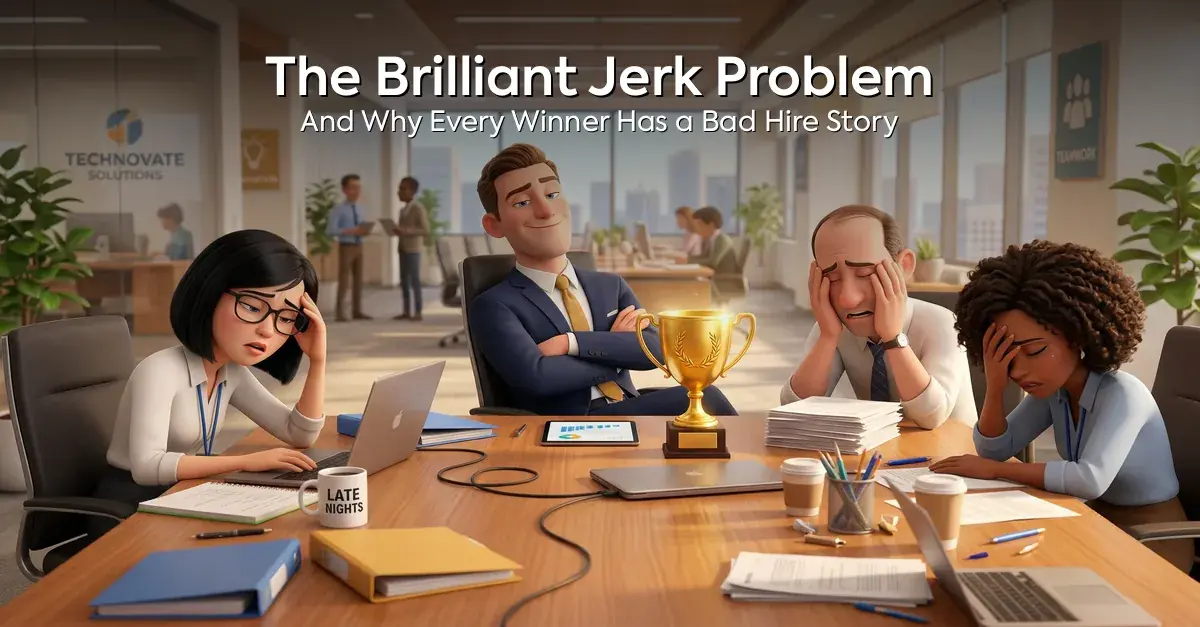
Every HR Influence Awards 2026 winner admitted to making a bad hire. Here's what six of Australia and New Zealand's top people leaders learned about...
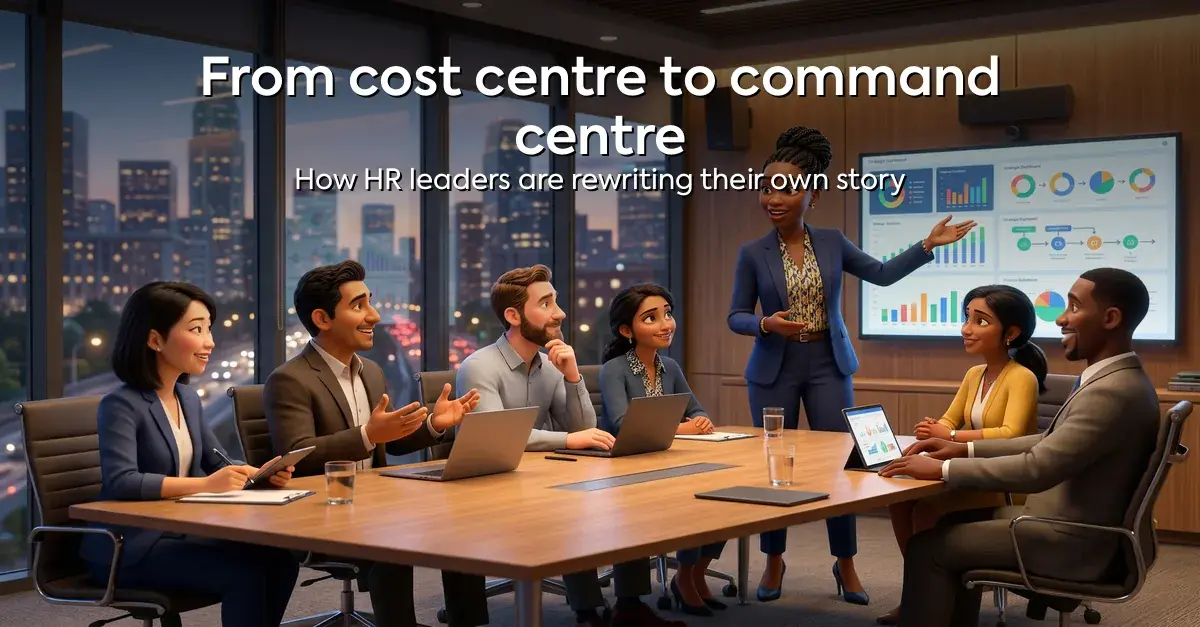
Somewhere in the middle of Matt McFarlane's interview, he said something that made everyone pause.
"We already are strategic, we're just doing a really bad job of marketing it."
The question had been about the shift from transactional HR to strategic HR. It's a question we put to every winner in the HR Influence Awards 2026, and we'd heard thoughtful answers from all of them. But Matt flipped the entire premise. The problem, he argued, isn't that HR isn't strategic. It's that nobody outside the function knows what HR is actually working on.
Having been on the call for all twelve winner interviews as the producer of the awards, I can tell you this landed differently than it reads on the page. Because Matt wasn't being glib. He was a little frustrated. And so were the others, in their own ways.
Matt's argument is disarmingly simple. Every other function in a business tells you what they're doing. Product teams have roadmaps. Engineering teams have sprint updates. Marketing teams share campaign results. People teams? They sit in the back office and only get called in when there's a problem.
"Everyone knows who Toby from The Office is," Matt says. "He's this classic representation of the HR function. He kind of sits in his back office. He only pops up when it's time for the mandatory training. He's only called in when there's a problem. Popular culture is often what sets people's assumptions around what it is that we do. So they're already conditioned to believe that we're terrible. We're not their friend. We're not to be trusted."
Matt's fix? Treat the HR function like a product. Build a roadmap. Share what you're working on. Broadcast your wins. "Why don't we as people teams share what it is that we're working on? Why don't we have a roadmap? Why aren't we telling people what we're working on?"
He pushes this further. "Don't let the business define what it thinks we do and don't let them define what we do by coming to us saying, hey, I've got this question. That just derails the project we're working on. We really need to do a better job of saying, here's actually what we are here to achieve."
When I heard this, I thought about every HR leader I've met who's been pulled off a critical project to deal with something urgent but low-value. The function gets defined by interruptions because it never established what it was building in the first place.
Alex Pusenjak at Fluent Commerce takes a different angle on the same problem. Where Matt talks about internal branding, Alex talks about fluency. Specifically, financial fluency.
"You need to be able to speak the same language as your CFO," Alex says. "You need to understand the business more than ever and understand where the direction from a revenue perspective is. The days of HR leaders being very reactive, those days are gone. It's more about how you understand the business, how you decipher the business and how you lean into the business and make value out of that sense."
His advice to people leaders is pointed. "I often hear the expression about having a seat at the table and I always say, don't stop asking to have a seat at the table, but actually bring the table or build the table."
What does building the table look like? "Bring those data-driven insights to leadership. When you're talking with your leadership team or your CEO with the human data, they need to make business decisions. You aren't serving the business. See it as you're shaping the direction of the business."
I found Alex's framing refreshing because it repositions the people function from reactive to directional. You're not waiting for the business to tell you what it needs. You're arriving with insights the business didn't know it was missing.
He goes even further in his advice to his younger self: "Master the business. You can't be a great people leader if you don't understand how the company is structured, how the P&L is running, how the company builds its technology, how it markets itself. I'm not saying you need to become the next CFO but you need to be alert enough to be dangerous."
Lead with empathy, Alex says, "but back everything up with data."

Deepak Singh might be the most direct on this point. Where others describe the shift diplomatically, Deepak names the structural problem head on.
"It is still very much seen as a cost centre in a lot of places, but there is a shift happening," Deepak says. "The best organisations see people as a performance lever, not a cost to manage. We've all worked in a business where the sales team will stick it to the people team and say, you're a cost centre. But in the best businesses, everyone knows that everyone has a role to play."
His line in the sand is clear: "If people outcomes aren't tied to business outcomes, HR will always struggle for credibility. So what we do has to have impact."
And the solution isn't to ask for permission. "We have to stop waiting to be invited. Our role is to understand the business, understand the customer, the people in the business, and really importantly, how that business makes money so that in turn we bring insight and not updates. We come with solutions and not problems. And we're willing to challenge."
When Deepak was asked about what separates high-performing people teams from the rest, his answer was the same thread: "We have to be extremely strategic. As a team, we have to stop waiting to be invited." He paused and then added something that stuck with me. "Often, you can ask for permission afterwards, but sometimes you need to go and do it. If we're only servicing leadership, we're already behind. We're the ones who need to start shaping the direction."
Hearing this from someone who has founded three separate HR ventures and delivered a Gallup engagement shift from the 25th to the 75th percentile, the credibility is hard to argue with.
Teresa Lilly grounds the strategic conversation in something simpler: empathy for the people you're trying to influence.
"HR has an enormous amount of data, but we don't always know what to do with it. Or it's not clean data, or it's not complete data," Teresa explains. "Ultimately, you need to be making your case based on facts and evidence rather than on intuition."
But data alone isn't the point. Teresa says the real shift is in who you're solving for. "It ultimately comes down to who's the stakeholder, what do they care about most, and how is what you are proposing going to solve their problems versus advocating for the things that you really care about. That shift, I think, is the nitty gritty of more of that business acumen. It's actually focusing on what's going to drive this business forward and then what's your role to play."
This might be the most underrated skill in the entire conversation. The ability to frame a people initiative in terms of what the CEO or founder actually cares about, not what HR cares about, is often what separates the people leaders who get the budget from those who don't.
For people teams looking to make this shift, a platform that connects people data to business outcomes can make a real difference. When engagement scores, hiring metrics, and development data live in one place, it's easier to walk into a leadership meeting with insight rather than intuition.
Sharon Gray at OzHarvest takes what might seem like the opposite approach. Where Alex and Deepak emphasise going straight to strategy, Sharon argues that you earn the right to be strategic by being excellent at the transactional stuff first.
"When I got here I was very clear with my very tiny team at the time that we should not be seen as the police," Sharon says. "Our position was just around creating really strong relationships through the business, earning trust, getting to understand the business, working alongside people to understand what their needs are."
Her advice to her team is practical and patient. "While we do want to do more strategic work, the transactional work is really important because you are building relationships, trust, value and credibility when you do that work with your leaders."
But she's careful not to let it stop there. Once the trust is built, you move forward. "Separately to that, it is putting in intentional time with your leaders to start understanding what they have in front of them. What is your strategy on a page for the year? What are your goals for your people? What do you want to see them doing? How do you want this team to feel at the end of the year? Asking those forward-thinking questions really positions us as a valuable part of the team."
This is one of the best answers across the entire series on this question. Because it acknowledges something that the "be strategic" advice often misses: if your stakeholders don't trust your competence on the basics, they're not going to invite you into the big conversations. Sharon's approach is to earn that invitation through the always-on work, then expand from there.
Anna Liumaihetau Darling at Sharesies didn't just change what her team does. She changed what they call themselves.
"We have reframed over the last year our team. We're the Enabling Team," Anna explains. "Previously HR and so forth have been support teams. So we're here to support you. And we will be and we always are. But now we really want to help teams enable themselves to be able to deliver on the strategy. We have started calling ourselves the Enabling Team. And I think the more that we say it, the more that we feel it and the more that we're able to work in that space."
It sounds like a rebrand, but Anna describes it as a shift in posture. Her team now partners with business units rather than servicing them. She has a business partner working closely with teams as they've grown in complexity, and a capability manager who doubles as an executive leadership coach for new leaders at Sharesies.
"We're absolutely looking at how we can partner with teams and people as opposed to going, this is how you should and shouldn't do it. We partner with them to help them do that."
There's something in the simplicity of that language shift, from support to enabling, that captures the entire thesis of this article. The function hasn't changed. The framing has.

Edan Haddock at Movember brings a creative lens that the others don't. Where Alex talks about data fluency and Deepak talks about commercial credibility, Edan talks about storytelling.
"I did a big piece of people analytics work yesterday with one of my team members, Kiyo, and we were able to use Claude AI to do what would have taken us weeks," Edan says. "And so what that means is we've got this wonderful technology that can analyse our people data. Then Kiyo and I could really focus on, well how do we bring this to life and how do we creatively tell these stories to the people that matter."
His argument is that data is table stakes. The strategic advantage is in what you do with it. "In five years time, that data will be self-serve for leaders. But what they can't do is tell the story. What the technology can't do is tell that authentic humanistic story. So it's amplifying that, bring it to life."
I found Edan's perspective compelling because it fills a gap in the usual "be more commercial" advice. Yes, people leaders need data literacy. Yes, they need financial fluency. But they also need the ability to turn numbers into narratives that move people to action. That's a creative skill, and Edan argues it's the one that will matter most as the analytical work gets automated.
"We are in a position we've never been in before where we can really define, design and deliver on what our value is as a profession," Edan says.
When teams have the right engagement and culture data in hand, the opportunity shifts from proving HR's worth to showing what's possible. That's the difference between reporting metrics and telling a story that changes how leaders think about their people.

As the producer of the HR Influence Awards, having been on the call for every one of these interviews, I noticed something across all seven of these conversations. Nobody was complaining about not having a seat at the table. They'd all built their own table, in different ways and at different speeds, but with a shared set of principles underneath.
Matt's roadmap thinking. Alex's financial fluency. Deepak's refusal to wait for permission. Teresa's stakeholder empathy. Sharon's trust-first foundation. Anna's language shift from support to enabling. Edan's creative storytelling.
These aren't seven different strategies. They're seven facets of the same thing: a people function that takes ownership of how it's perceived, measured, and understood by the rest of the business.
The shift from cost centre to command centre isn't a single moment. It happens through hundreds of small decisions about how you show up, what you measure, what you share, and whether you wait to be asked or turn up with an answer before anyone thought to ask the question.
Read the full feature articles for each winner mentioned in this piece:
About the HR Influence Awards The HR Influence Awards recognise the top 12 HR and people leaders across Australia and New Zealand who are shaping the future of work. Presented by Compono, the awards celebrate leaders who go beyond policy to drive real business and cultural outcomes.
#HRInfluenceAwards
Every HR Influence Awards 2026 winner admitted to making a bad hire. Here's what six of Australia and New Zealand's top people leaders learned about...
Eight HR Influence Awards 2026 winners on what culture looks like in practice, from the Post-It Note Test to naming the opposite of your values.
Seven HR Influence Awards 2026 winners on how to lead diverse personalities, from the platinum rule and whole-brain thinking tools to why the leader...