
.webp)

 Mathan Allington


Does hiring software really work for modern teams
 Compono
Hiring software speeds up admin. Whether it improves your hires depends on what it measures. Here is how to tell the two apart before you buy.

Talent acquisition software earns its place when it does four things a resume database cannot: score every candidate against the job and the organisation, show you what a new person will do to the balance of an existing team, keep the application short enough that strong candidates finish it, and pass what it learned to the manager who inherits the hire. Run those four tests on any shortlist and most of the market thins out quickly.
Last reviewed September 2026
The category is broader than applicant tracking. A talent acquisition platform is expected to handle job advertising and distribution, sourcing and talent pools, screening, assessment, interview scheduling, offers, the handover into onboarding, and reporting across all of it. An applicant tracking system does the middle of that list well and leaves the ends to other tools.
That difference matters at purchase time, because the four categories below are all sold under similar words. Knowing which one you are looking at tells you what you will still have to buy later.
| Category | Built to do | Where it stops | Usually bought by |
|---|---|---|---|
| Applicant tracking system | Post roles, collect applications, move candidates through stages, keep an audit trail | Tells you where someone is in the process, not whether they should be there | In-house teams replacing spreadsheets and inboxes |
| Recruitment CRM | Build and nurture talent pools, run outreach campaigns, manage client and candidate relationships | Front of funnel only, with thin assessment and onboarding | Agencies and internal sourcing teams hiring the same roles repeatedly |
| Assessment platform | Measure ability, behaviour and work style, then rank candidates on evidence | Rarely runs the whole hiring workflow, so it bolts onto something else | Teams whose problem is decision quality rather than admin volume |
| Talent acquisition platform | Run the hiring workflow and the assessment in one place, then carry the data into onboarding and development | Depth varies, so the assessment science is the thing to interrogate | Organisations where a wrong hire is expensive and hard to reverse |

Keyword matching against a resume answers a narrow question: has this person done something with a similar label before. It says nothing about whether the way they work suits the way your organisation works.
Ask a vendor to show you the scoring model. You want to see what the benchmark is built from, whether you can define it yourself, and whether every candidate is measured against the same criteria in the same order. A platform such as Compono Hire scores candidates on organisation fit alongside skills and qualifications, so a shortlist arrives with reasoning attached rather than a ranking you have to justify after the fact.
Fit should never be read as "people like the ones already here". That version of fit narrows a workforce over time. A defensible benchmark is built from the behaviours that correlate with doing the job well, which leaves plenty of room for people who look nothing like the incumbent.
Individual scores are the easy part. The harder question is what happens when this person joins the four people already doing the work. Teams fail on composition far more often than on individual capability.
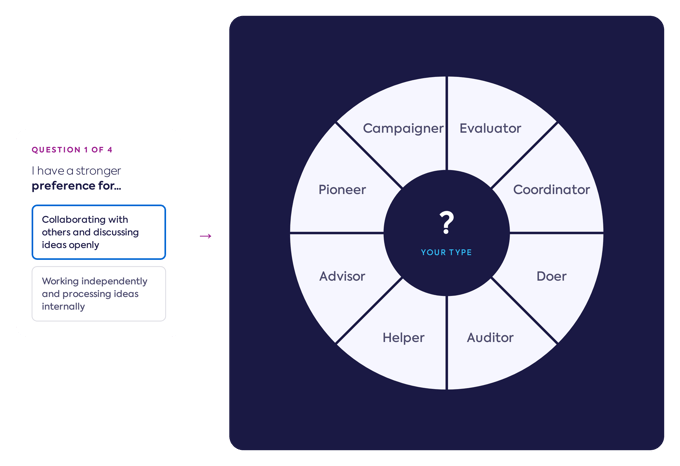
Compono reads that through eight work personality types: Doer, Auditor, Helper, Advisor, Pioneer, Campaigner, Evaluator and Coordinator. Software carrying that view will tell you when you are about to add a fifth Pioneer to a team that has no one who finishes things, or when a methodical Auditor is the missing piece rather than another persuasive voice. There is more detail on composition in our piece on how the eight work personality types show up in high-performing teams.
A practical check during a demo: ask the vendor to show you a team view, not a candidate view. Plenty of tools can profile a person. Fewer can show the profile of a group and the gap in it.

Every extra screen costs you applicants, and it costs you the ones with options first. Before you sign anything, apply for one of your own roles on the vendor's system, on a phone, on mobile data, the way a real candidate would.
Count the clicks. Check whether the system makes someone retype what is already on the resume they just uploaded. Look at what happens after submission: silence for three weeks damages an employer brand more efficiently than any rejection email. Automated stage updates and self-service scheduling are worth more here than any feature on the sales deck, and they pull time to hire down as a side effect.
Assessment length is part of the same calculation. A long battery early in the funnel will cost you completions, which is why the useful question is how much signal the assessment buys per minute of candidate time. Where video interviewing fits against structured assessment is covered in our comparison of assessments and video interviewing.
Most hiring systems forget everything the moment a contract is signed. The assessment that told you how this person prefers to receive feedback, where they need structure and what will bore them is sitting in a record the new manager cannot see.
Ask what happens to candidate data after hire. Does the profile follow the person into onboarding? Can a manager open it in week one? Does it feed engagement and development, or does it expire with the requisition? A new starter whose manager already knows they work best with clear written instructions and a methodical introduction reaches full output sooner, and that is the cheapest retention intervention available to you.
Two answers tell you most of what you need. If the assessment has no published basis, you are buying opinion with a progress bar. If the integration list is vague, budget for manual work that will never appear on the invoice.
Here is an illustrative example with made-up numbers, to show the shape of the calculation rather than to claim yours. A team hires 24 people a year and six of them leave inside the first twelve months, which is a 25 per cent first-year exit rate. Put your own figure on a single failed hire, say $20,000 once you count advertising, recruiter time, the manager's time and the output that never arrived. Six of those is $120,000 a year, before anyone counts the effect on the people who stayed.
Replace those placeholders with your own numbers using the cost of a bad hire calculator. A finance director will argue with a software quote and accept a figure like that one, which is usually the difference between a business case that lands and one that gets deferred to next quarter.
Pricing in this category follows a few common models: per user per month for the recruiter seats, per employee per month when hiring is bundled with a wider people platform, per active job, or a flat annual licence with a separate implementation fee. Assessment is sometimes included and sometimes charged per candidate, which is the line item that surprises people once volume climbs.
Compare on the total of the first two years rather than the monthly headline. Implementation, data migration, integration work and training are real costs, and they are where quotes diverge most.
Compono Hire scores candidates on organisation fit alongside skills and qualifications, then hands the profile to the manager who inherits the hire.
Talk to usAn applicant tracking system is built for the administrative spine of hiring: posting roles, collecting applications, moving people through stages and keeping an audit trail. Talent acquisition software covers that plus sourcing, assessment, candidate relationship management and the handover into onboarding, so it answers who should get the job rather than only where each applicant sits.
Vendors price per recruiter seat, per employee, per active job, or as an annual licence with a separate implementation fee, and assessment is sometimes charged per candidate on top. Compare the total of the first two years including migration, integration and training, because the monthly headline rarely reflects what you will actually pay.
Work personality describes how someone prefers to work and how they interact with others, across eight types: Doer, Auditor, Helper, Advisor, Pioneer, Campaigner, Evaluator and Coordinator. Knowing a candidate's type tells you whether their strengths fill the gap in the team as it stands, which is a different question from whether they can do the job.
It can reduce some of it. Standardised scoring against criteria set before applications open removes a share of the gut feel that creeps into resume screening, and it gives you a record of why each decision was made. The software still reflects the benchmark you give it, so the criteria themselves need scrutiny.
Plan in weeks rather than days. The parts that consume time are migrating historical candidate data, connecting job boards and your HR system, configuring approval workflows, and training hiring managers to read what the platform gives them. Ask each vendor who does the migration and whether it is quoted separately.

Hiring software speeds up admin. Whether it improves your hires depends on what it measures. Here is how to tell the two apart before you buy.

Compare hiring software on the features that matter: seven criteria, the questions to ask vendors, and the traps that make a demo look better than it...

How to build a recruitment metrics dashboard that tracks time-to-fill, cost-per-hire and quality of hire, and what to do with the numbers.
 Mathan Allington