

.webp)

 Mathan Allington


Culture fit assessment in hiring: building high-performing teams
 Mathan Allington
How to assess culture fit without screening for sameness: what to measure, which questions to ask, and how to keep the decision defensible.
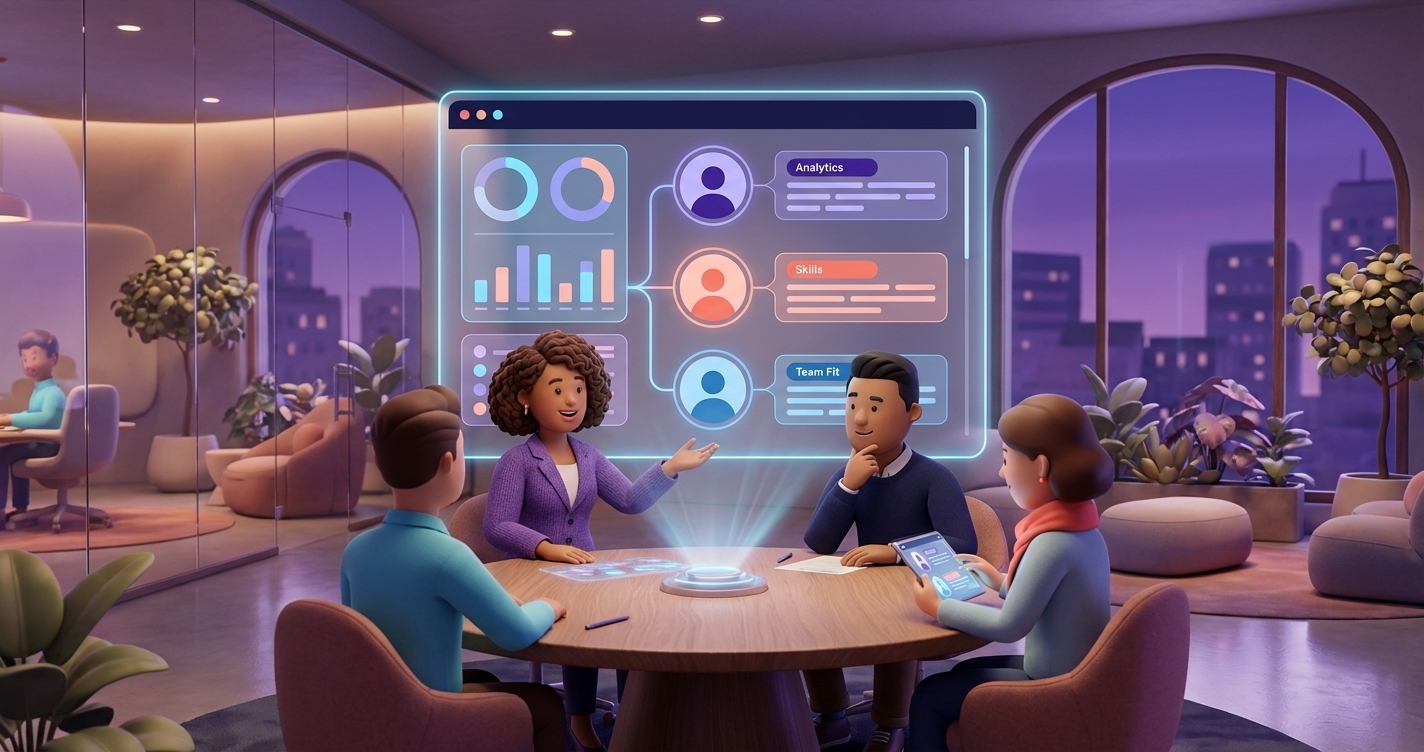
Unbiased candidate assessment means every applicant is measured against the same written criteria, in the same order, by people who recorded their scores before they discussed them. No process removes bias entirely. What a well built process does is make bias visible, comparable and correctable, which is also what makes a hiring decision defensible months later.
Last reviewed September 2026
Fairness is not a single control you switch on. It is the sum of decisions made at the job advertisement, the shortlist, the interview and the offer, and bias enters differently at each one. Below is where it gets in, which assessment methods reduce it and what they cost, and the part most guides skip: whether automated screening tools make evaluation fairer or simply move the problem somewhere harder to see.

Most hiring teams look for bias in the interview, which is the one stage where people are paying attention. It usually arrived earlier.
Each of those has a fix, and the fixes are unglamorous: written criteria before you advertise, a recorded score at every cut, the same questions for everyone, and independent scoring before discussion.
Selection methods differ in how much subjectivity they allow and in how much time and money they take. There is a real trade-off, and pretending otherwise leads teams to design a process they abandon by the third vacancy.
| Method | What it controls for | Effort and cost | Best used for |
|---|---|---|---|
| Unstructured interview | Very little. Questions vary by candidate, so scores are not comparable | Low effort, high hidden cost in rework and turnover | Nothing on its own. Keep it as a short culture-add conversation after scoring |
| Structured interview | Question order and content, interviewer drift, and after-the-fact reasoning | Moderate. Real work goes into writing questions and a scoring rubric once per role | The default for almost every role, at every stage |
| Panel interview | One person's blind spots, because several independent scores are recorded | Higher, because you spend several people's time in the same hour | Senior, public-facing or high-risk roles, and only when panellists score before they talk |
| Work sample or job simulation | Polish and self-presentation, by watching the actual work instead of the story about it | Moderate to high to build, low to run once it exists | Roles with an observable task: writing, coding, sales calls, machine operation |
| Psychometric and work personality assessment | Interviewer impressions of how someone works, by measuring it consistently for everyone | Low per candidate once configured, and fast for the applicant | Comparing candidates on how they work, not only on what they have done |
| Blinded CV screening | Name, age, gender and school signals at the first cut | Low if the system strips fields for you, tedious if done by hand | High-volume early screening, where most unrecorded decisions happen |
| Assessment centre | Almost everything, by combining exercises and multiple assessors | The most expensive option by a distance | Graduate intakes and senior appointments where volume justifies the cost |
If you only change one thing, change the interview. A structured interview costs a morning of question writing per role and removes more inconsistency than any other single control. The comparison that trips teams up next is where to spend the rest of the budget, which our guide to assessments against video interviewing works through.
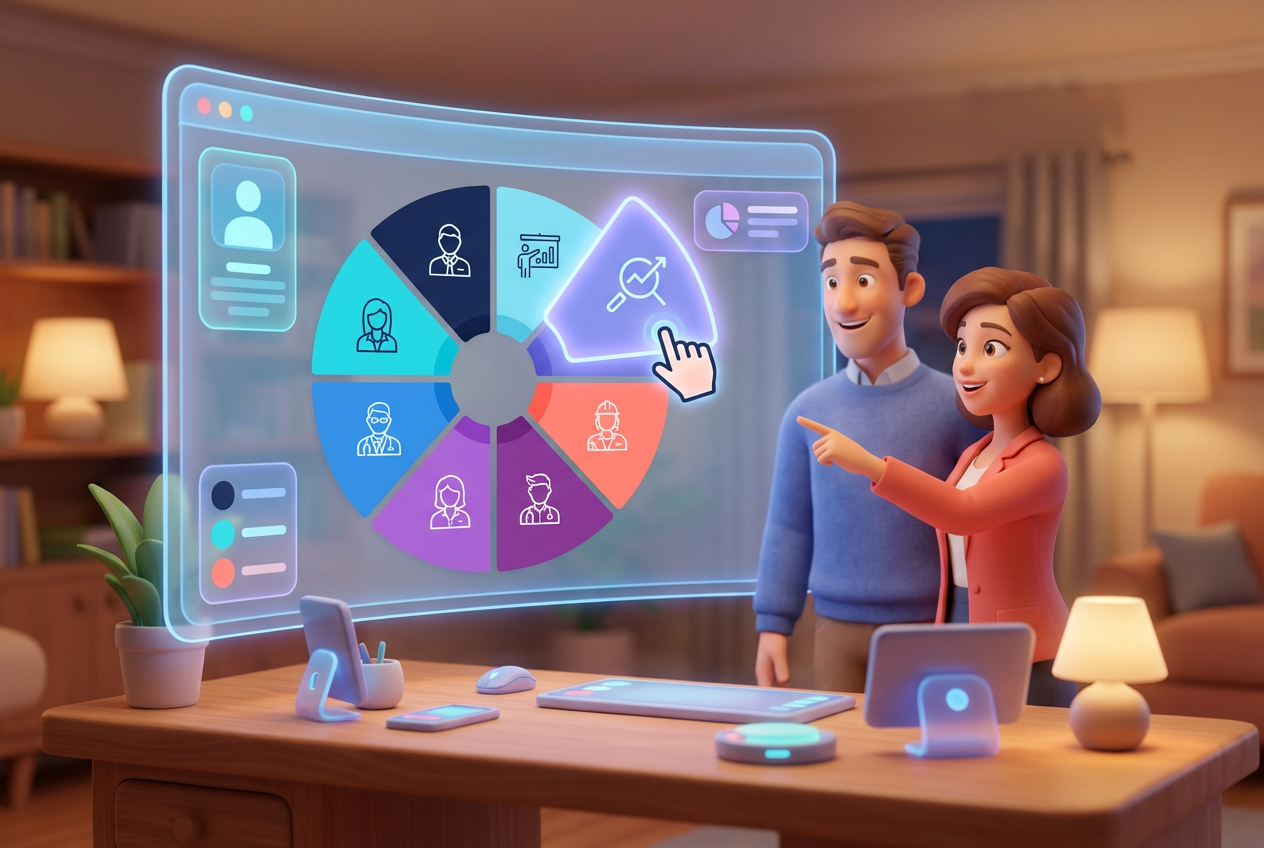
Automated screening helps in two specific ways. It applies the same rule to every application, which humans reading their two-hundredth CV do not, and it can hide identifying fields at the first cut so the decision rests on capability. Those are real gains, and they land at the stage where bias is hardest to observe.
The risk is narrower than the headlines suggest and more stubborn. A tool that learns from your past hiring decisions learns your past preferences, including the ones you are trying to remove. Features that look neutral can stand in for protected attributes: a postcode carries socio-economic information, a graduation year carries age, continuous employment history carries carer status. Keyword matching rewards people who write CVs in industry language, which usually means people already inside the industry.
Four questions separate a screening tool that helps from one that launders an old bias into a new score:
Assessment that is administered consistently and scored against job criteria tends to travel better than a model tuned on past outcomes, because you can show the criteria to the candidate. Whichever route you take, keep a human in the decision and keep the reason written down.
Defensibility is the practical test of a fair process. If a candidate asks why they were not progressed, or a regulator or a court asks a year later, the answer needs to exist in a record rather than in someone's memory of the room.
A workable scorecard names the criteria before the role is advertised, weights them by how much they matter to the job, and records a score with one line of evidence for each. Every cut gets a reason. Interviewers submit scores before the debrief. When two scores diverge widely, the process treats that as information rather than an inconvenience.
Anti-discrimination obligations differ by jurisdiction and change over time, and this article is general information rather than legal advice. If you are designing a process for a regulated setting, testing for adverse impact, or responding to a complaint, get advice from a suitably qualified employment lawyer or workplace relations adviser for your jurisdiction.
Culture fit is where a careful process often goes soft. Used loosely it means the people already here recognise themselves in the candidate, which narrows a team a little more with every hire. Used precisely it means something checkable: how a person prefers to work, measured the same way for everyone, compared with what the role and the team need.
That is what work personality describes. Compono's framework covers eight types, the Doer, Auditor, Helper, Advisor, Pioneer, Campaigner, Evaluator and Coordinator, and none of them is a better hire than another. A team heavy with Pioneers may need the objective analysis an Evaluator brings, and a team of strong individual contributors may need a Coordinator to finish anything. Hiring the person who fits in socially can cost you the perspective the team is short of.
Compono Hire works this way by design: you define the role profile first, then every applicant is scored against it and the ranking keeps its reasoning attached. It suits employers hiring into defined teams who want the assessment inside the hiring record. If your process is already structured and your problem is volume alone, a tracking system with a good scorecard will get you most of the way.
Two rules keep this honest. Define the profile the role needs before you see any candidates, so the requirement cannot be reverse-engineered to justify a favourite. And treat the result as one input among skills, evidence of past work and the structured interview, never as a gate on its own.
Step six is the one teams skip and the one that improves the process. A rubric nobody reviews slowly turns into the old judgement in a new format.
Compono Hire measures applicants against the role profile you define first, and keeps the reasoning behind every ranking.
Talk to usIt is a hiring process where every applicant is measured against the same written, job-related criteria, in the same sequence, with scores recorded before they are discussed. No process reaches complete objectivity. What a well built one gives you is consistency you can compare and defend later.
They can improve consistency and hide identifying details at the first cut, which helps. They can also repeat old patterns if they were trained on past hiring decisions, or use inputs that stand in for age, gender or background. Ask what the tool scores, what it was built on, whether you can test pass rates across groups, and keep a person accountable for the decision.
Every candidate answers the same questions in the same order against a scoring rubric written in advance. That stops the conversation drifting towards shared interests and stops interviewers reasoning backwards from a first impression, so the scores can be compared with each other.
They can be, because several people record independent judgements and one person's blind spot carries less weight. The benefit disappears if panellists discuss the candidate before scoring, since the room converges on whoever speaks first or loudest.
Culture fit is often social similarity, which narrows a team over time. Organisation fit is measurable: how a person's work preferences and skills line up with what the role and the team need, defined before candidates are seen and scored the same way for everyone.
Keep the criteria, the weights, the individual scores and a one-line reason for every cut, all recorded at the time rather than reconstructed later. Review pass rates by stage each quarter, and take professional advice for your jurisdiction if you are testing for adverse impact or responding to a complaint.

How to assess culture fit without screening for sameness: what to measure, which questions to ask, and how to keep the decision defensible.

What separates candidate assessment software that predicts performance from software that only scores tests, and the questions to put to a vendor.

How merit based selection and behavioural assessment work together in federal hiring, including the STAR method and where work personality data helps.
 Compono