

.webp)

 Compono


1 min read
Competency Based Assessment Software: The 2026 HR Guide
 Mathan Allington
Last reviewed August 2026

Competency framework software helps organisations define, measure, and develop the specific skills and behaviours their teams need to succeed.
For businesses looking to scale, moving away from static spreadsheets and into an intelligent system is the difference between a framework that gathers dust and one that actively drives performance. We see many companies build elaborate matrices that look impressive on paper but fail entirely when managers try to use them in the real world. A modern system connects daily work habits with long-term career progression.
Key takeaways
- Competency framework software transforms static skill matrices into active development tools used by managers and staff.
- Modern systems map both technical skills and behavioural traits to give a complete picture of employee capability.
- Integrating work personality data helps leaders understand how different team members naturally approach their competencies.
- Replacing manual spreadsheets with dedicated platforms increases adoption rates and provides actionable data for succession planning.
Most organisations start their competency journey with good intentions and a very large spreadsheet. HR teams spend months consulting with department heads to map out exactly what a junior developer, a mid-level accountant, or a senior sales manager needs to know. They document the technical requirements, the communication expectations, and the leadership qualities required for every level of the business.
Then the document is saved on a shared drive and forgotten until annual performance reviews roll around. Managers find the spreadsheet too complex to navigate during regular one-on-one meetings. Employees find the language vague and struggle to connect the broad competency statements to their daily tasks. We often see why leadership competency frameworks fail when they are treated as an administrative exercise rather than a practical management tool.
Without a dedicated system, tracking progression becomes impossible. A manager might know an employee needs to improve their stakeholder management, but there is no central place to record that observation, assign relevant training, or track improvement over time. The framework becomes a static reference document rather than a living map of your workforce's capability.
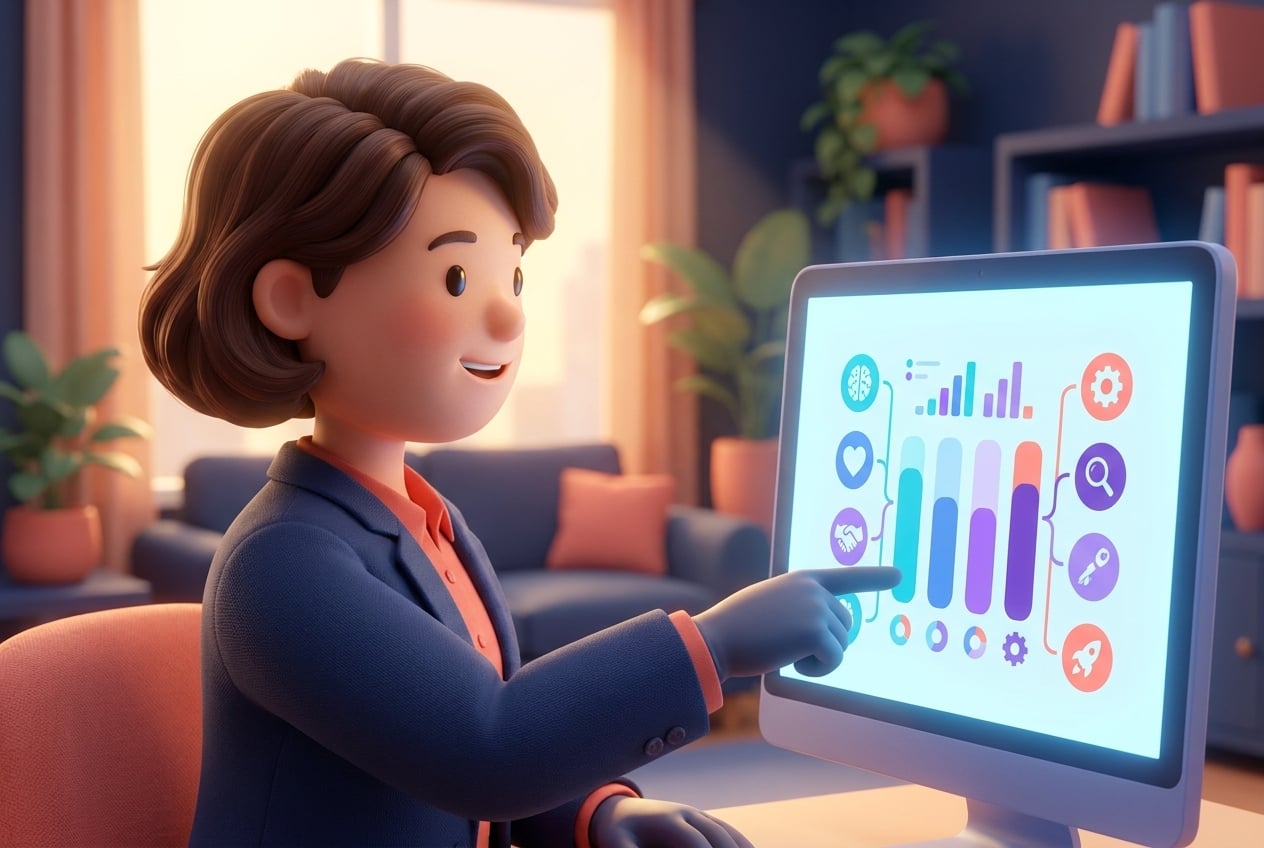
Implementing competency framework software changes how a business approaches employee development. Instead of a dense document, employees log into a platform that clearly shows where they sit in their current role and exactly what they need to demonstrate to reach the next level. The expectations are transparent, measurable, and accessible.
Good software breaks down broad competencies into observable behaviours. Instead of a vague requirement like "demonstrates good communication", the system tracks specific actions like "runs effective weekly team meetings" or "presents financial data clearly to non-financial stakeholders". Managers can easily check off these specific behaviours during regular catch-ups, making performance conversations objective and evidence-based.
This active tracking creates a clear pathway for internal mobility. When an employee expresses interest in moving to a different department, the software can instantly compare their current verified competencies against the requirements of the new role. This highlights the exact skill gaps they need to close. Using a platform like Compono Develop allows you to link these identified gaps directly to specific learning modules, turning a performance conversation into an immediate action plan.
Technical skills are only half of the competency equation. An employee might be an exceptional coder or a brilliant financial modeller, but if they cannot collaborate with their team or handle constructive feedback, their overall competency is compromised. Traditional frameworks often struggle to quantify these behavioural elements.
Modern competency software incorporates behavioural science to measure how people actually work. It moves beyond subjective manager opinions and uses structured assessments to map traits like resilience, adaptability, and problem-solving. This gives HR teams a system of intelligence that accurately reflects the true capability of the workforce.
When you map behavioural competencies, you start to understand why certain teams perform better than others. You might discover that your most successful project managers share specific behavioural traits regarding risk management and communication. You can then update your competency framework to reflect these proven behaviours, ensuring you are developing the traits that actually drive success in your specific business environment.
Competency dictates whether someone *can* do a task. Work personality dictates *how* they will naturally approach it. Understanding the difference between the two is essential for effective team management and development.
Consider a competency like "project planning". An employee with a "Doer" work personality will approach this competency by immediately creating a practical, step-by-step task list focused on quick execution. An employee with an "Auditor" work personality will approach the exact same competency by building a meticulous, risk-adjusted schedule that accounts for every possible variable. Both employees are competent, but their methods are entirely different.
When you integrate work personality insights into your competency framework, managers can tailor their coaching. They stop trying to force everyone to achieve a competency in the exact same way. Instead, they guide employees to use their natural strengths while being mindful of their blind spots. This personalised approach to development significantly increases employee engagement and accelerates skill acquisition.
Finding the right competency framework software in Christchurch often means filtering through enterprise tools that are too heavy for mid-market teams. Local businesses need platforms that are sophisticated enough to handle complex behavioural mapping but intuitive enough that line managers will actually use them.
When evaluating options, look for systems that integrate smoothly with your existing HR technology. Your competency framework should speak directly to your recruitment platform and your learning management system. If you hire someone based on specific behavioural traits, those traits should automatically populate their development profile on day one.
You also need a system that provides clear data visualisation. Senior leadership needs to be able to look at a dashboard and instantly see the skill gaps across the entire organisation. If the business is planning to launch a new product line next year, the software should be able to tell you exactly how many people currently possess the required competencies and how long it will take to train the rest.
Organisations that successfully implement competency software see a marked shift in their culture. Development stops being an HR-driven compliance exercise and becomes a core part of the operational rhythm. Employees take ownership of their career paths because they can see exactly what is required to progress.
Managers feel more confident having performance conversations because they have objective data to rely on. They can point to specific, tracked behaviours rather than relying on their memory of the past twelve months. This reduces bias in promotions and ensures that the people moving up in the organisation actually possess the required competencies.
Ultimately, a good competency framework provides clarity. It clearly defines what good looks like for every role in the business. By putting that framework into an intelligent software platform, you ensure that everyone in the organisation is working from the same map, moving in the same direction, and developing the skills your business needs for the future.
Key insights
- Effective competency software connects daily work habits with long-term career development and succession planning.
- Systems that incorporate behavioural data provide a more accurate assessment of an employee's true capability than technical skill tracking alone.
- Replacing manual spreadsheets with dedicated platforms increases adoption rates among both managers and staff.
- Understanding an employee's work personality allows managers to tailor how they coach specific competencies.
Ready to move your competency frameworks out of spreadsheets and into an intelligent system that actually drives team performance?
Competency framework software is a digital platform that helps businesses define, track, and develop the specific skills and behaviours required for every role in their organisation. It replaces static spreadsheets with an interactive system where employees can view their progression paths and managers can objectively assess performance against clear benchmarks.
Implementation starts with defining the core technical and behavioural skills required for success in your business. You then map these skills to specific roles and levels of seniority. Once the framework is built, you upload it into your software platform, train your managers on how to assess against the new criteria, and communicate the progression pathways to your staff.
Most frameworks fail because they are too complex, too vague, or too difficult to access. When a framework lives in a massive spreadsheet on a shared drive, managers only look at it once a year during performance reviews. Software solves this by integrating the framework into daily management habits and linking it directly to learning and development resources.
Behavioural science provides a structured way to measure "soft skills" that are traditionally hard to quantify. Instead of subjectively guessing if someone is a good leader, behavioural assessments provide objective data on their communication style, risk tolerance, and adaptability. This creates a much more accurate and fairer competency framework.
Yes. By tracking the verified skills and behaviours of your entire workforce, the software can quickly identify internal candidates who are ready to step into leadership roles. It also highlights the specific skill gaps that need to be closed before an employee is ready for promotion, allowing you to create targeted development plans.
 Read More

1 min read
Competency framework software maps the exact skills, behaviours, and knowledge your team needs to perform their roles effectively.

1 min read
Finding the right competency framework software providers in Queensland means looking for platforms that connect skills tracking directly to daily...
 Compono