
.webp?width=559&height=292&name=2026.07.21%20Fireside%20KV%20-%201200x627%20(event%20featured).webp)
.png?width=383&height=200&name=team%20(1).png)
 Compono

The best LMS in Australia for 2026 depends entirely on your organisation's specific needs, with top contenders including Cloud Assess for skills training, Sentrient for compliance, and Compono Develop for mid-sized businesses seeking integrated workforce intelligence.
Key takeaways
- Choosing the best LMS in Australia requires balancing compliance features, local support, and integration capabilities.
- Australian-built platforms often provide superior data sovereignty and local hosting compared to global alternatives.
- Integration with your existing HRIS is a non-negotiable feature for creating a seamless employee experience in 2026.
- Organisations must look beyond simple completion tracking to platforms that tie learning directly to performance and engagement.
- The rise of AI and microlearning is fundamentally changing how Australian businesses deliver and measure corporate training.
Choosing the right Learning Management System (LMS) has never been more critical for Australian businesses. In the past, an LMS was often viewed as a digital filing cabinet – a place to store mandatory compliance modules and track who had ticked the right boxes. Today, the landscape has shifted dramatically. Modern employees expect engaging, accessible, and highly relevant learning experiences that help them grow in their careers, not just pass an annual workplace safety quiz.
As we navigate 2026, Australian organisations face a unique set of challenges. We operate in a highly regulated environment with strict data sovereignty laws, complex workplace relations, and a workforce that is increasingly distributed across different states and time zones. A generic, off-the-shelf global platform often falls short when you need local support, Australian-hosted data, or integrations with local HR payroll systems. The stakes are high; choose the wrong platform, and you risk low adoption rates, wasted budget, and a disengaged workforce. Choose the right one, and you transform your learning culture into a strategic advantage.
This comprehensive guide will break down everything you need to know about selecting the best LMS in Australia for 2026. We will explore the top platforms on the market, dissect the features that actually matter, and provide a clear framework for evaluating your options. Whether you are a mid-sized enterprise looking to upskill your team or a training organisation needing strict compliance tracking, this guide will help you navigate the crowded LMS market with confidence.
What Makes an LMS Truly "Australian-Ready" in 2026?
Before diving into specific platforms, it is crucial to understand what separates an Australian-ready LMS from a generic global competitor. While many international platforms offer excellent features, they often lack the nuanced understanding of the Australian business landscape. When evaluating an LMS, local context matters immensely.
First and foremost is data sovereignty. Under the Australian Privacy Principles (APPs), businesses must take reasonable steps to protect personal information. An LMS that hosts data on Australian servers (such as AWS Sydney) provides peace of mind and ensures compliance with local privacy laws. If a platform hosts your employee data offshore, you may be exposing your organisation to unnecessary regulatory risks.
Secondly, local support is a massive differentiator. When a critical training module crashes on a Tuesday morning in Melbourne, waiting for a support team to wake up in California is simply not viable. The best LMS providers in Australia offer local support during Australian business hours, ensuring that your team can resolve issues quickly and keep your learning programmes running smoothly.
Finally, an Australian-ready LMS understands local compliance requirements. Whether it is tracking specific industry certifications, managing Fair Work compliance training, or – for Registered Training Organisations (RTOs) – handling AVETMISS reporting, a platform built with Australian regulations in mind will save your HR and compliance teams hundreds of hours in administrative work.
Top Learning Management Systems in Australia for 2026
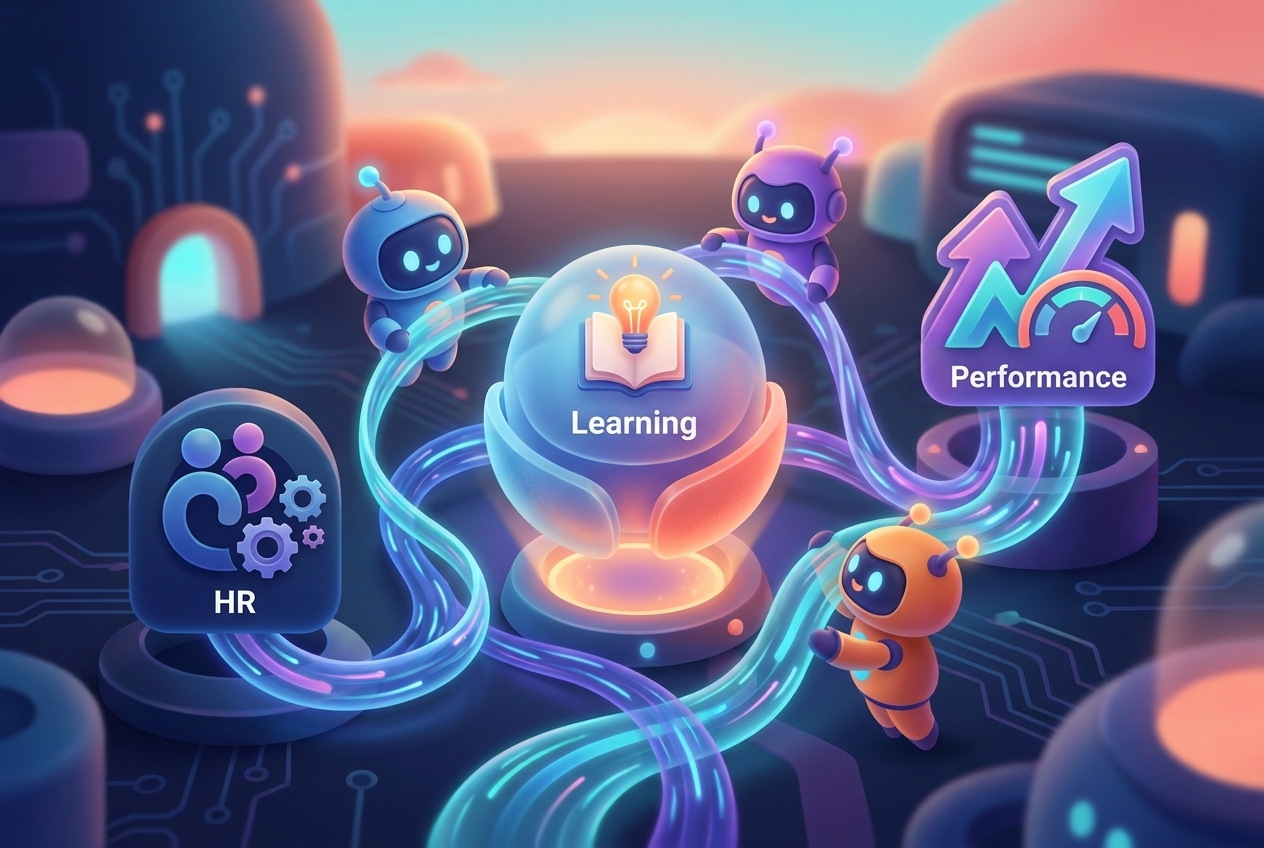
The Australian LMS market is diverse, ranging from enterprise-grade monoliths to agile, specialised platforms. To help you narrow down your search, we have analysed the top contenders making waves in 2026. Each of these platforms excels in different areas, so the "best" option will depend heavily on your specific use case.
1. Cloud Assess: Best for Skills and Vocational Training
For organisations with a large deskless workforce or those heavily involved in vocational education, Cloud Assess is a standout choice. Built specifically to handle practical, on-the-job assessments, it bridges the gap between theoretical learning and practical application.
Research shows that Cloud Assess is the top-rated LMS in Australia with an average score of 4.7/5 across 236 reviews on Capterra, Google, and G2. This high rating reflects its strong user experience and robust feature set for practical training.
Key features include offline assessment capabilities, evidence collection via photo and video, and seamless mapping to Australian training packages. If your team needs to prove they can operate a forklift or follow specific hygiene procedures rather than just clicking through a slide deck, Cloud Assess is a powerful tool.
2. Tribal Habits: Best for Internal Knowledge Sharing
Tribal Habits takes a unique approach to corporate learning by focusing on peer-to-peer knowledge sharing. Instead of relying solely on external content libraries, this platform empowers your own subject matter experts to create and share training modules easily.
In terms of user satisfaction, Tribal Habits holds a higher average rating of 4.8/5 across 62 reviews, though based on a smaller sample size than Cloud Assess. This exceptional rating highlights how much users value its intuitive course creation tools.
The platform uses guided templates to help employees capture their institutional knowledge and turn it into engaging training. This is particularly valuable for mid-sized Australian businesses that have unique, highly specific processes that cannot be taught through generic off-the-shelf courses.
3. Sentrient: Best for Compliance and Mandatory Training
When it comes to keeping your organisation legally compliant, you need a platform that is robust, reliable, and up-to-date with Australian law. Sentrient has built a strong reputation as the go-to LMS for compliance-heavy industries.
Industry analysis notes that for Australian businesses focused on compliance and mandatory training, Sentrient LMS is the top pick due to its Australian-built platform, pre-built legally reviewed courses, and local hosting. Their library covers everything from workplace bullying and harassment to privacy and data protection.
What sets Sentrient apart is the peace of mind it offers HR teams. The courses are regularly updated to reflect changes in Australian legislation, meaning you never have to worry if your mandatory training is out of date. It is a highly effective, no-nonsense solution for managing workplace risk.
4. Compono Develop: Best for Mid-Market Workforce Intelligence
For growing Australian businesses, an LMS needs to be more than just a course catalog. It needs to be a strategic tool that drives employee development, retention, and performance. This is where Compono Develop shines, offering a sophisticated approach to corporate learning that integrates deeply with broader workforce intelligence.
As noted in recent industry guides, the best LMS for mid-sized Australian organisations in 2026 must prove capability beyond just tracking completions, with Compono Develop highlighted as a leading Australian-built option.
Compono Develop leverages behavioural science to deliver personalised learning pathways. Rather than a one-size-fits-all approach, the platform helps identify skill gaps and serves highly relevant content that aligns with both the employee's career goals and the organisation's strategic objectives. When paired with other modules in the Compono platform, it creates a seamless ecosystem where hiring, engagement, and development speak the same language.
5. eSkilled and aXcelerate: Best for RTOs and Education Providers
Registered Training Organisations (RTOs) have entirely different needs compared to corporate businesses. They require platforms that can handle complex student management, government reporting, and strict compliance frameworks.
For these specific needs, eSkilled and aXcelerate LMS are the leading platforms due to their AVETMISS and RTO sector compatibility. These platforms are essentially dual-purpose, acting as both a Student Management System (SMS) and an LMS.
aXcelerate, in particular, is highly regarded for its comprehensive compliance tools and robust reporting features, making the daunting task of AVETMISS reporting significantly more manageable for Australian training providers.
6. Blend-ed: Best for AI-Driven Training Companies
Artificial Intelligence is rapidly reshaping the learning landscape, and some platforms are leaning into this technology harder than others. Blend-ed has positioned itself as a forward-thinking platform for training businesses looking to leverage AI.
Recent evaluations highlight that Blend-ed is identified as the best AI LMS in Australia specifically for training companies and professional academies in 2026. The platform uses AI to automate course creation, generate quizzes, and personalise learning journeys.
For commercial training providers who need to rapidly develop and deploy new courses to market, the AI-assisted authoring tools in Blend-ed can significantly reduce content development time and overhead costs.
The Critical Role of HRIS Integration in 2026
One of the most significant trends in the Australian LMS market for 2026 is the demand for deep, seamless integration with Human Resource Information Systems (HRIS). A standalone LMS that exists in isolation is no longer sufficient for modern HR and People and Culture teams.
When your LMS and HRIS communicate effectively, the administrative burden on your team drops dramatically. User provisioning becomes automated – when a new employee is added to your HRIS, they are instantly granted access to the LMS and automatically enrolled in their role-specific onboarding courses. When they leave, their access is automatically revoked, ensuring data security.
Furthermore, integrated systems provide a holistic view of the employee lifecycle. You can begin to correlate learning data with performance metrics, engagement scores, and retention rates. This is where learning transforms from a cost centre into a measurable driver of business success. Organisations that achieve this level of integration find it much easier to prove the ROI of their learning and development initiatives.
Key Features to Evaluate When Choosing an LMS
With so many options on the market, evaluating an LMS can feel overwhelming. To cut through the marketing noise, focus on the features that will actually drive adoption and deliver value to your organisation. Here is a breakdown of the critical capabilities you should assess.
User Experience (UX) and Interface
If an LMS is difficult to navigate, your employees simply will not use it. The user interface must be intuitive, clean, and modern. Employees should be able to log in and find their assigned training within seconds, without needing a manual. Pay close attention to the mobile experience – in 2026, a significant portion of learning happens on smartphones, especially for deskless or hybrid workers. A responsive design or a dedicated mobile app is essential.
Content Authoring and Curation
How easy is it to get content into the platform? Some LMS solutions require you to build courses in external authoring tools (like Articulate or Adobe Captivate) and import them via SCORM. Others, like Compono Develop, offer robust built-in authoring tools that allow anyone in your organisation to create engaging content quickly. Additionally, look for platforms that integrate with third-party content libraries (like Go1 or LinkedIn Learning) so you can instantly access thousands of pre-built courses.
Reporting and Analytics
Basic reporting (who completed what, and when) is the bare minimum. The best LMS platforms in Australia offer advanced analytics that help you understand learner behaviour. Look for visual dashboards that show course engagement, drop-off rates, and assessment scores. The ability to easily export this data or integrate it with your broader business intelligence tools is crucial for demonstrating the impact of your training programmes.
Automation and Workflows
Your LMS should make your life easier, not create more admin work. Look for robust automation features. Can the system automatically send reminder emails for overdue compliance training? Can it assign specific learning pathways based on a user's job title or department? Can it automatically generate certificates upon course completion? Strong workflow automation is the key to scaling your learning programmes without needing to hire a massive L&D team.
How to Build a Business Case for a New LMS
Identifying the best LMS in Australia is only half the battle; the other half is convincing your executive team to fund it. Building a strong business case requires shifting the conversation away from software features and towards business outcomes. Executives care about risk mitigation, cost savings, and revenue growth.
Start by quantifying the cost of your current state. How many hours does your HR team spend manually tracking compliance spreadsheets? What is the financial risk of a compliance breach due to outdated training records? Calculate the administrative time that could be saved through automation and integration.
Next, focus on employee retention and onboarding. A poor onboarding experience is a leading cause of early employee turnover, which is incredibly costly. A modern LMS ensures a consistent, engaging onboarding process that helps new hires reach full productivity faster. Frame the LMS investment as a tool to protect your investment in talent.
Finally, highlight the strategic value of upskilling. In a tight Australian labour market, building skills internally is often more cost-effective than hiring externally. An LMS that supports continuous development helps create a pipeline of internal talent ready to step into leadership roles, directly supporting the organisation's long-term growth objectives.
Common Pitfalls in LMS Implementation
Even if you select the perfect platform, a poor implementation can derail your entire learning strategy. Many Australian businesses make avoidable mistakes during the rollout phase. Being aware of these pitfalls is the first step to ensuring a successful launch.
The most common mistake is treating the LMS launch as an IT project rather than a change management initiative. If you simply switch the system on and send a company-wide email, adoption will be low. You need a comprehensive communication plan, leadership buy-in, and a clear "What's In It For Me" (WIIFM) message for the employees.
Another frequent pitfall is migrating outdated, irrelevant content. An LMS migration is the perfect time to audit your learning materials. Do not clutter your shiny new platform with boring, hour-long compliance videos from 2015. Take the time to refresh your content, break it down into digestible microlearning modules, and ensure it aligns with your current business goals.
Lastly, many organisations fail to define clear success metrics before launch. If you don't know what success looks like, you cannot measure it. Set baseline metrics for engagement, completion rates, and time-to-competency before you roll out the new system, so you can clearly demonstrate the improvement.
The Shift Towards Microlearning and AI
Looking ahead through 2026, two major trends are dominating the Australian LMS landscape: microlearning and Artificial Intelligence. The days of forcing employees to sit through 60-minute e-learning modules are rapidly ending. Modern learners have shorter attention spans and less time for dedicated training.
Microlearning breaks complex topics down into bite-sized, highly focused modules that take just a few minutes to consume. This approach aligns perfectly with how we consume information in our personal lives. The best LMS platforms support this format natively, allowing employees to quickly search for a specific piece of knowledge right in the flow of work, exactly when they need it.
Artificial Intelligence is also moving from a buzzword to a practical tool. AI is being used to recommend personalised learning pathways, much like Netflix recommends movies. It is also helping administrators by automatically tagging content, generating quiz questions, and even translating courses into multiple languages to support diverse workforces. Platforms that successfully integrate these technologies will provide a significant competitive advantage to the organisations that use them.
Aligning Learning with Company Culture
A critical, yet often overlooked, aspect of choosing an LMS is how well it aligns with your organisational culture. Your learning platform is a highly visible extension of your employer brand. If your company prides itself on being innovative, agile, and employee-centric, but your LMS feels clunky, restrictive, and purely compliance-driven, it creates a jarring disconnect for your staff.
When evaluating platforms, consider the tone and flexibility of the system. Does it encourage social learning and peer feedback? Does it celebrate achievements with digital badges or leaderboards? An LMS should reinforce the behaviours and values you want to see in your team. By choosing a platform that feels like a natural extension of your workplace culture, you significantly increase the likelihood of organic, voluntary engagement with your learning programmes.
Ultimately, the best LMS in Australia is the one that your employees actually want to use. It should remove friction from the learning process, provide clear value to the individual, and empower your HR team with the insights they need to build a smarter, more capable workforce.
Key insights
- The Australian LMS market in 2026 requires platforms that offer local data hosting, compliance expertise, and responsive local support.
- Different platforms excel in different niches, from Cloud Assess for vocational skills to Sentrient for strict legal compliance.
- Mid-market organisations benefit most from platforms like Compono Develop that integrate learning with broader workforce intelligence and behavioural insights.
- Successful LMS implementation relies heavily on change management, content auditing, and clear communication, rather than just IT deployment.
- Future-proofing your learning strategy means embracing platforms that support microlearning formats and leverage AI for personalised development pathways.
Where to from here?
Choosing the right LMS is a significant step toward building a high-performing, continuously learning workforce. If you are ready to move beyond basic compliance tracking and start driving real employee development, it is time to explore a platform built for modern Australian teams.
- Explore the Compono platform: Compono Develop
Where to from here?
If you'd like to talk through how Compono can support your team, we're happy to walk you through it. No pressure, just a conversation.
Related reading
FAQ
What is a Learning Management System (LMS)?
A Learning Management System (LMS) is a software platform used to create, deliver, track, and report on educational courses and training programmes. In a corporate setting, it is used for everything from new hire onboarding and compliance training to ongoing professional development and skills tracking.
How much does an LMS cost in Australia?
LMS pricing in Australia varies widely based on the features, the number of users, and the pricing model. Most platforms charge a per-user, per-month fee, which can range from $2 to $15+ per user. Some offer flat-rate enterprise pricing or charge based on active users rather than total registered users. Always factor in potential setup fees and content library costs.
What is AVETMISS compliance?
AVETMISS (Australian Vocational Education and Training Management Information Statistical Standard) is a national data standard that ensures the consistent and accurate collection of VET information across Australia. If you are a Registered Training Organisation (RTO), your LMS or Student Management System must be capable of generating AVETMISS-compliant reports for government submission.
Can an LMS integrate with my payroll or HRIS software?
Yes, most modern LMS platforms offer integrations with popular HRIS and payroll systems through APIs or native connectors. This integration is highly recommended as it automates user management, ensures data accuracy, and saves HR teams significant administrative time.
What is the difference between an LMS and an LXP?
An LMS (Learning Management System) is typically driven by administrators who assign specific, often mandatory, training to employees. An LXP (Learning Experience Platform) is more learner-driven, operating like a streaming service that recommends personalised, diverse content based on the employee's interests and career goals. Many modern platforms in 2026 blend features of both.

