

.webp)

 Compono


1 min read
Does training improve performance in modern teams?
 Mathan Allington
Yes, training improves performance, but only under specific conditions: it targets a real skill gap, matches how the individual naturally works, and...

You know your team is competent when they consistently deliver high-quality outcomes while demonstrating the specific work behaviours required to meet your strategic goals.
True competence goes beyond simple task completion; it involves a blend of technical capability, cultural alignment, and the natural work personality of each individual. To truly understand if your team is fit for purpose, you must look at how they solve problems, collaborate under pressure, and adapt to changing requirements without constant oversight.
Key takeaways
- Competence is a three-dimensional measure involving technical skills, organisational fit, and work personality alignment.
- High-performing teams balance eight core work actions: Evaluating, Coordinating, Campaigning, Pioneering, Advising, Helping, and Doing.
- Measuring competence requires moving beyond gut feel to evidence-based assessments that highlight hidden skills gaps and strengths.
- A competent team is one where individual natural tendencies match the specific demands of their roles and the wider business context.
It is easy to mistake a high volume of activity for a high level of competence. We often see teams that are perpetually busy – responding to emails, attending meetings, and ticking off tasks – yet they struggle to move the needle on key business objectives. This usually happens because there is a mismatch between the work being done and the actual skills required to succeed.
Competence is not just about effort; it is about the effective application of ability to achieve a desired result. When we look at team performance, we often find that technical skills are only one part of the equation. A person might be a brilliant coder or a meticulous accountant, but if they cannot communicate their findings or collaborate with their peers, the team’s overall competence remains capped.
To solve this, we need to shift our focus from individual outputs to the collective capability of the group. We must ask whether the team has the right mix of personalities and skills to handle the complexity of the modern workplace. At Compono, we believe that understanding the Compono Culture, Engagement & Performance Model is the first step in recognising how these different elements interact to create a truly competent workforce.
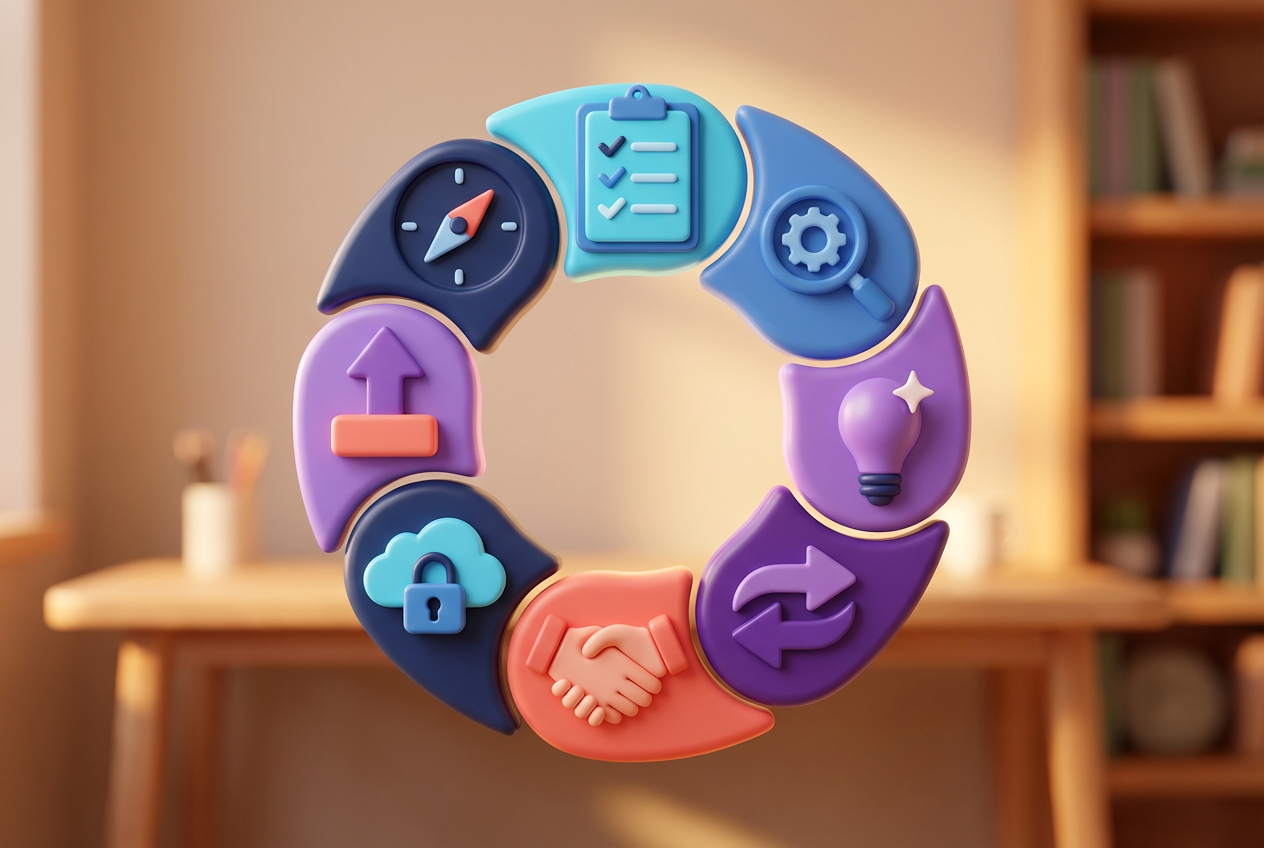
One of the most effective ways to gauge competence is to look at how your team naturally prefers to work. Every high-performing team needs to execute eight key work actions: Evaluating, Coordinating, Campaigning, Pioneering, Advising, Helping, and Doing. If your team is missing one of these functions, you will likely notice a drop in competence in that specific area.
For example, a team full of Pioneers will be excellent at generating new ideas and pushing boundaries. However, without a Coordinator to build structure or an Auditor to check the details, those ideas may never reach fruition. In this scenario, the team is highly creative but incompetent at execution. This is not a failure of talent, but a lack of balance.
By mapping the work personality of each team member, you can see where your strengths and gaps lie. This evidence-based approach allows you to stop guessing and start building. When you align a person's natural tendencies with their daily responsibilities, their competence increases because they are working in a way that feels intuitive to them. This is the foundation of workforce intelligence.
Competence does not exist in a vacuum. A team that is competent in one company might struggle in another because the environment, values, and expectations are different. This is why organisational fit is a critical component of competence. If a team member’s values do not align with the company’s mission, their motivation will eventually wane, leading to a decline in their perceived competence.
We often see business leaders hire for technical skills alone, only to find that the new hire disrupts the team dynamic. True competence requires a person to be a good "fit" for the team’s culture and the specific demands of the role. This includes their ability to handle conflict, their communication style, and their willingness to adapt to the team's established processes.
To ensure you are building a competent team from the start, it is vital to assess candidates across multiple dimensions. The Compono Hire platform helps you do exactly this by evaluating Organisation Fit alongside skills and qualifications. By using these insights, you can ensure that every person you bring into the team adds to the collective competence rather than detracting from it.
A competent team is one that can make sound decisions independently. If you find yourself constantly micromanaging or being pulled into minor disputes, it is a clear sign that the team lacks the competence – or perhaps the confidence – to lead themselves. Competence involves knowing when to take charge and when to seek collaboration.
In our research into leadership styles, we have found that different situations require different approaches. A competent team understands this and can adjust their behaviour accordingly. For instance, in a crisis, they might look for Directive Leadership, whereas in a creative brainstorming session, they thrive under a Democratic or Non-Directive style. The ability to flex between these styles is a hallmark of a mature, competent team.
You can test this by observing how your team handles a new, complex problem. Do they immediately look to you for the answer, or do they organise themselves, evaluate the options, and present a reasoned solution? A team that does the latter is demonstrating high competence. They are using their collective intelligence to navigate uncertainty, which is exactly what modern businesses need to stay competitive.
Once you have identified the gaps in your team's competence, the next step is to bridge them. This might involve targeted training, reorganising responsibilities, or hiring for a specific work personality that is currently missing. The key is to use objective data rather than subjective observations.
Many HR leaders find that using a workforce intelligence platform allows them to see patterns that were previously hidden. For example, you might discover that your team has plenty of "Doers" but lacks "Evaluators" who can objectively critique the work before it goes live. By identifying this specific gap, you can take practical steps to fix it, such as introducing a new peer-review process or bringing in a consultant with that specific analytical mindset.
At Compono, we have spent over a decade researching what makes teams successful. We have found that when leaders have access to deep insights into their people's work preferences and behaviours, they can make much smarter decisions about team design. This not only improves competence but also boosts engagement and retention, as people feel more supported in roles that actually suit them.
Key insights
- Competence is a holistic measure of skills, work personality, and cultural alignment within a specific business context.
- Identifying gaps in the eight core work actions – such as a lack of Coordinators or Auditors – is essential for improving team execution.
- A truly competent team demonstrates the ability to make independent, logical decisions and adapt their leadership style to the situation.
- Moving from subjective 'gut feel' to data-driven workforce intelligence is the only way to accurately measure and improve team capability.
Measuring team competence is the first step toward building a high-performing culture. If you are ready to stop guessing and start using data to drive your people strategy, we can help.
The best way to measure competence without hovering is to focus on outcomes and use objective assessments. By using work personality tools, you can understand how your team is likely to behave and where they might need support, allowing you to manage by exception rather than constant intervention.
While a team can function with gaps, they will likely struggle with specific phases of work. For example, a team without a Pioneer might be very efficient at routine tasks but fail to innovate when the market changes. Identifying and filling these gaps is key to long-term competence.
Using a workforce intelligence platform like Compono allows you to quickly map your current team's work personalities and skills against the requirements of your strategic goals. This highlights exactly where you need to hire or develop talent to reach full competence.
Technical skills are the 'entry ticket', but work personality determines how those skills are applied. A person with high technical skill but a poor work personality fit for their role will often underperform or cause friction within the team, reducing overall competence.
Competence isn't static. You should review your team's capability at least annually or whenever there is a significant change in business strategy or team membership. This ensures your people are always aligned with the work that needs to be done.

1 min read
Yes, training improves performance, but only under specific conditions: it targets a real skill gap, matches how the individual naturally works, and...

1 min read
Last reviewed July 2026.

1 min read
The best capability assessment software in Wollongong combines behavioural science with practical skills tracking to help growing businesses...
 Compono