

.webp)

 Mathan Allington


1 min read
Why engagement surveys don't work for modern teams
 Compono
Engagement surveys don't work because they often measure past sentiments without providing a clear path for future action, leaving employees feeling...
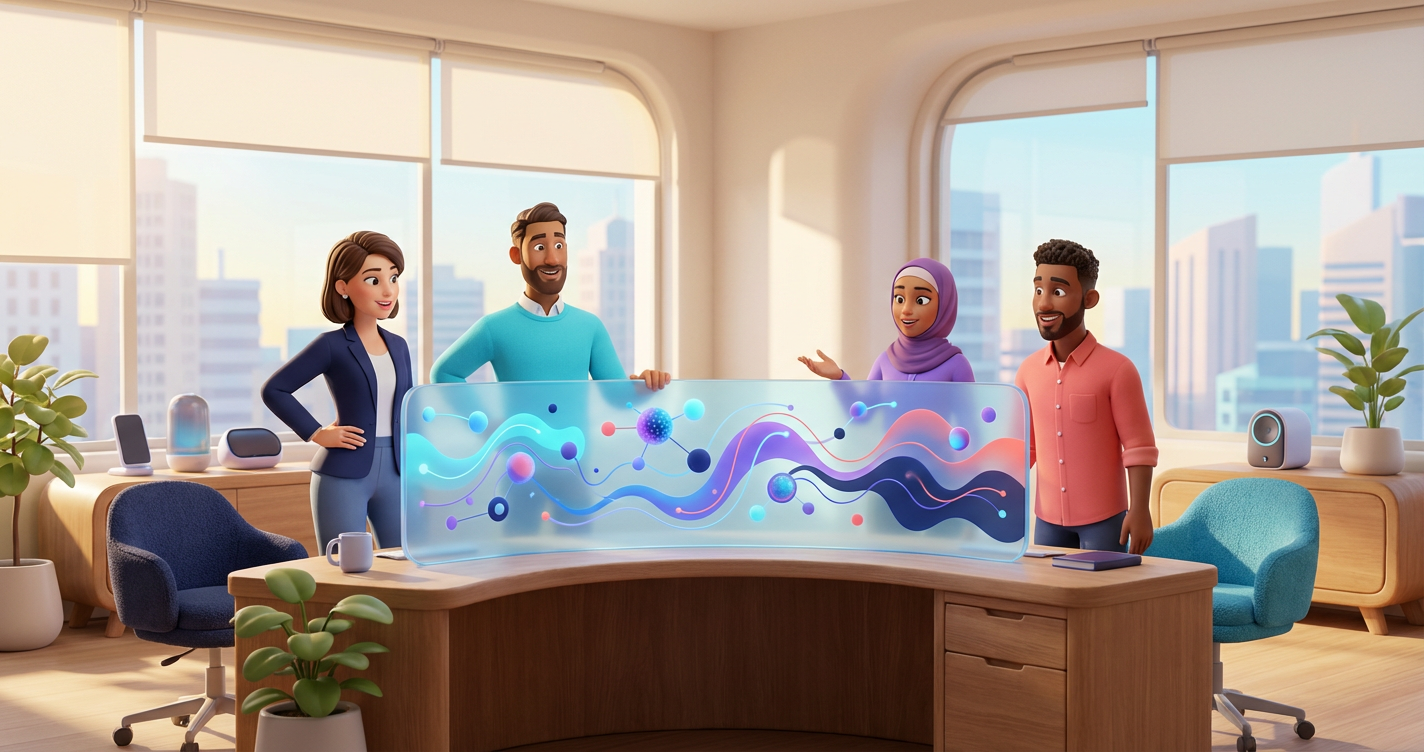
DISC and the Big Five measure different things. DISC describes observable communication styles across four quadrants, which makes it quick to learn but situational. The Big Five measures five underlying personality traits that stay stable over time, and it is the model with the strongest scientific validation. Which one fits depends on what you are trying to do.
Last reviewed July 2026.
If your team members seem to be speaking different languages, the cause is usually differing natural work preferences rather than a lack of skill or intent. Personality frameworks help, but the DISC vs Big Five choice confuses plenty of leaders: one feels intuitive and easy to remember, the other carries decades of academic research. Picking the wrong tool for the job produces shallow insights, or worse, a team that feels pigeonholed by a four-colour label.
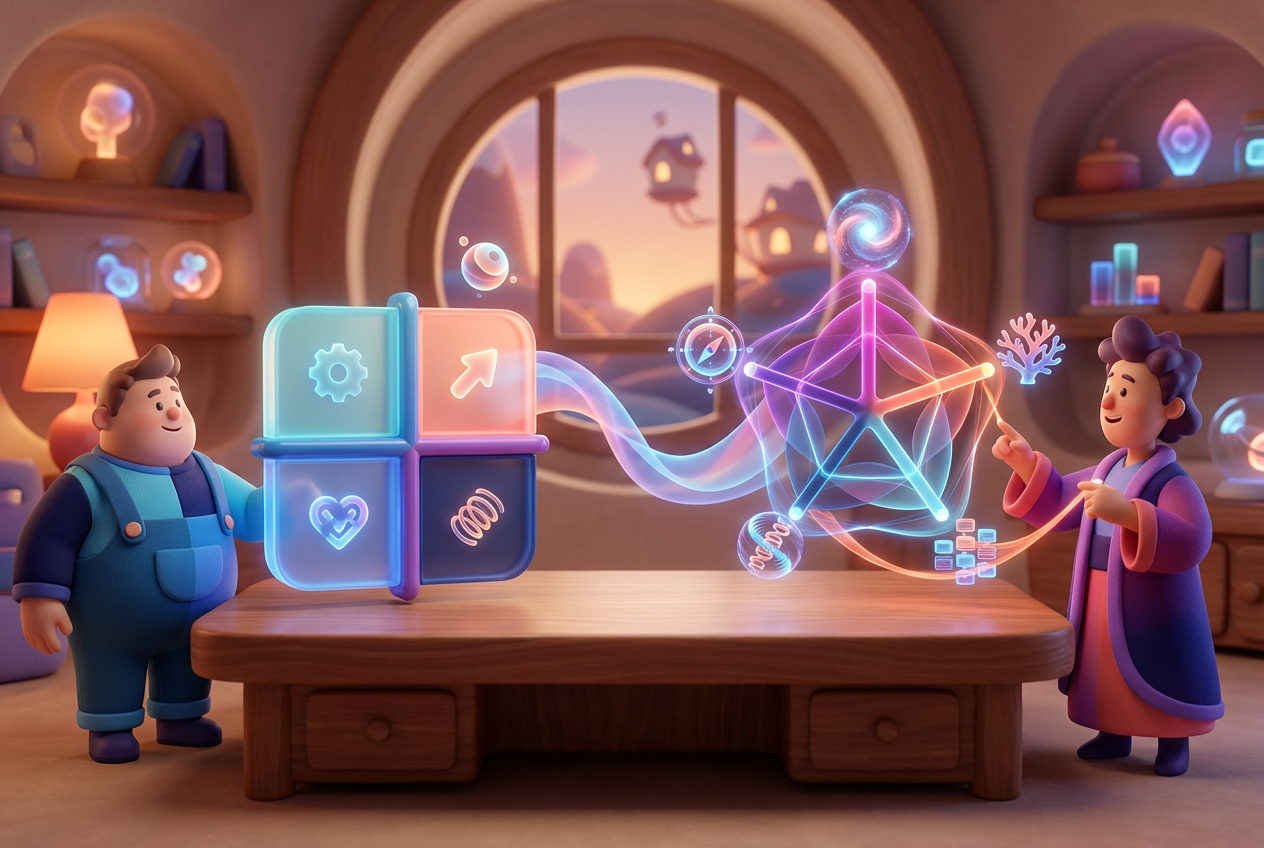
DISC classifies behaviour into four quadrants: Dominance, Influence, Steadiness and Conscientiousness. It describes how a person is likely to act in a given environment. A high 'D' tends to be direct and results-oriented; a high 'S' prioritises harmony and stability.
Its strength is simplicity. DISC has been a corporate training staple for decades because it gives teams a shared vocabulary for their interactions with almost no training required. Its limitation follows from the same design choice: because DISC measures behavioural style in a situation, a person's profile can shift with their role or stress levels. It tells you how someone tends to behave, not why, and it was built for workshops rather than high-stakes decisions.
The Big Five (often called OCEAN) measures five traits: Openness to experience, Conscientiousness, Extraversion, Agreeableness and Neuroticism, usually reframed as Emotional Stability in workplace settings. Unlike DISC it is not a type indicator. Each trait is a spectrum, and you sit somewhere on all five.
It is widely treated as the gold standard in personality research because it emerged from decades of statistical analysis and has been replicated across cultures and languages. It also has predictive power: research consistently links traits such as high Conscientiousness to job performance across almost every industry. Because the traits are relatively stable through adulthood, the Big Five gives you a foundation you can build long-term talent decisions on.
| DISC | Big Five | |
|---|---|---|
| Measures | Observable behavioural style in a situation | Five stable underlying personality traits |
| Output | Four types (D, I, S, C) | A position on five spectrums |
| Stability | Can shift with role, context or stress | Relatively stable through adulthood |
| Scientific standing | Useful vocabulary, limited predictive validity | Most validated model in personality research |
| Best for | Communication workshops, team icebreakers | Hiring, development, long-term talent strategy |
The honest summary: if you want a quick, accessible workshop that helps people understand why some colleagues are more talkative than others, DISC does the job. If your goal is to improve hiring accuracy, reduce turnover or build a durable picture of your workforce, the Big Five is the stronger foundation because you can trust its data for decisions that matter.
If hiring accuracy is the goal, Compono Hire puts that foundation to work at selection, matching candidates on work personality, culture and the job before you make an offer.
Both models share a weakness in practice: the report ends up in a drawer. Traits and quadrants are abstractions, and busy managers need to know what to actually do differently on Monday.
That is the gap Compono's Work Personality framework is built for. It is rooted in the Big Five and high-performance team research, but expressed as a workplace-specific behavioural lens: eight work personalities (Doer, Auditor, Helper, Advisor, Pioneer, Campaigner, Evaluator, Coordinator) that map to the activities every successful team needs covered. Someone high in Agreeableness might show up as a natural Helper, making sure everyone feels supported; someone high in Extraversion and Openness may be a Campaigner, bringing energy and vision to new projects.
Framed this way, personality data becomes a live part of how teams run. You can see how a new hire fits an existing team, why two high performers clash, and which behaviours a team is missing. It matters even more in hybrid work, where the subtle social cues that used to fill the gap are gone: knowing a colleague is an Auditor tells you they will appreciate detailed written instructions over a vague spontaneous video call.
Four questions, grounded in Big Five research, mapped to the eight ways real teams work. See which of the eight you are.
Take the Free Assessment See how it worksThe Big Five is generally more accurate for hiring because it measures stable traits that predict long-term performance. DISC focuses on outward behaviour, which can change with the situation, so it is better suited to communication training than selection decisions.
Yes. Because DISC measures behavioural style in a specific environment, profiles commonly shift when someone changes roles or works under different pressures. Big Five traits stay much more consistent through adult life.
It was developed through extensive statistical analysis and has been replicated across cultures and languages, making it the model most trusted by organisational psychologists worldwide.
Compono's Work Personality model is rooted in the Big Five and high-performance team research. It translates those traits into eight work personalities that represent the activities every successful team needs, so the science turns into practical day-to-day actions.
1 min read
Engagement surveys don't work because they often measure past sentiments without providing a clear path for future action, leaving employees feeling...
1 min read
A work personality test really works when it is built on validated psychological research and used to match natural human preferences with specific...
1 min read
ANZ HR technology is software built for Australian and New Zealand employers that goes past payroll and record-keeping to give leaders workforce...
 Mathan Allington