

.webp)

 Compono


How to assess team fit for long-term performance
 Mathan Allington
Assess team fit with the eight work actions, hire for culture add rather than culture clones, and spot likely friction before it costs you.

Behavioural science in HR is the application of psychological insights and data-driven research to understand how people actually behave at work, rather than how we assume they should.
By moving beyond gut feel and traditional intuition, people leaders can use these evidence-based frameworks to improve hiring accuracy, boost employee engagement, and design more effective team structures. In a modern workplace, understanding the natural work preferences of your staff is the most reliable way to ensure long-term productivity and cultural alignment.
Key takeaways
- Behavioural science in HR replaces subjective guesswork with objective, data-driven insights into employee motivations.
- High-performing teams are built by mapping individual work personalities to specific work activities.
- Applying psychological frameworks helps reduce unconscious bias and improves the quality of every hire.
- Small changes in workplace design – known as nudges – can significantly lift engagement and collaboration.
- Understanding the 8 key work activities is essential for identifying and closing team performance gaps.
For decades, many HR decisions were driven by 'the vibe'. We hired people because they seemed like a good fit in a coffee chat, or we promoted leaders because they were the most vocal in meetings. While experience is valuable, behavioural science in HR tells us that human intuition is often riddled with unconscious biases that lead to poor outcomes. When we rely solely on our gut, we tend to hire people who look and think just like us, which stifles diversity and innovation.
Behavioural science provides a lens to see the hidden drivers of performance. It looks at the 'why' behind the 'what'. Why does a certain team struggle with deadlines despite having the right technical skills? Why do some employees thrive under pressure while others withdraw? By using frameworks rooted in personality theory and organisational design, we can start to answer these questions with precision. This isn't about over-complicating human nature – it’s about making it visible so we can support it better.
At Compono, we have spent years researching how these psychological principles manifest in the workplace. We’ve found that when leaders understand the natural work preferences of their teams, they can move from reactive management to proactive leadership. This evidence-based approach doesn't just make sense on paper; it transforms the daily experience of every employee by aligning their natural strengths with the work they actually do.

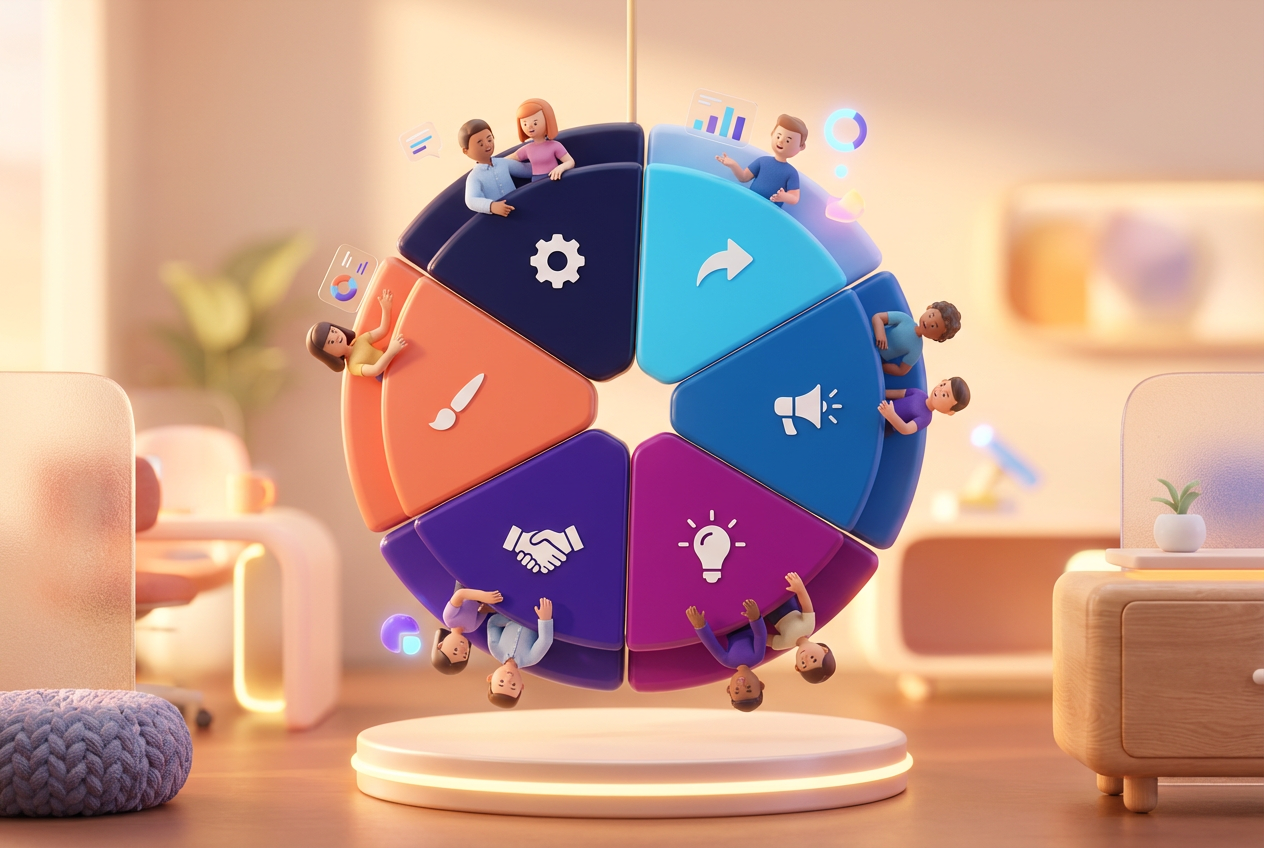
One of the most practical applications of behavioural science in HR is the identification of specific work activities that drive success. Our research has identified 8 key work activities that every high-performing team must perform to a high level. These include Evaluating, Coordinating, Campaigning, Pioneering, Advising, Helping, and Doing. If a team is missing a critical mass in any of these areas, performance inevitably starts to slip.
For example, a team full of Pioneers will be incredible at generating new ideas and pushing boundaries, but they might struggle with the follow-through required to see a project to completion. Conversely, a team dominated by Auditors will be exceptionally thorough and accurate, but they might find it difficult to adapt when a sudden change requires a creative pivot. The goal of behavioural science is not to change who people are, but to ensure the right mix of personalities is present to cover all 8 bases.
When you use the Compono platform, you gain instant visibility into these dynamics. By inviting staff to complete a short work personality assessment, business leaders can see exactly where their team’s energy is naturally directed. It allows you to identify if you have enough Doers to handle the heavy lifting, or if you need more Helpers to maintain team harmony and support. This level of insight is the difference between a team that survives and a team that thrives.
Unconscious bias is perhaps the greatest challenge in traditional recruitment. Even the most well-meaning managers are influenced by factors like 'affinity bias' – the tendency to favour people with similar backgrounds or interests. Behavioural science in HR addresses this by introducing objective assessments into the hiring process. Instead of asking 'Do I like this person?', we start asking 'Does this person possess the work personality and attributes required for this specific role?'
By assessing candidates across dimensions of Organisation Fit, job fit, and personality fit, you create a much fairer playing field. This methodology ensures that you aren't just hiring for skills – which can be taught – but for the underlying traits that lead to long-term success in your specific culture. It moves the conversation away from subjective opinions and toward a shared language of performance and potential.
This is where Compono Hire becomes an invaluable tool for modern HR teams. It allows you to select the precise work personality you need for a role and automatically rank candidates based on how well they match that profile. By grounding the selection process in behavioural science, you reduce the risk of a 'bad hire' and ensure that every new team member is set up for success from day one. You can read more about this in our guide on how Compono Hire assesses candidates.
Engagement isn't just about fruit bowls or Friday drinks; it's a direct result of how well a person's work aligns with their natural motivations. Behavioural science shows us that when people are forced to spend the majority of their time on activities that drain their energy, burnout is inevitable. On the other hand, when employees are encouraged to lean into their natural work personality, engagement scores naturally rise. Retention becomes a byproduct of a well-designed workplace rather than a constant uphill battle.
Leaders can use these insights to tailor their communication and management styles. A Campaigner might need public recognition and a fast-paced environment to feel valued, whereas an Advisor might prefer a collaborative, low-pressure setting where they can offer guidance and support. Recognising these differences allows you to 'nudge' the environment in a way that brings out the best in everyone.
For teams looking to deepen this connection, Compono Engage provides the tools to measure and manage these cultural drivers. By understanding the interplay between culture, engagement, and performance, you can create a workplace that people actually want to be part of. For a deeper look at this relationship, explore the Compono Culture, Engagement & Performance Model, which breaks down the science of why some cultures succeed while others struggle.
As we move further into a data-driven era, the role of behavioural science in HR will only grow. We are moving away from static job descriptions toward dynamic team designs that evolve as the business does. Workforce intelligence is about having the data to make confident decisions about your people – whether you are scaling a startup, managing a franchise, or navigating a complex merger. It’s about knowing your people as well as you know your profit and loss statement.
The most successful organisations will be those that treat behavioural data as a core business asset. By investing in the development of their staff and understanding their natural work personalities, these companies build a resilient foundation that can withstand market shifts and internal changes. They don't just hire people; they curate high-performing ecosystems where talent is recognised, nurtured, and effectively deployed.
Key insights
- Behavioural science provides a structured way to move beyond intuition and make evidence-based people decisions.
- High performance is a result of balancing 8 critical work activities across a team.
- Objective assessments are the most effective way to reduce hiring bias and improve cultural alignment.
- Employee engagement is highest when work activities match an individual's natural work personality.
- Workforce intelligence tools like Compono make complex psychological insights accessible and actionable for every manager.
Where to from here?
It is the practice of using psychological research and data to understand employee behaviour. It helps HR leaders design better hiring processes, management strategies, and workplace cultures by focusing on how people actually think and act.
It reduces unconscious bias by using objective assessments instead of subjective interviews. By measuring things like work personality and organisational fit, companies can predict long-term success more accurately than by looking at a CV alone.
Yes. By aligning an employee's daily tasks with their natural work preferences, you increase their job satisfaction and reduce burnout. When people feel that their natural strengths are being used, they are much more likely to stay with the company.
Our research identifies 8 key activities: Evaluating, Coordinating, Campaigning, Pioneering, Advising, Helping, and Doing. A high-performing team needs a balance of these activities to succeed across all stages of a project.
Not at all. Compono has built the expertise of corporate psychologists into an easy-to-use platform. We provide the data and the 'so what' insights, so leaders can take immediate action without needing to be experts in behavioural theory.
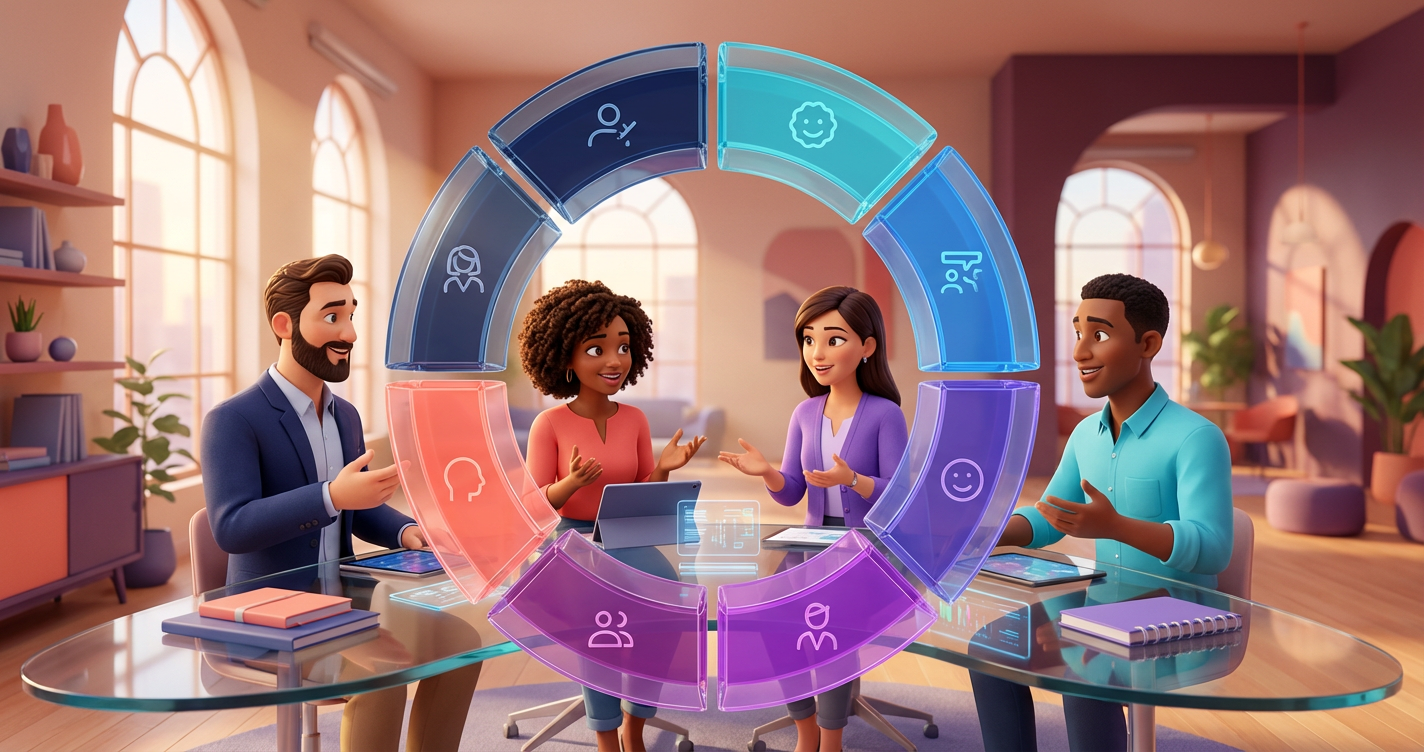
Assess team fit with the eight work actions, hire for culture add rather than culture clones, and spot likely friction before it costs you.

How merit based selection and behavioural assessment work together in federal hiring, including the STAR method and where work personality data helps.

How workforce planning software helps HR leaders match talent to business goals, spot skill gaps early, and plan headcount with real data.
 Compono