

.png?width=383&height=200&name=team%20(1).png)
 Compono


1 min read
ATS HRIS integration: a guide to connecting your people data
 Compono
ATS HRIS integration is the process of connecting your recruitment software with your core employee database to ensure a seamless flow of candidate...
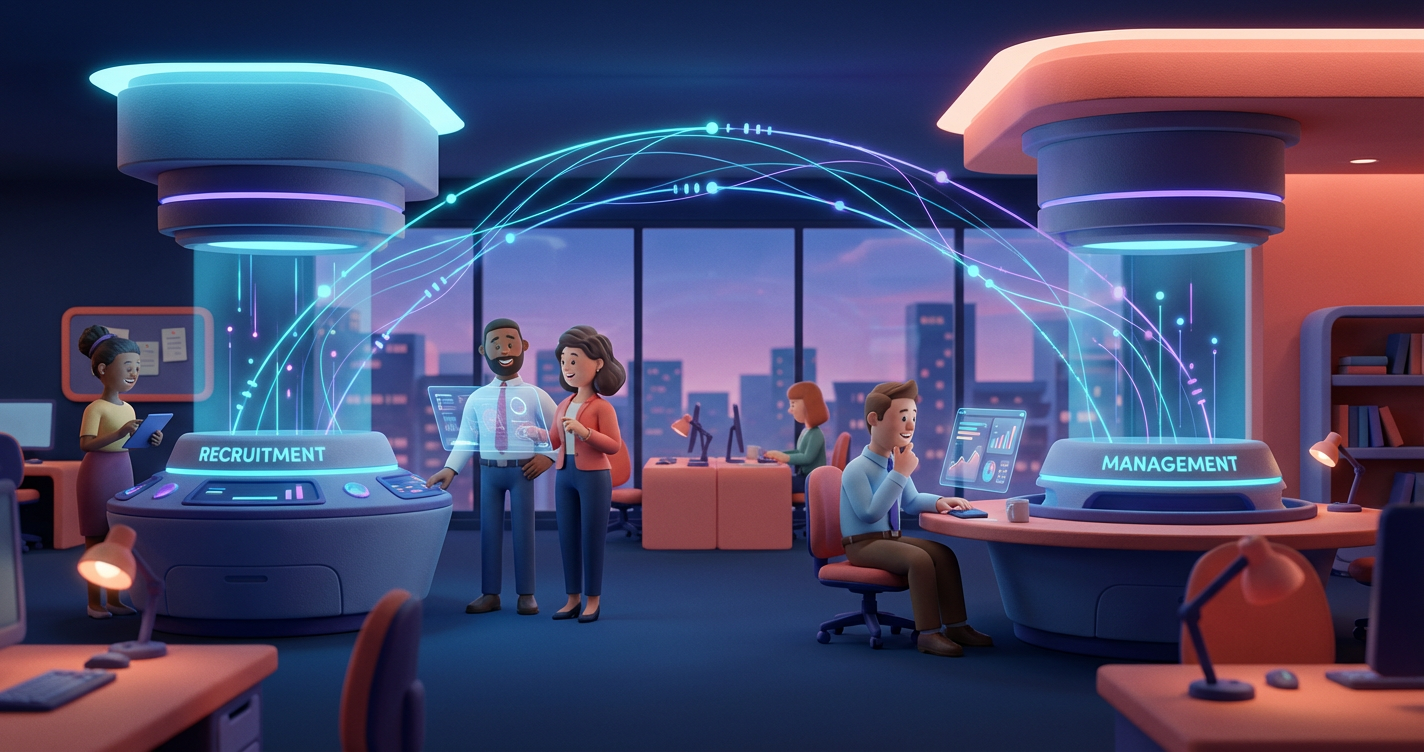
ATS HRIS integration is the process of connecting your Applicant Tracking System with your Human Resources Information System to ensure a seamless flow of data from the point of hire to long-term employee management.
By bridging the gap between these two critical platforms, your recruitment team can stop manual data entry and start focusing on the human side of hiring, ensuring that every new starter has a consistent experience from their first application to their first day on the job.
Key takeaways
- Integrating your ATS and HRIS removes the need for manual data entry, reducing the risk of human error during the onboarding process.
- A connected data ecosystem provides a single source of truth for people analytics, allowing leaders to track the full employee lifecycle.
- Seamless data transfer improves the candidate experience by ensuring a smooth transition from applicant to employee without administrative delays.
- Modern integration allows for better talent pool management and long-term workforce planning by linking hiring data with performance metrics.
Many HR teams today find themselves caught in a cycle of administrative double-handling. You find the perfect candidate in your recruitment software, move them through the stages of interviews, and finally celebrate an accepted offer. However, the moment that contract is signed, the real work often begins – manually re-typing that same information into your payroll or HR management system. This gap between systems is where momentum stalls and data errors creep in.
When your ATS and HRIS don't talk to each other, you aren't just losing time; you're losing the narrative of your talent. Information about a candidate's skills, work personality, and cultural fit often stays locked in the recruitment platform, never making it to the managers who will actually lead them. This lack of ATS HRIS integration creates a fragmented view of the workforce that makes it difficult to understand why certain hires succeed while others struggle.
At Compono, we see this challenge frequently in mid-market organisations. As you scale from 60 to 1,000 staff, the inefficiency of manual data transfer becomes a significant bottleneck. Centralising this data isn't just about saving a few hours of typing; it's about building a foundation for workforce intelligence that supports every stage of the employee journey.
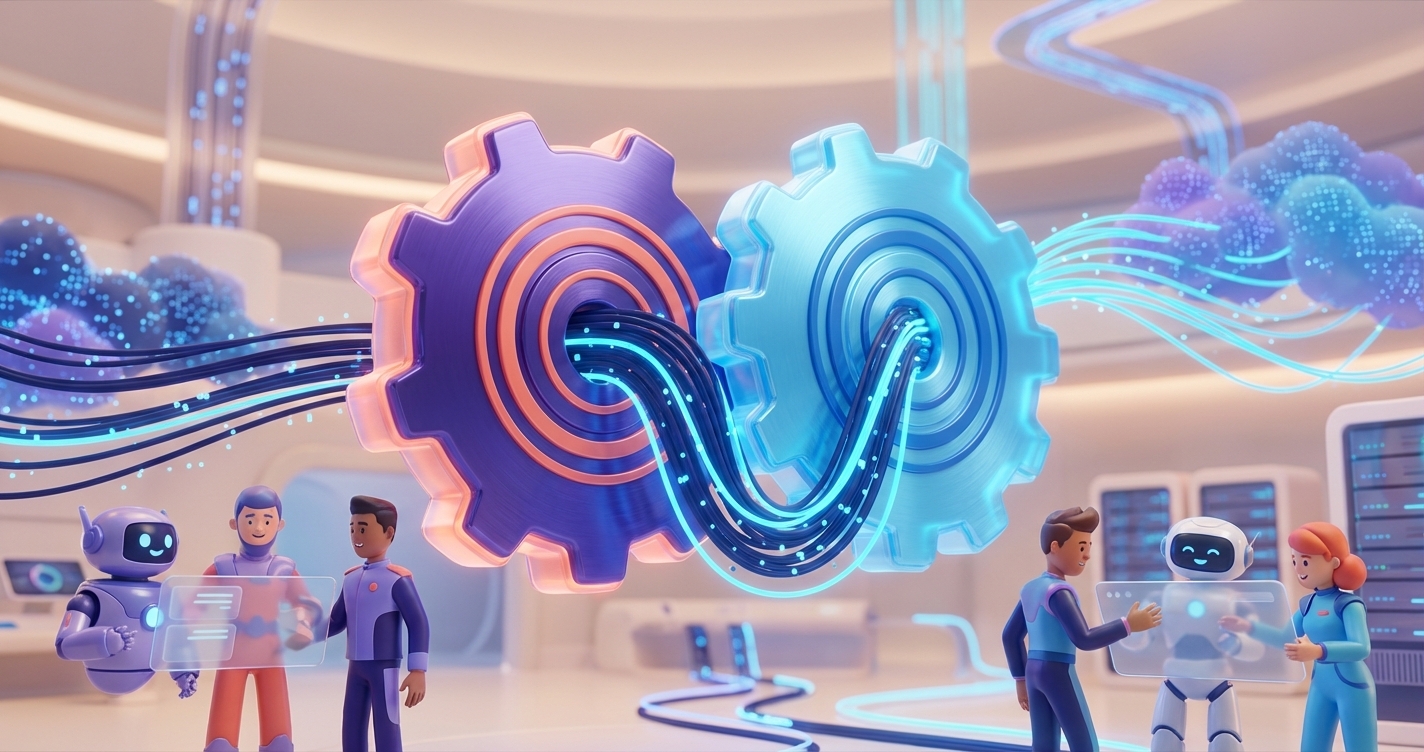
At its simplest level, an integration acts as a digital bridge. When a candidate is marked as 'hired' in your recruitment tool, a trigger sends their profile information – name, contact details, tax file numbers, and job specifics – directly into your HRIS. This 'new hire export' is the most common form of integration, but modern teams are looking for more than just a one-way data dump.
A more sophisticated approach involves bi-directional syncing. This means that if a job role is updated in your HRIS, the requirements and budget details automatically update in your ATS. This ensures that your recruitment team is always working with the most current information. We've spent a decade researching how these data flows impact team performance, and the results show that clarity in the hiring stage leads to better alignment once the employee starts their role.
To achieve this, many organisations look for platforms that offer native connectivity. For example, the Compono platform is designed to ensure that the intelligence gathered during the hiring phase flows naturally into development and engagement modules. When your systems are built to work together, you spend less time acting as a data broker and more time acting as a strategic partner to the business.
While basic contact information is essential, the most valuable data to integrate is often the qualitative stuff. Understanding a person’s work personality during the recruitment phase allows you to predict how they will mesh with the existing team. If your recruitment system identifies a candidate as The Pioneer, that insight shouldn't disappear once they are hired.
By integrating this personality data into your HRIS or engagement platforms, managers gain immediate access to collaboration tips and potential blind spots. Imagine a manager being able to see that their new hire is one of the Evaluators before they even have their first one-on-one. They can tailor their communication style to be more direct and logical, which helps the new employee feel understood and productive from day one.
This is where Compono Hire adds significant value. It doesn't just track applicants; it assesses candidates across Organisation Fit and personality. When this intelligence is integrated into your broader HR ecosystem, it transforms the HRIS from a static database into a dynamic tool for team design. You aren't just storing a name; you're storing the blueprint for that person's success within your culture.

The path to a connected tech stack isn't always a straight line. One of the biggest hurdles is data cleanliness. If your ATS has 'Senior Manager' as a job title but your HRIS uses 'Level 4 Lead', the systems might struggle to match the records. Before starting any ATS HRIS integration project, it's vital to audit your data fields and ensure you have a consistent naming convention across both platforms.
Another common challenge is the 'walled garden' approach of some legacy software providers. Some older systems make it difficult or expensive to export data. This is why we recommend looking for modern, API-first solutions that prioritise connectivity. At Compono, we believe that your data belongs to you, and it should be easy to move between the tools you use to manage your people.
Security and compliance also play a major role. Moving sensitive candidate data between systems requires robust encryption and a clear understanding of privacy regulations. Using a consolidated platform can often mitigate these risks, as the data stays within a single, secure environment. This is particularly important for industries with strict regulatory requirements where maintaining a clear audit trail of hiring decisions is mandatory.
How do you know if your integration is actually working? The most immediate metric is time-to-onboard. By removing the manual entry step, you can often reduce the time between 'offer accepted' and 'system access granted' by several days. This improves the new hire's first impression and gets them to peak productivity faster.
Beyond speed, you should look at data accuracy. Count the number of payroll errors or system entry mistakes that occurred before and after the integration. Most teams find that errors drop to near zero once the human element of re-typing data is removed. This has a direct impact on employee trust – nothing sours a new relationship like a late or incorrect first payslip.
Finally, look at the quality of your people analytics. With an integrated system, you can start to run reports that link recruitment sources to long-term performance. You might find that candidates who score highly as Helpers in your recruitment phase have the highest retention rates in your customer service teams. This kind of intelligence is only possible when your ATS and HRIS are working in perfect harmony, providing a complete picture of your workforce.
Key insights
- ATS HRIS integration is the foundation of a modern, data-driven HR function that values efficiency and accuracy.
- Connecting these systems allows for the transfer of work personality data, which helps managers lead more effectively from day one.
- Successful integration requires a commitment to data cleanliness and the selection of partners who prioritise open connectivity.
- The return on investment is found in reduced administrative costs, improved data integrity, and deeper workforce intelligence.
An Applicant Tracking System (ATS) is used to manage the recruitment process, from posting job ads to managing candidates. A Human Resources Information System (HRIS) is used to manage employee data, payroll, and benefits once a candidate has been hired. Integration connects these two distinct phases of the employee lifecycle.
While some custom integrations require technical expertise, many modern platforms like Compono offer streamlined ways to connect your data. Many SaaS tools now use pre-built connectors or APIs that simplify the process for HR teams without requiring extensive coding knowledge.
Integration ensures that the information a candidate provides during their application flows directly into their employee record. This means they don't have to provide the same details multiple times, and their onboarding process is much faster and more professional.
At a minimum, you should integrate contact details, job specifics, and tax information. However, for maximum value, we recommend also integrating assessment data, such as work personality results and organisation fit scores, to help managers support the new hire effectively.
The Compono platform is built to be the centre of your workforce intelligence. We focus on ensuring that the data gathered during the hire, develop, and engage phases is centralised, making it easier to maintain a single source of truth for your people data.
1 min read
ATS HRIS integration is the process of connecting your recruitment software with your core employee database to ensure a seamless flow of candidate...

1 min read
A system of intelligence HR is a layer of technology that sits above traditional record-keeping tools to provide proactive, data-driven insights...
1 min read
HRIS integration is the process of connecting your Human Resources Information System with other business software to create a single, reliable...