

.webp)

Compono vs HBDI
The Herrmann Brain Dominance Instrument maps thinking-style preferences across four colour-coded quadrants, and by Herrmann's own definition it measures how people prefer to think, not personality, ability or behaviour. Compono measures work personality, in context, connected to decisions. Here's the honest breakdown.
Last reviewed July 2026 · All comparisons
Workplace personality tools are popular for good reason. The well-known ones are accessible, quick to run, easy to interpret and genuinely useful for self-awareness. Their limits are just as consistent. Most read the individual in isolation, through general personality rather than behaviour at work, and say nothing about the team around them. Trait-based instruments go deeper and can be highly valid, but they're complex to interpret and usually need certification: a big jackhammer for a small problem. What matters is whether the instrument was built for work, and whether it can see the team as well as the person.
The full picture: Assessments vs video interviewing
The short answer
Choose Compono if you want
- Work personality and behavioural fit, not thinking-style preference alone
- Assessment that flows into hiring, culture and development decisions rather than stopping at the debrief
- Always-on people data instead of per-head profiles and practitioner gatekeeping
Choose HBDI if you want
- A proven, facilitator-led lens on cognitive diversity for leadership and innovation programs
- A shared four-colour language many Australian leaders already know (Herrmann has run from Sydney since 1989)
- Workshop-shaped team development around how the group prefers to think
Side by side
| Compono | HBDI | |
|---|---|---|
| What it is | ✓A validated work-personality assessment inside a talent intelligence platform | A 116-question self-report of thinking-style preference on the four-quadrant Whole Brain model, practitioner-administered |
| What's measured | ✓Work personality: 8 validated types built for the workplace, plus organisation and culture fit | Cognitive preference. Herrmann's own words: it does not measure personality, ability, aptitude or brain activity |
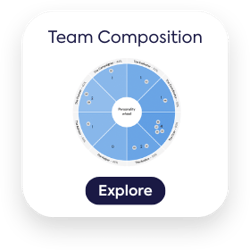
| Team view | ✓Team work-personality mix read against culture, climate and what the role needs | A genuine team profile: preference map, composite tilt, cluster detection |
| Use in hiring | ✓Built for hiring from the start: every candidate matched to the role and your measured culture, with instruments validated for selection decisions | Not built or positioned for selection; Herrmann's own comparisons point recruitment buyers to other tools |
| Scientific footing | ✓Validated organisational-psychology instruments with Compono's own normative data | Practitioner-useful, but validity evidence is largely Herrmann-published, and the brain-dominance framing is metaphor, not neuroscience |
| Delivery model | ✓Software-first: interpretation is built into the platform, with no certification course, no practitioner gatekeeping and no per-head report fees | Certified practitioners, per-head profiles (around A$275 each via AU resellers, debrief extra) |
| What the data feeds | ✓Hiring, engagement, capability and competency decisions on one dataset | Development workshops and team debriefs |
| Best fit | Mid-market organisations (roughly 60-1,000 staff) that want people data driving decisions | Facilitated leadership development and innovation training |
Facts checked July 2026 against Herrmann's published pages and reseller pricing. Tell us if something's out of date and we'll fix it.
What HBDI genuinely does well
- A memorable language for thinking diversity. Four colours, four decades of corporate use, born inside GE's management education. Many leaders already know their profile.
- The team application is real. The HBDI Team Profile maps every member's preferences, shows the composite tilt and finds clusters. As a team-development diagnostic for how a group prefers to think, it's legitimate.
- Honest positioning. Herrmann states plainly that the HBDI doesn't measure ability, aptitude or personality, and doesn't pitch it for recruitment. Scope honesty is rarer than it should be.
- Strong Australian pedigree. Herrmann Asia has operated from Sydney since 1989, so the local practitioner base and corporate alumni network run deep.
Where Compono differs
Thinking preference is one lens; work behaviour is another. Knowing a team leans analytical tells you how it prefers to think, and nothing about whether its behavioural mix covers the ways work actually gets done, whether the culture supports it, or who to hire next. By Herrmann's own definition that's outside the instrument's scope, and the product line contains nothing for hiring, engagement or culture. The insight is genuinely useful and structurally stuck at the workshop.
Compono starts where the debrief ends. Work personality is measured with validated instruments, read at team level against culture and climate, and connected to the decisions that follow: who to hire, what to develop, how the team's shape needs to change. Preference data you discuss once is interesting. People data that keeps working is infrastructure.
More than an assessment
Everything above compares assessment capability. Compono's work-personality data doesn't stop at a profile: Hire matches candidates against the role and your measured culture, Engage reads team work-personality mix alongside culture and climate, and Develop points development at what the measurement actually found. The profile is the start of the dataset, not the deliverable.
Comparing the two for your team?
Tell us what the decision hangs on. We'll give you a straight answer on fit, including where HBDI still earns its place in your leadership programs.
Talk to usFrequently asked questions
Is HBDI a personality test?
No, and Herrmann says so itself: the HBDI measures thinking-style preference, not personality, ability or aptitude. That's a genuinely different construct from work personality, which measures how people actually operate at work.
Can HBDI be used for hiring?
It isn't built for it. There's no selection product in the Herrmann line, no candidate-screening norms, and Herrmann's own comparison content points recruitment buyers to other tools. Compono was built for hiring: validated work-personality and fit assessment on every candidate.
Doesn't HBDI already have a team profile?
Yes, and it's well made. The difference is what the team view connects to. HBDI's team profile describes thinking preferences and ends at the debrief; Compono's team view reads work-personality mix alongside measured culture and climate, and feeds hiring and development decisions directly.
Is the whole-brain model scientifically sound?
The four quadrants are a useful metaphor, and Herrmann itself concedes the instrument doesn't measure brain activity; neuroscience research has found no evidence people are left-brained or right-brained. The preference data can still be useful for development. Just treat the brain language as branding, not biology.