Skip to the main content.
FOR GOVERNMENT

AssureArrow Left

Become the expert on delivering
valid and fair assessments for
your training and education.

Compono Assure


FOR BUSINESS

HireArrow Left

Engage Arrow Left

Develop Arrow Left

The ATS that matches candidates to culture and performance, not resumes to keywords.

The culture assessment and employee engagement platform that shows you what to fix, not just what's wrong.

The Learning Management System (LMS) that builds capability, not just completion rates.


The AI that actually understands you.

Hey Compono helps you understand your personality and how to turn it into your superpower.

First 1,000 users get 10 minutes free.
Just $15 a month after that — cancel anytime.

Hey Compono


5 min read

Industrial organisational psychology and modern team performance

Industrial organisational psychology and modern team performance

Industrial organisational psychology is the scientific study of human behaviour in the workplace, applying psychological theories and principles to increase organisational efficiency and employee well-being.

Key takeaways

  • Industrial organisational psychology uses evidence-based methods to match the right people to the right roles.
  • Understanding work personality types allows leaders to predict team dynamics and prevent friction before it starts.
  • Data-driven insights into team culture directly correlate with higher engagement and long-term retention.
  • Modern businesses use psychological frameworks to transition from subjective 'gut feel' to objective decision-making.

Most of us have experienced a team that just didn't click. You might have the most talented individuals in the room, yet the projects stall, communication breaks down, and the atmosphere feels heavy. Usually, we chalk this up to a 'bad culture' or 'clashing personalities' and hope things improve with the next hire. But hope isn't a strategy for growth.

The reality is that many businesses are still guessing when it comes to their most valuable asset: their people. We often hire based on a polished CV and a pleasant interview, only to find six months later that the person doesn't fit the team's rhythm. This is where industrial organisational psychology changes the game. It moves us away from guesswork and provides a structural, scientific lens to view how people work, lead, and interact.

At Compono, we believe that every person deserves to be in a role that fits their natural strengths. By applying psychological principles to the workplace, we can help you identify exactly why a team is thriving or where the hidden bottlenecks lie. It is about understanding the 'why' behind the 'what' to build a more resilient, productive workplace.

The science of matching people to roles

Industrial organisational psychology – often called I-O psychology – focuses heavily on the relationship between an individual and their work environment. One of the core pillars is job analysis and selection. This isn't just about checking if someone can use a specific software. It is about understanding the cognitive and behavioural requirements of a role and finding the person whose natural tendencies align with those needs.

When we look at high-performing teams, we see a clear pattern of alignment. People who are naturally detail-oriented thrive in roles that require precision, whilst those with a visionary bent are best suited for strategic, future-focused tasks. When this alignment is missing, you see burnout, disengagement, and high turnover. Statistics from the Society for Industrial and Organizational Psychology show that using structured, psychologically-backed assessments can significantly improve the quality of hire compared to traditional interviews alone.

We have spent years researching these dynamics to make them accessible for modern leaders. For example, Compono Hire uses these psychological insights to help you assess candidates across organisation fit, job fit, and personality. This ensures you aren't just hiring a set of skills, but a person who will truly thrive in your specific environment.

Predicting team dynamics through work personality

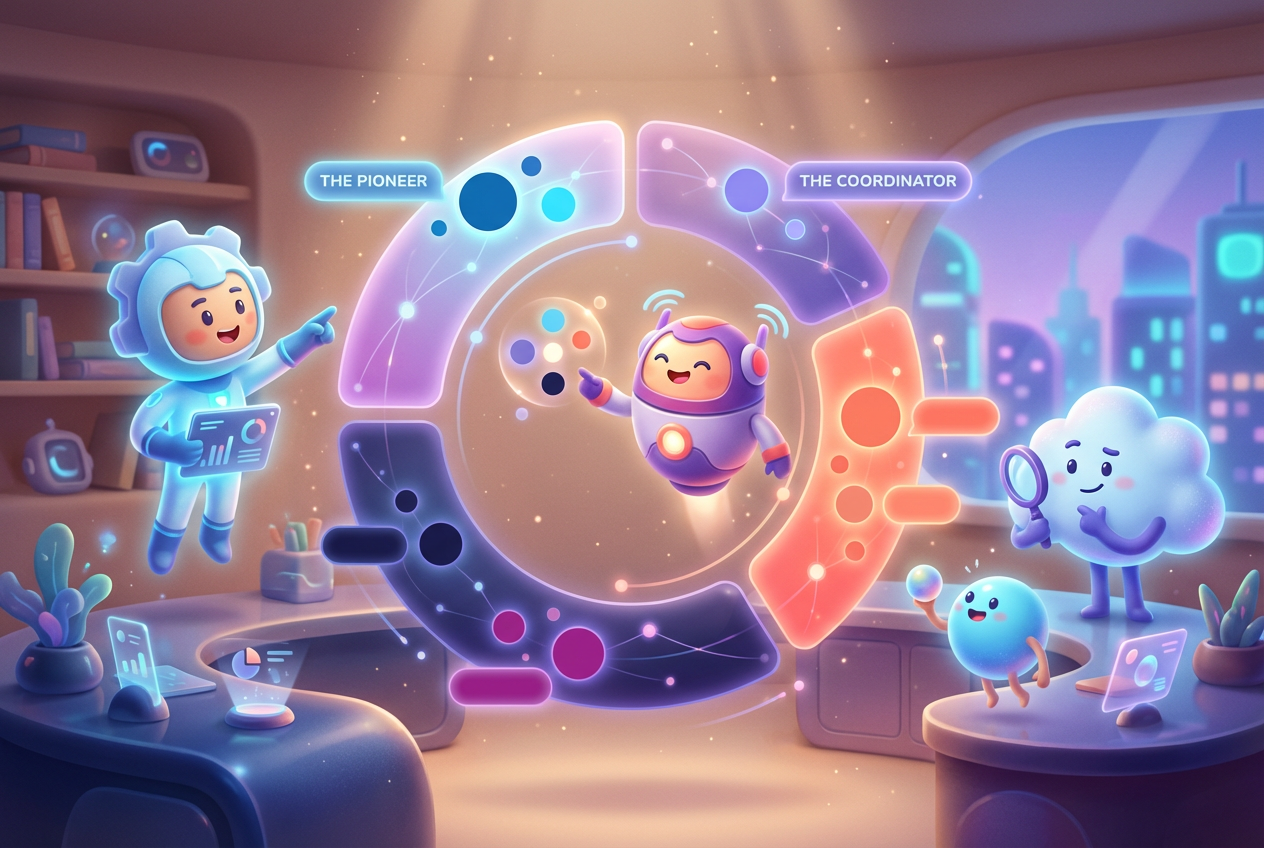
Section 1 illustration for Industrial organisational psychology and modern team performance

A common mistake in leadership is assuming that a group of high achievers will automatically form a high-performing team. However, industrial organisational psychology teaches us that team composition is about balance, not just individual excellence. If a team is composed entirely of big-picture thinkers, the execution might suffer. Conversely, a team of only executors might struggle to innovate when the market shifts.

By categorising natural work preferences, we can start to see the 'shape' of a team. We identify these preferences through eight distinct work personality types. For instance, The Pioneer is imaginative and adaptable, often driving innovation. However, they may need to be balanced by The Coordinator, who excels at structure, order, and keeping projects on a strict timeline. Understanding these archetypes helps leaders manage conflict and assign tasks that play to each person's strengths.

When you understand the work personality of your staff, you stop managing by trial and error. You can predict how two people might interact during a high-pressure deadline or who is best suited to lead a collaborative brainstorming session. This level of insight transforms the way we think about professional development and team design.

The link between psychology and employee engagement

Engagement is often treated as a buzzword, but in industrial organisational psychology, it is a measurable state influenced by specific environmental factors. Psychologists look at 'person-organisation fit' – the degree to which an employee's values and goals match those of the company. When this fit is high, employees feel a sense of purpose and belonging that transcends their daily tasks.

Building this fit requires a deep look at the company's culture. Culture isn't what is written on the office wall; it is the collective behaviour and mindset of the team. Using psychological frameworks, we can measure engagement levels and identify the 'drivers' that matter most to your people – whether that is autonomy, recognition, or a sense of mastery. Addressing these drivers is the most effective way to reduce turnover and boost productivity.

To help organisations navigate this, we developed The Compono Culture, Engagement & Performance Model. This framework allows you to see the direct link between the psychological health of your team and the overall performance of the business. It provides a roadmap for leaders to cultivate an environment where people actually want to show up and do their best work.

Data-driven leadership in a modern workplace

Section 2 illustration for Industrial organisational psychology and modern team performance

The final insight from industrial organisational psychology is the importance of objective data. In the past, leadership was often seen as an innate 'soft skill'. Today, we know that the best leaders are those who use data to inform their intuition. This means using assessments to identify leadership potential and using feedback loops to monitor team sentiment in real time.

Data helps remove the unconscious biases that often creep into hiring and promotion decisions. When you have a clear, evidence-based view of a person's work personality and their historical performance, you can make fairer, more effective decisions. This transparency builds trust within the organisation, as employees see that opportunities are based on merit and fit rather than office politics.

At Compono, we provide the tools to centralise this intelligence. By using our platform, you can see how your teams think and act, allowing you to make strategic adjustments that support both individual growth and business objectives. It is about giving you the workforce intelligence needed to lead with confidence in a complex world.

Key insights

  • Industrial organisational psychology is the foundation of modern, data-driven talent management.
  • Role alignment is the most effective way to prevent burnout and improve long-term employee retention.
  • Balancing different work personality types within a team ensures both innovation and execution are prioritised.
  • Measuring person-organisation fit is essential for building a culture that drives authentic engagement.
  • Objective psychological data helps eliminate bias and creates a more equitable workplace for all employees.

Where to from here?

Building a high-performing team doesn't have to be a mystery. By applying the principles of industrial organisational psychology, you can gain a clear view of your workforce and make smarter decisions for the future.

Frequently asked questions

What is the main goal of industrial organisational psychology?

The primary goal is to apply psychological research and principles to the workplace to improve the overall performance, health, and well-being of both the organisation and its employees.

How does industrial organisational psychology help with hiring?

It provides scientifically validated tools and assessments that measure a candidate's personality, cognitive abilities, and fit for a specific role or company culture, leading to more accurate hiring decisions.

Can industrial organisational psychology improve team culture?

Yes, by measuring employee engagement and identifying the underlying behaviours and values within a team, it helps leaders implement strategies that foster a more positive and productive work environment.

Is industrial organisational psychology only for large corporations?

Not at all. While large companies often have dedicated departments, the principles of role fit, team balance, and data-driven leadership are just as valuable for small and mid-sized businesses looking to scale effectively.

How do work personality types relate to this field of study?

Work personality types are a practical application of personality theory within industrial organisational psychology. They help categorise natural work preferences so leaders can better understand team dynamics and individual motivations.

Related

How to fix a dysfunctional team and boost performance

How to fix a dysfunctional team and boost performance

Have you ever walked into a meeting and felt a tension so thick you could almost touch it? When a dysfunctional team begins to drift, the signs...

Read More
Workable vs Compono: choosing the right talent platform

Workable vs Compono: choosing the right talent platform

Choosing between Workable vs Compono depends on whether you need a traditional tracking tool or a complete workforce intelligence system that...

Read More
What drives employee performance in modern teams

What drives employee performance in modern teams

Understanding what drives employee performance is the difference between a team that simply hits targets and one that redefines them. While many...

Read More