How to identify skills gaps and build high-performing teams
To identify skills gaps effectively, you must compare your team’s current capabilities against the specific work activities required to achieve your...
Hey Compono helps you understand your personality and how to turn it into your superpower.
First 1,000 users get 10 minutes free.
Just $15 a month after that — cancel anytime.
The AI coach that actually gets you.
First 1000 users get 10 minutes free.
Get Started ≫
A skills gap analysis is the process of comparing the current capabilities of your workforce against the skills your organisation needs to achieve its long-term goals.
By identifying the specific areas where your team lacks proficiency, you can make informed decisions about hiring, training, and strategic workforce planning. In today's rapidly changing work environment, understanding these gaps is no longer an optional exercise – it is the foundation of a resilient and high-performing business.
Key takeaways
- Skills gap analysis identifies the mismatch between current employee capabilities and future business requirements.
- Effective analysis requires a clear understanding of both technical competencies and soft skills or work personality traits.
- Data-driven insights from gap analysis allow for targeted recruitment and more effective internal development programmes.
- Regularly revisiting your skills map ensures your team remains adaptable to industry shifts and technological advancements.
We often see teams struggling to hit targets, not because of a lack of effort, but because the goalposts have moved while the toolkit remained the same. A skills gap analysis acts as a diagnostic tool for your organisation, revealing why certain projects stall or why productivity might be dipping in specific departments. It moves the conversation from "we need more people" to "we need these specific capabilities."
When you take the time to map out your current talent landscape, you stop guessing and start strategising. This process helps you identify which roles are becoming obsolete and which emerging skills will be critical for your success over the next few years. Without this clarity, your hiring and training budgets are essentially being spent in the dark, hoping for a match that might not exist.
At Compono, we believe that workforce intelligence starts with data. By using the Compono platform, leaders can gain a clearer view of their team's existing strengths and identify the missing pieces of the puzzle before they become critical liabilities. This proactive approach is what separates reactive HR departments from strategic people leaders.

Before you can figure out what is missing, you need to know where you are going. We recommend starting with your business objectives for the next 12–24 months. Are you expanding into new markets? Are you automating certain manual processes? Each of these goals requires a specific set of skills that your team may or may not currently possess.
Talk to your department heads and team leads to understand the practical requirements of these objectives. It is helpful to categorise these into "hard skills" – like data analysis or software proficiency – and "soft skills" – like leadership, empathy, or strategic thinking. Both are equally vital for a balanced and effective workforce.
Consider the broader industry trends as well. If your sector is moving toward a more digital-first approach, your team will need the digital literacy to keep pace. By defining these requirements early, you create a benchmark against which all current and future employees can be measured, ensuring alignment across the entire organisation.
Once you have a clear picture of what you need, it is time to look at what you already have. This is often the most eye-opening part of the process. You might find that a marketing coordinator has hidden talents in project management, or a sales lead has a background in technical support that hasn't been utilised.
There are several ways to gather this data, from self-assessments and manager reviews to formal testing. However, the most effective method is looking at how people actually work. Understanding a person's work personality can reveal a great deal about their natural strengths and where they might struggle to adapt to new requirements.
For instance, someone who identifies as The Auditor will naturally excel in roles requiring precision and methodical focus. If your future goals require high levels of detail and compliance, you may already have the right person in the wrong seat. Inventorying skills isn't just about ticking boxes; it's about discovering the latent potential within your existing team.

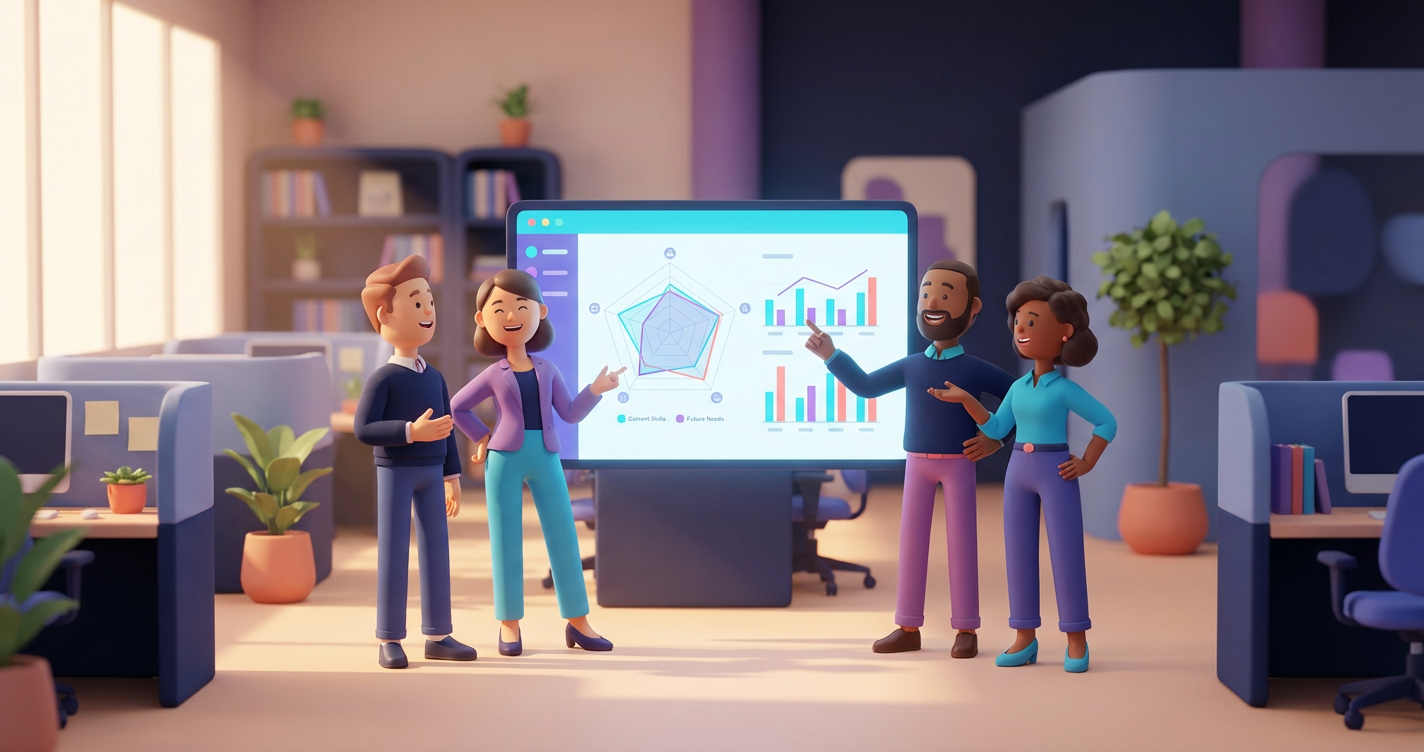
Now comes the comparison. By overlaying your future needs with your current inventory, the gaps will start to emerge. These gaps usually fall into two categories: individual gaps, where a specific person needs upskilling, and organisational gaps, where a whole capability is missing from the business.
Don't be discouraged by a long list of gaps. This is actually a roadmap for your future growth. It allows you to prioritise which gaps need to be filled immediately and which can be addressed through long-term development. It also helps you decide whether to "buy" the skills through recruitment or "build" them through internal training.
When you identify a gap that requires a new hire, precision is key. Tools like Compono Hire allow you to assess candidates not just on their CV, but on how well they fit the specific organisational and personality gaps you've identified. This ensures that every new person you bring on board is a strategic addition to the team's collective capability.
A skills gap analysis is only useful if it leads to action. Your plan should outline specific steps to bridge the identified divides. This might include formal training sessions, mentorship programmes, or even restructuring teams to better leverage existing strengths. The goal is to create a culture of continuous learning where employees feel supported in their professional growth.
For those gaps that cannot be filled internally, your recruitment strategy should become highly targeted. Instead of posting generic job descriptions, you can now look for specific competencies that will directly contribute to your business goals. This reduces the risk of a bad hire and ensures that your new employees can hit the ground running.
Remember that this is not a one-and-done task. The skills required for success will continue to evolve as technology and markets change. We suggest making the skills gap analysis a regular part of your annual planning process. By staying ahead of the curve, you ensure that your team remains competitive, engaged, and ready for whatever comes next.
Key insights
- The primary goal of a skills gap analysis is to align human capital with strategic business objectives.
- Identifying work personality types helps in placing the right people in roles where their natural strengths are most effective.
- Bridging gaps through a mix of targeted hiring and internal development creates a more sustainable and loyal workforce.
- Workforce intelligence tools like Compono provide the data necessary to make these complex decisions with confidence.
Explore: Workforce Intelligence Platform
Talk to an expert: Book in a 15-minute chat to get a walkthrough of how Compono can help you identify and bridge your team's skills gaps.
Most organisations find that an annual review works best, usually aligned with the strategic planning cycle. However, if your industry is undergoing rapid technological change, a bi-annual check-in might be more appropriate to ensure you aren't falling behind.
Not at all. In fact, small to mid-sized businesses often benefit the most because they have less room for error in their hiring decisions. Knowing exactly what skills you need helps you make the most of every headcount and training dollar.
Yes, absolutely. Engaging employees in self-assessment not only provides more accurate data but also makes them feel invested in their own development. It turns the process from something done "to" them into something done "for" them and the team.
A skills gap usually refers to specific technical or soft skill proficiencies. A talent gap is broader, often referring to a lack of people in the pipeline for leadership roles or a general shortage of qualified individuals in the market for a specific role.
Success can be measured through improved productivity, higher employee engagement scores, and a reduction in the time it takes to fill critical roles. Most importantly, you should see a direct correlation between your upskilling efforts and the achievement of your business goals.

Compono Hire helps you predict job-fit and team-fit using behavioural science, so you can shortlist with confidence.
Request a demoBuilt for mid-market hiring teams.

Voice-first coaching that adapts to your personality. Get actionable steps you can take this week.
Start freeBuilt by Compono. Not therapy — practical behaviour change.
To identify skills gaps effectively, you must compare your team’s current capabilities against the specific work activities required to achieve your...
A training analytics platform is a digital solution that collects, processes, and visualises data related to employee learning to help organisations...
A bad workplace culture is defined by low trust, poor communication, and high employee turnover, often resulting from a misalignment between company...