

.png?width=383&height=200&name=team%20(1).png)
 Compono


1 min read
How to build and sustain high performing teams
 Compono
High performing teams are built on a foundation of cognitive diversity where individual work preferences are aligned with the team's core objectives.
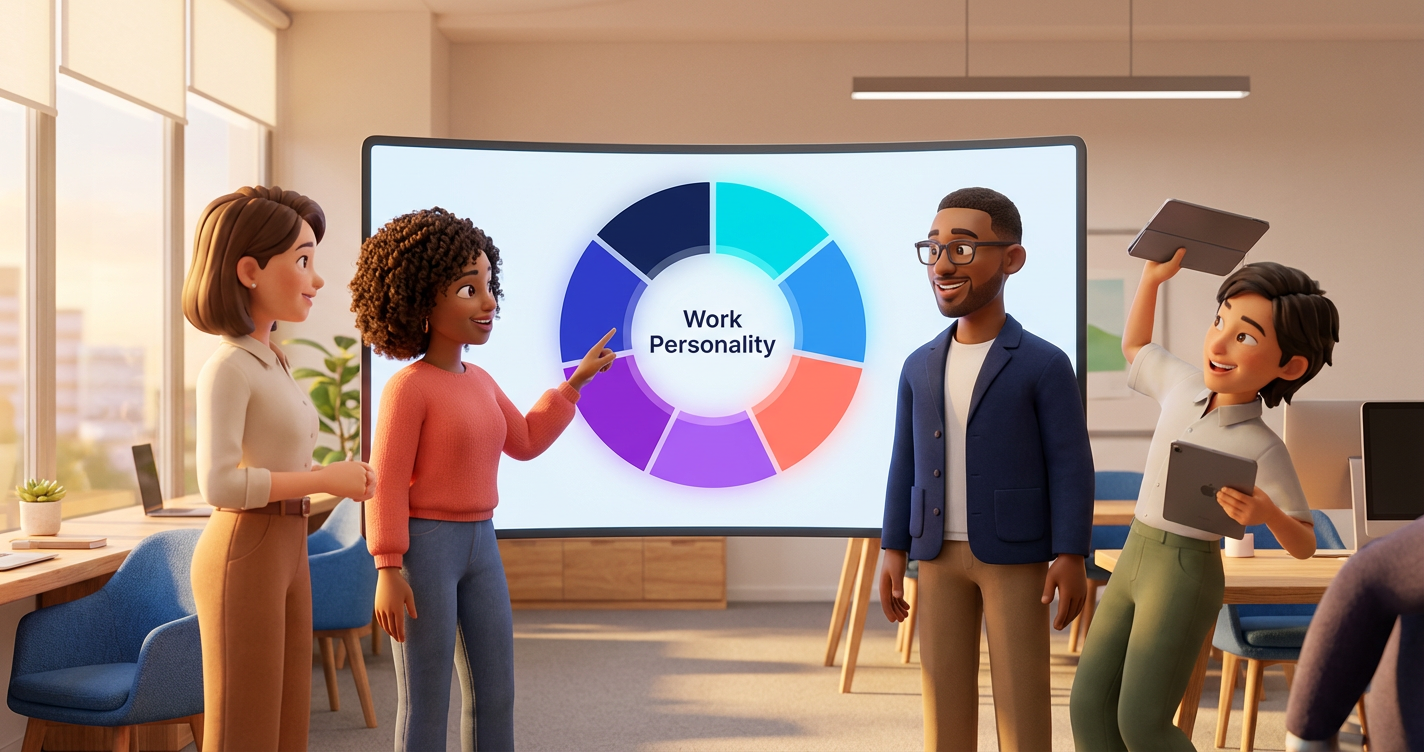
High performing teams are built on a foundation of balanced work activities and a deep understanding of individual work personality types.
Key takeaways
- Success relies on mastering eight specific work activities, from pioneering new ideas to ensuring methodical execution.
- A team's effectiveness is often limited by 'blind spots' where certain work preferences are over-represented or entirely missing.
- Effective leadership requires the ability to flex between directive, democratic, and non-directive styles based on the specific situation.
- High performing teams use data-driven insights to align individual strengths with the right organisational tasks.
We have all been part of a team that looks perfect on paper but struggles to gain momentum. You might have the best talent in the industry, yet the daily reality is marked by missed deadlines, circular discussions, or a lack of creative spark. This friction usually isn't a result of poor intent; it stems from a misalignment of how people naturally prefer to work.
At Compono, we have spent years researching the mechanics of group success. What we found is that high performing teams aren't just a collection of high achievers. They are carefully balanced ecosystems where eight critical work activities are performed in harmony. When a team lacks an Evaluator to weigh up risks, or a Doer to push through the final stages of a project, performance inevitably suffers.
Understanding these dynamics is the first step toward moving from a group of individuals to a truly cohesive unit. By identifying the natural work personality of each member, leaders can stop guessing why projects stall and start designing teams that are built to win.

Our research into organisational design has identified eight key activities that every team must execute to stay competitive. These aren't just job titles; they are types of energy and focus that move a project from a vague concept to a finished result. These activities include Evaluating, Coordinating, Campaigning, Pioneering, Advising, Helping, and Doing.
Think of it like an engine. If you have plenty of fuel (Pioneering) but no spark (Campaigning) or no wheels (Doing), you aren't going anywhere. High performing teams ensure that all eight cylinders are firing. For example, Pioneers bring the imaginative, out-of-the-box ideas that spark innovation. However, without a Coordinator to organise those ideas into a structured plan, that innovation often evaporates into wasted time.
The challenge for most managers is that we naturally hire people who think like us. If a leader is a visionary, they might inadvertently fill the room with Campaigners who love to "sell the dream" but struggle with the meticulous details required for long-term stability. Achieving balance requires a conscious effort to value the Auditor who checks the facts just as much as the person who comes up with the next big strategy.
One of the most common myths about high performing teams is that they require a single, charismatic style of leadership. In reality, the best leaders are those who can move along a continuum. Depending on the task urgency and the team’s experience, you may need to switch between Directive, Democratic, and Non-Directive styles.
Directive Leadership is about providing clear instructions and structure. It is essential in high-stakes environments where quick decisions are a priority. Conversely, Democratic Leadership focuses on shared decision-making and is the bedrock of environments where creativity and diverse perspectives are valued. Finally, Non-Directive Leadership empowers highly skilled teams with autonomy, allowing them to self-manage and innovate with minimal oversight.
At Compono, we have developed tools to help you identify your natural leadership tendency. While an Advisor might naturally lean toward a collaborative, democratic approach, they must be able to flex into a directive style if a project hits a crisis point. Understanding these shifts helps prevent the team from becoming stagnant or confused during transitions.

Conflict is an inevitable part of any ambitious team. However, in high performing teams, conflict is used as a tool for growth rather than a source of division. Most workplace friction arises when two different work personality types see the same problem through different lenses. An Auditor might see a Campaigner’s enthusiasm as a lack of attention to detail, while the Campaigner sees the Auditor as a bottleneck to progress.
When you understand these natural preferences, you can change the dialogue. Instead of personal frustration, you can use objective language. A leader might say to a Helper, "Your input on team morale is vital – how do you feel this new plan will affect the group?" This validates their natural strength while keeping the project moving forward. It turns a potential argument into a strategic discussion about team health.
By using the Compono platform, managers can invite every employee to complete a work personality assessment. This visibility allows the team to see where their collective blind spots lie. If everyone on the team is a "big picture" thinker, the group can collectively agree to place extra emphasis on the methodical, detail-oriented tasks that they might otherwise overlook.
Building a high performing team is not a one-time event; it is a process of constant refinement. As your business grows, the activities you need will change. A startup needs heavy Pioneering and Campaigning, while a mature organisation might need more focus on Auditing and Coordinating to maintain its standards. High performing teams are those that can recognise these shifts and adjust their composition accordingly.
This is where workforce intelligence becomes a competitive advantage. When you have data on how your team thinks and works, you can make better hiring decisions. If you know your current team is struggling with execution, you can specifically look for a Doer in your next round of recruitment. This proactive approach to team design ensures that you aren't just adding headcount, but adding the specific "work energy" your team currently lacks.
The Compono Engage module helps leaders visualise these team dynamics in real time. It provides the expertise of a corporate psychologist in a digital format, helping you manage conflict and strengthen team design without needing a full-scale consultancy project. When everyone understands their role and how it fits into the broader 8-activity model, the path to high performance becomes much clearer.
Key insights
- High performance is a result of balancing eight core work activities: Evaluating, Coordinating, Campaigning, Pioneering, Advising, Helping, and Doing.
- Individual work personality types dictate which activities a person will naturally gravitate toward or avoid.
- Leadership must be situational – effective managers flex between directive and non-directive styles based on the team's needs.
- Data-driven team design allows leaders to identify and fill gaps in their team's collective skill set proactively.
- Conflict is best managed by acknowledging different work preferences and using them to provide a more rounded perspective on problems.
A high performing team is one that effectively balances eight critical work activities – such as pioneering, coordinating, and doing – while ensuring that the leadership style matches the team's current situation and experience level.
You can identify gaps by mapping your team's natural work personality types against the eight core work activities. If your team is struggling with deadlines, you may lack Coordinators or Doers; if you lack new ideas, you may need more Pioneers.
Yes. While most people have a natural leadership tendency based on their personality, effective leaders learn to flex between directive, democratic, and non-directive styles depending on the urgency and complexity of the task at hand.
Conflict often arises from differing work preferences. For example, a detail-oriented Auditor may clash with a visionary Campaigner. Understanding these types allows teams to use these differences as complementary strengths rather than sources of friction.
Strategic team design allows you to hire for the specific work activities your team is currently missing. This ensures that new hires solve existing performance bottlenecks rather than simply adding more of the same personality types.

1 min read
High performing teams are built on a foundation of cognitive diversity where individual work preferences are aligned with the team's core objectives.

1 min read
Team collaboration software is most effective when it bridges the gap between digital task management and the unique work personalities of your...

1 min read
To build high performing teams, you must align individual work personality types with the eight critical work activities – Evaluating, Coordinating,...