

.webp)

 Compono


How culture fit hiring works in disability services
 Compono
Support work asks for patience under pressure. Here is how culture fit hiring finds people who hold up in the role and share how your team works.

Behavioural hiring in hospitality works by prioritising innate traits and psychological drivers over technical experience to identify candidates who will naturally thrive in service-led environments.
This approach shifts the focus from what a person has done to how they act – ensuring that new hires possess the resilience, empathy, and social energy required to deliver exceptional guest experiences day after day.
Key takeaways
- Behavioural hiring identifies candidates with the natural service-mindset required for hospitality, reducing the risk of early turnover.
- By focusing on work personality and psychological traits, venues can build more cohesive teams that manage pressure effectively.
- Using structured behavioural assessments allows managers to move beyond the limitations of the traditional résumé.
- This method improves the guest experience by ensuring staff are naturally inclined toward empathy and proactive problem-solving.
Hospitality managers often say they hire for attitude and train for skill, yet most recruitment processes still start and end with a résumé. When you are looking for a floor manager or a barista, a list of past employers tells you they can operate a machine or manage a roster, but it says very little about how they handle a double-booked table on a Saturday night. This is where the gap between a 'paper-perfect' candidate and a high-performer begins to widen.
The traditional approach to hiring relies on self-reported experience, which is increasingly difficult to verify in a high-turnover industry. If you have ever hired someone with ten years of experience only to find they lack basic empathy or resilience, you have felt the limitations of experience-based hiring. Behavioural hiring addresses this by looking at the underlying 'Work Personality' of an individual to predict their future performance in your specific venue centre.
We have seen that when hospitality teams are built on behavioural alignment, the results are transformative. Staff are more engaged, guest complaints drop, and the constant cycle of churning through new starters begins to slow down. It is about understanding that while you can teach someone to use a point-of-sale system, you cannot easily teach them to care about a guest's experience.
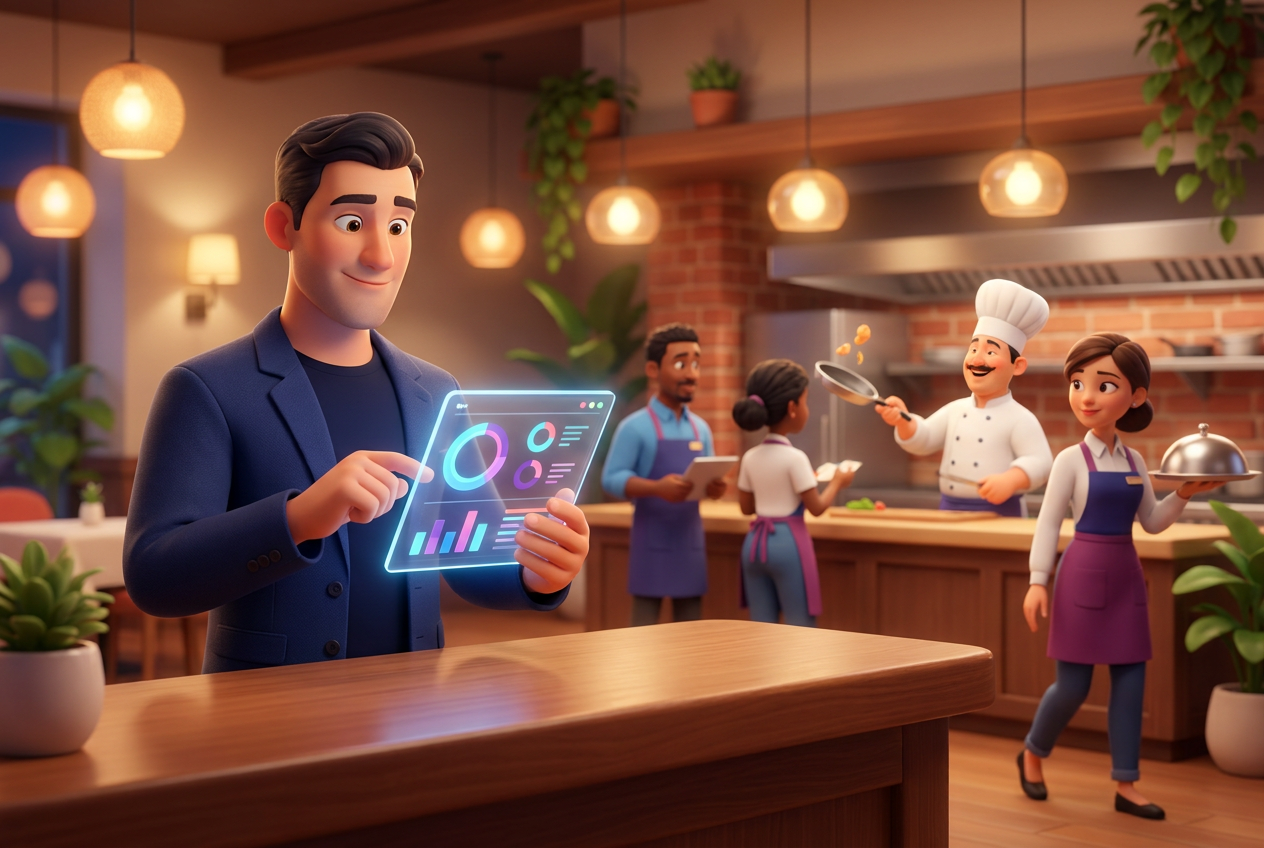
At its core, behavioural hiring is a scientific method of assessing how an individual is likely to behave in a work setting based on their personality traits and past actions. In a hospitality context, this means moving away from 'Where have you worked?' toward 'How do you naturally respond to people and pressure?'. It involves using psychometric tools and structured interview techniques to uncover the drivers of human behaviour.
The process usually starts with defining the behavioural 'DNA' of a successful role. For example, a front-of-house role might require a high level of 'The Campaigner' traits – being energetic, persuasive, and people-oriented. Conversely, a back-of-house role might benefit from 'The Doer' or 'The Auditor' traits, where precision and task-orientation are paramount. By identifying these needs first, you create a benchmark for every applicant.
At Compono, we use a Workforce Intelligence Platform to help businesses map these specific traits. By understanding the work personality of your existing top performers, you can use those insights to find candidates who share the same natural inclinations. This data-driven approach removes the guesswork and 'gut feel' that often leads to hiring mistakes in busy hospitality environments.
Hospitality is a high-pressure environment where the social 'battery' of your staff is constantly being drained. Behavioural hiring works by assessing a candidate's resilience and social energy before they ever step onto the floor. It looks for indicators of emotional intelligence and the ability to maintain a positive demeanour even when things go wrong.
Consider the difference between a candidate who is naturally an 'Advisor' – empathetic and collaborative – and someone who is purely results-driven. In a team conflict or a difficult guest interaction, the Advisor will naturally seek a harmonious resolution. Understanding these tendencies allows you to place people in roles where their natural behaviour is an asset, not a liability. This prevents the burnout that occurs when staff have to 'mask' their natural personality to meet job requirements.
Using behavioural insights also helps you understand how to avoid common hiring mistakes, such as over-indexing on technical skills. A chef might have incredible knife skills, but if they lack the behavioural trait of 'Helping' or 'Coordinating', they may struggle in a collaborative kitchen environment. Behavioural hiring ensures the 'team fit' is as strong as the 'job fit'.
To make behavioural hiring work, you need objective data. This is typically gathered through short, evidence-based assessments that measure a candidate’s work personality. These assessments don't just tell you if someone is an introvert or an extrovert; they provide a deep look at how they prioritise tasks, communicate with colleagues, and respond to authority.
For instance, an 'Evaluator' personality type is naturally analytical and logical. In a hospitality management role, this person will be excellent at weighing up options and managing strategic risks. However, they might need to be mindful of appearing too blunt during a busy service. When a leader understands these traits, they can manage communication and conflict far more effectively.
Compono Hire allows you to assess candidates across these dimensions – Organisation Fit, Job Fit, and Personality Fit – before the first interview. This means your short-list is already filtered for the behaviours that matter most to your culture. You stop wasting time interviewing people who have the right skills but the wrong attitude for your specific team dynamic.
The final piece of the behavioural hiring puzzle is the interview itself. Instead of asking hypothetical questions like 'What would you do if...?', behavioural interviewing asks for specific examples of past behaviour: 'Tell me about a time when...'. The logic is simple – the best predictor of future behaviour is past behaviour in a similar situation.
In hospitality, these questions should target the core competencies of the role, such as conflict resolution, multitasking, and teamwork. When you combine these structured questions with the insights gained from a work personality assessment, you get a 360-degree view of the candidate. You are no longer just listening to their best 'sales pitch'; you are seeing the evidence of how they operate.
This method also helps reduce unconscious bias. When every candidate is asked the same behavioural questions and scored against a consistent key, the hiring decision becomes about merit and fit rather than who the manager 'cliqued' with the most. This leads to more diverse, resilient, and high-performing hospitality teams.
Key insights
- Behavioural hiring shifts the focus from technical history to the psychological drivers that dictate how someone handles the hospitality environment.
- Identifying a candidate's work personality – whether they are a Doer, a Helper, or a Campaigner – allows for better role placement and team alignment.
- Data-driven assessments reduce the reliance on gut feeling, leading to a significant reduction in time-to-hire and turnover costs.
- Structured interviews based on past actions provide the most accurate prediction of how a staff member will perform during a busy service.
Where to from here?
Implementing behavioural hiring in your venue is the single most effective way to build a culture of excellence and stop the revolving door of recruitment. By focusing on the person behind the résumé, you ensure your team is built to last.
Traditional hiring focuses on past experience and technical skills found on a résumé. Behavioural hiring looks at the underlying personality traits and past actions of a candidate to predict how they will behave in future work situations, specifically focusing on attitude and cultural fit.
Yes, it is often most effective for entry-level roles where candidates may have limited work history. By assessing their natural work personality and inclinations, managers can identify high-potential individuals who have the right 'service DNA' even if they haven't worked in a restaurant or hotel before.
Most modern behavioural assessments are designed to be mobile-friendly and quick. For example, the Compono work personality assessment takes only a few minutes to complete, providing immediate insights without creating a barrier for the candidate during the application process.
Definitely. Most hospitality turnover is caused by a lack of cultural fit or an inability to handle the social and mental pressures of the job. Behavioural hiring ensures that the people you hire are naturally suited to the environment, leading to higher job satisfaction and longer retention.
Effective questions focus on specific past examples, such as: 'Tell me about a time you had to deal with an unhappy guest and how you resolved it,' or 'Describe a situation where you had to work closely with a difficult teammate to achieve a goal.'

Support work asks for patience under pressure. Here is how culture fit hiring finds people who hold up in the role and share how your team works.

How to answer common interview questions with confidence, and how to show a hiring panel that you fit the way the team actually works.
How not-for-profits hire past the passion trap, what behavioural data adds to a shortlist, and how it keeps bias out of the decision.