

.webp)

 Compono


1 min read
How does behavioural hiring work in supermarkets
 Compono
Behavioural hiring in supermarkets works by using structured assessments and interview techniques to predict future job performance based on a...
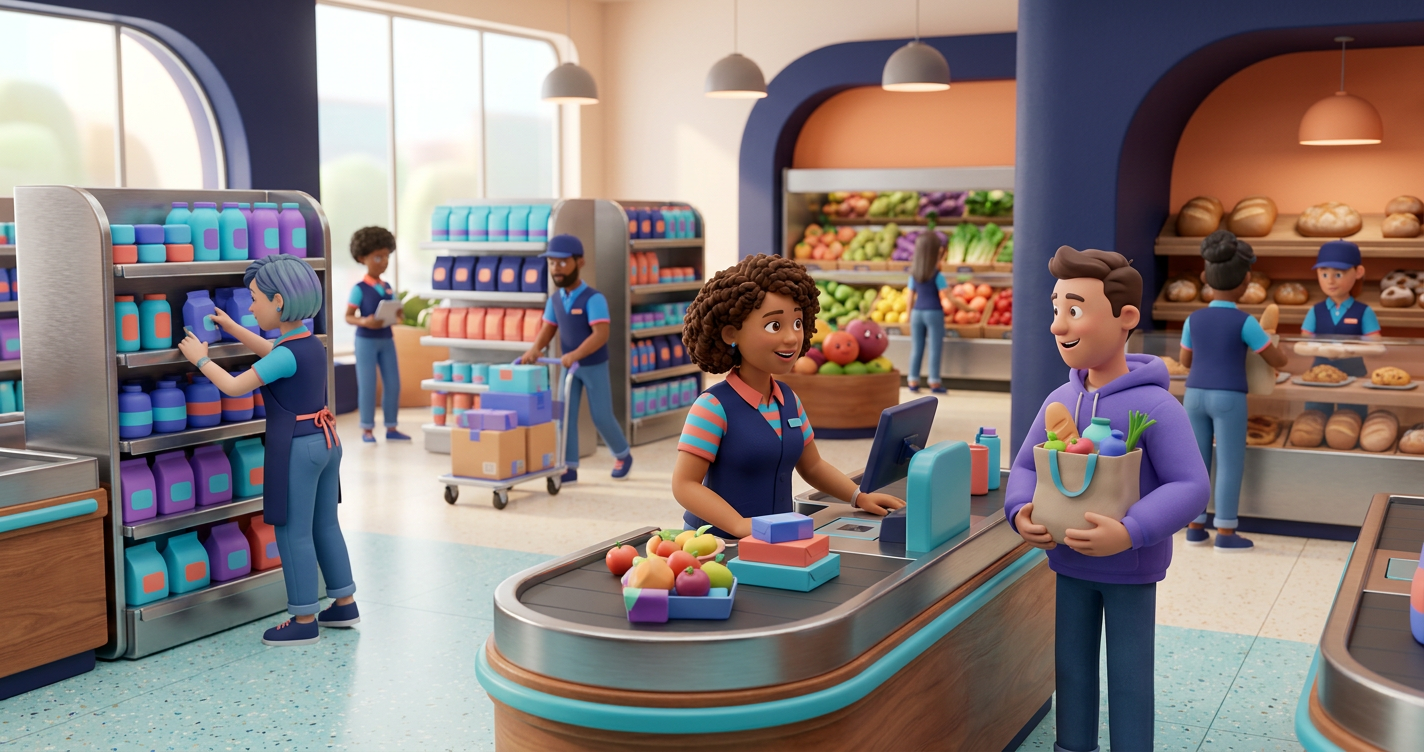
Supermarkets need behavioural hiring because traditional resumes fail to predict how a candidate will perform in high-pressure, customer-facing retail environments where soft skills and resilience matter most.
By shifting the focus from previous experience to natural work preferences and tendencies, grocery retailers can identify individuals who genuinely thrive in fast-paced settings, leading to better customer service and significantly lower staff turnover.
Key takeaways
- Behavioural hiring identifies the natural work personality of a candidate, ensuring they are suited for the specific demands of retail.
- Supermarkets can reduce the high costs associated with employee churn by matching individuals to roles that align with their inherent strengths.
- Traditional recruitment methods often overlook critical soft skills like empathy and problem-solving, which are essential for front-end supermarket staff.
- Implementing data-driven assessments allows hiring managers to objectively rank candidates based on organisational fit rather than subjective gut feelings.
- A balanced team with diverse work personalities – from Helpers to Doers – creates a more stable and efficient supermarket operation.
The retail sector has long grappled with the challenge of high staff turnover, but for supermarkets, the problem is particularly acute. We often see a cycle where new hires start with enthusiasm but quickly burn out or realise the role isn't what they expected. This isn't just a scheduling headache – it is a significant drain on your bottom line. Every time a checkout operator or deli assistant leaves, you lose the investment made in their training and the institutional knowledge they gathered.
The root cause often lies in how we hire. Most supermarket recruitment processes rely heavily on looking at where someone worked before. While having eighteen months of experience at a rival chain is helpful, it doesn't tell you if that person has the patience to handle a difficult customer on a busy Saturday morning. We need a way to look beneath the surface of the resume to see the person underneath.
This is where behavioural hiring changes the game. Instead of asking "what have you done?", we start asking "how do you work?". By understanding a candidate's natural tendencies, supermarket managers can predict how they will react when the fruit and veg delivery is late or when the self-checkout area is suddenly overwhelmed. It moves recruitment from a guessing game to a strategic process based on workforce intelligence.

Resumes in the retail world are often remarkably similar. Most applicants list the same basic tasks: shelf stocking, cash handling, and customer service. If you are looking at a pile of fifty applications that all look identical, how do you choose the right one? Many managers fall back on "gut feel" during a ten-minute interview, but research shows this is one of the least effective ways to predict long-term success.
Behavioural hiring allows us to identify specific traits that are non-negotiable in a supermarket setting. For example, a person who naturally identifies as The Helper is likely to excel at the service desk because they find genuine satisfaction in supporting others. Conversely, The Doer might be your best bet for night fill, where the focus is on practical, efficient task completion and meeting strict deadlines.
At Compono, we've spent over a decade researching how personality influences work performance. Our Compono Culture, Engagement & Performance Model shows that when an individual's natural work personality matches the requirements of their role, they are more engaged and less likely to leave. For a supermarket, this means a more stable team and a better experience for your shoppers.
A high-performing supermarket isn't made up of just one type of person. You need a mix of personalities to handle the diverse range of tasks required to keep the doors open. If your entire team consists of big-picture thinkers, the shelves might never get stacked correctly. If everyone is focused solely on minute details, the customer experience might feel cold and transactional.
Behavioural hiring helps you see the "gaps" in your current team. If your front-end team is struggling with conflict, you might need someone with the traits of The Advisor – someone flexible and empathetic who can mediate and maintain harmony. If your inventory management is slipping, you might look for The Auditor, who brings a methodical and exacting mindset to every task.
Using a platform like Compono Hire allows you to assess candidates across multiple dimensions, including Organisation Fit and personality fit. This ensures that you aren't just hiring a pair of hands, but a person who complements your existing culture. It allows you to build a team that is resilient, diverse, and capable of handling the unique pressures of the grocery industry.
The cost of hiring the wrong person in retail is estimated to be significantly higher than most managers realise. Beyond the advertising costs and the time spent interviewing, there is the "productivity dip" that occurs while a new person learns the ropes. In a supermarket, where margins are thin, these costs add up quickly. Behavioural hiring acts as a filter, ensuring that only those with a high likelihood of success make it through the final stages.
When employees feel that their work aligns with their natural strengths, they experience higher job satisfaction. A person who loves order and precision will find shelf-facing and inventory checks rewarding rather than tedious. By using behavioural data, you can place people in the right aisles – literally and figuratively. This alignment is the most effective tool we have for boosting retention in the modern workplace.
Many organisations find that traditional personality tests are too long or confusing for entry-level roles. However, modern assessments are designed to be quick and engaging. At Compono, our work personality assessment takes only a few minutes but provides deep insights that help managers make better decisions. It’s about making the recruitment process work for both the employer and the candidate.
We are living in an era where data drives almost every part of the supermarket business, from supply chain logistics to loyalty programmes. It only makes sense that data should also drive your most important asset: your people. Relying on subjective interviews leads to unconscious bias and inconsistent hiring standards across different store locations.
By centralising your recruitment through a digital platform, you ensure that every candidate is measured against the same objective benchmarks. This is particularly useful for franchise or multi-location businesses that need to maintain a consistent culture across different regions. You can see how The Coffee Club used these types of insights to transform their hiring success across multiple locations, proving that a data-driven approach works at scale.
Behavioural hiring doesn't replace the human element of an interview – it enhances it. It gives the hiring manager a roadmap of what to ask and which areas to explore further. It allows you to have more meaningful conversations because you already have a baseline understanding of how the candidate prefers to work. This leads to better hires, happier teams, and a more successful supermarket.
Key insights
- Supermarkets must look beyond previous experience to identify candidates whose natural work personalities align with retail demands.
- Behavioural hiring reduces turnover by ensuring high job satisfaction through proper role alignment.
- A balanced retail team requires a mix of work personalities, including Doers for execution and Helpers for customer service.
- Objective, data-driven assessments eliminate the bias and inconsistency often found in traditional supermarket interviews.
- Utilising workforce intelligence platforms allows supermarkets to scale successful hiring practices across multiple store locations.
Ready to transform your retail recruitment and build a more resilient team? Explore how our tools can help you identify the right talent for your supermarket.
Behavioural hiring focuses on a candidate's natural work preferences and tendencies rather than just their past job titles. In retail, this means identifying traits like resilience, empathy, and attention to detail that are essential for supermarket roles.
By matching candidates to roles that suit their natural work personality, employees feel more comfortable and satisfied in their jobs. This alignment significantly reduces the likelihood of them leaving due to burnout or a poor fit with the role.
Not at all. Modern assessments like those offered by Compono are designed to be completed in just a few minutes, making them ideal for high-volume recruitment while still providing high-quality data for hiring managers.
Yes. By focusing on objective behavioural data rather than subjective resumes, you can build a team with a diverse range of strengths. This ensures you have the right mix of people to handle everything from customer service to complex inventory tasks.
Absolutely. Behavioural assessments provide a roadmap for the interview, helping you ask more targeted questions. The assessment tells you how they are likely to work, and the interview allows you to confirm that fit and build a personal connection.
1 min read
Behavioural hiring in supermarkets works by using structured assessments and interview techniques to predict future job performance based on a...
1 min read
Hiring workflow automation uses software to run the repetitive parts of recruitment, including resume screening, candidate ranking, interview...

1 min read
The best applicant tracking system for gyms and fitness in New Zealand is one that filters candidates by both technical certifications and...
 Mathan Allington